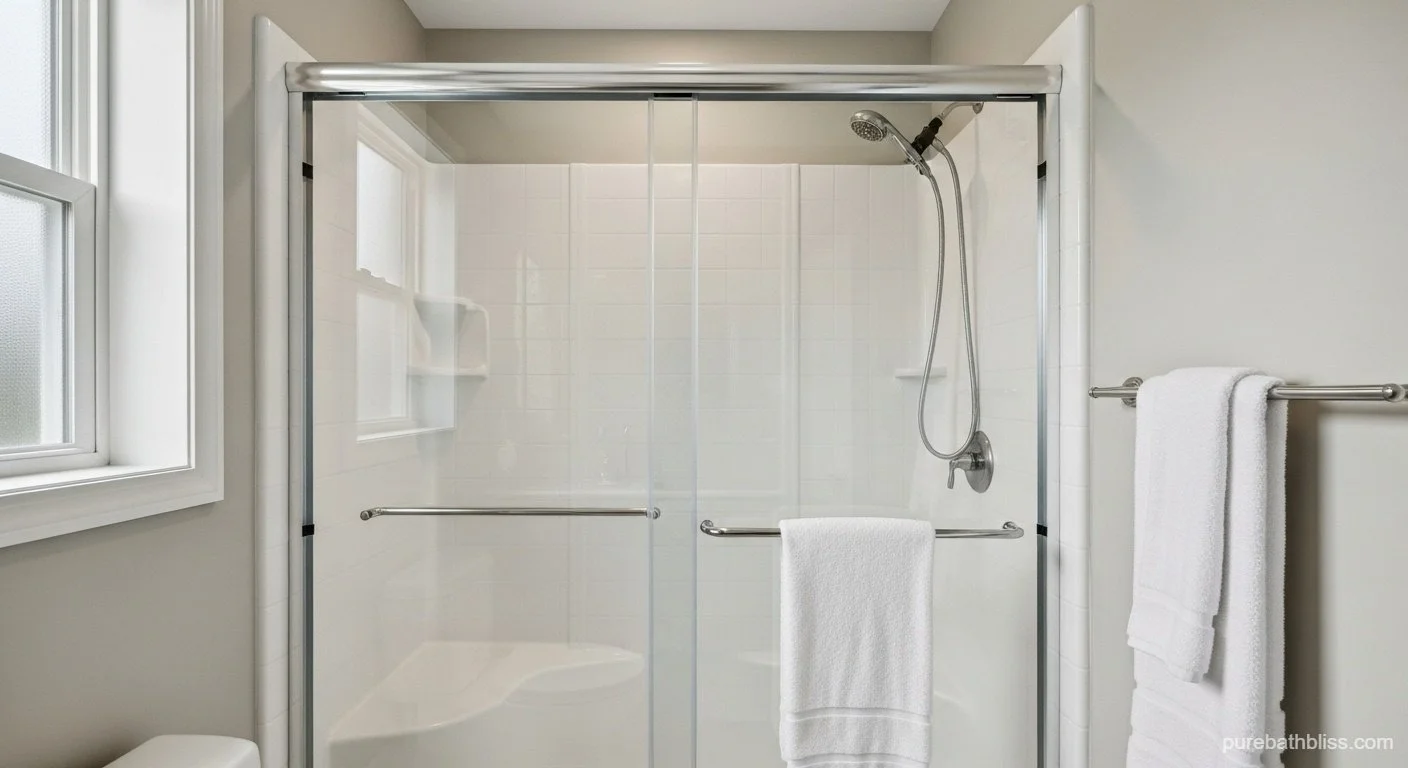
How to Remove Hard Water Stains from Shower Glass (Using Only 2 Ingredients)
You know the routine. You spray your glass shower doors with standard glass cleaner. You wipe them down until they look pristine. You walk away feeling accomplished.
Ten minutes later, you walk back in, and the glass is dry, and the white, cloudy haze is back.
It is one of the most frustrating cleaning mysteries in the home. You scrubbed, so why does it still look dirty?
The reason standard cleaners (like Windex) fail is that you aren't fighting dirt; you are fighting rocks.
That cloudy haze is caused by Hard Water. It is a buildup of dissolved minerals, specifically calcium and magnesium, that are left behind when water evaporates. These minerals are alkaline. Most general-purpose cleaners are neutral or slightly alkaline, meaning they literally cannot dissolve the bond these minerals have with your glass.
To remove rock, you need chemistry. Specifically, you need acid.
Put down the expensive chemical sprays. We are going to clear that glass permanently using two ingredients you likely have in your kitchen right now.
The "Magic Spray" Recipe
This is the gold standard for removing soap scum and mineral haze.
The Acid: White Vinegar (dissolves the calcium).
The Degreaser: Dish Soap (cuts through the body oils and soap scum protecting the minerals).
The Secret Step: Heat
Most people try vinegar and say it "doesn't work." That is because they use it cold. By heating the vinegar, you supercharge the molecules, making the acid reaction significantly faster and more aggressive against the minerals.
The Ingredients
1 Cup White Distilled Vinegar
1 Tablespoon Blue Dish Soap (like Dawn)
A spray bottle
A microwave-safe bowl
The Method
Heat It: Pour the vinegar into a bowl and microwave it for 60 seconds (it should be hot, not boiling).
Mix It: Pour the hot vinegar into the spray bottle and add the dish soap. Swirl gently to mix (don't shake, or it will foam up).
Soak It: Spray the glass liberally. It needs to look wet.
The Dwell Time: This is crucial. Walk away for 15–20 minutes. Let the acid do the work for you.
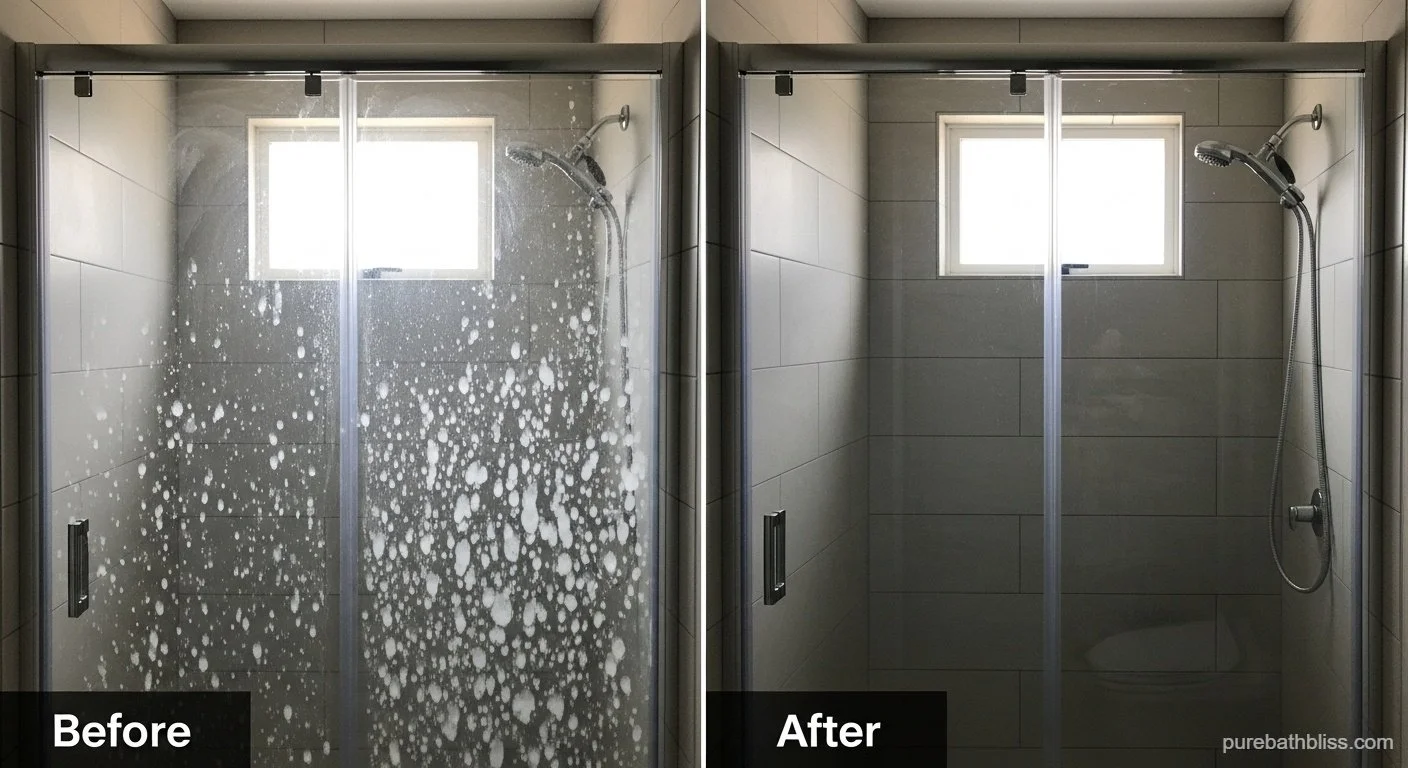
Scrub & Rinse: Wipe with a non-scratch sponge or microfiber cloth. The white haze should lift right off. Rinse with hot water.
Method 2: The Lemon Scrub (For Chrome & Metal)
If you have hard water spots on your chrome fixtures or metal door tracks, vinegar can sometimes be too runny. Use this natural abrasive paste instead.
Cut a lemon in half.
Dip the cut face into a bowl of coarse salt.
Scrub. Use the lemon like a sponge, scrubbing the metal fixtures directly. The citric acid eats the calcium, and the salt scours away the grime without scratching the metal.
It smells incredible, much better than the hot vinegar method!
Method 3: The "Last Resort" (The Scraper)
If you just moved into a new place, or haven't deep cleaned the glass in years, the mineral buildup might be too thick for liquids to penetrate. It has essentially calcified into stone.
You need a mechanical removal tool: The Razor Scraper.
Warning: This requires a steady hand. Do not use on plexiglass or acrylic, only tempered glass.
Wet the Glass: Never scrape dry glass; you will scratch it. Spray it with water or your vinegar mix.
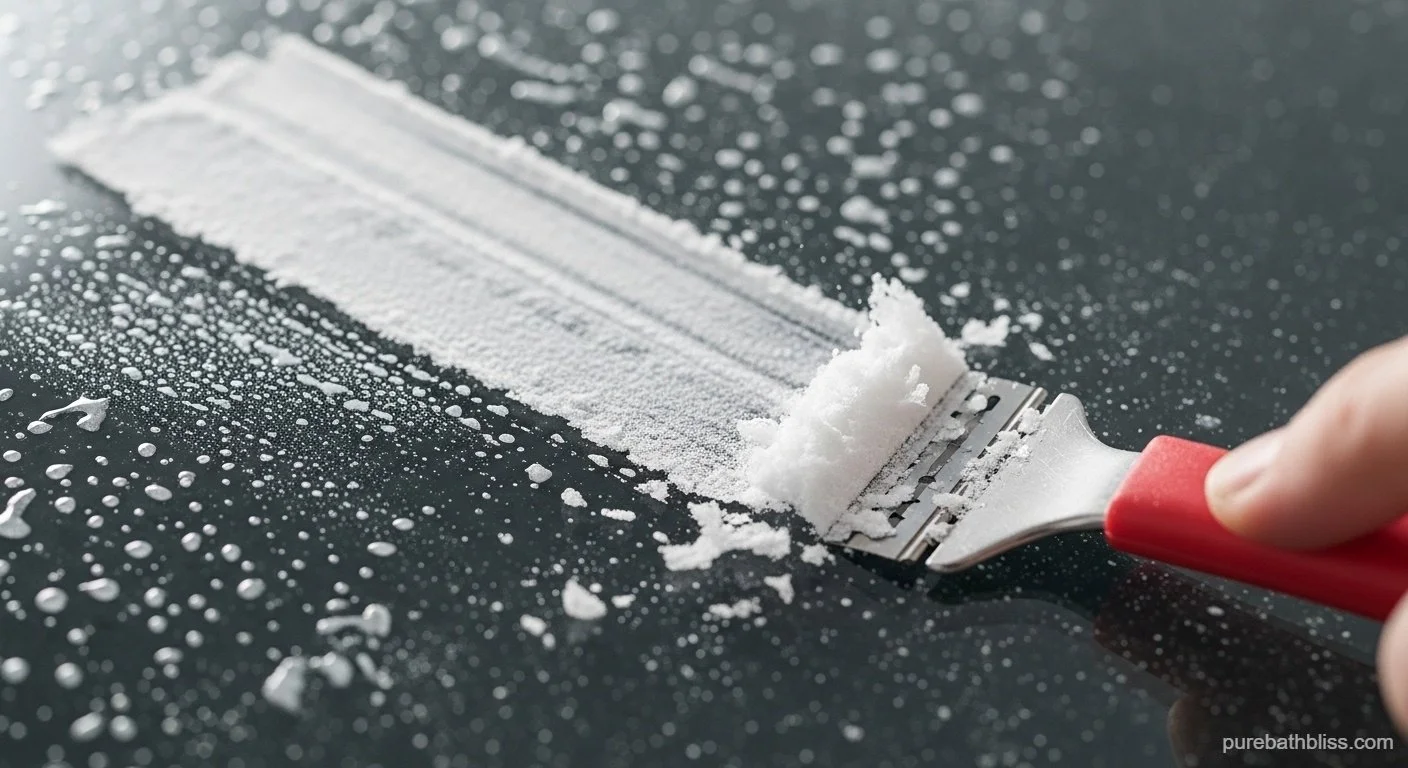
The Angle: Hold a straight-razor window scraper at a strict 45-degree angle.
The Push: Push gently. You will actually see (and hear) a white, flaky powder peeling off the glass. It looks like snow.
Wipe: Once the heavy layer is shaved off, follow up with the Magic Spray to get the residue.
Prevention: Never Scrub Again
Once your glass is crystal clear, you want to keep it that way. The goal is to prevent water droplets from drying on the surface in the first place.
1. The Squeegee Rule
It takes 30 seconds. Keep a squeegee in the shower and wipe the glass down after every single use. This physically removes the minerals before they can bond.
This habit also lowers humidity, helping prevent mold. Read more in our guide: Breathe Easy: The Ultimate Guide to Bathroom Air Quality.
2. The Hydrophobic Hack
Want the water to slide off by itself? Treat your shower glass like your car windshield.
Apply a coat of Rain-X (or a specific shower glass sealant) to the inside of the clean, dry doors.
The water will bead up and roll off, taking the minerals with it. Reapply every 3 months.
Note: Curious why you have so much hard water buildup? It starts at the source. Check out our water quality guide: The Ultimate Bathroom Water Audit.
Conclusion
A bathroom looks infinitely cleaner when the shower doors are invisible. By understanding the chemistry of hard water, you can stop scrubbing endlessly with Windex and start dissolving the problem at the source.
Your guests will notice the sparkle. You will notice the lack of elbow grease required.
Now that the glass is clear, look up. Is your showerhead clogged with the same white crust? Don't forget to clean that too: Read How to Clean Your Showerhead.