5 "Unkillable" Trees That Thrive in Your Bathroom (And Make It Look Like a Spa)
Originally published January 2026, Updated June 2026
Transparency note: We independently select these products based on research and real-world testing. If you buy through our links, we may earn a commission at no extra cost to you.
Most people stop at a small potted plant on the back of the toilet. I get it, it feels like the safe choice. But once you've seen a bathroom with a proper floor-standing tree in the corner, you understand why small plants can feel like a compromise.
A tree changes the scale of a bathroom entirely. It adds height, fills dead corners that no shelf or towel rack ever quite handled, and creates that layered, lush feel that takes a bathroom from functional to genuinely restorative. The problem is that most people assume indoor trees are finicky and high-maintenance. And to be fair, some of them are. A Fiddle Leaf Fig will punish you for looking at it wrong. But there is a whole category of indoor trees that actively prefer the warm, humid, low-light conditions of a bathroom, and they are far tougher than most plant guides give them credit for.
These are the five I keep recommending. Each one has earned its place through real performance in real bathrooms, not just good looks on a nursery shelf. I have also included the care guides we've built for each one and the Amazon links from the original article since those are useful if you want to skip the nursery trip entirely.
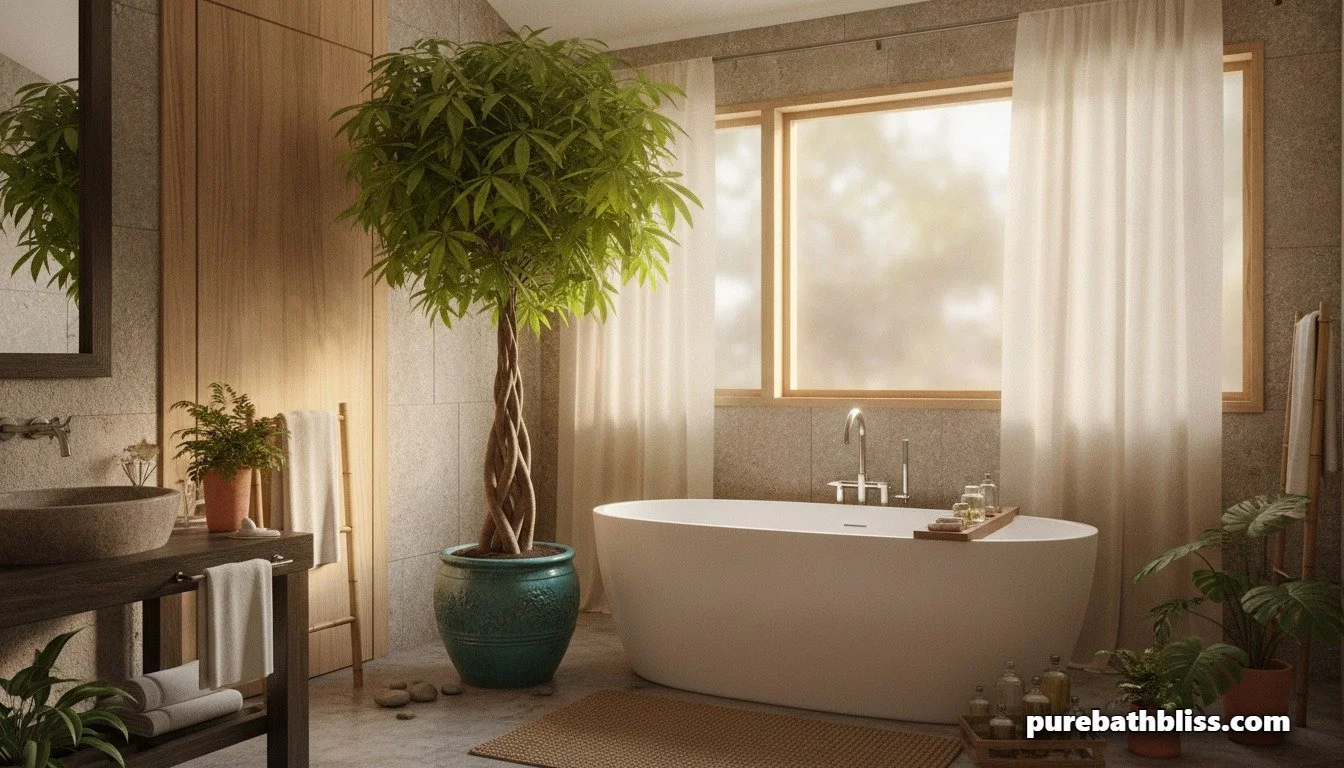
Before You Buy: The Two Things That Determine Whether a Tree Survives Your Bathroom
Every tree on this list is genuinely tough, but tough does not mean invincible. The two variables that determine whether a bathroom tree thrives or slowly declines are drainage and light, and both are easy to get right if you think about them before the tree goes in.
Drainage is non-negotiable. In a humid bathroom, soil stays moist significantly longer than in any other room. A pot without drainage holes traps water at the root level, and even moisture-tolerant trees will develop root rot if their roots sit in standing water for days at a time. Always use a pot with a drainage hole, or keep the tree in its plastic nursery liner inside a decorative cache pot so you can lift it out, water it properly, let it drain, and return it. A natural cork plant mat under the pot protects your tile from the inevitable drip and prevents the slow moisture damage we see under planters that sit directly on bathroom floors.
Low light does not mean no light. Every tree on this list tolerates low light, but none will survive in complete darkness. If your bathroom has no window, a full-spectrum LED grow bulb screwed into your existing vanity fixture (E26 base, available for around fifteen dollars) will sustain all five of these trees indefinitely. Run it on a timer for eight to twelve hours a day. It looks like ordinary white light to you and provides what the plant needs to photosynthesize.
If you want to go deeper on bathroom air quality and the role plants play in it, our ultimate guide to bathroom air quality and ventilation covers the full picture. And if you're building out a complete bathroom plant ecosystem beyond just the trees, our guide to 7 unkillable plants for windowless bathrooms covers the smaller species that pair well with a floor tree.
If you want to extend the same living ecosystem philosophy into the rest of your home, our sister site Pure Kitchen Bliss has a companion guide to 7 unkillable plants for your kitchen that covers how the same species perform in a completely different room environment.
The 5 Trees
1. Money Tree (Pachira aquatica)
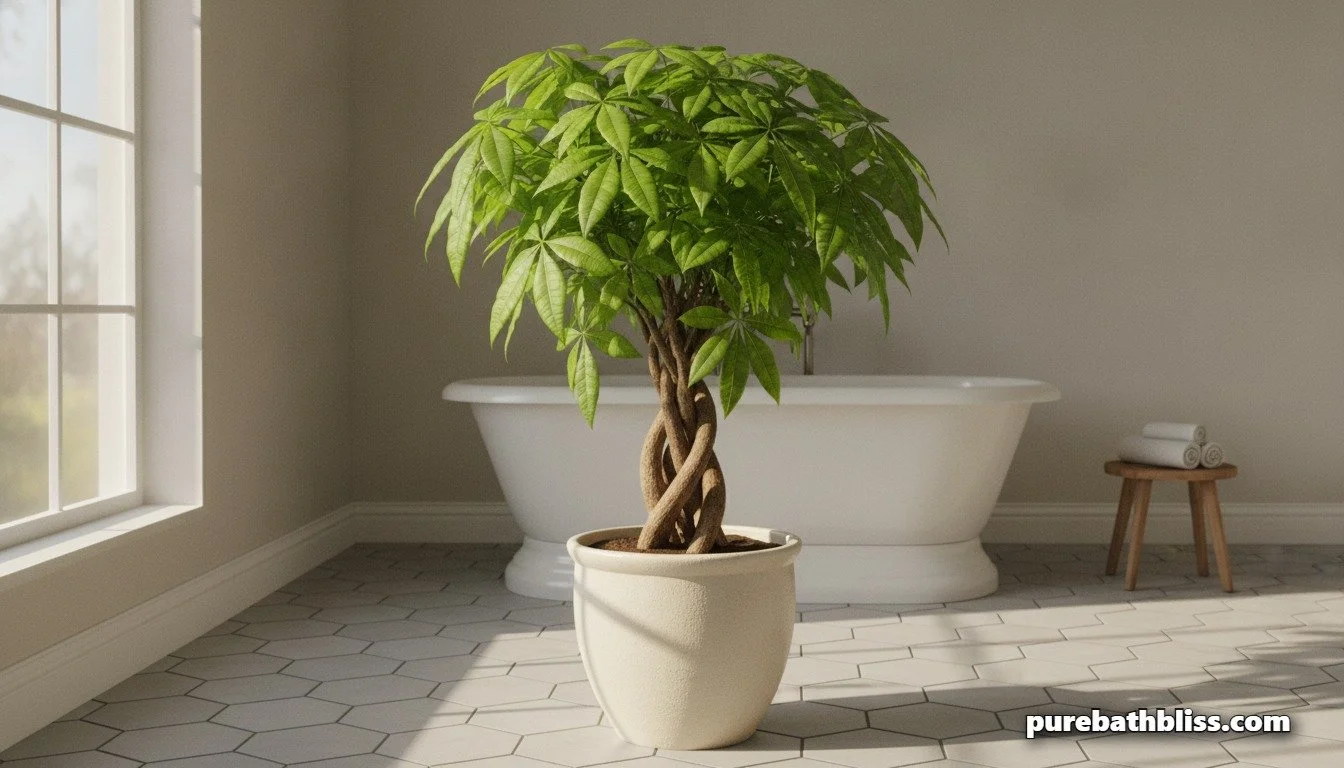
The money tree is the undisputed starting point for anyone who wants a floor tree in a bathroom. In its natural habitat it grows in swamps and tropical wetlands, which means the warm, steamy environment of a post-shower bathroom is essentially what it evolved for. It handles humidity without complaint, tolerates overwatering better than any other tree on this list, and produces the kind of lush tropical canopy that makes a bathroom feel like a completely different room.
Most money trees sold commercially have braided trunks, a technique that nurseries use to give young stems structural stability and an architectural quality that looks genuinely impressive once the tree is established. The hand-shaped compound leaves are deep green and glossy. Given enough indirect light, the tree grows steadily and can reach ceiling height over several years indoors.
Water when the top two to three inches of soil are dry. In a bathroom this may mean every ten to fourteen days rather than weekly. Feed lightly in spring and summer with a diluted liquid fertilizer. Rotate the pot a quarter turn every few weeks so all sides of the canopy get equal light exposure and the tree grows symmetrically.
Best placement: A heavy ceramic floor planter in a corner opposite the shower, or beside the bathtub where it benefits from steam without being in direct spray range.
Care guide: Money Tree Care Guide
Buy it: Live Money Tree on Amazon
2. Corn Plant (Dracaena fragrans)
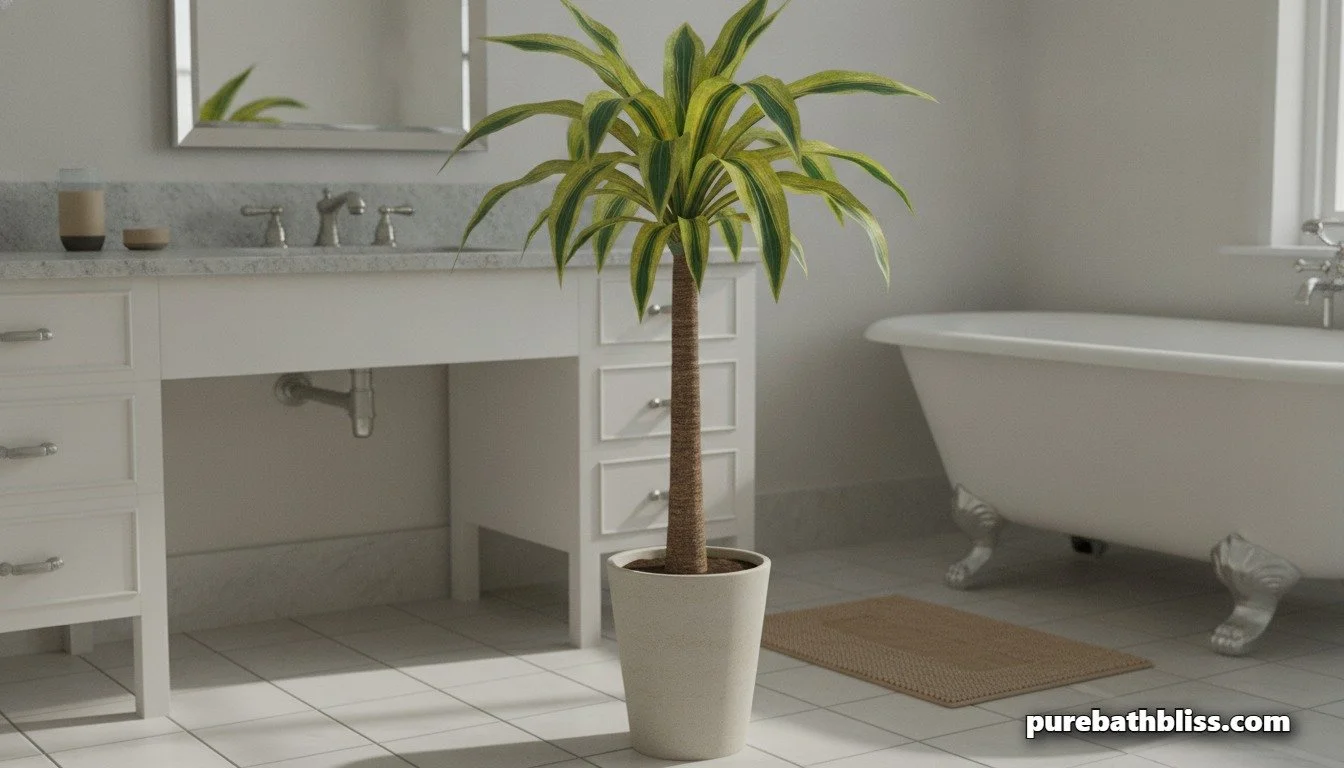
If you have a windowless bathroom or a very narrow space between fixtures, the corn plant is the answer. Its growth habit is almost entirely vertical, meaning it adds significant height without spreading sideways. The thick woody cane and burst of long arching leaves at the top give it a sculptural quality that works in both modern and natural bathroom aesthetics. The name comes from the resemblance of its leaves to corn stalks, and once you see it, you cannot unsee it.
As a dracaena, it is part of one of the most air-purification-effective plant families available. It specifically targets benzene, trichloroethylene, and formaldehyde, compounds present in many household cleaning products and personal care aerosols. It grows slowly, which is actually an advantage in a bathroom where you do not want to be repotting frequently, and it requires almost no attention between waterings.
Water only when the soil is nearly completely dry. This tree is genuinely drought tolerant and the most common mistake is overwatering it. Brown leaf tips are usually a sign of fluoride sensitivity in tap water, which is easily fixed by switching to filtered water or letting tap water sit out overnight before using it on the plant.
Best placement: Tight spaces between the vanity and the tub, or any tall narrow corner where wider plants would not fit.
Care guide: Corn Plant Care Guide
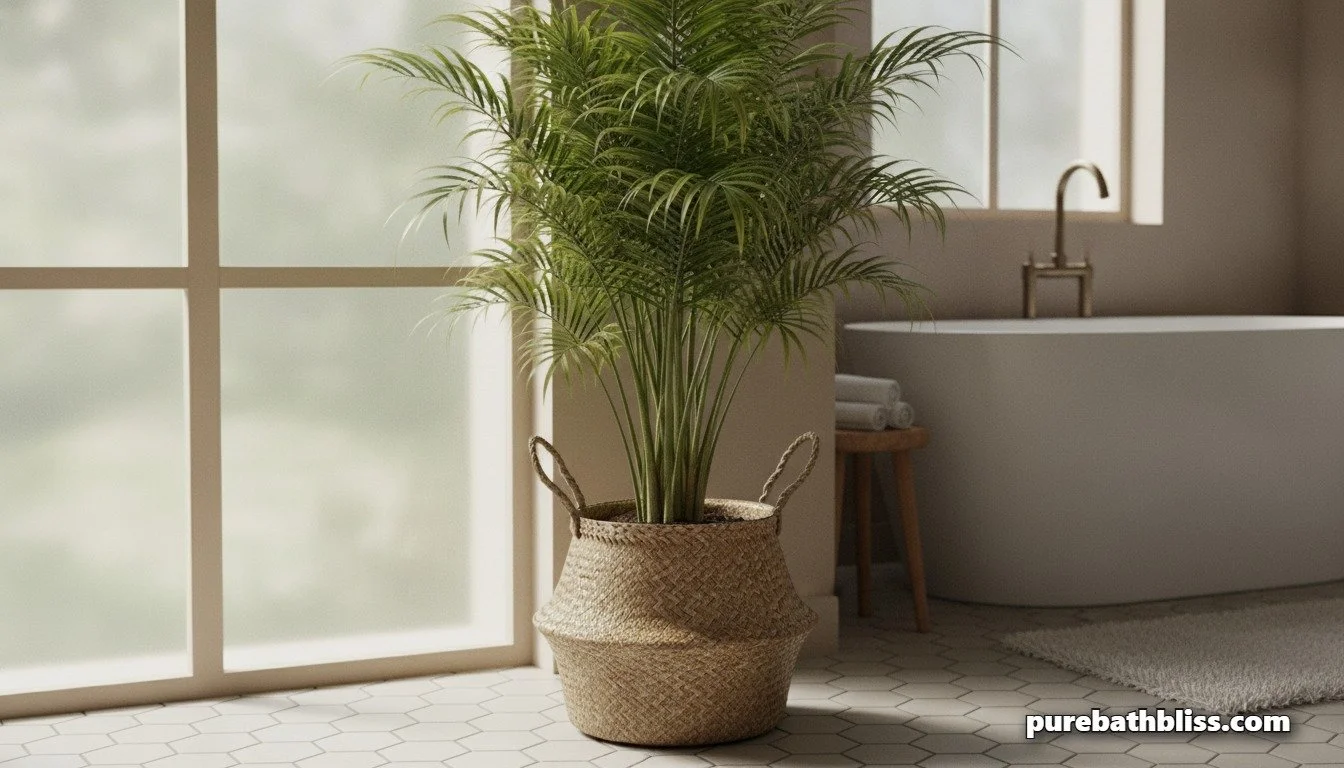
3. Parlor Palm (Chamaedorea elegans)
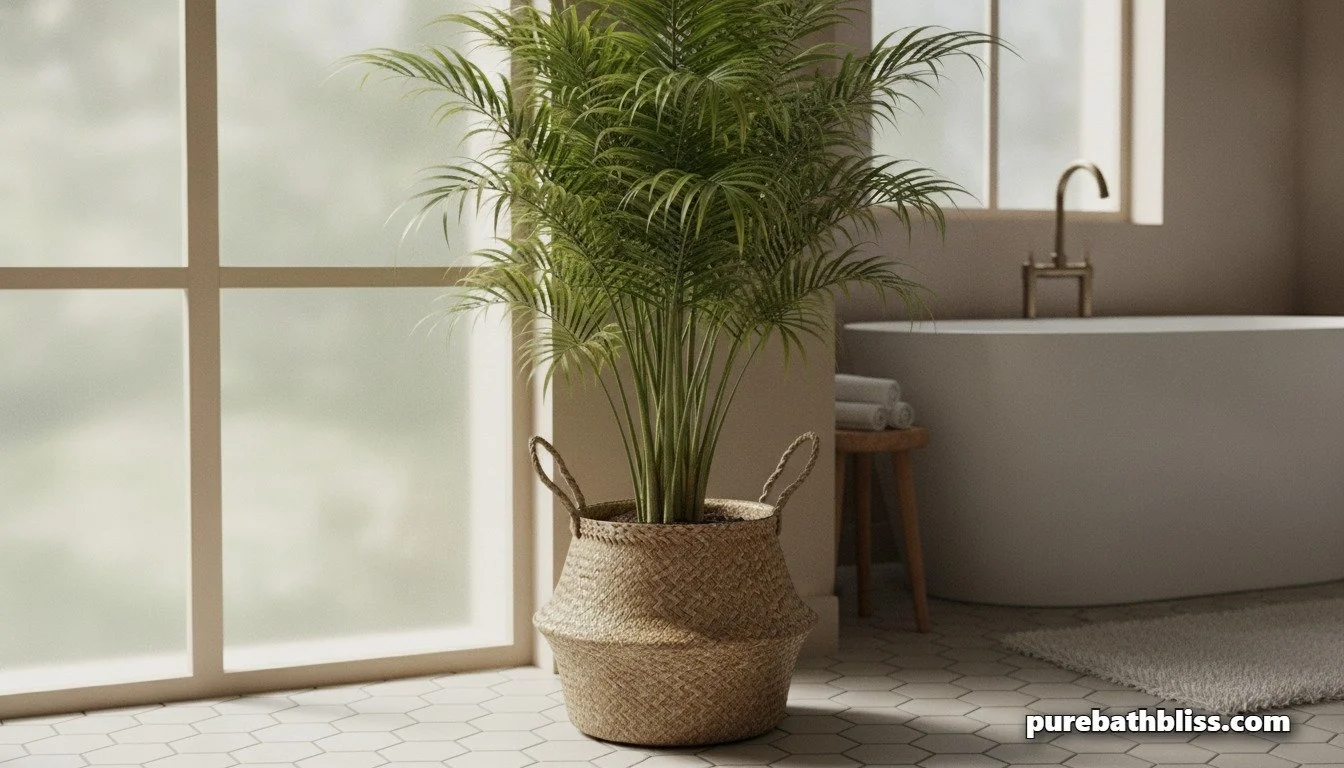
The parlor palm has been grown indoors for over a hundred years, and the reason it has lasted so long is simple: it refuses to die. It was bred to survive in dark, drafty Victorian hallways filled with gas lamp fumes and coal smoke. A modern bathroom is an upgrade by comparison. It loves humidity, handles temperature fluctuations without complaint, and produces the kind of soft, feathery tropical fronds that create the most convincingly spa-like atmosphere of any tree on this list.
It is also the most pet-safe tree here. If you have cats or dogs, the parlor palm is the only one on this list that is completely non-toxic if they decide to investigate it with their mouths. That is a meaningful distinction in a family home and worth factoring into your decision if it is relevant.
Water when the top inch of soil is dry and mist the fronds occasionally if your bathroom has dry spells between showers. It likes the humidity but will also tell you if it is not getting enough by developing brown frond tips. A bathroom that gets steamed regularly from daily showers is genuinely ideal for this palm and minimal misting will ever be needed. Feed once a month during the growing season with a diluted palm fertilizer.
Best placement: Beside the bathtub or in a corner near the shower where the steam level is highest. Works beautifully in a woven seagrass basket.
Care guide: Parlor Palm Care Guide
Buy it: Live Parlor Palm on Amazon
4. Dragon Tree (Dracaena marginata)
The dragon tree is the most architecturally striking option on this list. Its slender, naturally twisting trunks develop character over time in a way that feels genuinely sculptural, and the narrow sword-like leaves with their distinctive thin red border give it an edge that the rounder, softer trees on this list do not have. If your bathroom has a modern, minimalist, or industrial aesthetic, the dragon tree fits in a way that a lush palm might not.
It is arguably the toughest tree here. It handles low light, irregular watering, and high humidity simultaneously without losing its form or dropping leaves. As another member of the dracaena family, it is an effective air purifier targeting many of the same compounds as the corn plant, particularly those found in cleaning products and hairsprays. It grows slowly, which keeps it manageable in a bathroom where space is always at a premium.
Water only when the top half of the soil is dry. This is a tree you can leave for three weeks and come back to unchanged. It is particularly sensitive to fluoride, so filtered or distilled water is recommended if your tap water is heavily treated. Brown leaf tips are the early warning sign of fluoride stress, not underwatering, so resist the urge to water more when you see them.
Best placement: A corner or a space beside the vanity where its vertical, slightly spreading form can be appreciated from the side. A dark matte planter complements its modern aesthetic.
Care guide: Dragon Tree Care Guide
Buy it: Live Dragon Tree on Amazon
5. Rubber Tree (Ficus elastica)
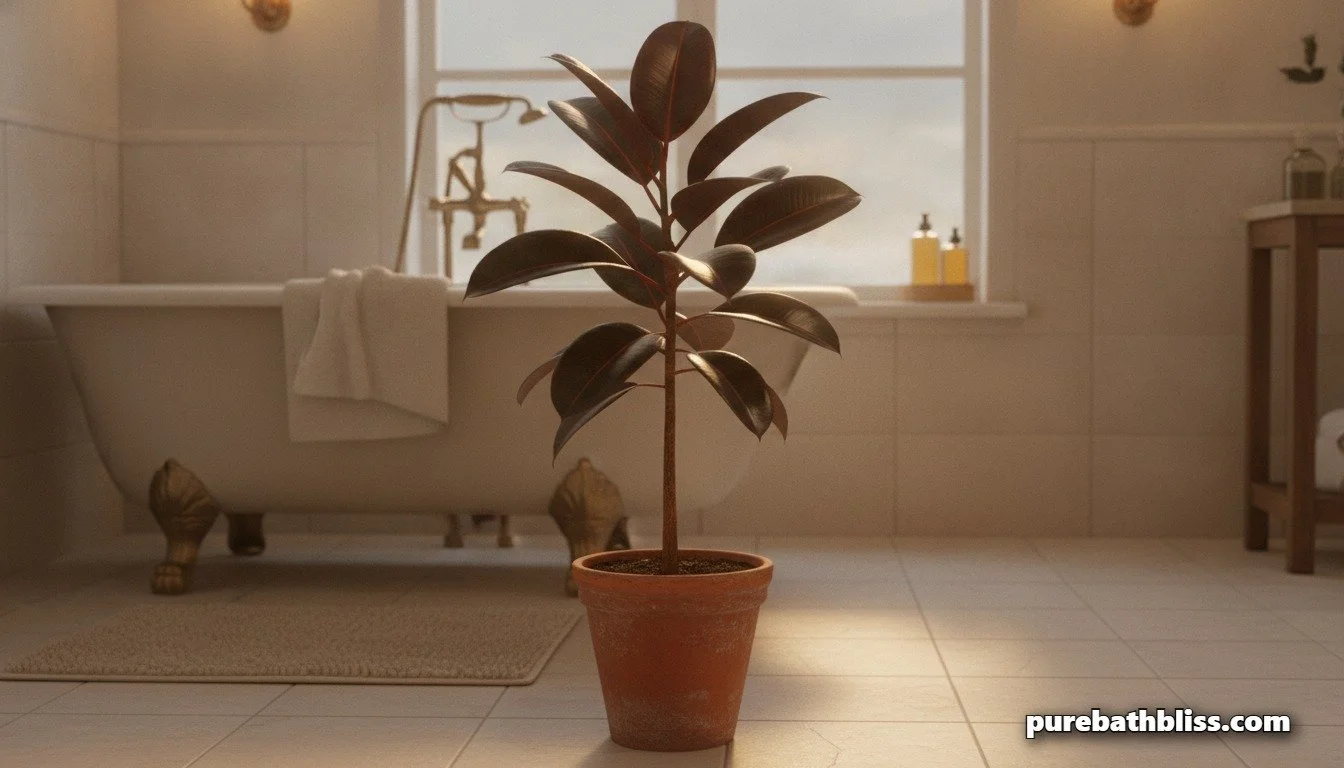
Most members of the Ficus family are difficult. The Fiddle Leaf Fig has a well-deserved reputation for dropping every leaf if you move it three inches to the left. The rubber tree is the exception in the family. Its thick, waxy, oversized leaves are designed to hold moisture in dry tropical environments, which means the steam from your shower is a genuine benefit rather than something it merely tolerates.
The visual appeal here is different from the other four trees. Where the money tree and parlor palm are lush and tropical, the rubber tree is bold and dramatic. The deep green or burgundy varieties in particular have a richness to them that photographs extraordinarily well and adds a genuinely luxurious quality to a bathroom. The leaves are large enough that they become a design element in their own right rather than just background texture.
Because those large leaves have a relatively high surface area, they collect dust efficiently. Once a month, wipe each leaf with a damp cloth using your upcycled towel rags. This keeps the pores clear and the leaves genuinely glossy. Dusty leaves also absorb less light, which matters in a lower-light bathroom environment.
Water when the top two inches of soil are dry and do not let it sit in standing water. Unlike the money tree, which tolerates overwatering, the rubber tree does not. Once the pot has drainage sorted, it is extremely low maintenance. It grows steadily and can eventually become a significant floor tree given a few years.
Best placement: A corner with the highest available light level in the bathroom, or near a frosted window where it gets bright indirect light without direct sun scorching the leaves.
Care guide: Rubber Tree Care Guide
Buy it: Live Rubber Tree on Amazon
Greg's Bathroom Tree Kit
Beyond the tree itself, a few supporting items make the whole setup work properly and protect your bathroom in the process.
The Planter: Heavy Ceramic Floor Planter — weight at the base prevents tipping, which matters with a tall tree in a small room with kids running through it.
The Floor Protector: Natural Cork Plant Mat — I have seen too many bathroom floors with tile damage from leaky pots sitting directly on the surface. A cork mat is cheap insurance.
The Nutrient Boost: Organic Indoor Plant Food — a light feed in spring and summer keeps the leaves vibrant and the growth rate steady without burning the roots.
The Moisture Checker: Digital Hygrometer — keeps tabs on your bathroom humidity level. The sweet spot for both your bathroom structure and your trees is between 40 and 60 percent. Above 70 percent consistently and you start creating conditions for mold on the soil surface, which is worth monitoring. We cover this in detail in our guide to bathroom condensation and moisture management.
Start With One Corner
The impulse when you first get excited about bathroom trees is to put one in every available corner. That almost always ends in disappointment because you are managing five variables at once before you understand how your specific bathroom's light and humidity behave across different seasons.
Start with one tree in the corner that gets the most light, or the most steam, depending on which tree you choose. Live with it for a season. Once you know how quickly the soil dries out, what the light does throughout the day, and how the tree responds, adding a second one becomes much less risky because you have real information rather than guesses.
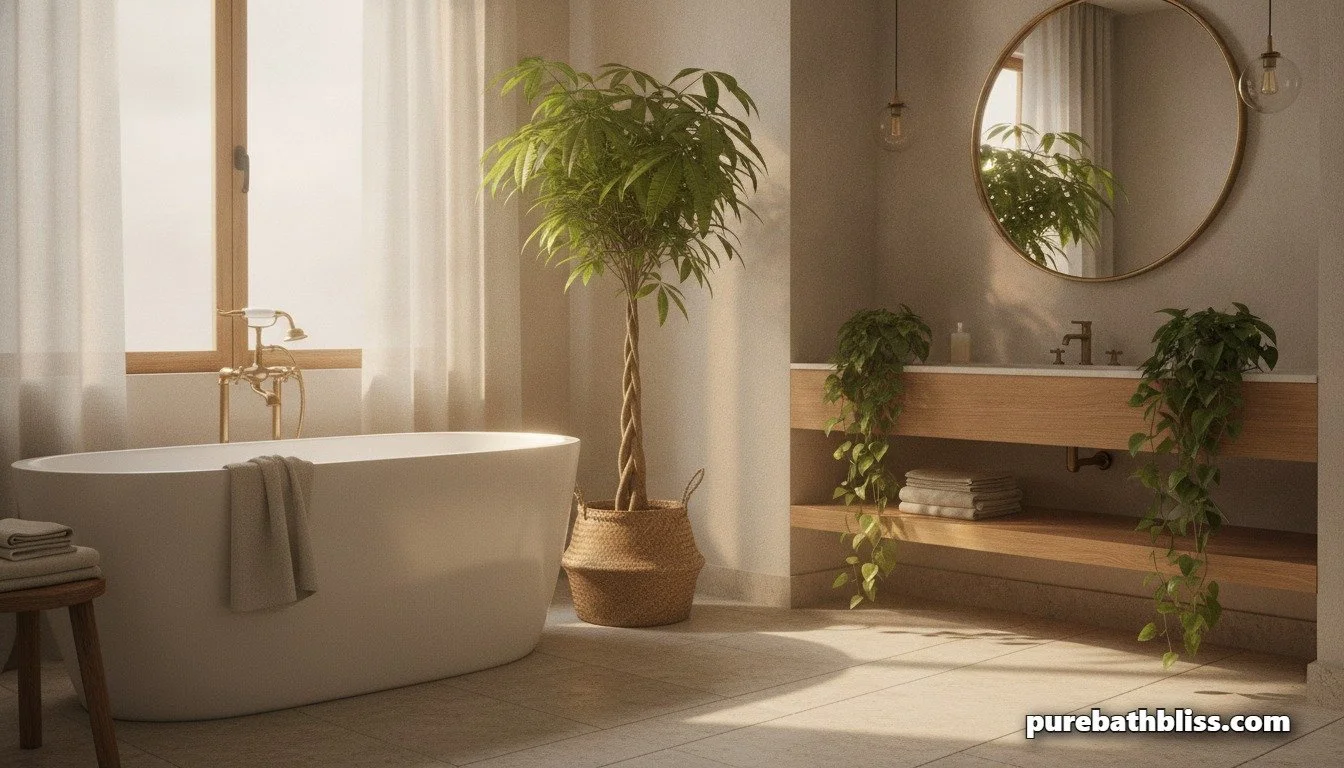
A floor tree paired with a trailing pothos on a high shelf and a snake plant on a lower surface creates the layered canopy effect that makes a bathroom feel genuinely like a living space rather than just a tiled utility room. That full approach is what we cover in our 7 bio-filter plants guide, which covers the smaller species that fill in the gaps below and beside the tree.
And if the idea of living plants doing real work throughout your home has you hooked, the Pure Kitchen Bliss guide to growing kitchen herbs is the natural next step, plants you actually cook with, growing in the room where you use them.