Parlor Palm Care: The Pet-Friendly Victorian Legend
Transparency Note: We independently select these products based on research and user reviews. If you buy something through our links, we may earn a commission.
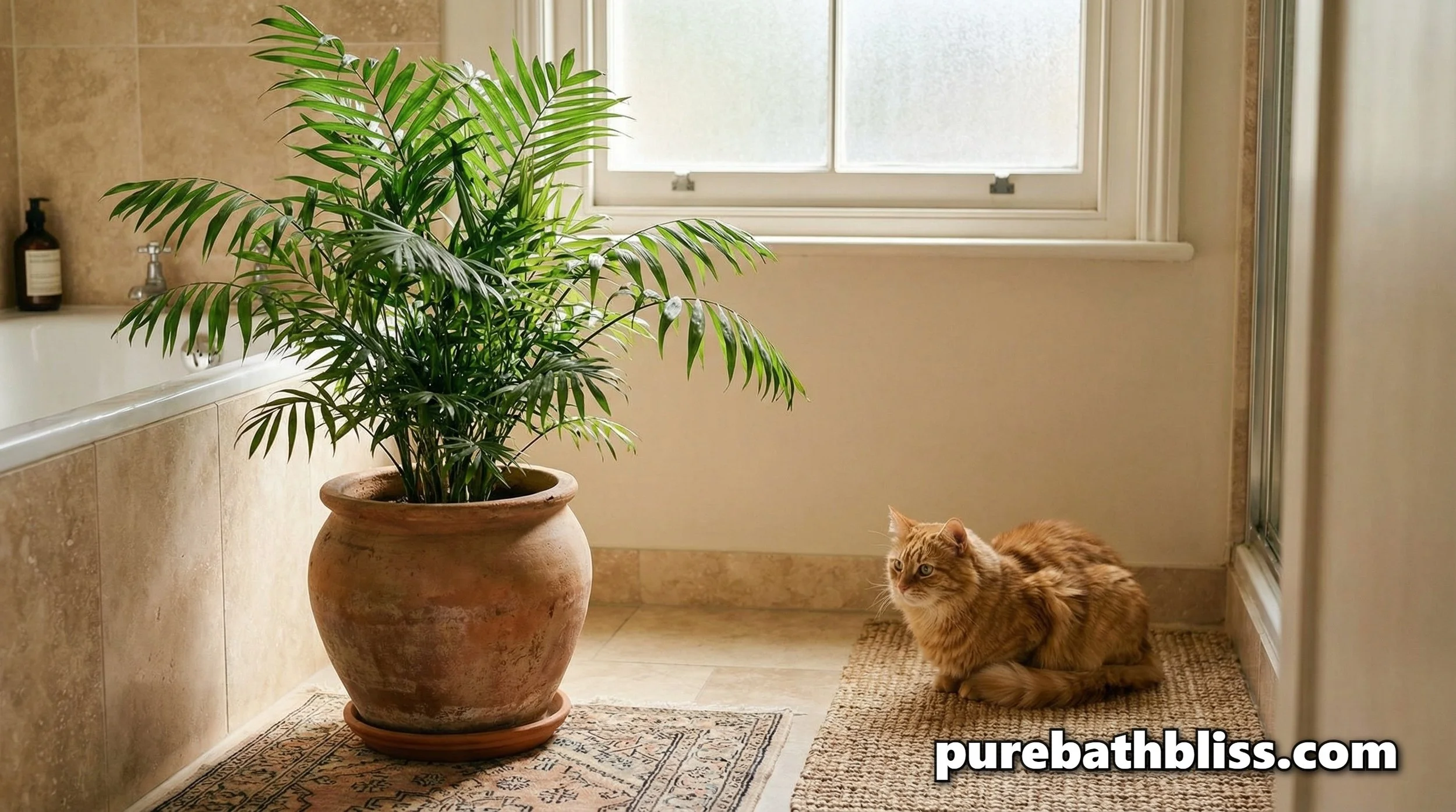
If you’re looking for a plant that makes your bathroom feel like a high-end spa, but you have a curious cat or dog who likes to "sample" the greenery, you need a Parlor Palm.
In the plant world, we call it the Chamaedorea elegans. It’s been a staple in homes since the Victorian era because it was one of the few plants that could survive in dark, drafty hallways. In a modern bathroom, this palm doesn't just survive—it thrives. It loves the extra humidity from your shower and doesn't mind a bit of shade.
As we build out our Sustainable Sanctuary, finding plants that are both "unkillable" and safe for the whole family is a top priority. The Parlor Palm is the feathery, elegant solution to that puzzle.
1. Why the Parlor Palm is "Unkillable"
Most palms have a reputation for being "divas" (think of the finicky Majesty Palm), but the Parlor Palm is different. It is slow-growing and incredibly tolerant of the conditions most other palms hate: low light and fluctuating temperatures.
Small Space, Big Impact: Because it grows slowly and stays relatively compact compared to a Money Tree, it’s a great "starter tree" for smaller bathrooms.
The "Victorian" Toughness: If it could survive the coal-heated, dimly lit homes of the 1800s, it can definitely handle your windowless bathroom.
2. Lighting: The "Shady" Preference
Unlike many palms that crave direct sun, the Parlor Palm actually prefers lower light. In fact, too much direct sunlight can "burn" its delicate fronds, turning them yellow or brown.
The Low-Light Win: This tree is a fantastic choice for North-facing windows or bathrooms with only artificial light.
The "Carpenter's" Placement: I like to tuck these into the corner of a vanity. They provide a soft, organic contrast to the hard edges of your bathroom cabinetry.
3. Watering and Humidity: The Spa Treatment
The Parlor Palm loves the "Spa Treatment" that a bathroom provides. Humidity is its best friend.
The Watering Rule: Keep the soil consistently moist, but never soggy. Wait until the top inch of soil feels dry before watering again.
The Humidity Perk: If you live in a dry climate, the steam from your shower will prevent the tips of the fronds from turning brown and crispy.
The "Mist" Myth: Many people think you need to mist palms. In a bathroom, the ambient humidity from your daily routine does the work for you—no spray bottle required!
4. Soil and Drainage: The Foundation
Even an "unkillable" palm can't survive in a pot without drainage. As a builder, I always say the foundation is the most important part of any structure, and that applies to plants too.
The Mix: Use a high-quality potting soil with a bit of perlite added for aeration.
The Pot: Ensure your pot has a drainage hole. If you love a decorative pot that doesn't have one, keep the palm in its plastic "nursery pot" and set it inside the decorative one.
5. Troubleshooting: What to Watch For
Brown Tips: This usually means the air is too dry or you're using too much fertilizer. In a bathroom, it’s rarely a humidity issue, so check your watering habits first.
Yellow Fronds: This is often a sign of too much direct sunlight. Move the plant a few feet further away from the window.
Spider Mites: These tiny pests love dry palms. The high humidity of your bathroom is actually your best defense against them!
Conclusion: Elegant, Safe, and Sturdy
The Parlor Palm is proof that you don't have to sacrifice style for safety. It brings a soft, jungle-like feel to your bathroom without endangering your pets or requiring a degree in botany to keep alive. It’s the perfect finishing touch for a healthy, happy home.
The Parlor Palm Care Kit
To keep your palm looking "Victorian-grand," I recommend these essentials:
The Foundation: Organic Potting Mix with Perlite.
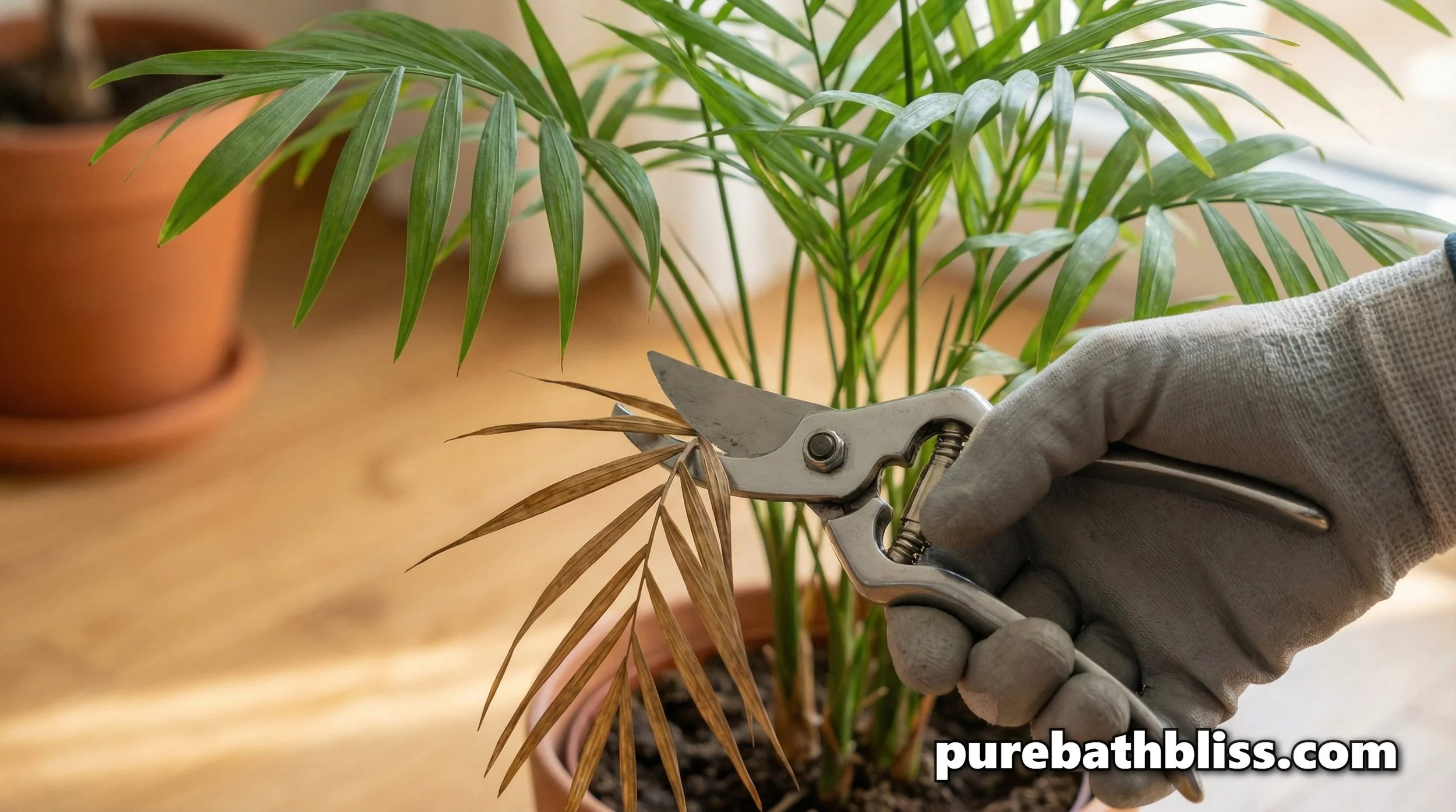
The Grooming Tool: Precision Pruning Shears for removing the occasional dry frond.
The Floor Protector: Natural Cork Plant Mat to protect your tiles.
Need something more architectural? Check out our guide to the Unkillable Corn Plant.