Give New Life to Old Towels: The Ultimate Guide to Sustainable Bathroom Upcycling
If you’ve been doing a "January Reset" of your linen closet, you likely found a few towels that have seen better days. Maybe they’re fraying at the edges, or perhaps they’ve just lost that "spa-day" fluffiness.
Usually, these end up in the rag bin, or worse, the landfill. But as someone who appreciates high-quality materials, I hate seeing durable cotton go to waste. Those old towels are actually a goldmine for DIY projects that can make your bathroom more organized and sustainable.
Between you and me, upcycling isn't just about saving a few dollars; it’s about keeping textiles out of our waste stream and creating something custom for your Zero-Waste Sanctuary. In this guide, we’ll dive into the science of towel fabrics, the environmental "why" behind upcycling, and 10 practical ways to give your linens a second act.
1. The Environmental Impact: Why Upcycling Matters
Before we get into the "how," we need to talk about the "why." Textiles are one of the largest contributors to landfill waste globally, and bath towels, in particular, have a significant environmental footprint even before they reach your home.
The Water Cost: To produce just one standard cotton bath towel, it takes approximately 2,300 liters of water. That’s enough for one person to drink for three years! When we toss a towel, all that precious water is essentially wasted.
The Chemical Load: Conventional cotton farming often uses heavy pesticides, which can pollute soil and water systems. Furthermore, the dyeing and processing of towels involve various chemicals. Disposing of these items means introducing those embedded chemicals back into the environment.
The Landfill Burden: Towels, especially those made from synthetic blends or treated with certain finishes, can take hundreds of years to decompose in a landfill. Even natural fibers like cotton take up valuable space and can release methane as they break down anaerobically.
The Microplastic Problem: If your old towels are made of synthetic microfiber (a blend of polyester and polyamide), they pose an additional threat. Every time you wash them, they shed tiny plastic fibers into our waterways. While we strongly advocate not buying new microfiber, if you already own old microfiber towels, repurposing them for specific tasks can at least prevent them from shedding in the washing machine and breaking down into microplastics in a landfill for potentially hundreds of years.
By choosing to upcycle, you are directly participating in a "circular economy" taking something at the end of its life and giving it a new purpose. It’s a small, tangible step towards reducing your household's ecological footprint.
2. Knowing Your Materials: Cotton vs. Microfiber (and Why it Matters for Upcycling)
Not all towels are created equal. Understanding the difference in fabric composition will help you decide which towel is best suited for each upcycling project, ensuring both effectiveness and environmental responsibility.
Turkish & Egyptian Cotton (Luxury Fibers): These towels are renowned for their long, strong cotton fibers, which result in exceptional absorbency and softness. They typically have a tight, dense weave.
Best For: Projects that touch your skin, like Reusable Makeup Remover Pads, as their softness is maintained even as they age.
Why They’re Great: Their high absorbency also makes them ideal for tasks where you need to soak up a lot of liquid quickly.
Standard Terry Cloth (Everyday Workhorse): This is the most common towel material, characterized by its distinctive "loopy" pile on both sides. These loops significantly increase the surface area, enhancing absorbency. Terry cloth can be 100% cotton or a cotton-poly blend.
Best For: Their robust, slightly abrasive texture makes them the "gold standard" for Cleaning Rags, Cushy Bath Mats, and other heavy-duty cleaning tasks where durability is key.
Why They’re Great: They stand up to repeated washing and vigorous scrubbing.
Microfiber (The Synthetic Grabber): Made from synthetic fibers like polyester and polyamide, microfiber towels have an extremely fine, split fiber structure. This structure allows them to pick up and hold dust, dirt, and even microscopic particles very effectively.
Best For: Projects where you need to trap dust or polish surfaces without lint, such as "Swiffer" Save Refills or polishing your bathroom mirrors.
Important Caveat: Due to their synthetic nature and the microplastic issue, avoid using new microfiber where possible. If you already own old microfiber towels, repurposing them for cleaning uses is a better alternative than sending them to landfill, but be mindful that they will still shed microfibers in the wash.
3. The "Strip Wash": Preparing Your Towels for Upcycling
If your old towels feel stiff, "crusty," or smell a bit funky even after a regular wash, it’s usually because of a buildup of detergent, fabric softener, and minerals from hard water. This residue coats the fibers, reducing absorbency and making them less pleasant to use. Before you start cutting them up, a "strip wash" can restore them to their former glory, making them much softer and more absorbent for your DIY projects.
The Hot Soak: Fill your bathtub or a large basin with the hottest water possible. Ensure the towels are fully submerged.
The Formula: Add 1 cup of white distilled vinegar, ½ cup of baking soda, and a quarter cup of washing soda (if you have it, for an extra boost).
The Wait: Let the towels soak for at least 3-4 hours, or even overnight. You might be surprised by how cloudy or discolored the water becomes as the residue is released.
The Final Wash: After soaking, wring out the towels and transfer them to your washing machine. Run them through a hot water cycle with no detergent.
The Dry: Dry them on a hot setting in your dryer, or hang them outside if possible for extra freshness.
They will come out feeling softer, smelling clean, and ready for their new life as upcycled bathroom essentials.
4. 10 Practical Bathroom Upcycles
Hack 1: Reusable Makeup Remover Pads
Stop buying single-use cotton rounds that contribute to landfill waste and cost you money over time.
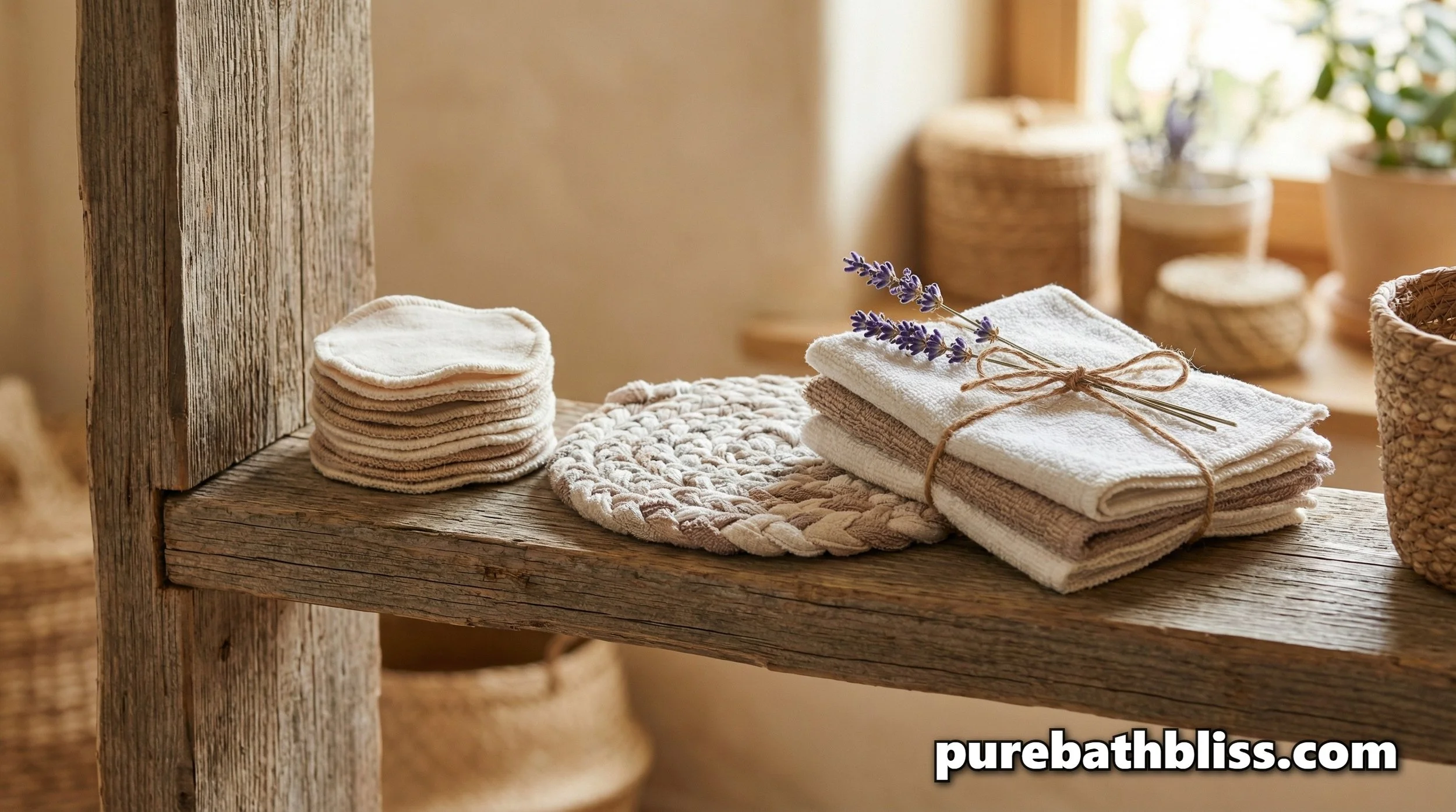
The Method: Find a soft, worn section of an old cotton towel (Turkish or Egyptian cotton works best here). Use a small glass or cookie cutter (about 2-3 inches in diameter) to trace circles onto the fabric. Cut them out. For extra thickness, sew two layers together using a simple "whip stitch" (see our sewing guide below).
The Perk: These durable pads can be tossed in a small mesh laundry bag with your regular wash. They are much gentler on your skin and reduce your waste instantly.
Hack 2: The "Cushy" Braided Bath Mat
If you have three old towels that coordinate in color, you can make a thick, luxurious bath mat that feels incredible underfoot.
The Method: Cut each towel lengthwise into long 3-inch wide strips. Take three strips and braid them tightly together. Once you have a long braid, begin coiling it into an oval or round shape, sewing the edges of the braid together as you go.
Why it Works: This creates a highly absorbent and surprisingly sturdy mat that's a beautiful, sustainable alternative to synthetic rubber-backed mats that often peel and crack over time.
Hack 3: The "Forever" Cleaning Cloths
This is the most obvious upcycle, but to make them truly effective and long-lasting, you need to do it right. If you just cut a towel into squares with regular scissors, it will fray excessively in the wash.
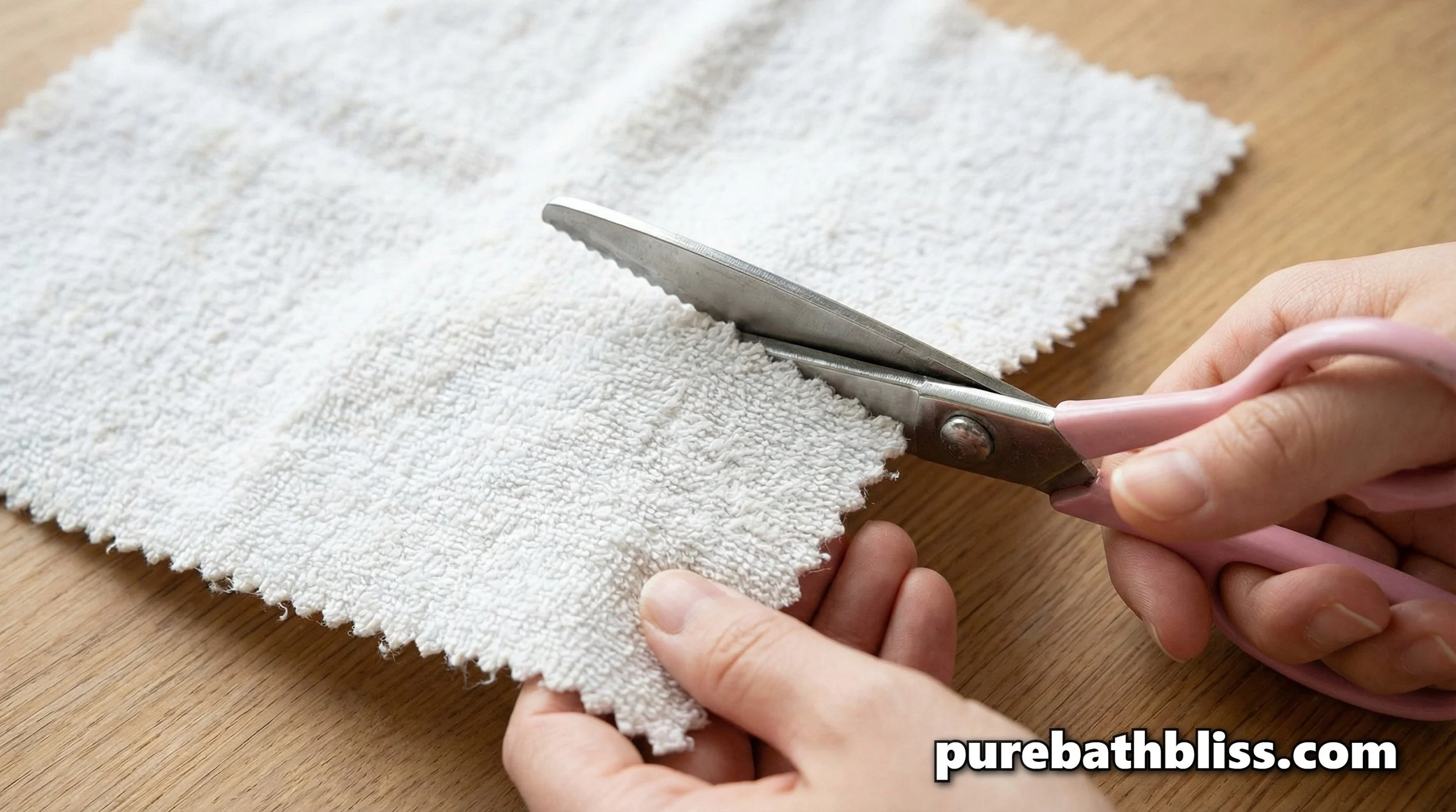
The Upgrade: Use pinking shears (the ones with the zigzag blade) to cut your old terry cloth or microfiber towels into 10x10 or 12x12 inch squares. The zigzag edge prevents the weave from unraveling, giving you durable, lint-free cloths.
The Use: These are perfect for general cleaning tasks, wiping down surfaces with our Lemon and Salt Toilet Scrub, or any task where you need a robust, absorbent cloth.
Hack 4: DIY Exfoliating Bath Mitt
Old, slightly coarser cotton towels are perfect for gentle exfoliation.
The Hack: Trace your hand (generously, leaving about an inch extra around the perimeter) on a doubled-over section of a terry cloth towel. Sew around the edge, leaving the bottom open. Turn it inside out to hide the seam.
The Use: Slip it on in the shower for a stimulating scrub that’s more hygienic than plastic loofahs, which can harbor bacteria.
Hack 5: The "Swiffer" Save Refills
Disposable dry-mop refills are expensive and often laden with synthetic fragrances.
The Hack: Take an old microfiber or cotton terry towel. Cut a piece that perfectly fits your dry-mop head, ensuring you leave about 2 inches of overhang on each side. These can be tucked into the grippers of your mop head.
The Use: Use it dry to pick up dust and hair, or dampen it with a little water and our Hydrogen Peroxide Cleaning Solution for a truly zero-waste floor cleaner. Toss it directly into the wash when done.
Hack 6: Draft Stopper for Winter
As a carpenter, I know drafts can be a huge drain on your home's energy efficiency. Bathroom doors and windows are often culprits.
The Hack: Take a large, old bath towel and roll it up tightly into a dense log shape. You can secure it with a few stitches or even stuff it inside an old leg from a pair of leggings or tights to keep its form.
The Use: Place it at the base of a drafty bathroom door or on a windowsill to block cold air from seeping in, helping to keep your "sanctuary" warm and your Energy Efficiency bill lower.
Hack 7: Toiletry Travel Roll
This project helps keep your toiletries organized and protected, whether you're traveling or just want to tidy up a shared bathroom drawer.
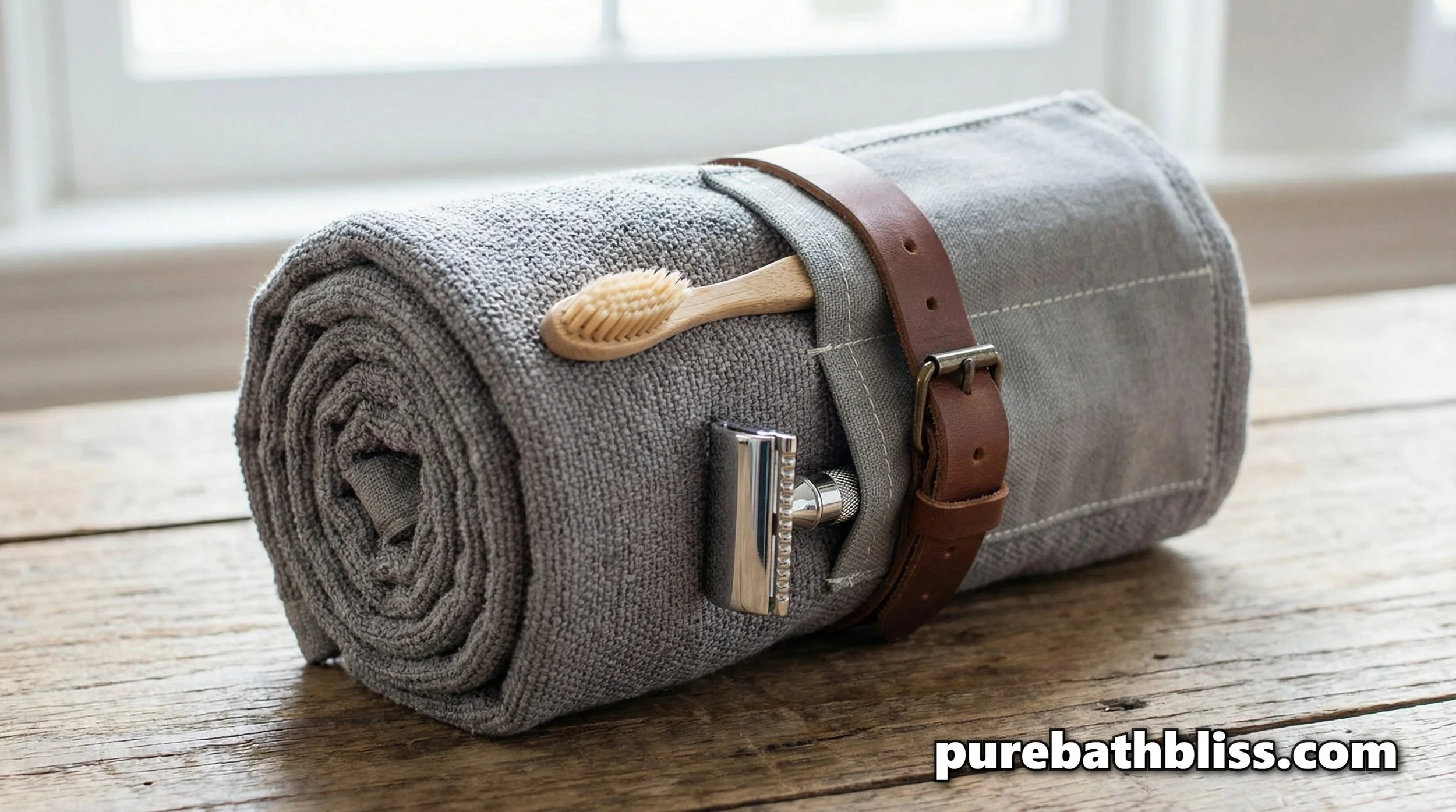
The Hack: Take an old hand towel that’s still in decent shape. Lay it flat. Fold the bottom third of the towel up. Sew vertical lines every 2.5 to 3 inches to create individual pockets.
The Use: Slide your toothbrush, razor, comb, and other essentials into the pockets. Roll the entire towel up and secure it with a ribbon or a simple elastic band. This protects your items and provides a clean surface to unroll them onto when you reach your destination.
Hack 8: Hanging Hand Towels (The "Never-Fall-Off" Hack)
If you have kids (or even just an enthusiastic houseguest), you know hand towels have a tendency to end up on the floor.
The Hack: Take an old hand towel and sew a simple fabric loop (from an old shirt sleeve or a scrap of fabric) to one corner. Attach a button to the other corner.
The Use: You can then button the loop around your towel bar or cabinet handle, creating a secure hanging towel that won't budge.
Hack 9: Hair Drying Turban
Old, thinner towels are often more manageable for wrapping wet hair than new, bulky ones.
The Hack: Lay a large towel flat. Cut it into a large triangle shape (the base should be about the width of the towel, and the point should extend towards the opposite side). Sew a small elastic loop at the pointed end and a button at the base of the triangle.
The Use: Wrap the base around your head with the point facing forward, twist the point, pull it back, and secure the elastic loop around the button. It stays on much better than a traditional wrap.
Hack 10: Soap "Scrubby" Bags
Don't let those tiny, unusable slivers of bar soap go to waste.
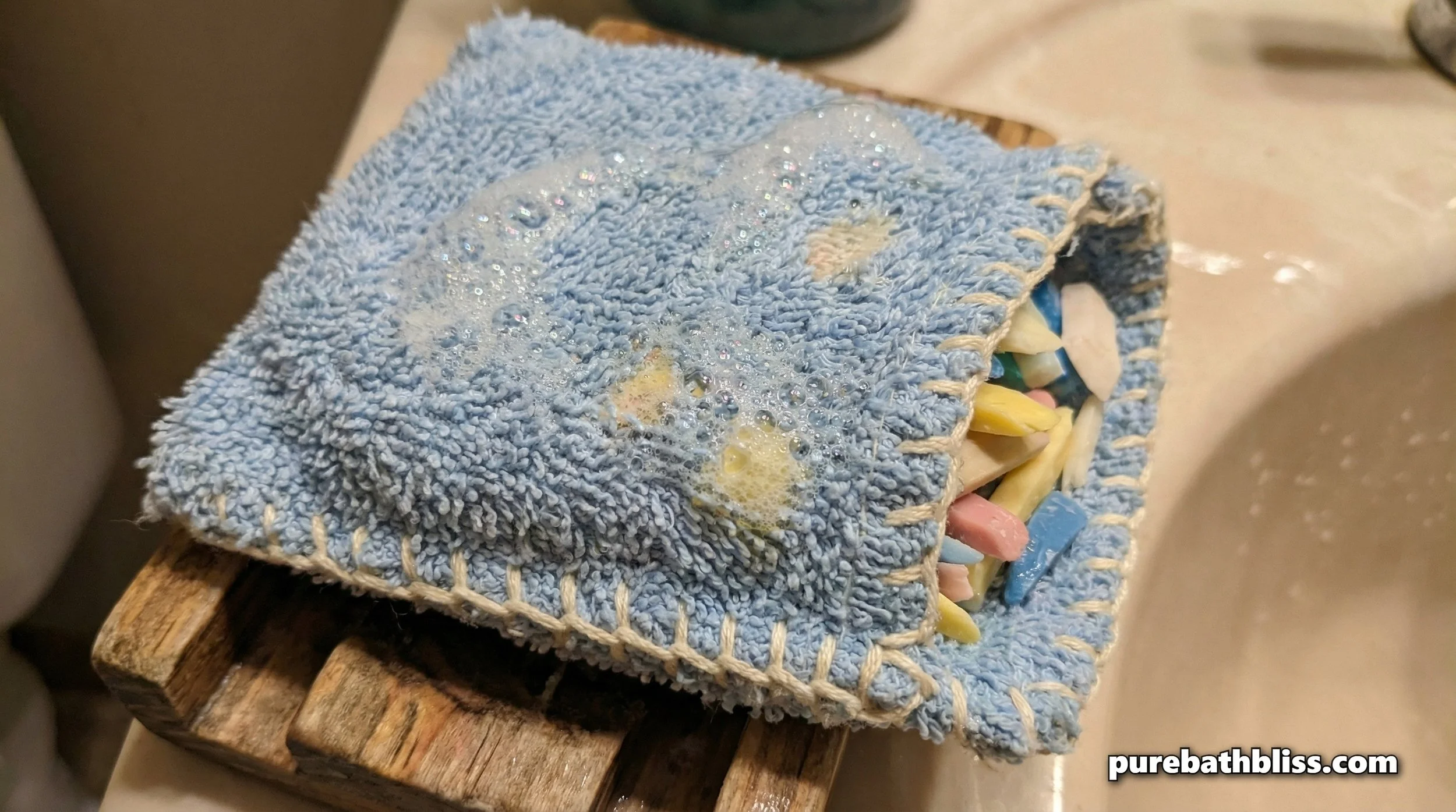
The Hack: Sew a tiny 3x4 inch pouch from a piece of old terry cloth towel. Make sure one side has an opening to slide the soap in.
The Use: Drop all your small soap scraps inside. The towel acts as a washcloth and creates a rich lather, allowing you to use every last bit of soap. It's fantastic for both exfoliation and deep cleaning.
5. Simple Sewing for Non-Sewers: Getting Started with Hand Stitches
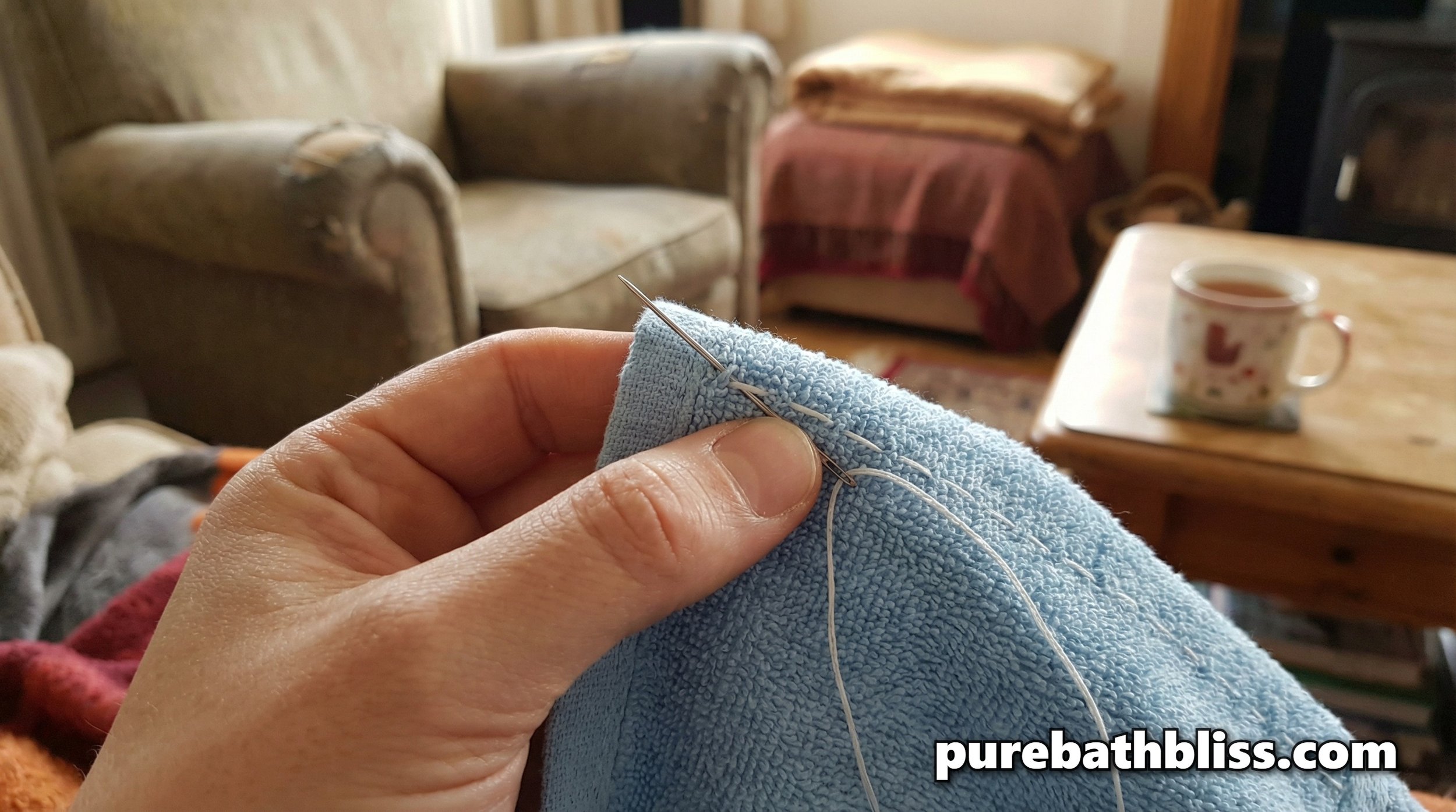
You absolutely do not need a sewing machine to tackle these projects. Two simple hand-stitches will cover almost everything you need:
The Running Stitch: This is your basic, go-to stitch for creating seams. It’s a series of small, even stitches that weave in and out of the fabric in a straight line. It’s perfect for joining two pieces of fabric together or creating the pockets in your travel roll.
The Whip Stitch: This stitch is excellent for finishing edges and preventing fraying, or for securely attaching one piece of fabric to another (like adding a loop to a towel). You bring the needle up through the fabric, loop the thread over the raw edge, and then bring the needle back up through the fabric slightly further along the edge. This wraps the thread around the raw edge, keeping it neat and tidy.
There are tons of quick videos online if you want a visual guide to these basic stitches, but don’t be intimidated—if you can thread a needle, you can do these projects!
Conclusion: A New Job Description for Your Linens
Your old towels aren't trash, they are just waiting for a new job description. By taking a little time to upcycle them, you’re not only making a more organized and eco-friendly home, but you’re also saving money and doing your part for the planet.
Whether you’re crafting a new set of cleaning rags or a unique braided bath mat, every towel saved from the landfill is a significant win for your Sustainable Sanctuary. It’s about building a home that reflects your values, one thoughtful reuse at a time.
Action Item: Start Small
Don't try to upcycle ten towels at once. This weekend, pick one old towel and try one of these hacks. Turn it into a set of cleaning cloths, or make a few makeup remover pads. Once you see how much better they work than their disposable counterparts, you'll be hooked!