Calathea Care: The Secret to the "Prayer Plant" in Your Bathroom
Transparency Note: We independently select these products based on research and user reviews. If you buy something through our links, we may earn a commission.
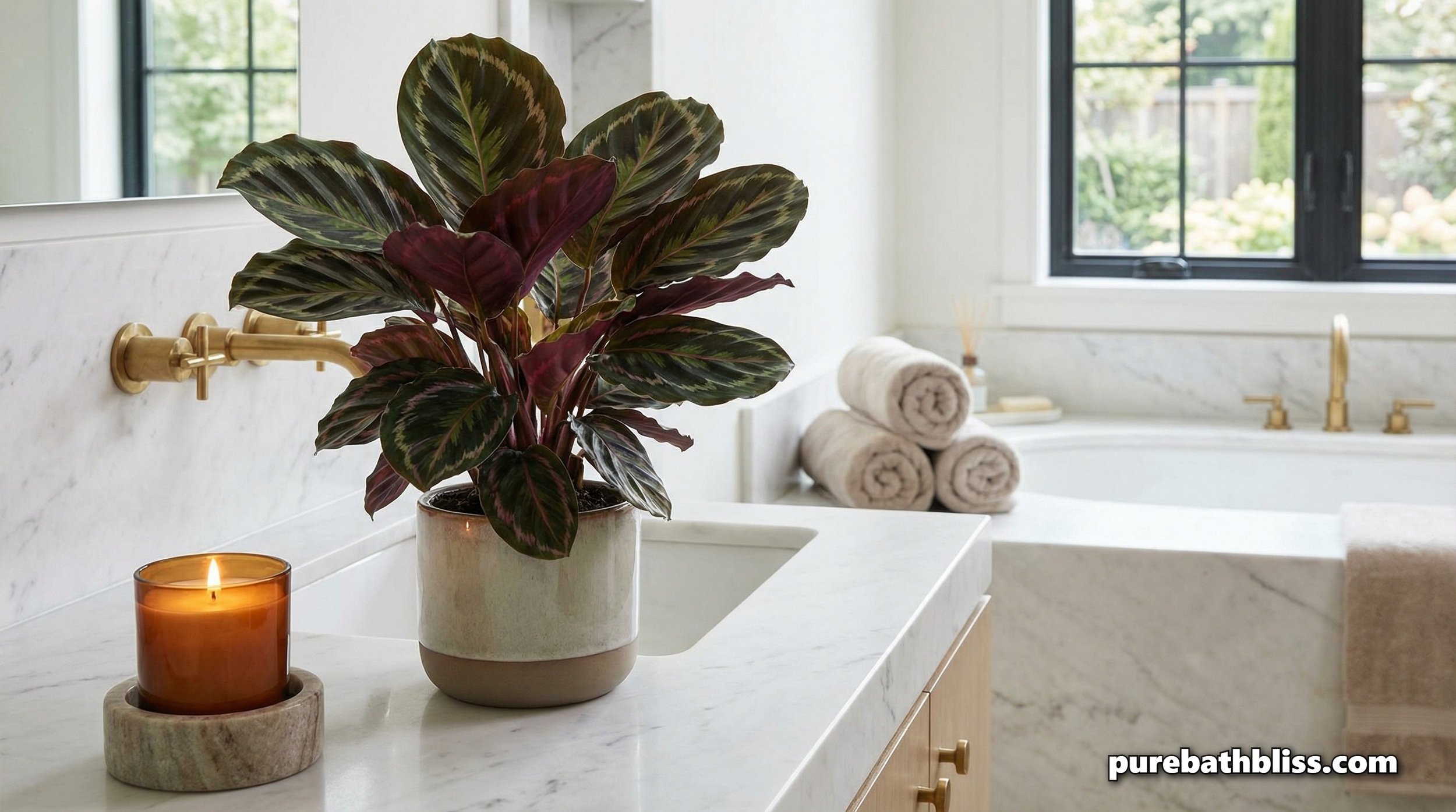
In our Sustainable Sanctuary, we love plants that have a personality. The Calathea, often called the Prayer Plant, is the ultimate example. At night, its leaves fold upward like hands in prayer, and in the morning, they open wide to catch the light.
Calatheas are famous for their intricate, painted-on leaf patterns, but they are equally famous for being "difficult." In most parts of the home, they struggle with dry air and crispy brown edges. But in the shower, these tropical divas finally feel at home.
Here is how to master Calathea care and keep those stunning leaves vibrant.
1. Humidity: The Non-Negotiable
The reason Calatheas often fail in living rooms is low humidity. They crave a level of 50–60% at all times.
The Shower Advantage: This is why the Calathea is a top pick in our 12 Best Shower Plants Guide. The steam from your daily routine provides the moist air they need to keep their leaf edges from turning brown and crunchy.
Pro-Tip: If you have a particularly large bathroom, group your Calathea with your Boston Fern. Together, they create a "humidity pocket" that benefits both plants.
2. The "Water Diva" Rule
This is the most important secret to Calathea care: They hate tap water. Calatheas are sensitive to the chlorine and minerals found in city water.
The Fix: If you use tap water, your Calathea will likely develop brown spots. Use distilled water, rainwater, or filtered water instead.
The Method: Keep the soil consistently moist (like a wrung-out sponge), but never let the plant sit in a saucer of standing water, which leads to root rot.
3. Light: Soft and Subtle
Think of the jungle floor where Calatheas grow—they are shaded by giant trees.
The Ideal Spot: Medium, indirect light. They will actually lose their beautiful colors if the light is too bright.
The Sign: If the leaves look faded or "washed out," it's getting too much sun. Move it further back from the window.
4. Troubleshooting Common "Diva" Issues
Curling Leaves: This is a sign of underwatering or very dry air. Check the soil immediately and give it a good misting.
Yellowing Leaves: Usually a sign of overwatering. Let the top inch of soil dry out before your next watering.
No Movement: If your "Prayer Plant" stops moving its leaves at night, it might not be getting enough light during the day to trigger its natural rhythm.
5. Cleaning the "Canvas"
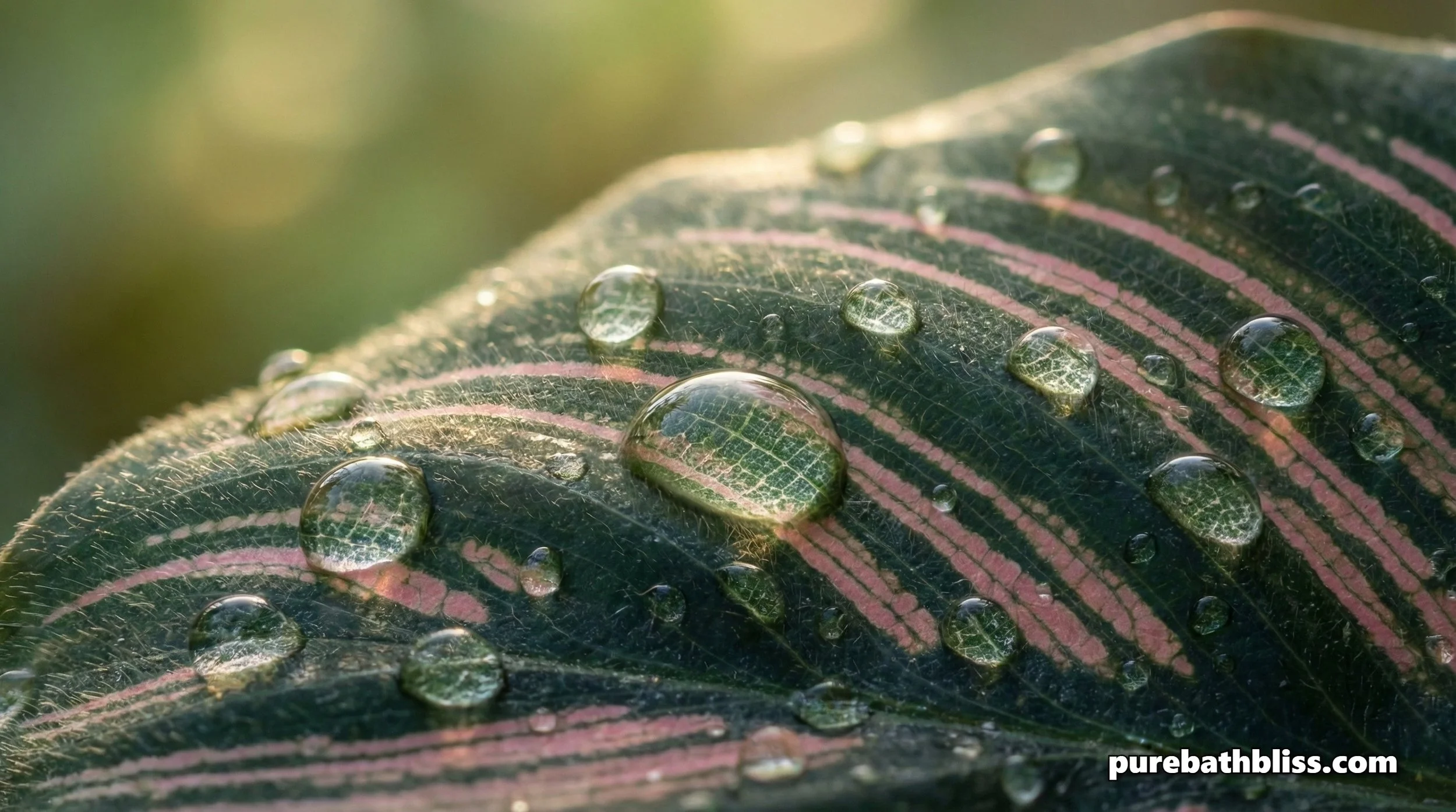
Because Calathea leaves are so wide and flat, they catch dust easily. Dust blocks the plant from absorbing light.
The Fix: Once a week, gently wipe the leaves with a damp Upcycled Towel Rag. This keeps the "painted" patterns looking sharp and the plant breathing easy.
Conclusion
The Calathea is a rewarding challenge. When you get the humidity right—which is easy to do in a bathroom—you are rewarded with a plant that literally moves and grows with you. It’s the perfect living art piece for your sanctuary.
Calathea Essentials
The Water Fix: Water Filtration Pitcher for Plants.
The Pot: Elegant Ceramic Pot with Drainage Tray.
The Food: Organic Indoor Plant Food.