Beyond Aesthetics: 7 "Bio-Filter" Plants That Scrub Toxins From Your Bathroom Air
Originally published December 2025, Updated June 2026
We spend a lot of time thinking about what we put on our skin in the bathroom. We're less likely to think about what we're breathing while we do it. The average bathroom contains a surprisingly high concentration of airborne chemicals — formaldehyde from toilet paper and paper products, benzene and xylene from synthetic fragrances and cleaning products, ammonia from conventional glass cleaners, and volatile organic compounds (VOCs) from hairsprays, dry shampoos, and aerosol deodorants. In a small, enclosed room with limited ventilation, these compounds build up quickly.
The standard response is an exhaust fan, which helps but doesn't address the compounds that off-gas continuously from products stored in the room. A second layer of defense that most people overlook is plants, specifically the category of tropical understory plants that evolved on jungle floors under dense canopy cover. These plants are adapted to exactly the conditions that describe most bathrooms: low light, high humidity, minimal airflow, and warm temperatures. And several of them actively absorb the specific compounds most commonly found in bathroom air.
We started adding plants to our bathrooms a few years ago, mostly for aesthetics. What kept us doing it was how much better the rooms felt. The air quality difference in a bathroom with two or three plants versus a bare one is noticeable even before you understand the chemistry behind it. Here are the seven we keep coming back to and why each one earns its spot.
A Quick Note on the NASA Clean Air Study
The 1989 NASA Clean Air Study is frequently cited in plant articles, and the core finding is real: certain houseplants absorb VOCs through their leaves and roots. However, the honest version of that finding is that the effect in a real home environment is more modest than the original study suggested, partly because the study was conducted in sealed chambers at concentrations higher than typical indoor air, and partly because the plants that perform best in lab conditions are not always the same ones that survive in a real bathroom.
A 2019 meta-analysis in the Journal of Exposure Science and Environmental Epidemiology reviewed the broader body of research and concluded that while plants do filter indoor air, you would need a large number of plants per square meter to produce effects comparable to simply opening a window or running a ventilation fan. That is important context. Plants are not a substitute for good ventilation and they will not neutralize a bathroom full of synthetic fragrance plug-ins and bleach-based cleaners. Our guide on the health risks of synthetic bathroom fragrance plug-ins covers why addressing those products directly is the more effective first step.
What plants do well, and what makes them genuinely worth having in a bathroom, is that they contribute to air quality continuously and passively, they regulate humidity through transpiration which reduces the conditions mold needs to grow, and the biophilic effect on wellbeing is well-documented regardless of the air filtration question. For a full breakdown of bathroom air quality strategy, our ultimate guide to bathroom air quality and ventilation covers the full picture. Plants are one part of it, and a good one.
Before You Buy: Two Rules That Determine Whether Your Plants Survive
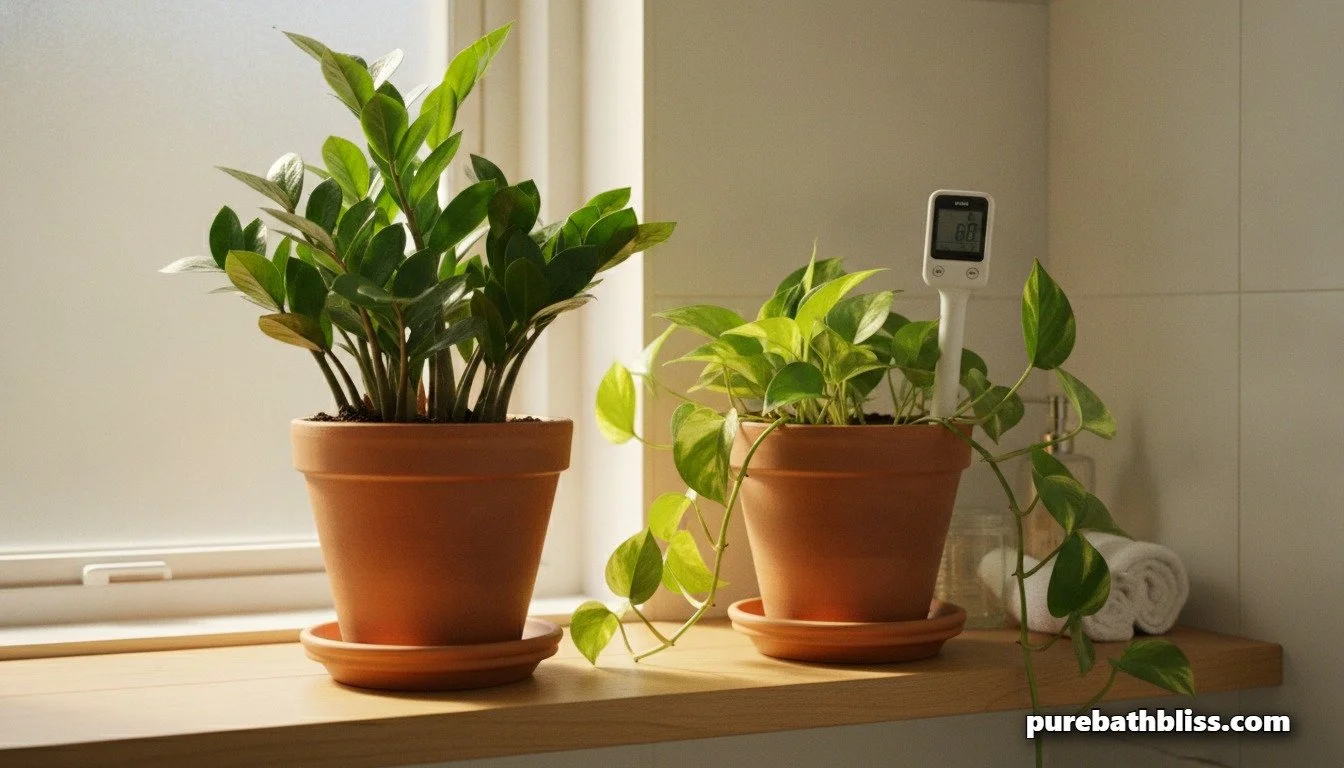
Rule 1: Low light does not mean no light. Every plant on this list will tolerate low light, but none of them will survive in a completely dark room with no natural or artificial light source. If your bathroom has no window at all, the most reliable solution is swapping one of your existing vanity bulbs for a full-spectrum LED grow bulb. They look like ordinary white light to the human eye and cost around fifteen to twenty dollars. Set them on a timer for eight to twelve hours a day and every plant on this list will grow without a window. The second option is a rotation system, keeping two plants and swapping them between the bathroom and a brighter room every week so each gets regular light exposure.
Rule 2: The bathroom humidity changes everything about watering. The most common way to kill bathroom plants is overwatering, precisely because people treat them the same as plants in drier rooms. The steam from daily showers keeps the soil moist significantly longer than in a living room or bedroom. Before watering any of these plants, push your finger an inch into the soil. If it feels even slightly damp, wait. Most bathroom plant deaths are root rot from overwatering, not underwatering. When in doubt, wait another few days.
The 7 Plants
1. Snake Plant (Sansevieria trifasciata)
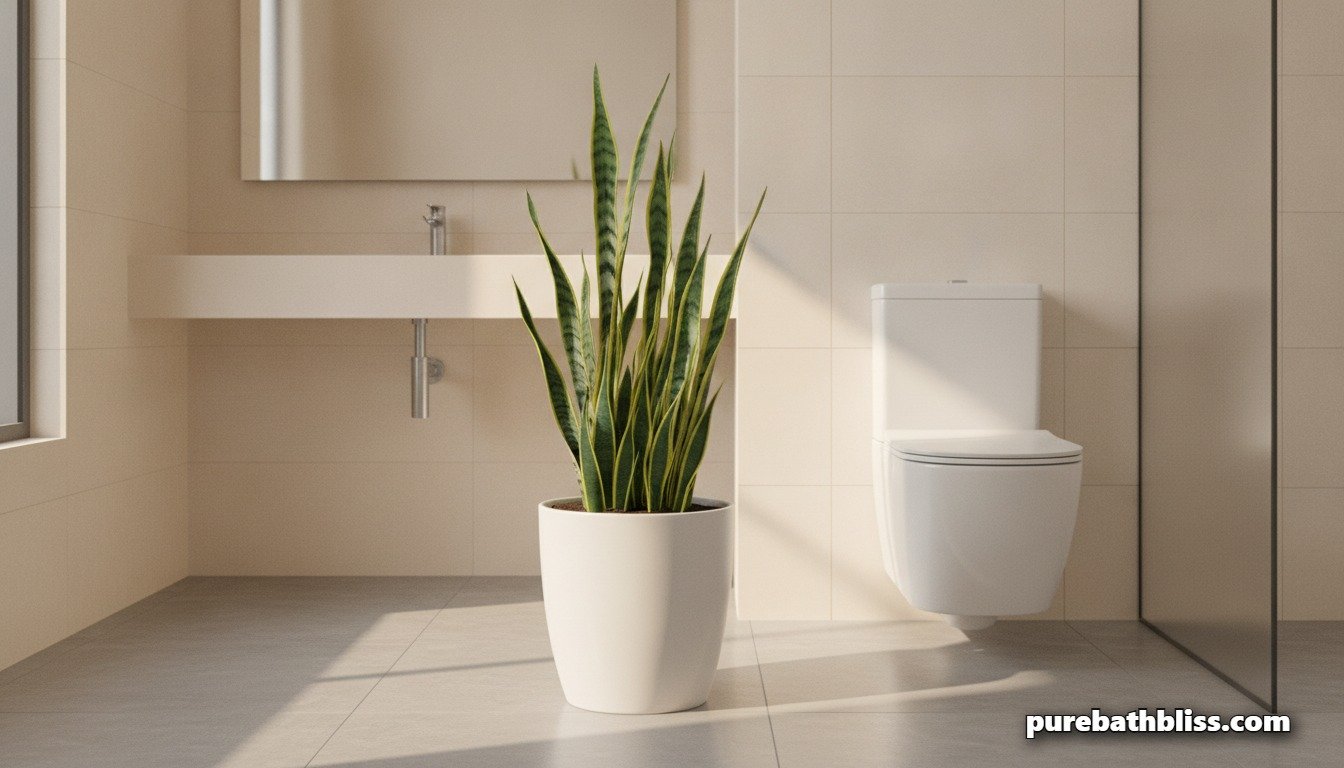
The snake plant is the benchmark against which all low-maintenance plants are measured. It tolerates neglect, irregular watering, temperature fluctuations, and light levels that would kill almost anything else. What makes it particularly valuable in a bathroom context is that it uses CAM photosynthesis, a metabolic pathway that allows it to absorb carbon dioxide and release oxygen at night rather than during the day. Most plants do the opposite. A snake plant in a bathroom that gets heavy use in the morning and evening is actively contributing to air quality exactly when the room is being used most.
It absorbs formaldehyde, xylene, toluene, and benzene. In the bathroom, formaldehyde is the most relevant target since it off-gasses from paper products, some toilet papers, and particleboard cabinetry. Water it every three to six weeks and essentially leave it alone. Tall varieties work beautifully on the floor in a woven basket beside the toilet or in a corner. Shorter varieties sit well on a shelf or the back of the cistern.
For everything you need to know about keeping one thriving: our complete Snake Plant care guide.
2. ZZ Plant (Zamioculcas zamiifolia)
The ZZ plant looks almost too good to be real. Its glossy, deep green leaves have the kind of polished perfection that makes visitors ask if it is fake. That quality comes from the fact that it evolved in environments with very little water, developing thick underground rhizomes that store moisture for months at a time. In practice, this means you water it roughly every four to six weeks and it largely takes care of itself.
It is particularly effective at filtering xylene and toluene, VOCs commonly found in hairsprays and some cleaning products. Its vertical growth habit makes it an excellent choice for narrow spaces, the back of the toilet tank, a slim shelf, or a tall corner where nothing else fits. It prefers indirect light and actively dislikes direct sun, which makes a bathroom environment well-suited to it.
The full care breakdown is in our ZZ Plant care guide.
3. Golden Pothos (Epipremnum aureum)
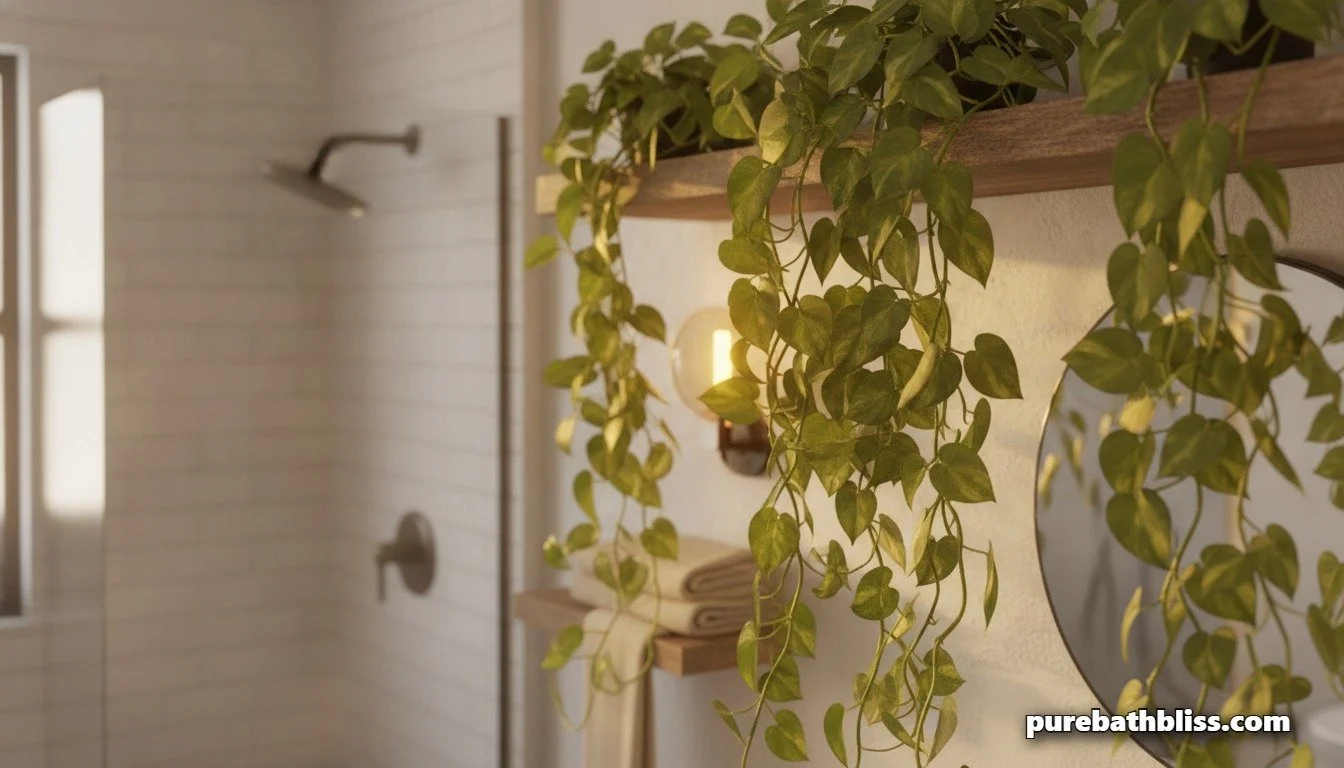
If the snake plant is the most resilient plant on this list, the golden pothos is the most rewarding. It grows fast, trails beautifully from high shelves and hooks, and responds visibly to the humidity of a bathroom by producing leaves that are noticeably glossier and more vibrant than the same plant kept in a drier room. It is genuinely one of the best plants for a bathroom with even minimal indirect light.
Pothos is consistently rated as one of the most effective plants for absorbing formaldehyde and carbon monoxide from indoor air. It propagates effortlessly from cuttings, which means one purchased plant can eventually populate multiple spots around the bathroom. Snip a stem just below a node, place it in a glass of water on the vanity counter, and within two weeks you will have roots forming. Transfer to soil or let it continue growing in the water vessel.
Place it high enough that the vines can trail downward. A hook on the ceiling or a bracket shelf near the top of the wall turns pothos into living curtains that make a small bathroom feel significantly more lush. Water when the top two inches of soil are dry, which in a humid bathroom may mean every ten to fourteen days rather than the weekly watering it needs in drier conditions.
The full guide to getting those long cascading vines: our Golden Pothos care guide.
4. Spider Plant (Chlorophytum comosum)
The spider plant is NASA's top-ranked plant for formaldehyde absorption, and it adds carbon monoxide removal to its repertoire as well, making it one of the most functional air filtration plants available. It is also the easiest to propagate. It sends out long arching runners with small plantlets, called spiderettes, dangling from the ends. Snip them off and pot them separately and you have a new plant for free within a few weeks.
It handles a wide range of light conditions including quite low light, though it grows faster and produces more spiderettes with a bit more indirect light. It prefers to dry out slightly between waterings. In a bathroom it will take moisture from the air through its leaves, which means the soil stays moist longer than you might expect. It is best displayed in a hanging planter or on a high shelf where the runners can trail downward, making the spiderettes visible.
For detailed care and troubleshooting: our Spider Plant care guide.
5. Peace Lily (Spathiphyllum)
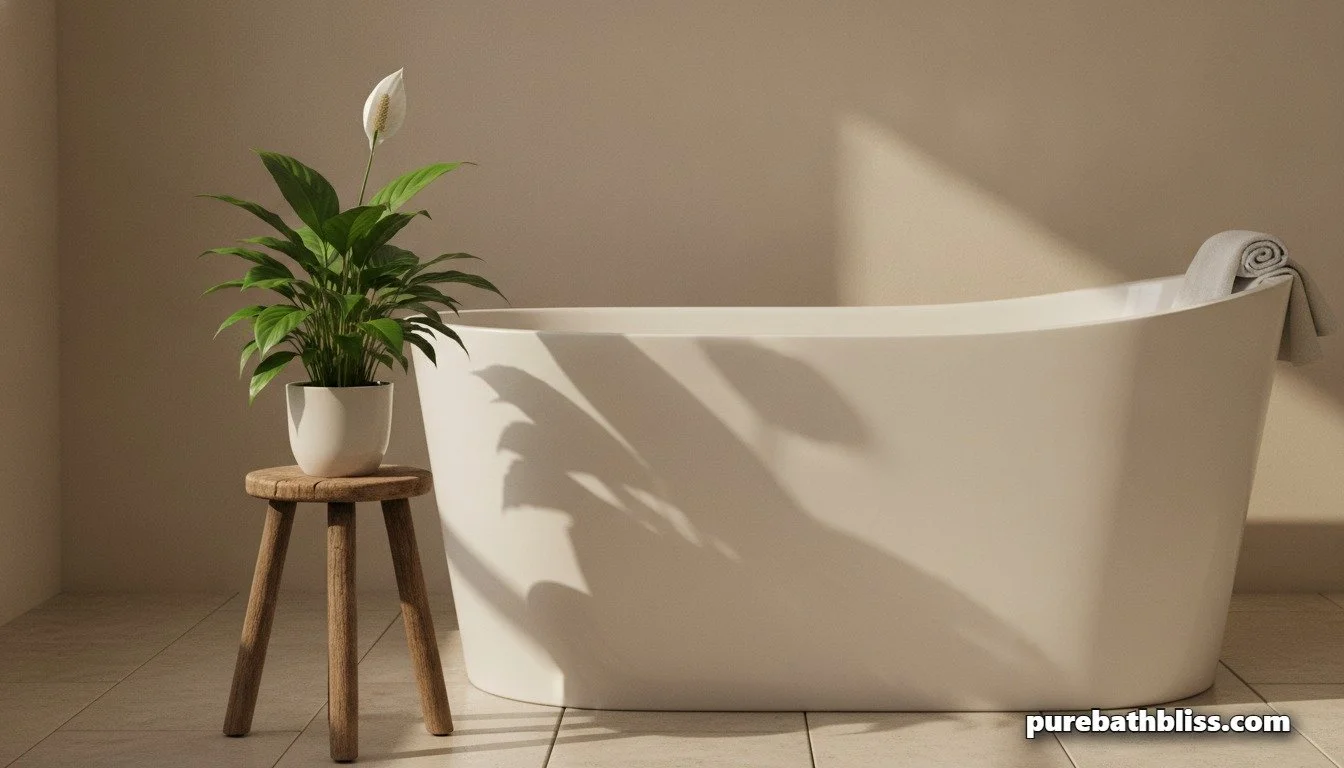
The peace lily is one of very few low-light plants that actually flowers, producing elegant white spathes that look like they belong in a boutique hotel. It is also the most communicative plant on this list. When it needs water it droops dramatically, practically pointing at itself in distress. An hour after watering it stands back up completely. This makes it genuinely hard to accidentally kill through neglect because the distress signal is so obvious.
It is highly effective at absorbing acetone, benzene, formaldehyde, and ammonia from indoor air. The ammonia absorption is particularly relevant in a bathroom context since ammonia is present in many conventional glass cleaners and some toilet bowl cleaners. It thrives in the humid conditions of a bathroom and prefers consistently moist soil, unlike most of the other plants on this list. Place it near the shower where it will benefit from the steam.
One important note for households with pets: peace lily is toxic to cats and dogs if ingested. Keep it out of reach if that is relevant for your home. For the full care guide including how to read its signals and avoid overwatering: our Peace Lily care guide.
6. Boston Fern (Nephrolepis exaltata)
The Boston fern is the most demanding plant on this list, but it earns its place through a quality none of the others have: it is a natural humidifier. It releases significant amounts of moisture through transpiration, which means it actively adds humidity to a dry room or helps maintain balanced humidity in a bathroom that swings from steamy to dry between uses. This moisture regulation is a genuine functional benefit, not just an aesthetic one.
It is excellent at absorbing formaldehyde and xylene. The challenge is that it needs consistent moisture in both its soil and the surrounding air. In a bathroom that gets regular shower steam, this is manageable. In a rarely used guest bathroom or a powder room without a shower, it will struggle. Place it on a shower bench or a stool directly beside the tub where the steam is thickest during a shower. The fronds will stay lush and green rather than turning dry and brown at the edges, which is the main complaint people have about ferns.
Water when the surface of the soil feels barely dry to the touch, which in a humid bathroom may mean every five to seven days. Avoid direct sunlight, which scorches the delicate fronds. We do not currently have a Boston Fern care guide live on the site, but our 12 best shower plants guide covers placement and care tips for ferns in a bathroom environment.
7. Lucky Bamboo (Dracaena sanderiana)
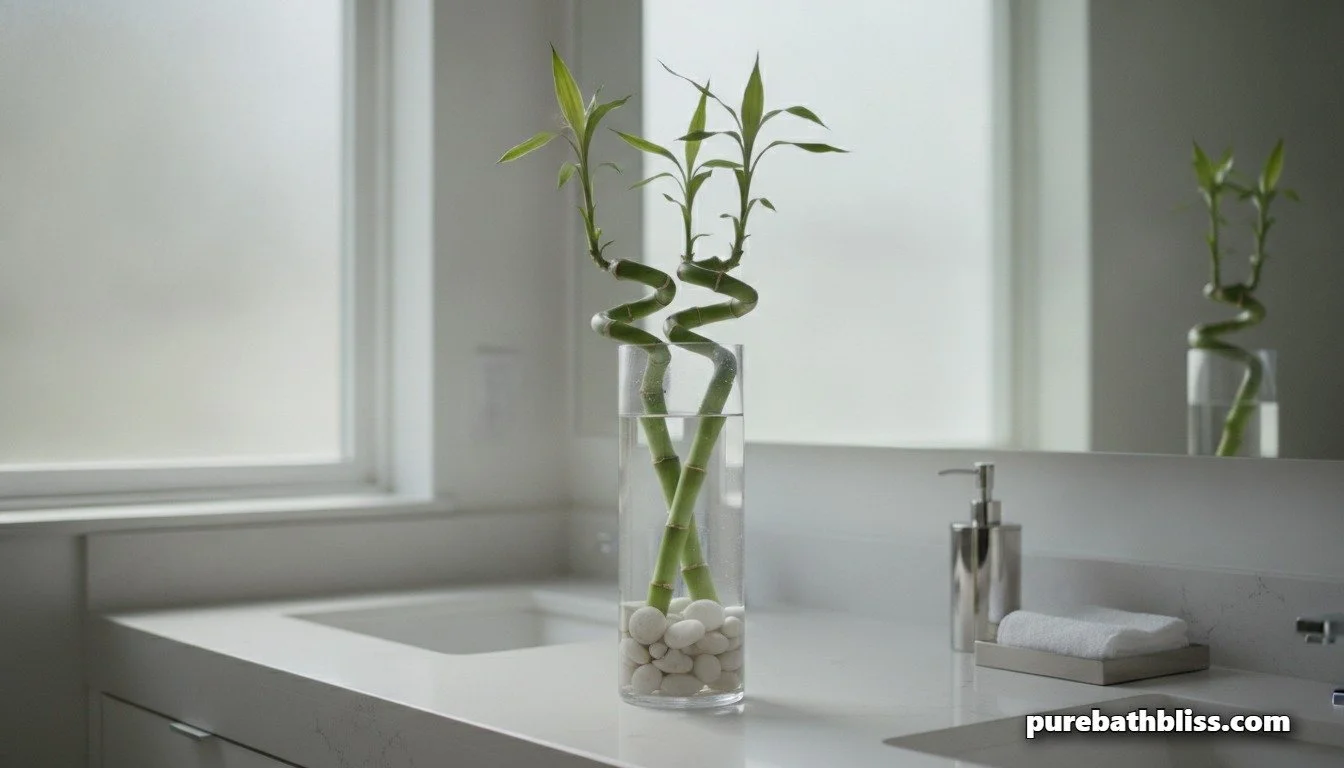
Lucky bamboo is not actually a bamboo at all. It is a species of dracaena, a family of plants well-documented for absorbing benzene, formaldehyde, xylene, and toluene. What makes it unique on this list is that it does not need soil. It grows entirely in water, which means no potting mix, no drainage holes, no soil-based gnats, and no risk of overwatering. A glass vase with pebbles and water is all it needs.
Change the water every two to four weeks and keep the vase topped up in between. Use filtered or distilled water if possible, as lucky bamboo is sensitive to the chlorine and fluoride in tap water, which can cause the leaf tips to turn yellow and brown. Keep it away from direct sunlight and out of range of heating vents or air conditioning, which dry it out quickly. It does well in low to medium indirect light, which is exactly what most bathrooms offer.
Styling-wise, a single glass vase of lucky bamboo on the vanity counter is one of the most effective minimal bathroom styling moves available. It adds a living element without taking up shelf space or requiring a pot. Two or three vases of different heights grouped together create a deliberate, architectural look that works in both modern and natural bathroom aesthetics. We do not currently have a dedicated Lucky Bamboo care guide, but our Hoya plant care guide covers the water-sensitive care principles that apply to dracaena family plants as well.
Where to Put Them: Placement That Actually Works
Counter space is too valuable in most bathrooms to use for plant display unless the plant is as minimal as lucky bamboo in a slim vase. Think vertically instead.
High shelving near the ceiling is ideal for anything that trails downward, especially pothos and spider plants. A ceiling hook or a wall bracket at head height lets the vines grow downward rather than sideways across a shelf where they quickly outgrow the space. The floor beside the toilet or in an unused corner accommodates a snake plant or peace lily in a floor basket without consuming any functional surface area. The back of the toilet cistern works well for smaller plants like the ZZ or a compact snake plant variety, particularly if you place them on a waterproof tray.
The shower niche or a shelf immediately beside the shower is reserved for the humidity lovers. The Boston fern and peace lily genuinely benefit from proximity to the shower steam. The other plants on this list will tolerate it but do not need it specifically. Avoid placing any plant directly in the shower spray path because soap residue on leaves blocks the pores the plant needs to breathe and absorb compounds from the air.
If you want more detailed guidance on which plants go where in a bathroom, our 7 unkillable plants for windowless bathrooms covers placement strategies for every room configuration including no-window bathrooms, and our 12 best shower plants guide goes deeper on the species that specifically thrive in high-humidity shower environments.
Start With One
The most common mistake is buying too many plants at once before you have figured out your bathroom's specific light and humidity conditions. Every bathroom is different. A south-facing window bathroom with daily showers is a different microclimate from a north-facing windowless powder room that gets used twice a day. Start with one plant, ideally a snake plant or pothos since both are the most forgiving on this list, and observe how it responds over the first four to six weeks.
If it is thriving, add a second. If it is struggling, diagnose why before adding more. The most common causes of failure in bathroom plants are overwatering (most likely), insufficient light (second most likely), and cold drafts from an exhaust fan blowing directly on the plant (easy to fix by repositioning).
Once you have a plant or two doing well, the room changes in a way that is hard to quantify but easy to feel. It becomes a space that seems alive rather than just functional. That shift in how a bathroom feels is one of the most cost-effective home improvements available, and a snake plant costs less than a candle. To complete the sensory picture once your plants are established, our guide to making a reed diffuser for your bathroom covers how to add a natural, non-toxic scent layer that complements rather than competes with the clean air your plants are working to maintain.