Breathe Easy: The Ultimate Guide to Bathroom Air Quality, Ventilation, and Healthy Ambiance
Close your eyes and picture a "clean" bathroom. What do you smell?
For most of us, the answer is a cocktail of bleach, artificial pine, or "Ocean Breeze" air freshener. We have been conditioned to believe that a sterile, chemical scent equals hygiene. But the truth is, a truly clean bathroom smells like... absolutely nothing.
The air quality in your bathroom is arguably the most critical environmental factor in your home. It is a space where high humidity meets chemical cleaners, creating a "toxic soup" of Volatile Organic Compounds (VOCs) that can be more polluted than the air outside your front door.
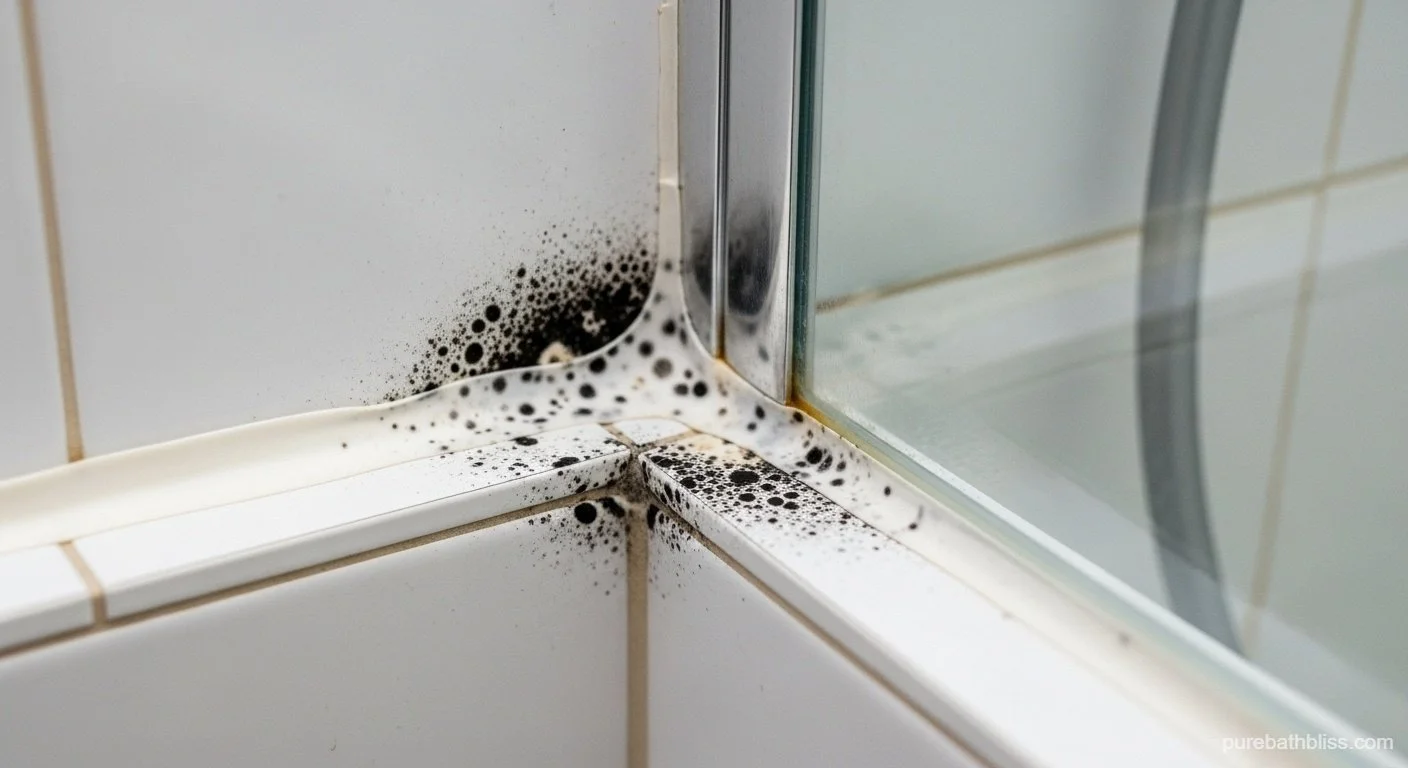
This invisible threat doesn't just damage your lungs; it creates the perfect breeding ground for mold, which silently destroys your home’s infrastructure. If you have ever scrubbed black spots off your grout only to see them return a week later, you don't have a cleaning problem—you have an air problem.
True Pure Bath Bliss isn't just about a sparkling tub or organic cotton towels. It’s about the air you breathe while you soak.
This master guide is your blueprint for transforming your bathroom from a damp, chemical-laden box into a healthy lung for your home. We will break down the physics of ventilation (including the math most contractors get wrong), the strategy for banishing mold before it starts, and how to create a spa-like ambiance without toxic aerosols.

Part 1: The Science of Humidity (The Mold Engine)
To control the air, you must understand the enemy: Moisture.
The bathroom is unique because it experiences rapid, extreme spikes in humidity. During a 10-minute hot shower, the relative humidity (RH) in the room can jump from a comfortable 40% to a soaking 99%.
The 30-Minute Rule
Mold spores are ubiquitous. They are floating in the air right now, and they are sitting on your tile. But they are harmless—until they have water.
Germination: Mold spores need 24–48 hours of consistent moisture to germinate.
The Danger Zone: If the humidity in your bathroom stays above 60% for more than 30 minutes after a shower, you are entering the danger zone. Condensation settles into the microscopic pores of your grout, drywall, and wood, feeding the dormant spores.
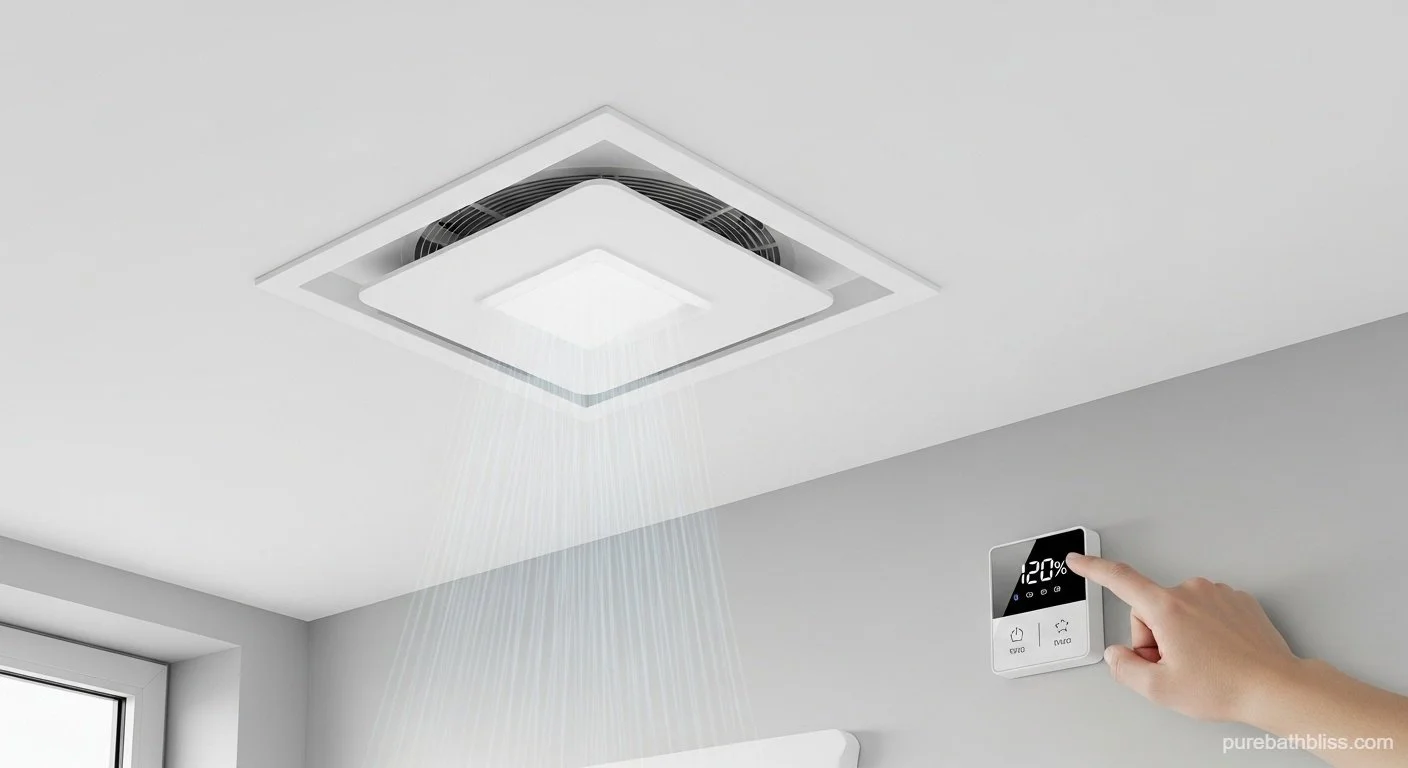
The Goal: You must evacuate that moist air and return the room to <50% humidity within 20 minutes of turning off the water. If your fan isn't strong enough to do this alone, you may need to add a dehumidifier to your routine
Ventilation 101: Do You Have Enough Power?
Most bathroom fans are woefully underpowered or poorly installed. Fans are rated in CFM (Cubic Feet per Minute), which measures the volume of air they can move.
The Golden Rule: You need 1 CFM per square foot of floor space.
The Math: If your bathroom is 80 sq. ft. (8x10), you need a fan rated for at least 80 CFM.
The Jetted Tub Factor: If you have a whirlpool or large soaker tub, the water surface area creates massive steam. Add +50 CFM to your calculation.
The Toilet Room: If your toilet is in a separate "water closet" with a door, it legally requires its own exhaust fan.
The Hidden Variable: Sones (Noise)
Why do people hate using their fans? Because they sound like jet engines. Fan noise is measured in Sones.
4.0 Sones: Standard cheap builder-grade fan. Loud, buzzing.
1.0 Sone: Roughly the sound of a quiet refrigerator.
<0.5 Sones: Nearly silent.
The Strategy: If your fan is louder than 1.5 Sones, you are subconsciously less likely to use it. Upgrading to a "Panasonic Whisper" or similar low-sone model is one of the best wellness upgrades you can make.
The "Toilet Paper Test"
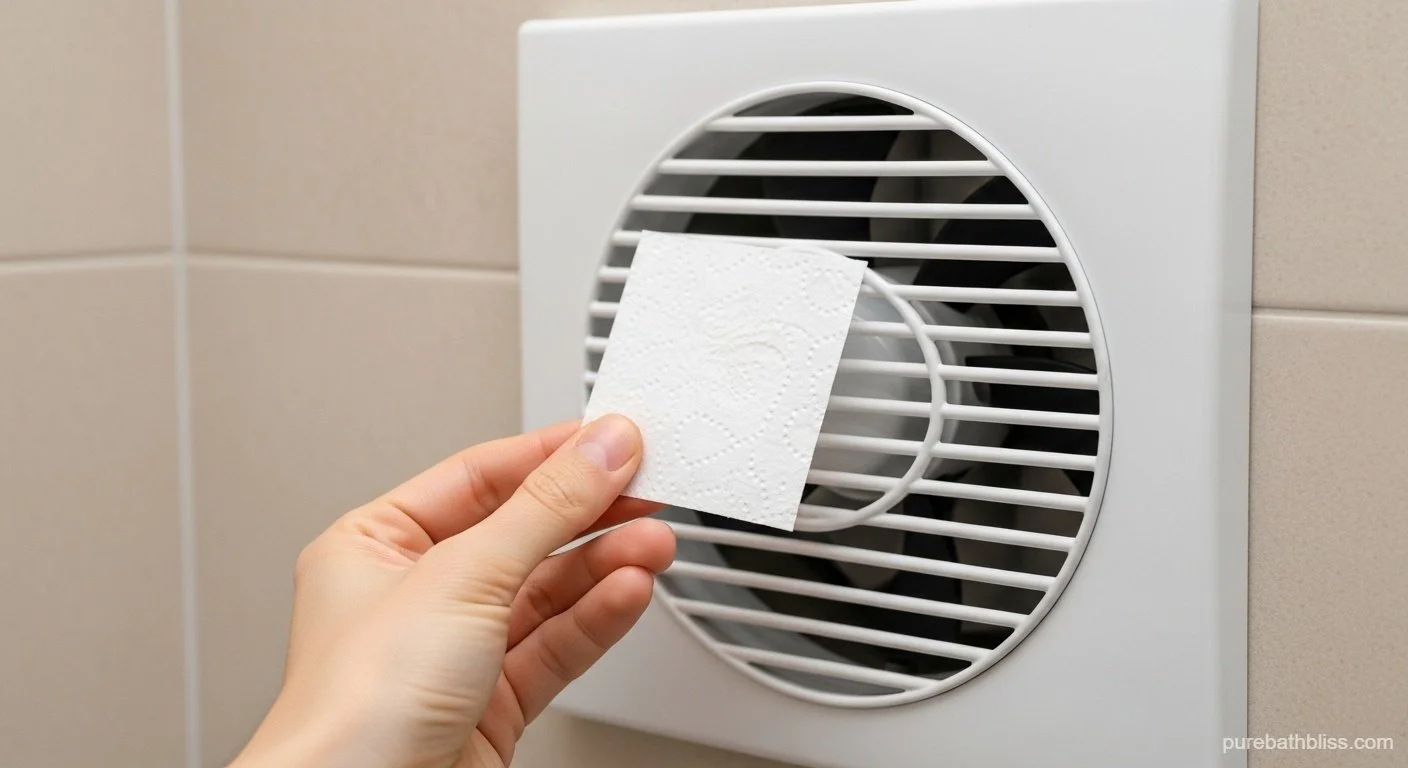
Don't know your fan's rating? Try this simple diagnostic:
Close the bathroom door and window.
Turn on the exhaust fan.
Hold a single square of toilet paper up to the fan grate.
Pass: The paper sticks firmly to the grate on its own.
Fail: The paper flutters or falls off. (This means your fan is either clogged with dust, the motor is dying, or the duct is blocked).
Part 2: Breaking the Mold Cycle
Many homeowners view mold as an inevitability—something you just have to scrub away every few months. This is a misconception. Cleaning mold is a failure of prevention.
Prevention vs. Removal
Once mold (like Cladosporium or black Stachybotrys) takes root in porous materials like drywall or caulk, surface cleaning is often a losing battle. Bleach only whitens the surface; it doesn't kill the root structure (hyphae) buried deep in the material.
If you are already seeing black spots, stop scrubbing and read our deep-dive repair guide: Why is My Bathroom Caulk Turning Black? (The Mold Cycle & Natural Fixes).
The "Dry Room" Protocol
To prevent mold from ever establishing a foothold, follow this routine:
Run the Fan Long Enough: The biggest mistake is turning the fan off when you leave the room. The fan should run for 20–30 minutes after the shower ends to pull the residual moisture out of the drywall.
Upgrade: Install a Countdown Timer Switch so you can press "30 Min" and walk away.
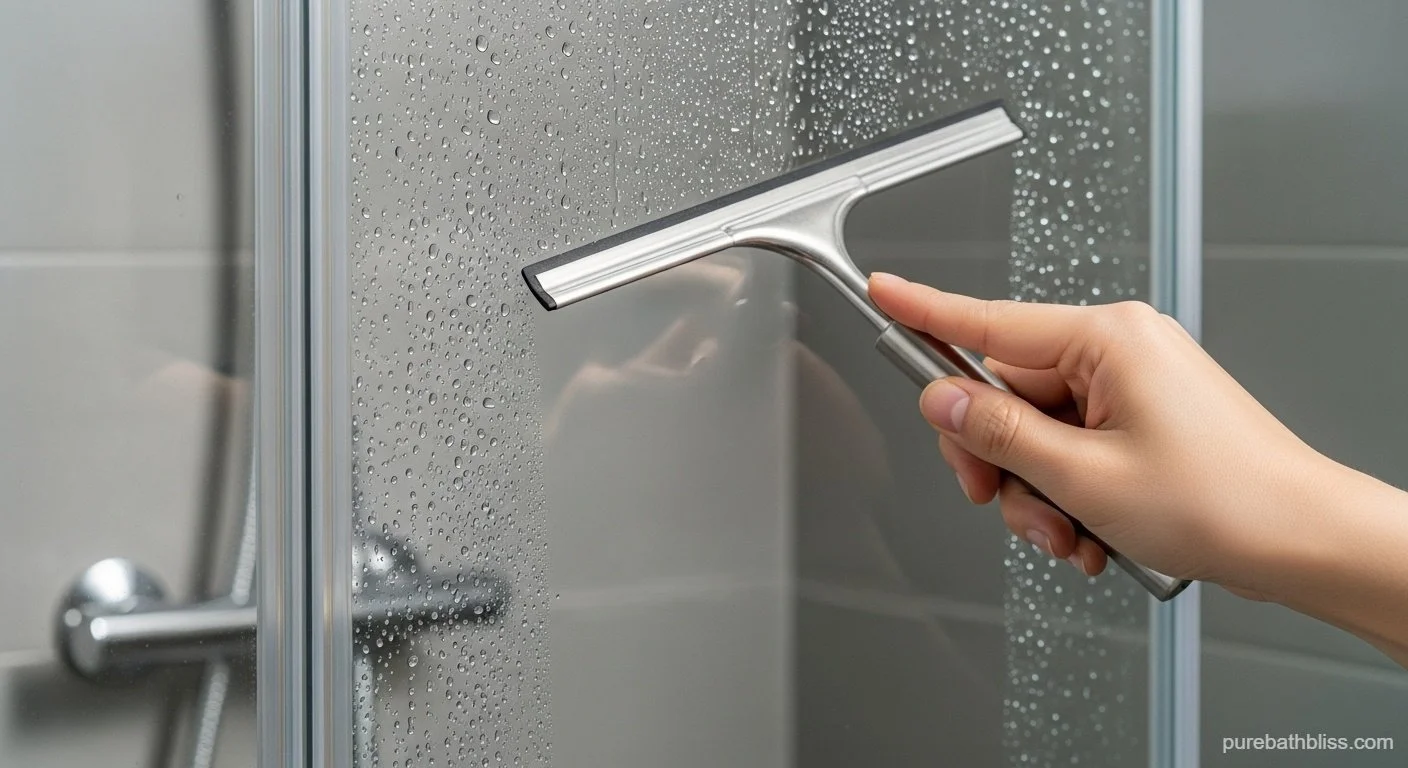
The Squeegee Habit: It takes 30 seconds. After every shower, squeegee the water off the glass and tile walls. This sends the water down the drain immediately, rather than forcing it to evaporate into the air. For a complete step-by-step cleaning routine, read our guide on The 15-Minute Weekly Ritual to Keep Bathroom Mold Away.
Leave the Door Open: If you don't have a fan (or even if you do), leaving the door open creates a "cross-breeze" that allows dry air from the hallway to replace the wet air in the bathroom.
Manage the Towels: A bunched-up wet towel is a mold bomb. Spread towels fully on a bar to dry, or use a heated towel rack to speed up evaporation.
Part 3: The Danger of "Air Fresheners"
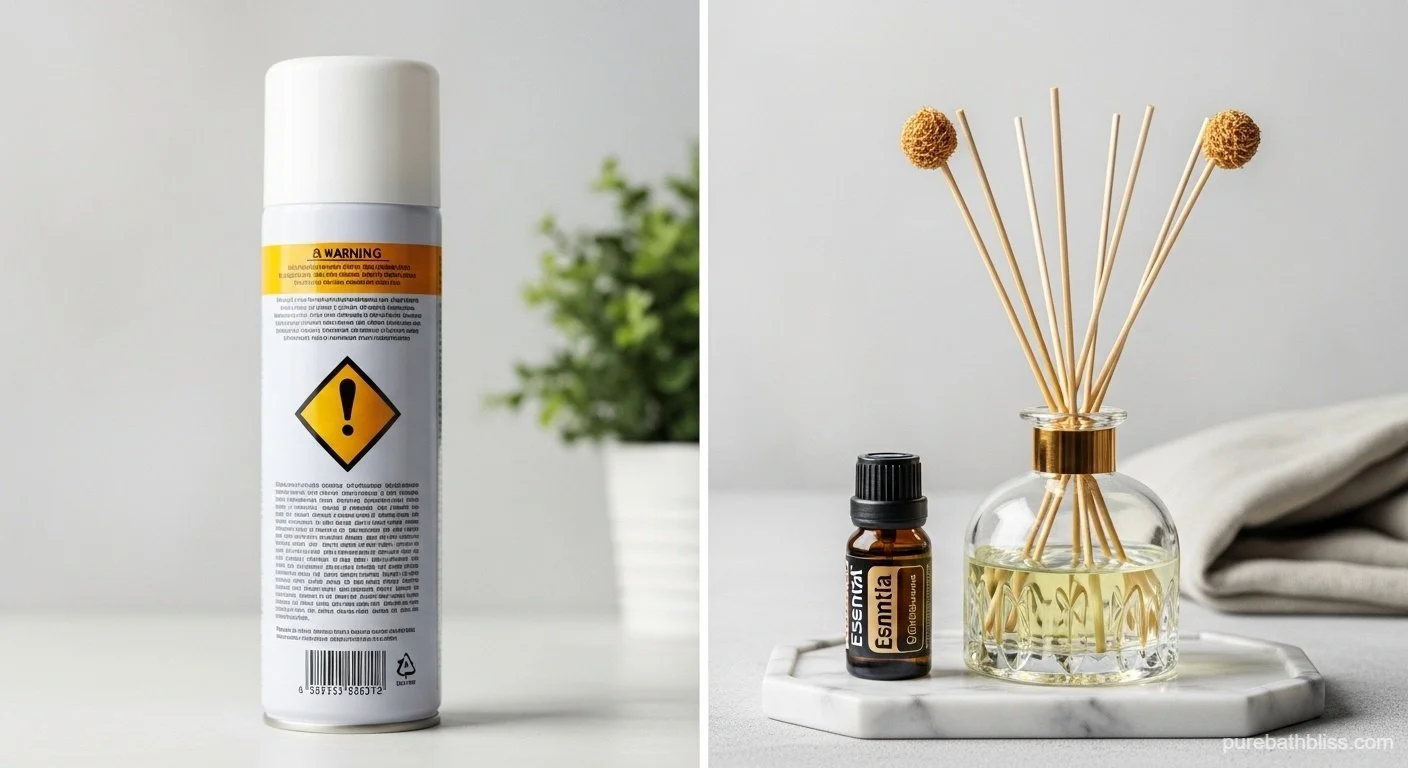
We naturally want our bathrooms to smell good. But the standard solution—aerosol cans and plug-in fresheners—is a health hazard.
The VOC Problem
Commercial air fresheners do not "clean" the air; they coat your nasal passages with oil and mask odors with chemicals.
Phthalates: Used to make scents linger longer, these chemicals are known endocrine disruptors that can interfere with hormone production and reproductive health.
VOCs (Volatile Organic Compounds): Ingredients like formaldehyde, benzene, and terpenes react with ozone in the air to create secondary pollutants.
The "Fragrance" Loophole: Manufacturers are not required to list ingredients under the term "Fragrance." One word can hide 300+ chemicals.
The Safe Alternatives: Passive Diffusion
You can achieve a spa-like scent without the toxic load by using Passive Diffusion—methods that release scent naturally without heat or propellants.
Reed Diffusers: Use a glass bottle with a narrow neck, a carrier oil (like almond oil), and essential oils. Rattan reeds wick the oil up and release it gently.
Ready to make your own for pennies? We have the perfect recipe. Read our step-by-step guide: Stop Buying Aerosols: How to Make a Chic Reed Diffuser for Your Bathroom.
The Toilet Paper Hack: Put 2 drops of essential oil on the cardboard tube inside your toilet paper roll. Every time someone spins the roll, it releases a burst of scent.
The Eucalyptus Bundle: As discussed in our Eucalyptus Guide, hanging fresh herbs in the shower utilizes steam to diffuse oils therapeutically.
Part 4: Biophilic Design (Plants as Filters)
NASA conducted a famous Clean Air Study in 1989 which proved that certain houseplants can remove toxins like formaldehyde, trichloroethylene, and benzene from the air.
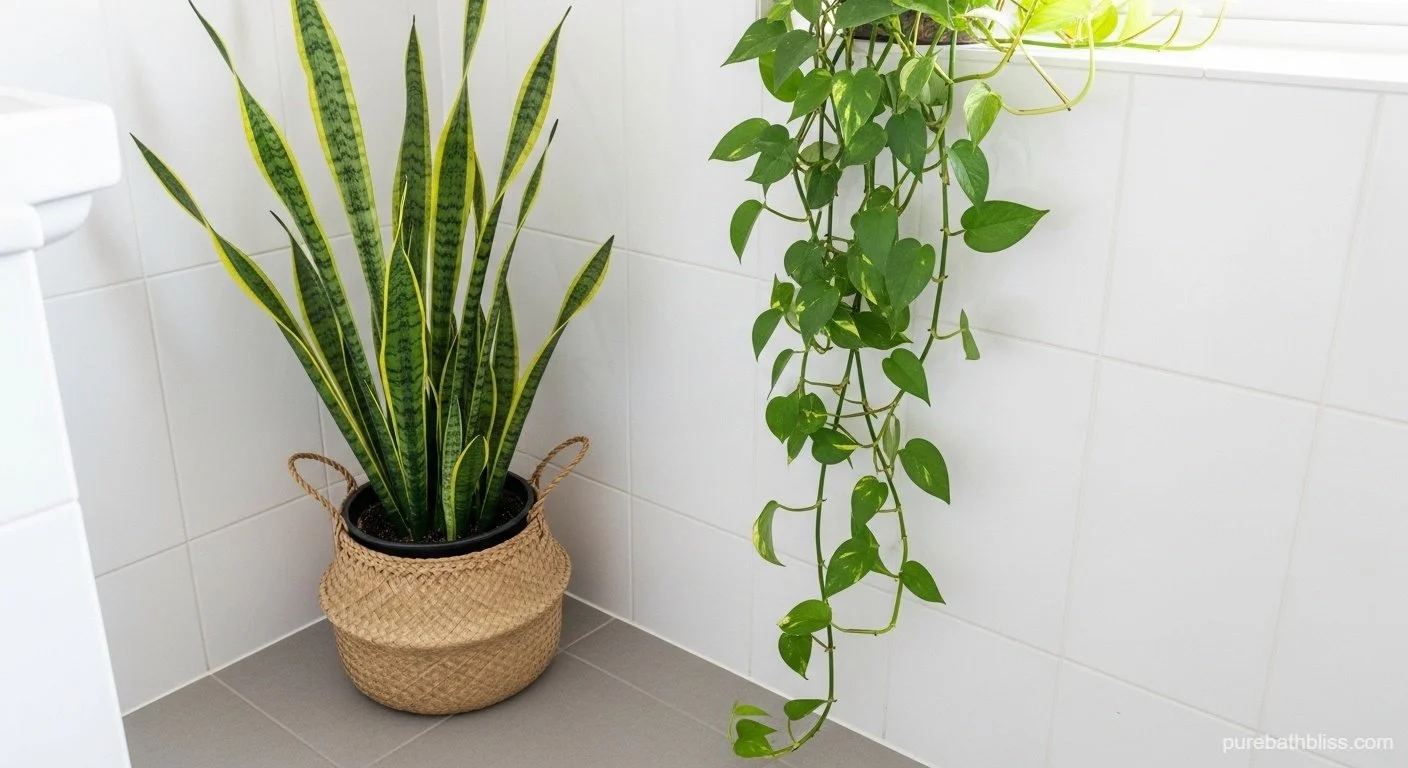
In a bathroom, plants serve a dual purpose: they filter the air, and they thrive on the humidity that would otherwise cause mold.
The "Humidity Survivors"
Not all plants can survive a windowless or high-moisture room. You need forest-floor species.
The Snake Plant (Sansevieria): Indestructible. It converts CO2 to oxygen at night and filters formaldehyde (found in toilet paper and cleaning products). It needs almost zero light.
The Boston Fern: A humidity lover. It acts as a natural humidifier and is excellent at removing formaldehyde.
The Spider Plant: Fast-growing and great at removing bacteria and mold spores from the air.
Finding the right plant for your specific lighting situation is tricky. We break it down by species in: 7 "Unkillable" Plants That Thrive in Your Windowless Bathroom.
Part 5: The Pure Bath Bliss Air Quality Checklist
If you are ready to overhaul your bathroom's ecosystem, follow this step-by-step checklist.
Phase 1: Assess
[ ] Perform the "Toilet Paper Test" on your exhaust fan.
[ ] Check your fan's grill for dust buildup (vacuum it out!).
[ ] Check the date on your beauty products.
Phase 2: Eliminate
[ ] Throw away all aerosol sprays and plug-in fresheners.
[ ] Remove any visible mold with a hydrogen peroxide paste.
[ ] Wash shower curtains and liners (or replace them if they are PVC).
Phase 3: Upgrade
[ ] Add one "Humidity Survivor" plant to a shelf or counter.
[ ] Install a timer switch for your fan (or commit to the 20-minute rule).
[ ] Set up a natural scent solution (Reed Diffuser or Eucalyptus bundle).
Conclusion: The Invisible Luxury
We spend a lot of time thinking about what our bathrooms look like—the tile, the hardware, the paint color. But the true definition of luxury is health.
A bathroom with breathable air, free from mold spores and synthetic toxins, is the ultimate sanctuary. It is a space where your body can truly detoxify and relax. By managing humidity and choosing natural scents, you are protecting not just your home's structure, but your family's long-term wellness.
This completes the wellness ecosystem of your home. You have mastered the air; now ensure your water is just as pure by revisiting our core guide:The Water Quality Handbook: Hard Water, Filters, and Skin Health.