The "Wet-Zone" Switch: Understanding IP-Ratings for Shower Lighting
When curating the perfect warm minimalism bathroom design, our minds automatically float toward the visual details—the texture of the tile, the soft glow of the mirror, and the placement of the overhead fixtures. We map out our circadian lighting schedule to ensure our morning routines are energizing and our evening baths are deeply relaxing.
But there is a critical technical boundary where high design must yield to absolute safety: the architectural "wet zones."
Many homeowners don't realize that standard light fixtures aren't built to survive the localized microclimates inside a bathroom. When exposed to dense shower steam or direct water spray, a standard interior light will quickly short-circuit, corrode, or present a serious safety hazard. To safely bring beautiful light into your shower stall or directly over your freestanding tub, you have to decode a tiny engineering metric stamped on the back of your fixtures: the IP (Ingress Protection) Rating. Let’s break down exactly how to read these codes so you can protect your home's infrastructure while maintaining your aesthetic.
Decoding the Two-Digit Code
An IP rating is an international standard that tells you exactly how effectively an electrical fixture's housing seals out environmental elements. The letters "IP" are always followed by two distinct numbers, and each digit has a completely separate job:
The First Digit (Solids): Measures protection against solid objects, dust, and accidental contact on a scale from 0 to 6.
The Second Digit (Liquids): Measures protection against moisture, splashes, and pressurized water on a scale from 0 to 9.
For a bathroom environment, the first digit is almost always a 6 (meaning it is completely dust-tight to protect internal wiring). The second digit is the one we care about most. It determines whether a fixture will slowly degrade under heavy steam or effortlessly laugh in the face of a direct blast from your new high-pressure rainfall showerhead.
Mapping Your Bathroom "Wet Zones"
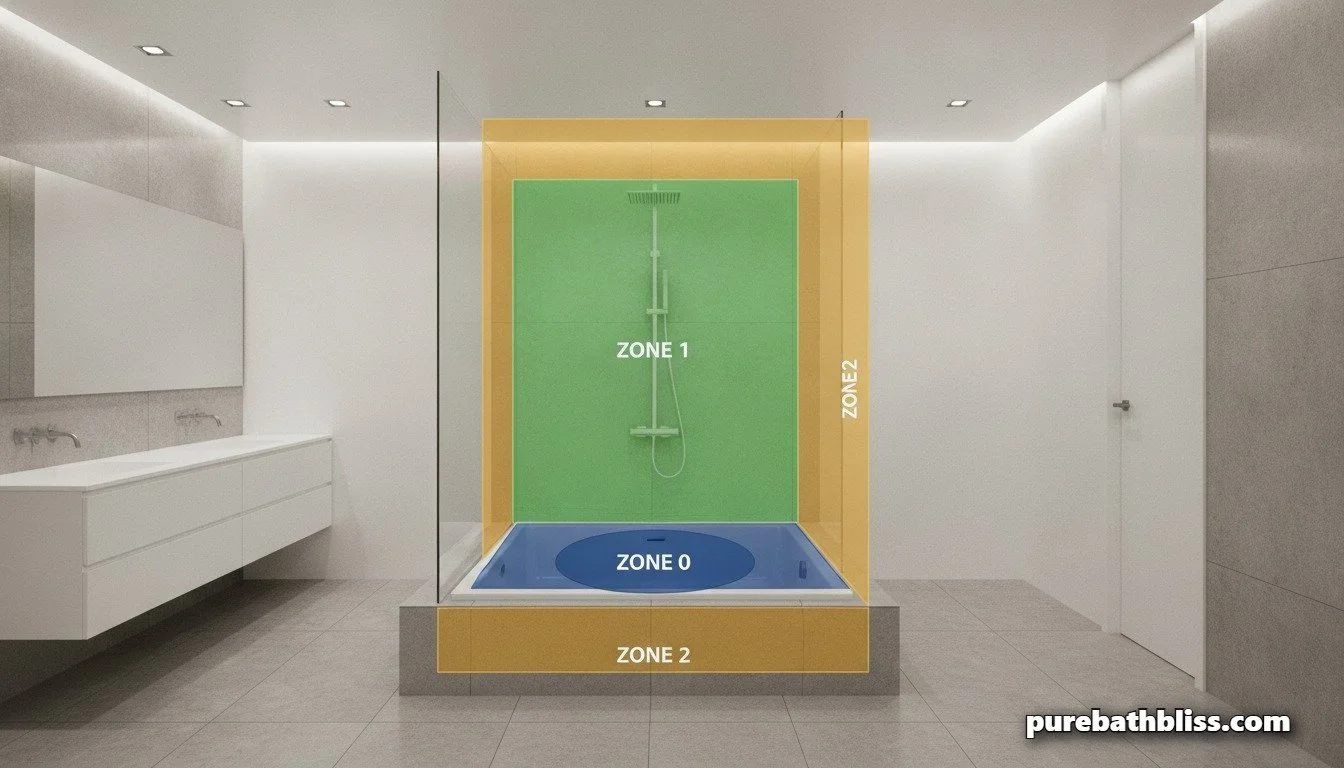
To make electrical planning straightforward, bathrooms are mapped into three distinct safety categories based on their proximity to running water. Matching your fixture's rating to these zones ensures long-term durability without overpaying for specialized marine-grade equipment where it isn't needed.
Zone 0: The Submersion Zone
This is the area inside the actual shower basin or the interior of the bathtub itself—any space that can physically hold standing water.
The Safety Mandate: Fixtures installed here require a minimum rating of IP67, meaning the housing is completely waterproof and safe for temporary submersion. Crucially, these must run on low-voltage circuitry (12V or less) to ensure absolute safety. Think of waterproof LED strips tucked seamlessly into a custom stone shampoo niche.
Zone 1: The Splash Zone
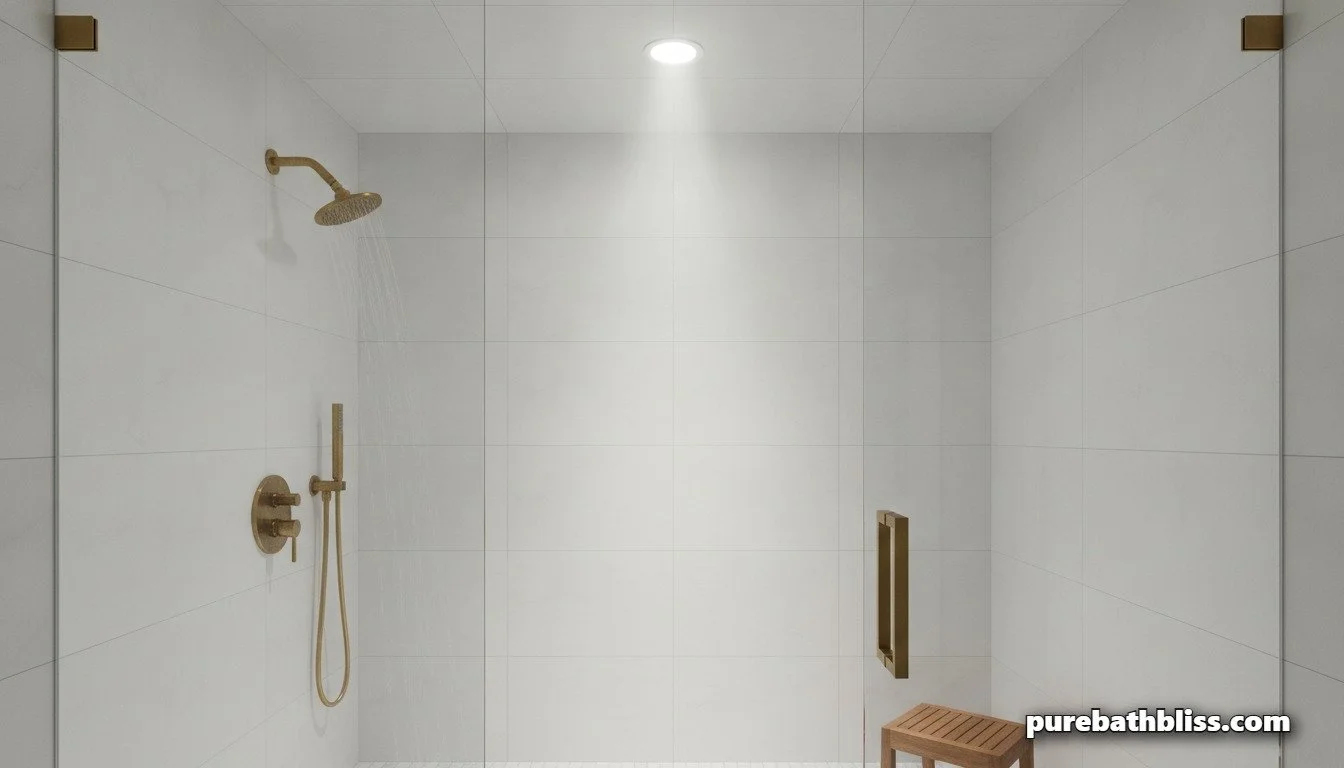
This is the high-humidity area directly above your shower tray or bathtub, extending up to roughly 7.4 feet (2.25 meters) from the floor. This zone catches rising steam, heavy condensation, and accidental direct spray from the showerhead.
The Safety Mandate: While electrical codes technically permit a lower rating, the design standard for a premium home is a minimum of IP65. An IP65 fixture is entirely sealed against low-pressure water jets from any direction. Choosing a flush, fire-rated LED pot light with an IP65 seal prevents moisture from creeping up into your ceiling joists, keeping the space safe from the structural damage highlighted in our budget bathroom mold prevention guide.
The Vanity Perimeter: Zone 2 and Beyond
As you move outward from the direct splash areas, the moisture requirements ease up, allowing you to incorporate more decorative, stylized lighting choices.
Zone 2: The Vapor Zone
This zone covers the space extending roughly 2 feet (60 centimeters) outside the edge of the shower or tub, as well as the immediate area surrounding your vanity sink taps.
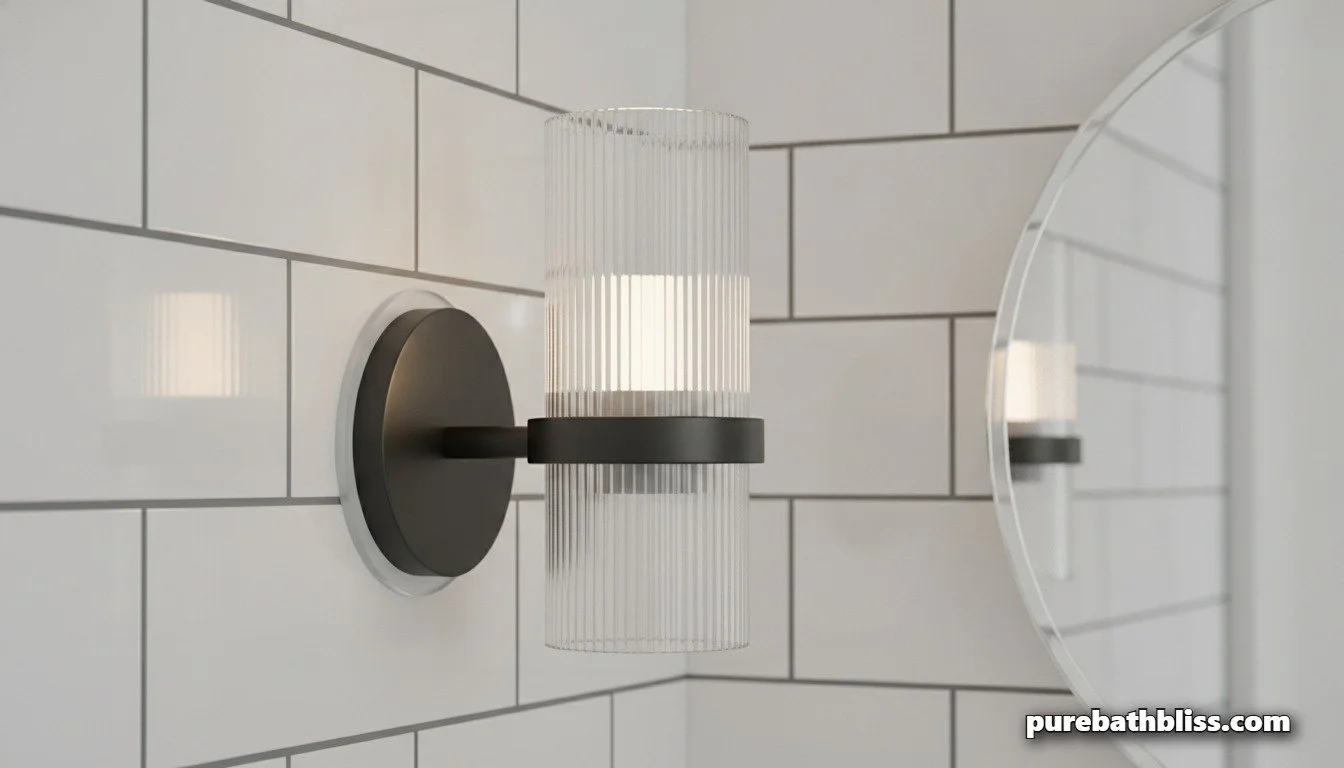
The Safety Mandate: Fixtures in this zone must be rated at IP44. This shield protects the delicate electrical connections from airborne splashes and drifting steam. This is the sweet spot for choosing beautiful, high-end wall sconces to frame your vanity mirror, keeping your curated apothecary countertop display cleanly lit without compromising on performance.
Outside the Zones: Safe Territory
Any space well away from the tub, shower, and sink basin is considered safe territory. Here, standard indoor fixtures (typically rated at IP20) are perfectly acceptable. This is where you can freely introduce dramatic, non-wet-rated statement pendants or ambient architectural details to soften the room's edges.
The Quick IP-Rating Reference Menu
| Bathroom Zone | Physical Location | Minimum IP Rating | Ideal Fixture Type |
|---|---|---|---|
| Zone 0 | Inside the shower floor / tub basin | IP67 (Low Voltage) | Submersible niche lighting, basin LEDs |
| Zone 1 | Directly above the shower or tub ceiling | IP65 (Water Jet-Proof) | Recessed fire-rated shower downlights |
| Zone 2 | Within 2 feet of the water perimeter | IP44 (Splash-Proof) | Vanity wall sconces, mirror backlighting |
| Outside | Any dry area away from taps | IP20 (Standard Indoor) | Decorative chandeliers, general ceiling lights |
Summary: Safety Meets Style
Bringing light into your wet zones shouldn't feel like a compromise. By understanding how to align Ingress Protection codes with the layout of your room, you can confidently build a beautifully layered space without risking your home's electrical health. Double-check your stamps, map your boundaries, and design a sanctuary that is as structurally sound as it is visually breathtaking.