The Linear Drain Dilemma: Gorgeous Design vs. Hidden Maintenance
If you have chosen a curbless walk-in shower for your home, you likely fell in love with the seamless, architectural look of a linear drain. Unlike traditional center strainers that force you to cut floor tiles into a sloping bowl, a linear drain sits flush along the wall or threshold. It allows for a continuous, uninterrupted floor design that epitomizes the high-end spa aesthetic.
However, once you begin using the space daily, a major "lightbulb moment" occurs: Linear drains do not clean themselves, and they trap hair across a much wider surface area than a standard drain. Because the collection channel is long and shallow, water moves more slowly across it, creating a prime environment for hair strands, body oils, and organic conditioners to mingle. Left unmanaged, this combination creates a sticky bacterial film known as biofilm, which triggers slow drainage and a musty odor.
As your home care expert, I want to ensure your architectural shower stays truly pristine. Here is the quick weekly maintenance routine to keep your linear drain functioning flawlessly and entirely odor-free.
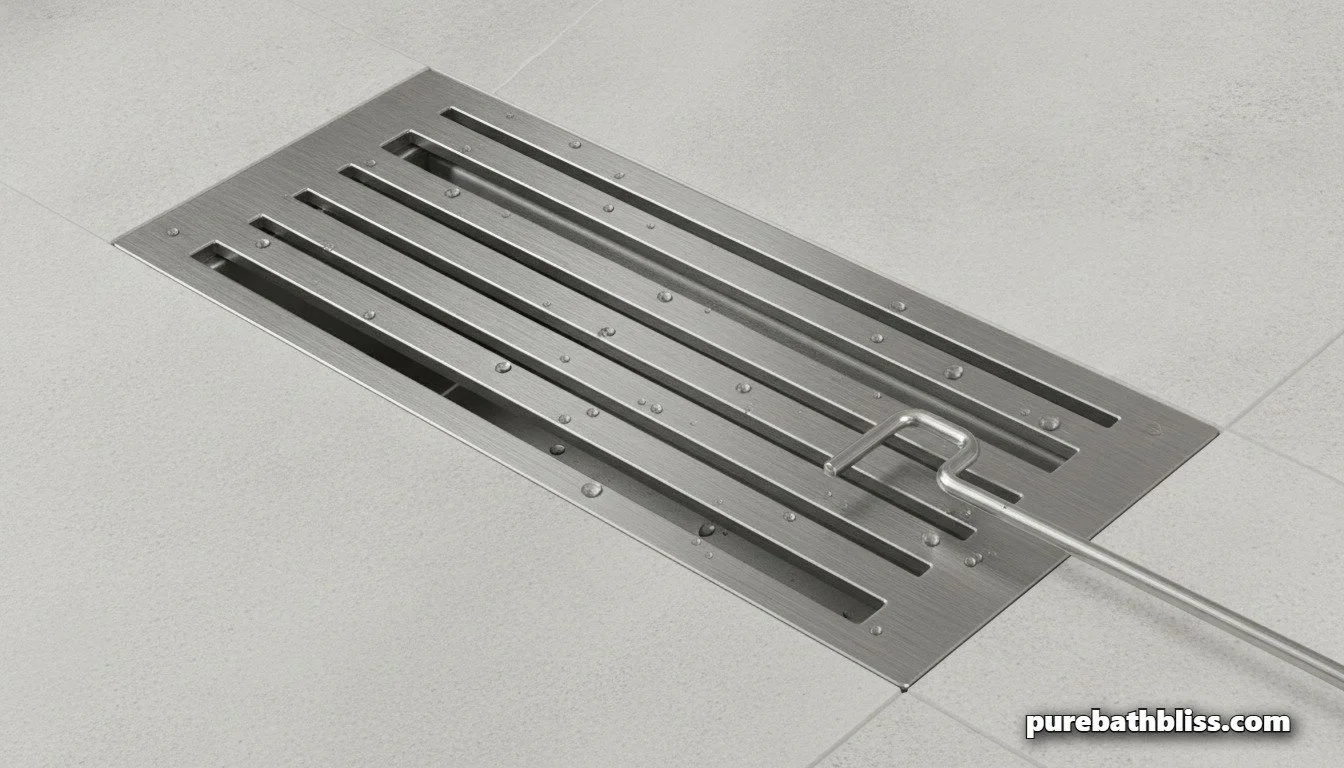
The Lift-and-Empty Protocol
Traditional drains hold hair deep down in the P-trap, but a linear setup is designed to catch debris right at the surface using an internal strainer basket. Because this basket is shallow, it needs to be emptied far more frequently to prevent water from backing up over your beautiful floor tile.
The Fix: Make the "Lift-and-Empty" step part of your regular weekend routine. Do not try to pry the grate up with your fingernails or a sharp screwdriver, which can permanently scratch high-end metal finishes. Instead, use the specialized lifting key or hook that arrived with your drain kit. Lift the grate from one end, pull out the internal stainless steel or ABS plastic hair basket, and tip the collected debris directly into the trash receptacle.
Banishing the Biofilm Build-Up
Even if you clear out the hair regularly, a thin layer of soap scum and skin cells will coat the long, flat channel beneath the grate. Over time, airborne bacteria feed on this residue, forming a dark slime that releases faint, unpleasant scents into your breathing zone.
The Fix: Once the basket is removed, mist the interior channel with a mild, pH-neutral bathroom cleaner or a basic solution of dish soap and warm water. Avoid pouring aggressive chemical drain openers down the line; these harsh formulas generate intense chemical heat that can warp underlying PVC pipes or degrade premium metal components from the inside out. Gently scrub the channel walls using a soft-bristled brush or a microfiber cloth to break down the biofilm completely.
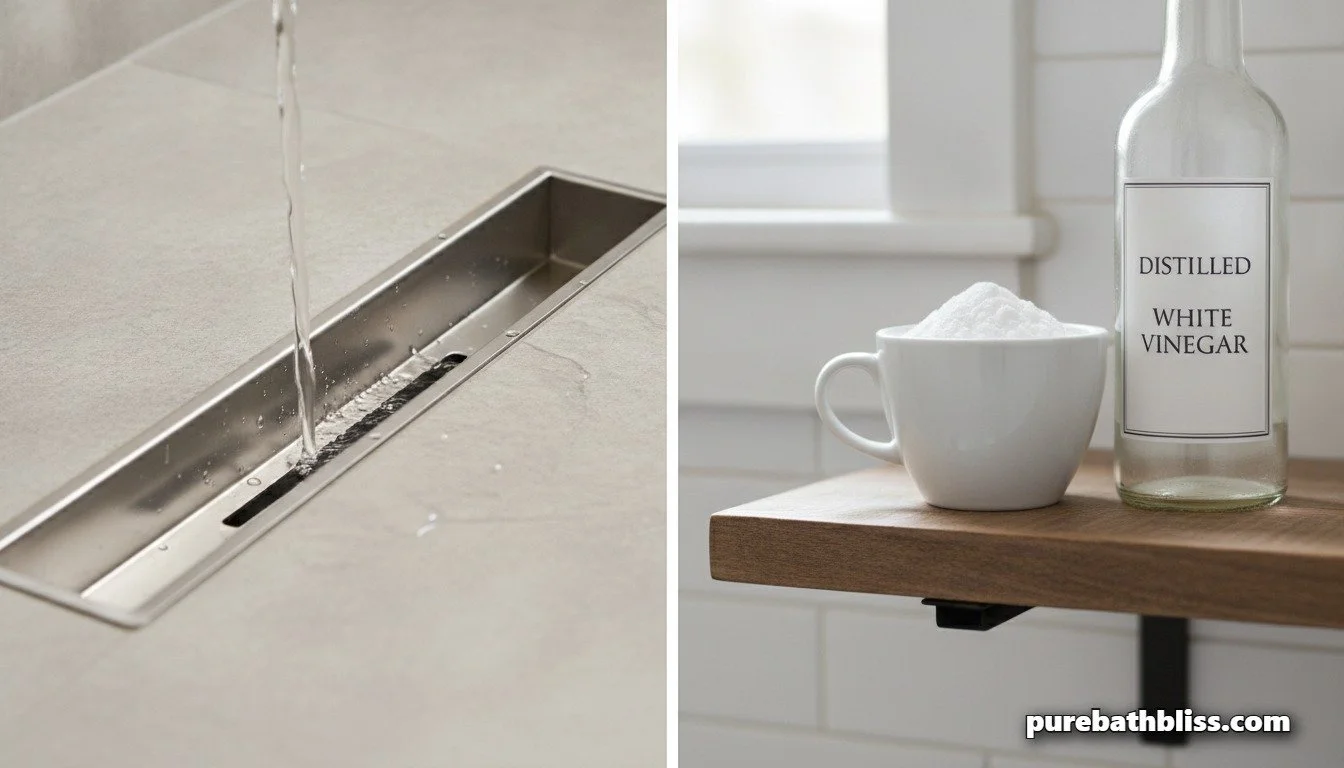
The Natural Monthly Deep-Flush
To safeguard your broader plumbing infrastructure and keep the drain line completely free-flowing, execute a natural, effervescent deep flush once a month. This non-corrosive method dissolves soap residue deep within the pipes without damaging your home's mechanics.
The Protocol:
The Base: Pour 3/4 cup of standard baking soda directly down the open drain opening.
The Activation: Follow it immediately with 3/4 cup of distilled white vinegar. The two household staples will react instantly, creating a vigorous fizzing action that physically scrubs away lingering organic matter.
The Rinse: Allow the mixture to work for roughly 15 minutes, then flush the system thoroughly by running hot water for two minutes. This routine pairs perfectly with our budget bathroom mold prevention guide to ensure a perfectly fresh environment.
Linear vs. Traditional Center Drain Architecture
| Design Element | Traditional Center Drain | Modern Linear Drain |
|---|---|---|
| Tile Installation | Requires complex, multi-slope diagonal tile cuts. | Allows for a seamless, single-direction floor slope. |
| Debris Collection | Concentrated in a single small point. | Spread across a wide, shallow surface area. |
| Maintenance Needs | Occasional clearing when flow slows down. | Quick weekly grate lift and basket clean out. |
| Odor Vulnerability | Low (Deep water trap prevents gas escape). | Moderate (Shallow channel creates biofilm easily). |
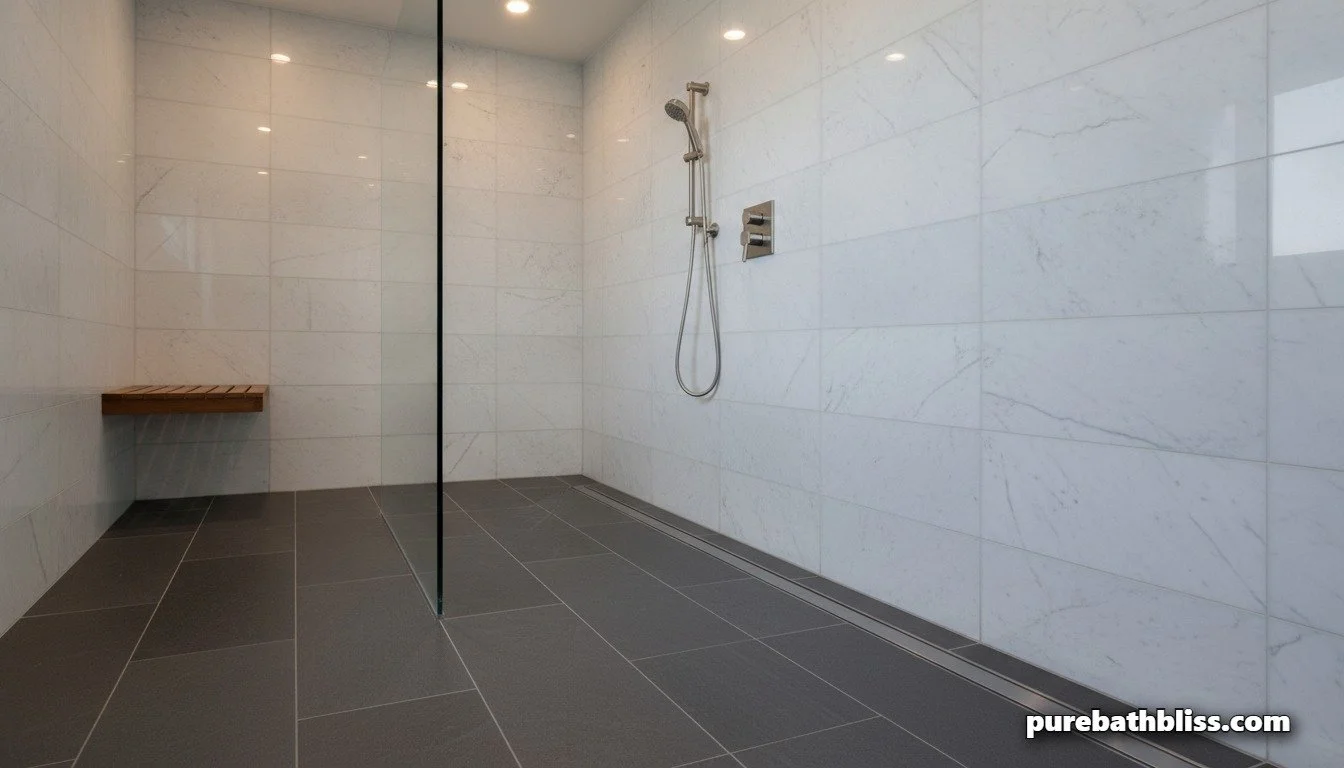
Summary: Nurturing Your Spatial Infrastructure
High design demands a high level of intentional care. A linear drain offers unparalleled architectural beauty, but it relies on you to manually manage its collection channel. By spending two minutes a week clearing the catch basket and keeping the underlying trough free of biofilm, you can ensure your shower remains a beautiful, functional, and deeply refreshing sanctuary. Combine this care with a high-performance inline water filter and an optimized rainfall showerhead to achieve the ultimate master bath experience.