3 Ways "Warm Minimalism" is Replacing the Cold White Bathroom
For the last decade, the "Pinterest-perfect" bathroom followed a very strict script: stark white subway tile, bright white grout, cold marble countertops, and high-gloss chrome fixtures. It was clean, yes, but it was also clinical. It felt more like a laboratory than a sanctuary.
As we move through 2026, we are seeing a massive cultural "lightbulb moment" in interior design. We are collectively craving spaces that feel "soulful" rather than just "sanitized." This shift has given rise to Warm Minimalism. It’s the art of keeping the clean, clutter-free lines of modern design but injecting them with earth-toned palettes and organic, tactile textures. It’s about creating a space that feels like a hug, not a hospital. As your knowledgeable best-friend in home design, I’m showing you the three foundational shifts that will turn your "Cold White" bathroom into a "Warm Minimalist" retreat.
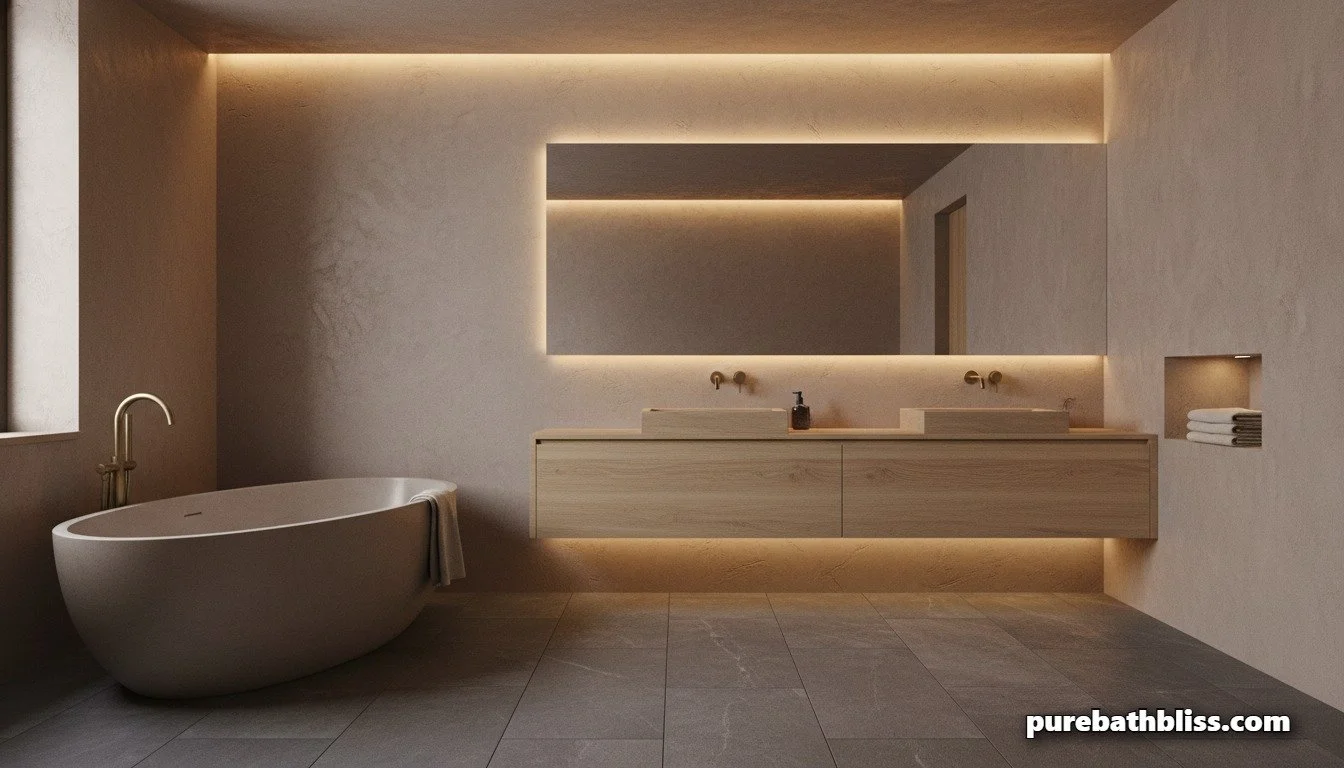
1. From "Stark White" to "Earth-Born" Palettes
The first step in the Warm Minimalist revolution is retiring the "hospital white" paint. In 2026, we are leaning into colors that feel "born of the earth"—think clay, sand, mushroom, and toasted almond. These tones have a natural depth that changes throughout the day as the sun moves.
If you’re worried about the room feeling too dark, look at "bone" or "soft linen" whites. These have warm undertones that prevent the space from feeling sterile. This palette provides the perfect backdrop for the cleaning-living-finishes-brass-copper-2026 we discussed recently. The golden patina of unlacquered brass against a clay-toned wall is the ultimate 2026 luxury flex.
2. Replacing Tile with "Seamless" Microcement
One of the reasons bathrooms feel so cold is the "grid" effect of tile and grout. As we noted in our no-grout-bathroom-renovation-guide, grout is the enemy of a peaceful aesthetic.
Warm Minimalism leans heavily into "Microcement" and "Tadelakt" (a traditional Moroccan lime plaster). These materials are applied by hand and create a seamless, waterproof surface that feels like soft stone. They have a subtle "movement" and texture to them that reflects light beautifully. Because there are no grout lines, the eye can travel across the room without being interrupted, making even a small bathroom feel significantly larger and more serene.
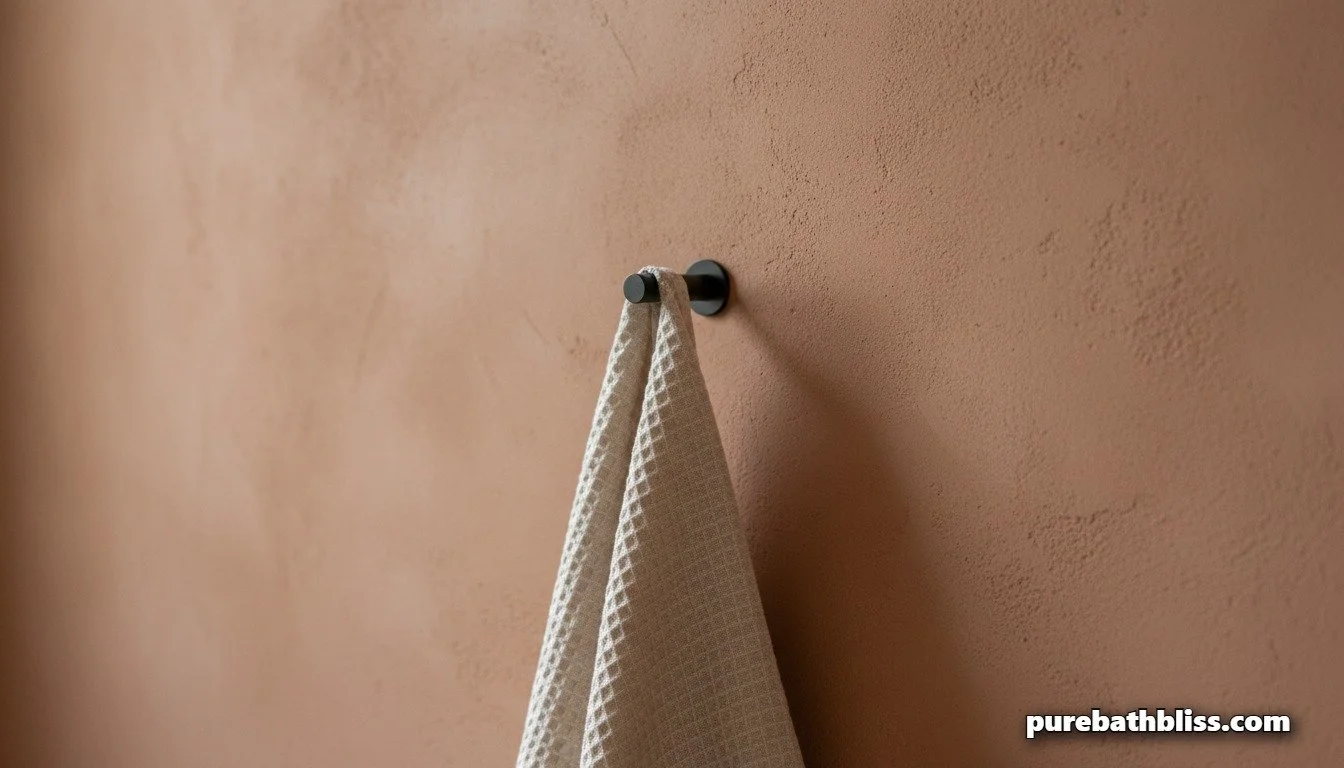
3. Tactile "Raw" Textures over High-Gloss
Warm Minimalism is all about the "touch" of the room. High-gloss finishes feel cold and artificial; raw, matte textures feel grounded.
To achieve this look, look for "honed" or "leathered" stone instead of polished marble. These finishes are soft to the touch and don't show the "fog" or water spots as clearly as high-gloss surfaces, a tip we often share when people ask why foggy bathroom mirrors are good (it’s all about surface temperature and humidity). Incorporate natural wood, like white oak or walnut, for your vanity. The visible grain of the wood adds a "living" element to the room that keeps the minimalist design from feeling flat or boring.
The Warm Minimalism Transition Table
| The "Cold" Element | The "Warm" Upgrade | The PureBathBliss Vibe |
|---|---|---|
| Pure White Paint | Clay, Sand, or Mushroom Tones | Grounded, peaceful, and organic. |
| Polished Marble | Honed Stone or Microcement | Matte, tactile, and finger-print resistant. |
| Chrome Fixtures | Unlacquered Brass or Copper | Warmth that develops a unique patina. |
| Bright Blue LED Light | 2200K - 2700K "Sunset" Glow | Circadian-friendly and spa-like. |
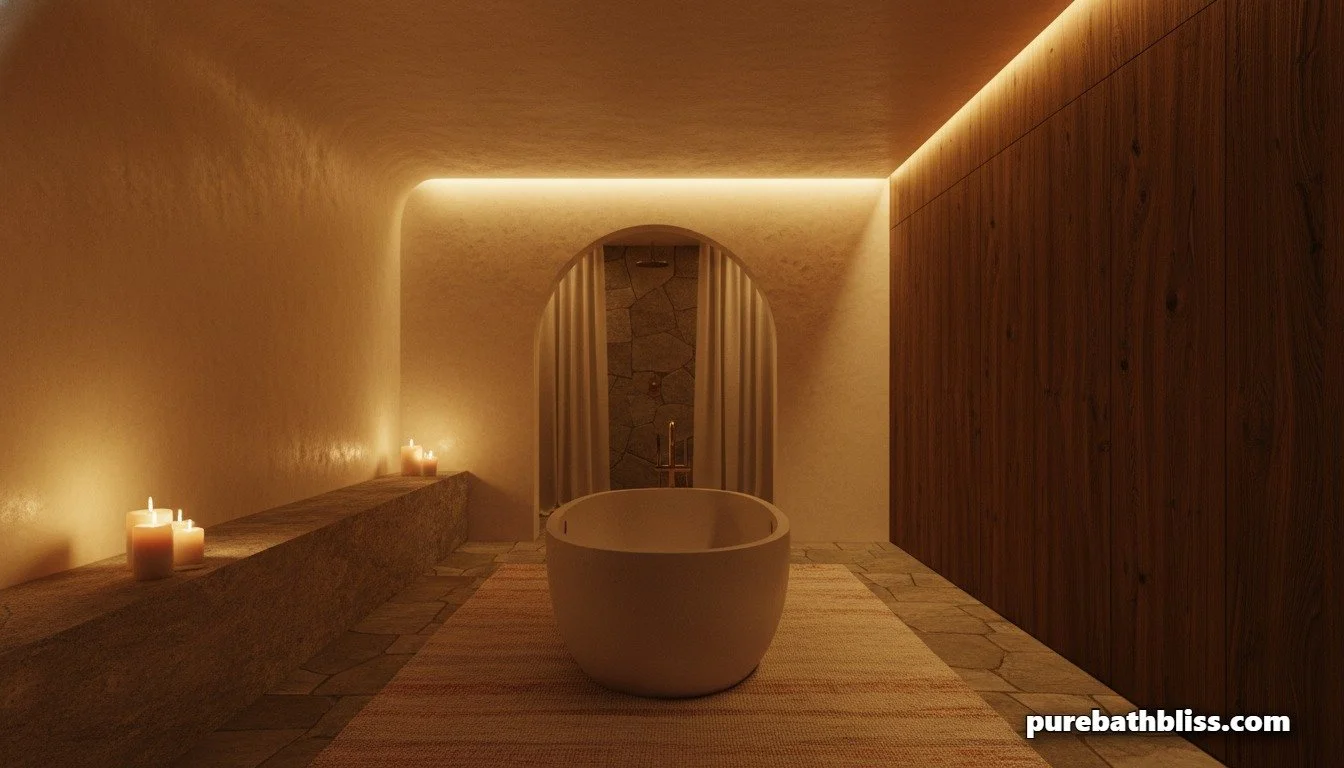
Summary: Designing for the Soul
Warm Minimalism isn't just a trend; it’s a shift toward more "human" environments. By prioritizing earth-toned palettes, seamless walls, and raw textures, you create a bathroom that does more than just function—it heals. It becomes a place where you can truly disconnect from the digital noise of 2026 and reconnect with your own sense of calm.
When you strip away the clinical white and bring in the warmth of the earth, you aren't just renovating a room; you’re building a sanctuary.