Why Your Rainfall Showerhead Feels Weak (and How to Fix It)
You finally pulled the trigger on that stunning, oversized rainfall showerhead. You envisioned standing under a tropical downpour, a perfect wall of water washing away the stress of the day. But when you finally turned it on, the reality was... disappointing. Instead of a powerful deluge, you got a tepid, gravity-fed trickle that barely has enough force to rinse the conditioner out of your hair.
This is the #1 complaint with modern "spa" showers. The "lightbulb moment" here is that rainfall showerheads are designed for coverage, not pressure, but that doesn't mean you have to settle for a weak flow. As your knowledgeable best friend in home maintenance, I’m going to show you why your shower feels like a leaky faucet and how to fix your plumbing infrastructure to get that high-end "drench" you actually paid for.
1. The "Hidden" Flow Restrictor
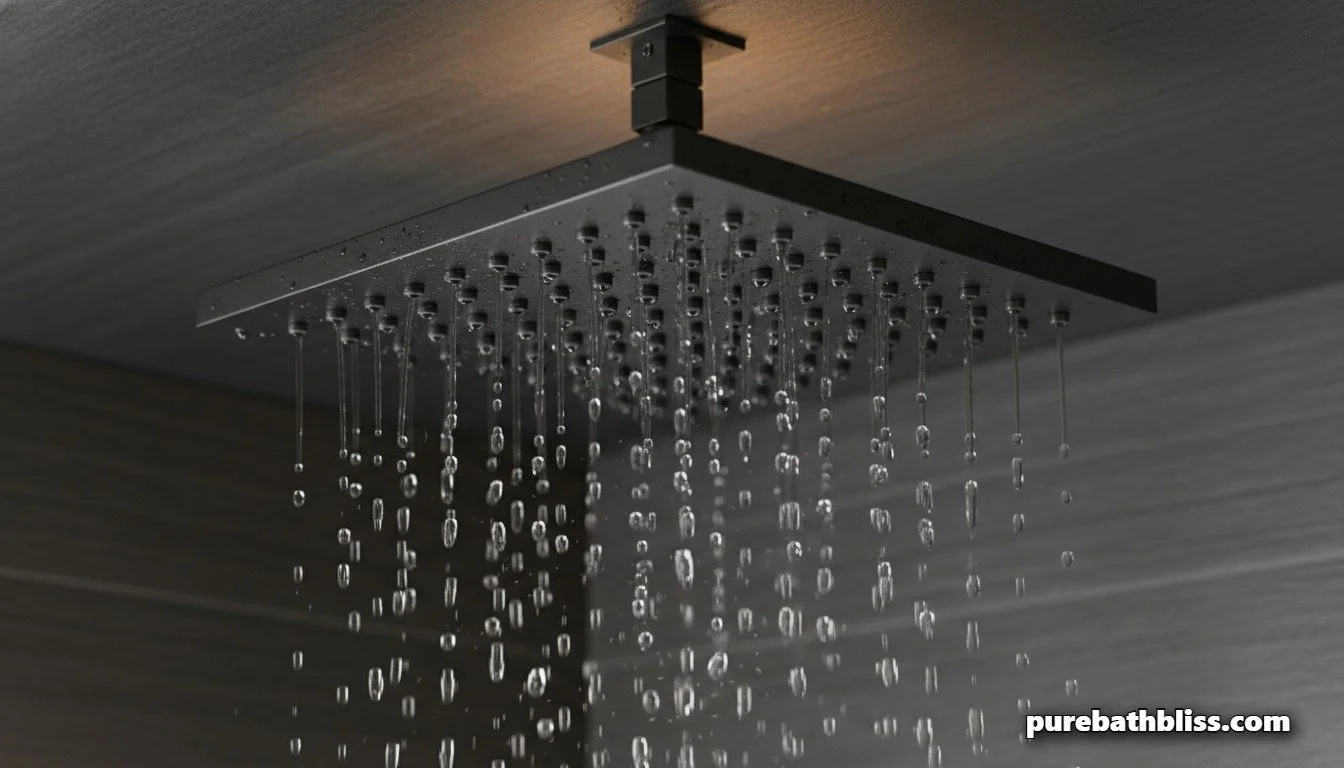
The most common reason for a weak rainfall shower is a tiny piece of plastic required by federal water-conservation laws. These "flow restrictors" are designed to limit water usage to roughly 2.5 gallons per minute (GPM). While this is great for the environment, it’s a disaster for a 12-inch showerhead with 100+ nozzles. The water is spread too thin to create any real force.
The Fix: You can often remove or "optimize" this restrictor. Unthread your showerhead from the arm and look inside the neck. You’ll see a small, usually bright-colored plastic disk with a rubber O-ring. By carefully removing this disk (check your local regulations first!), you allow the full volume of your home’s water pressure to reach the nozzles. This is the same "performance logic" we use for our invisible smart bathroom gadgets.
2. The Limescale Clog (Mid-Summer Buildup)
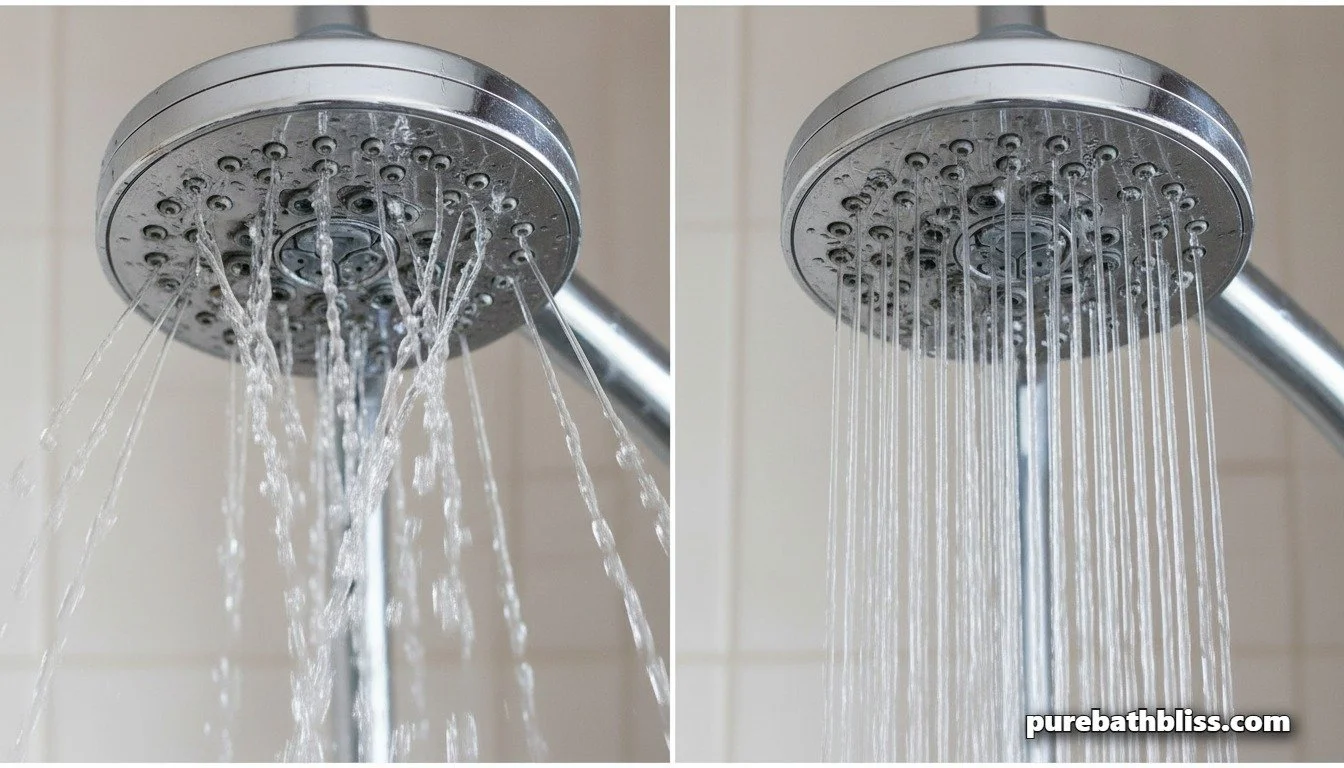
If your showerhead started out strong but has become "patchy" over the summer, the culprit is almost certainly mineral buildup. This is especially true if you haven't yet implemented a soft-water ritual. Calcium and magnesium deposits from hard water love to hide inside the tiny silicone nozzles of a rainfall head.
The Fix: Don't reach for harsh chemicals that could ruin your living brass finishes. Instead, perform a "Vinegar Soak." Tie a plastic bag filled with white vinegar around the showerhead and let it sit for two hours. This dissolves the scale and clears the path for a perfect, even spray.
3. Insufficient Pipe Diameter
If you've removed the restrictor and cleaned the nozzles but it still feels weak, the problem might be hidden behind your warm minimalism walls. Many older homes use 1/2-inch piping, but a large-format rainfall head often performs best with a 3/4-inch supply line.
The Fix: While you can't easily change your pipes without a no-grout renovation, you can install a Smart Pump Booster. These are small, quiet pumps that can be installed on the water line (often in a basement or utility closet) to increase the PSI (pounds per square inch) specifically for your shower. It’s an invisible upgrade that makes your "infrastructure" work for you.
Troubleshooting Your Shower Pressure
| Symptom | Primary Suspect | The 2-Minute Fix |
|---|---|---|
| Even but very weak flow. | Flow Restrictor | Unscrew head & remove the plastic disk. |
| Spraying in odd directions. | Mineral / Limescale Clog | Vinegar bag soak for 2 hours. |
| Low pressure throughout home. | Main PRV (Pressure Valve) | Adjust the main house pressure valve. |
| Air "sputtering" in head. | Airbound Plumbing | Bleed the lines by running all taps. |

Summary: Demand the Drench
You didn't install a rainfall showerhead to take a "mist." You installed it for the experience. By auditing your restrictors, maintaining your nozzles, and ensuring your water pressure is optimized, you can finally achieve the sensory bathing experience we all deserve. Don't let a tiny piece of plastic stand between you and your sanctuary.