Summer Bathroom Problems: How to Fix Humidity, Mold, Pink Slime, and Condensation
Transparency Note: We independently select these products based on research and user reviews. If you buy something through our links, we may earn a commission.
August is the month I get the most calls about bathroom problems. Not because anything breaks in summer specifically, but because summer accelerates every existing weakness in a bathroom's moisture management. Outdoor humidity is at its annual peak. The bathroom is used more frequently with kids home and guests visiting. The temperature differential between surfaces and the air, the differential that normally causes moisture to evaporate quickly, is smaller in summer heat, which means wet surfaces stay wet longer and mold spores that might take weeks to establish in October can take days in August.
The five problems I see most in summer are grout mold that appeared quickly and keeps coming back, the pink or orange slime around drains that most people mistake for mold but is actually a bacterium, toilet tank condensation puddling on the floor that gets misdiagnosed as a plumbing leak, a persistent musty smell that no amount of surface cleaning eliminates, and caulk at the tub line lifting and darkening. All five have specific causes and specific fixes. None require a contractor if you catch them now.
Here is the complete guide with the science behind each problem and the products and techniques that address the root cause rather than the symptom.
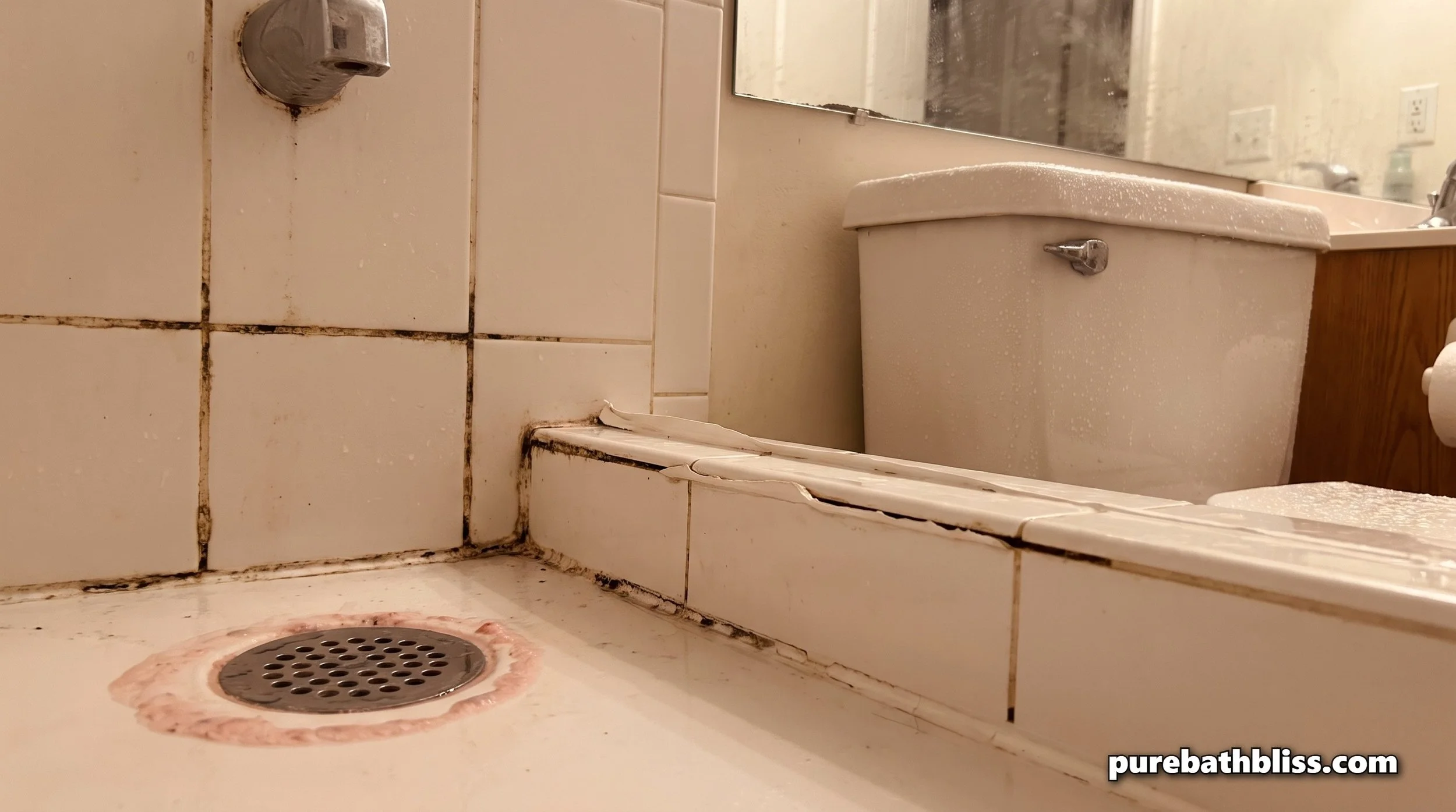
Problem 1: Grout Mold That Appeared Fast and Keeps Coming Back
Mold grows most aggressively between 60 and 80 degrees Fahrenheit, which overlaps almost exactly with typical indoor summer temperatures. In August, outdoor humidity raises baseline indoor relative humidity even in air-conditioned homes, which means the bathroom never fully dries between showers the way it does in drier months. Grout lines are the most vulnerable surface because cement-based grout is porous, moisture penetrates into the grout body rather than sitting on the surface, and the slightly recessed channel allows water to pool rather than run off.
The most common summer grout molds are Cladosporium, which appears as olive to dark brown powdery clusters, and Alternaria, which appears as fuzzy brown patches. Both are strongly associated with sustained high humidity rather than a one-time moisture event, which is why they establish in August bathrooms that were fine in May. Both cause persistent allergic reactions and respiratory irritation in sensitive individuals and both signal that the moisture conditions in the bathroom need to change, not just the mold on the surface.
The treatment that works. Hydrogen peroxide at three percent concentration, applied directly to grout mold and left for fifteen minutes before scrubbing with a stiff grout brush and rinsing, penetrates porous grout surfaces more effectively than bleach. Bleach works primarily at the surface level and leaves a salt residue that attracts moisture. The H₂O₂ oxygen radicals reach the mold at the grout body level rather than just removing the visible surface layer. Our guide to stopping shower mold covers the full treatment and prevention protocol in detail.
The prevention that changes the outcome. Running the exhaust fan for a minimum of 20 minutes after every shower, combined with a squeegee wipe of shower walls after the last shower of the day, removes the surface moisture mold requires to establish. The squeegee habit takes 30 seconds and is the highest-return anti-mold action available without spending anything. Our guide to bathroom exhaust fans and dehumidifiers covers the CFM calculation and timer options that make ventilation passive rather than habit-dependent.
Problem 2: Pink or Orange Slime That Is Not Mold
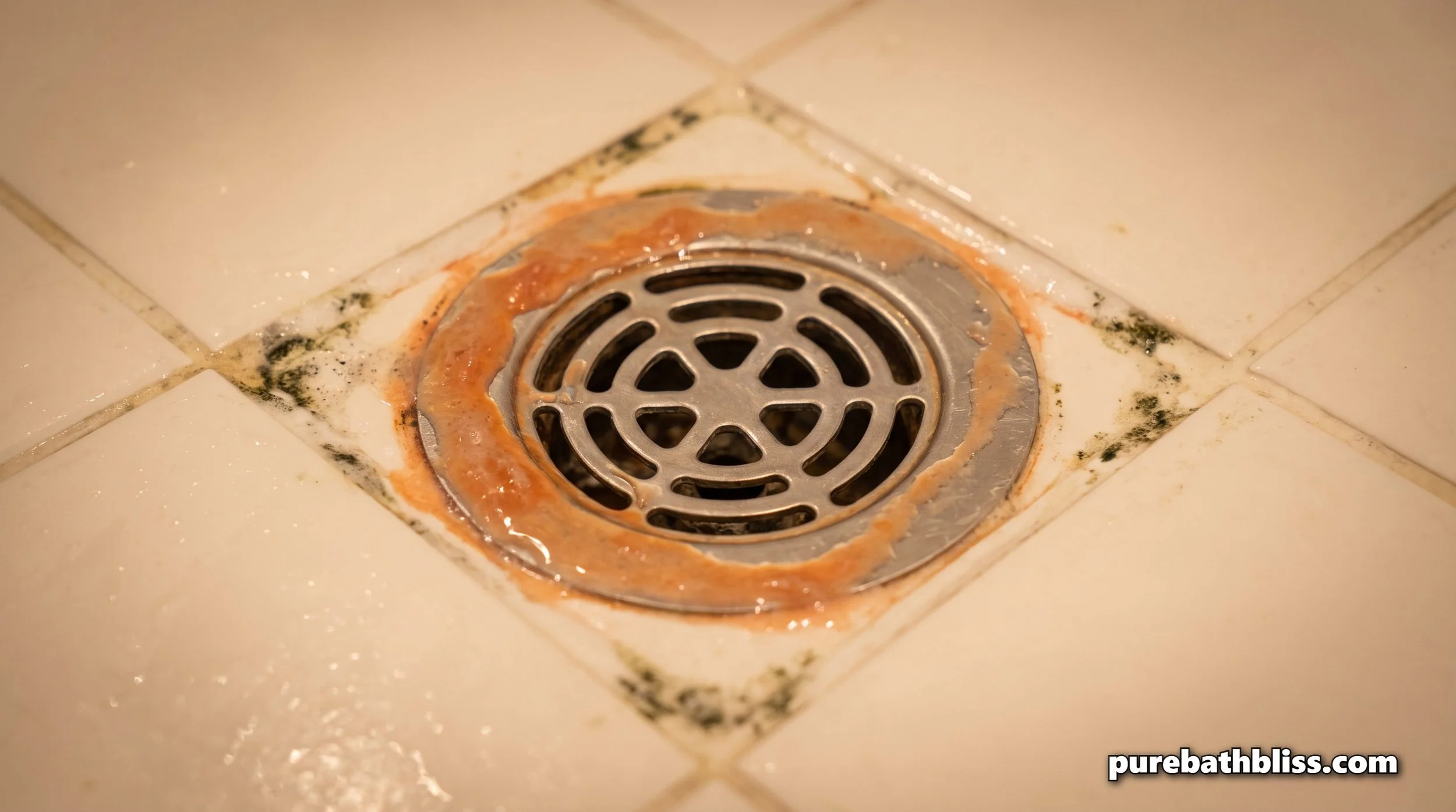
The pink or orange film that appears around shower drains, at the toilet waterline, along grout, and on shower curtains in summer is consistently misidentified as mold. It is Serratia marcescens, an airborne bacterium that produces a red to pink pigment called prodigiosin and thrives specifically in the warm, humid conditions that August creates. The distinction matters because bacteria and fungi respond to different treatments and different prevention strategies.
Serratia marcescens colonizes surfaces by forming a biofilm, a structured bacterial community embedded in a self-produced polysaccharide matrix, which makes it significantly more resistant to cleaning than free-floating bacteria. Surface wiping removes the visible pink layer but leaves the biofilm matrix and the bacteria within it, which is why the color returns within days of cleaning. The dwell time of the cleaning agent is the critical variable that most cleaning attempts skip entirely.
The treatment that disrupts the biofilm. Undiluted three percent hydrogen peroxide applied to the affected surface and left for a minimum of ten minutes, then scrubbed with a stiff brush, rinsed, and dried completely, penetrates and disrupts the biofilm matrix. In summer when the bacterium is most active, weekly preventive application is more effective than reactive spot treatment. The same conditions that prevent mold, reduced surface moisture and soap residue, also remove the nutrient and moisture source Serratia requires to establish, which is why the squeegee habit addresses both problems simultaneously.
Problem 3: Toilet Tank Condensation Dripping to the Floor
The puddle of water that appears around the toilet base in summer and disappears in other seasons is one of the most reliably misdiagnosed bathroom problems. Most households assume wax ring failure or a supply line leak. The actual cause in the majority of summer cases is condensation forming on the cold exterior surface of the toilet tank and dripping to the floor.
The mechanism is the same as condensation on a cold drink glass in summer. The water inside the tank arrives from the cold supply line at 50 to 60 degrees Fahrenheit. The bathroom air in August may be at 75 to 80 degrees with 70 to 80 percent relative humidity. When warm, humid air contacts the cold porcelain tank exterior it reaches its dew point and moisture condenses on the surface. In low-humidity months this evaporates quickly. In August it accumulates faster than it evaporates and runs to the floor.
Confirming the diagnosis. Dry the exterior of the tank completely with a towel. Wait 30 minutes without flushing. If moisture reappears on the exterior without any flushing, it is condensation from the air rather than a leak. If moisture appears only after flushing, investigate the supply line connection and tank-to-bowl bolts for an actual leak source. The diagnostic takes 30 minutes and saves the cost of an unnecessary plumber visit.
The fix. A toilet tank insulation liner bonded to the interior tank walls raises the exterior surface temperature above the dew point of the room air and eliminates the condensation entirely. For a seasonal solution during peak summer humidity, a compact dehumidifier maintaining relative humidity below 50 percent removes the condensation conditions without any tank modification. The floor around the toilet staying continuously damp accelerates wax ring degradation and softens the subfloor, making addressing this now significantly less expensive than the water damage repair it eventually causes if ignored. Our guide to why your bathroom smells covers how a continuously damp toilet base contributes to persistent bathroom odor.
Problem 4: The Musty Smell That Surface Cleaning Does Not Fix
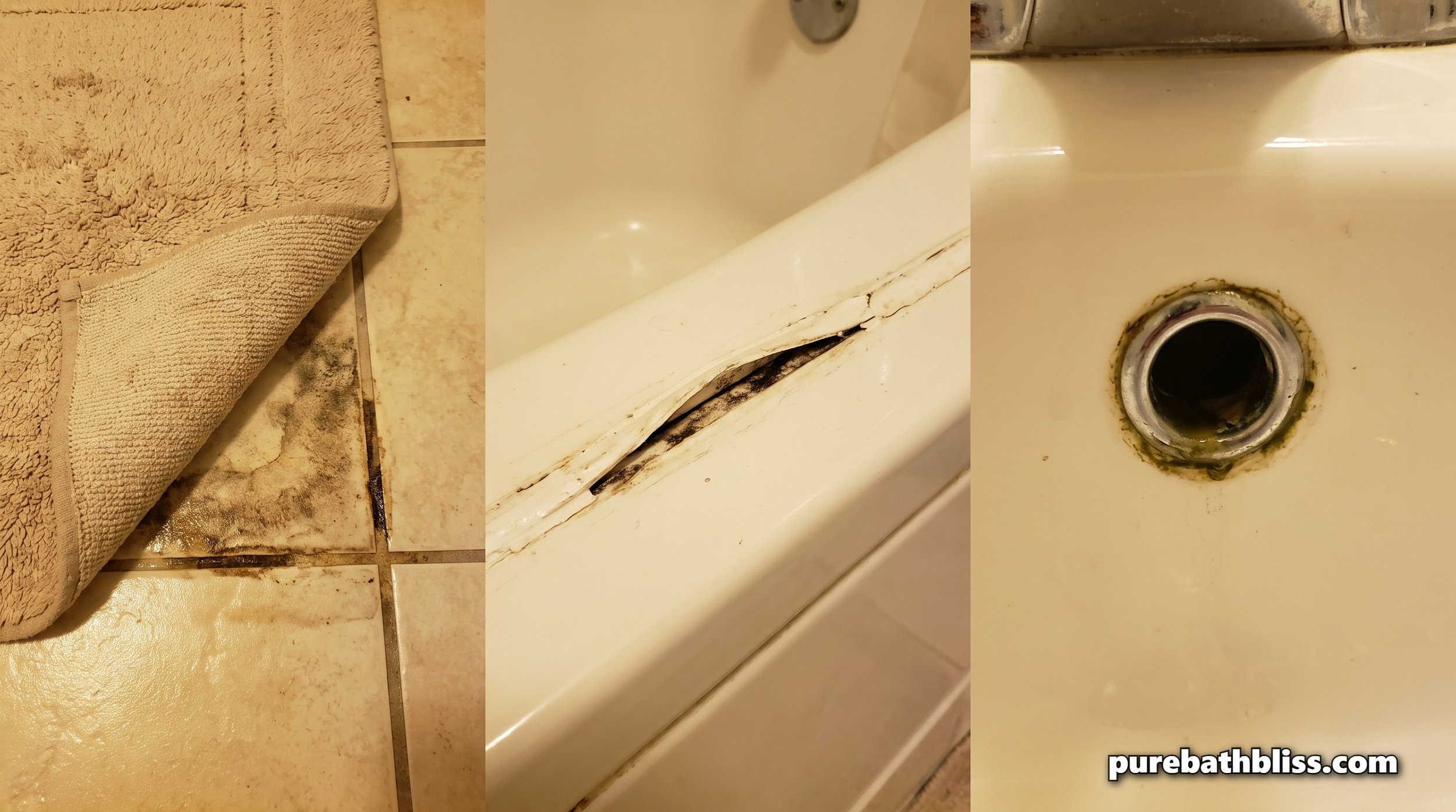
A musty bathroom smell that persists after cleaning is coming from a moisture source that surface cleaning cannot reach. In summer, elevated ambient humidity keeps these hidden sources continuously damp rather than drying out between cleaning sessions, which is why the smell intensifies in August in bathrooms that were fine in spring.
The bath mat. A conventional fabric or rubber-backed bath mat traps moisture between its underside and the floor with every use. In summer humidity the floor never fully dries between uses and mold establishes in this perpetually damp zone. Lift the mat and inspect the floor beneath it. If the surface is damp or discolored the mat is the odor source. Replacing it with a diatomaceous earth bath mat eliminates the problem because the stone dries completely within minutes of use rather than trapping moisture against the floor for hours.
The caulk line. Caulk that has lifted from the tub or shower surround allows water to seep behind the surface and reach the wall substrate and subfloor beneath. This moisture source is completely inaccessible to surface cleaning and produces a persistent odor from the tub area without any visible mold on accessible surfaces. Lifted caulk requires recaulking rather than cleaning. Our guide to recaulking a tub correctly covers the full preparation and technique.
The sink overflow channel. The overflow hole in a bathroom sink connects to an internal channel that accumulates soap scum, hair, and bacterial biofilm that produces a musty odor disproportionate to its size. A small funnel, half a cup of baking soda, and one cup of white vinegar flushed through the overflow hole, left to fizz for ten minutes, then flushed with hot water clears the biofilm completely. The same acid chemistry that removes mineral buildup from kitchen appliances works here. Our sister site Pure Kitchen Bliss covers the citric acid and vinegar approach to removing mineral and biological buildup from appliances and textiles using the same chemistry on a larger scale.
Problem 5: Lifting and Darkening Caulk at the Tub Line
Caulk at the tub surround fails faster in summer for two reasons. Thermal expansion causes the tub to expand slightly in summer heat and contract in winter cold, working on the caulk joint continuously. Caulk applied when the tub was cold and contracted sits under slight tension when the tub expands in summer heat, which accelerates edge lifting. Simultaneously, continuous surface dampness of summer humidity accelerates mold growth within acrylic caulk, producing the black discoloration that appears between July and September in most bathrooms.
Darkening caulk that has not yet lifted can sometimes be treated with hydrogen peroxide applied with a cotton ball pressed into the surface for fifteen minutes. If the discoloration does not respond, the mold is within the caulk body rather than on its surface and the caulk needs replacement. Caulk that has lifted from either surface cannot be resealed and must be replaced regardless of its visual condition.
August is actually the best time to recaulk. Warmer temperatures allow silicone caulk to cure faster and the tub is in its thermally expanded state, meaning the joint is at its narrowest when the caulk is applied. Caulk applied when the tub is expanded will not be under tension when it contracts in winter, producing a longer-lasting seal than caulk applied in a cold bathroom in November.
The Four Products Worth Having Right Now
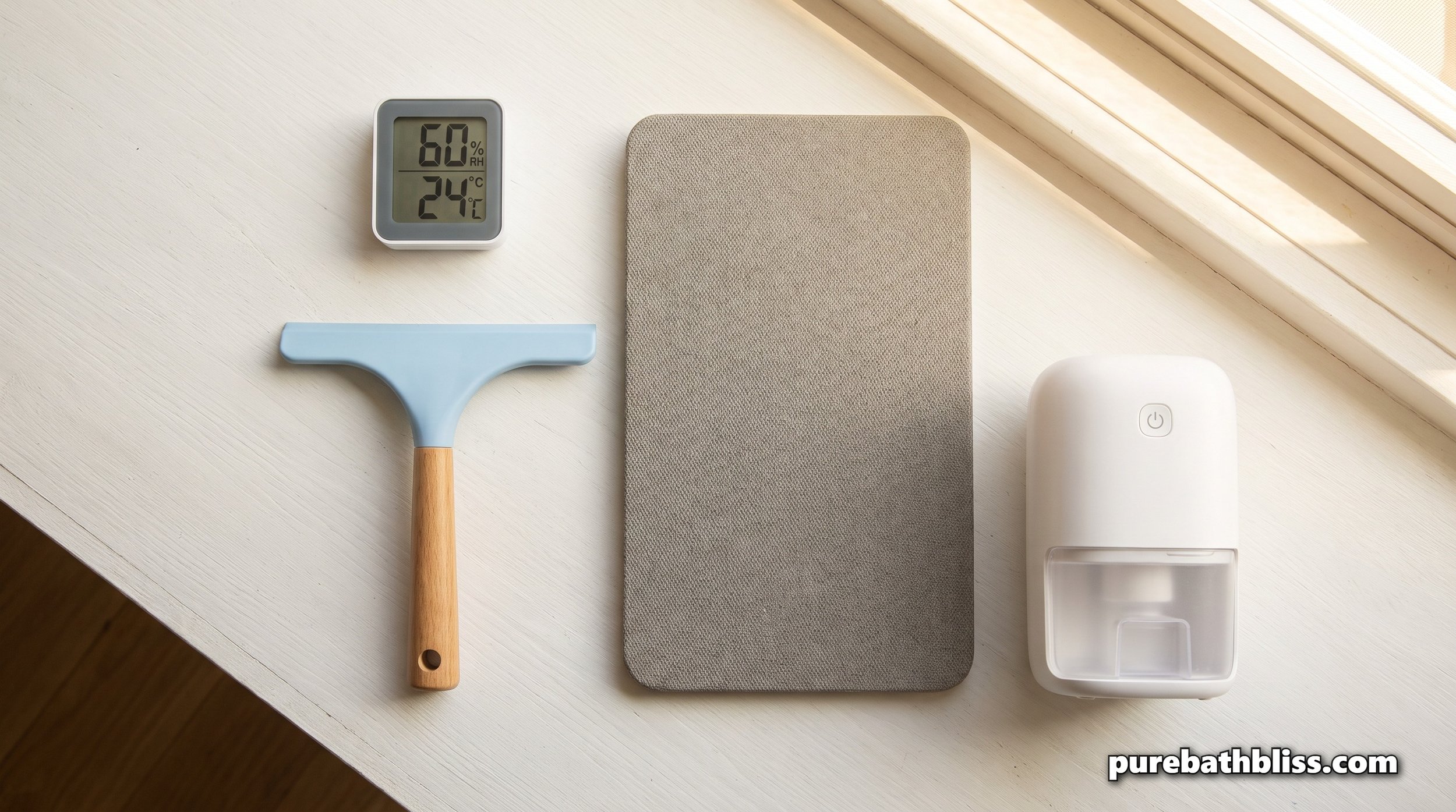
A digital hygrometer placed in the bathroom gives you the actual relative humidity reading rather than guessing from condensation and smell. Anything above 60 percent is the threshold at which mold and bacteria establish aggressively in summer conditions. At under $15 it is the highest-return diagnostic tool available for any bathroom with recurring humidity problems.
A silicone shower squeegee hung inside the shower removes surface moisture from walls and floor in 30 seconds after the last shower of the day. This single habit reduces the moisture available for mold and Serratia marcescens colonization more than any cleaning product. Prevention at this level costs nothing beyond the squeegee and 30 seconds of daily time.
A diatomaceous earth bath mat replaces the conventional mat that traps moisture against the floor in summer humidity. Diatomaceous earth absorbs water instantly and dries completely within minutes, eliminating the perpetually damp floor surface under a conventional mat that is one of the most reliable hidden mold sources in any summer bathroom.
A compact bathroom dehumidifier running during July and August maintains relative humidity below 50 percent and addresses the root cause of all five summer problems simultaneously. The toilet condensation stops. Mold growth slows dramatically. Serratia loses its moisture conditions. The caulk dries between showers. For a bathroom struggling with multiple humidity issues right now it is the single highest-impact purchase available.
| Problem | What It Actually Is | Why Worse in Summer | Correct Fix | Prevention |
|---|---|---|---|---|
| Dark grout mold | Cladosporium or Alternaria fungal mold in porous grout | Peak growth temp overlaps with indoor summer temps. Bathroom stays damp longer between showers. | 3% hydrogen peroxide, 15 minute dwell, stiff brush scrub, rinse. Seal grout after treatment. | 20-minute exhaust fan runtime after every shower. Daily squeegee after last shower. |
| Pink or orange slime | Serratia marcescens bacterial biofilm. Not mold. | Warm humid conditions accelerate bacterial colonization and biofilm formation rate. | Undiluted 3% H₂O₂, 10 minute dwell minimum, scrub, rinse, dry completely. Weekly in summer. | Remove soap residue and surface moisture after each shower. Squeegee habit. |
| Puddle at toilet base | Condensation on cold tank exterior. Not a plumbing leak in most summer cases. | High outdoor humidity raises bathroom dew point above cold tank surface temperature. | Tank insulation liner or compact dehumidifier maintaining RH below 50%. | Dehumidifier prevents recurrence. Confirm with dry-tank 30-minute diagnostic before calling plumber. |
| Persistent musty smell | Hidden moisture source: bath mat underside, lifted caulk, or sink overflow biofilm. | High ambient humidity prevents hidden moisture sources from drying between uses. | Lift and inspect mat. Recaulk if lifted. Flush overflow hole with baking soda and vinegar. | Diatomaceous earth bath mat. Monthly overflow flush. Intact caulk line year-round. |
| Lifting or dark caulk | Thermal expansion stress plus mold growth within caulk body from continuous summer dampness. | Thermal cycling greatest in summer. Surfaces stay wet longer, accelerating mold in caulk. | H₂O₂ treatment for surface discoloration. Full recaulk for lifted or deeply discolored caulk. | August is the best month to recaulk — tub is expanded, silicone cures faster in heat. |