Dehumidifier vs. Exhaust Fan: Do You Really Need Both for a Healthy Bathroom?
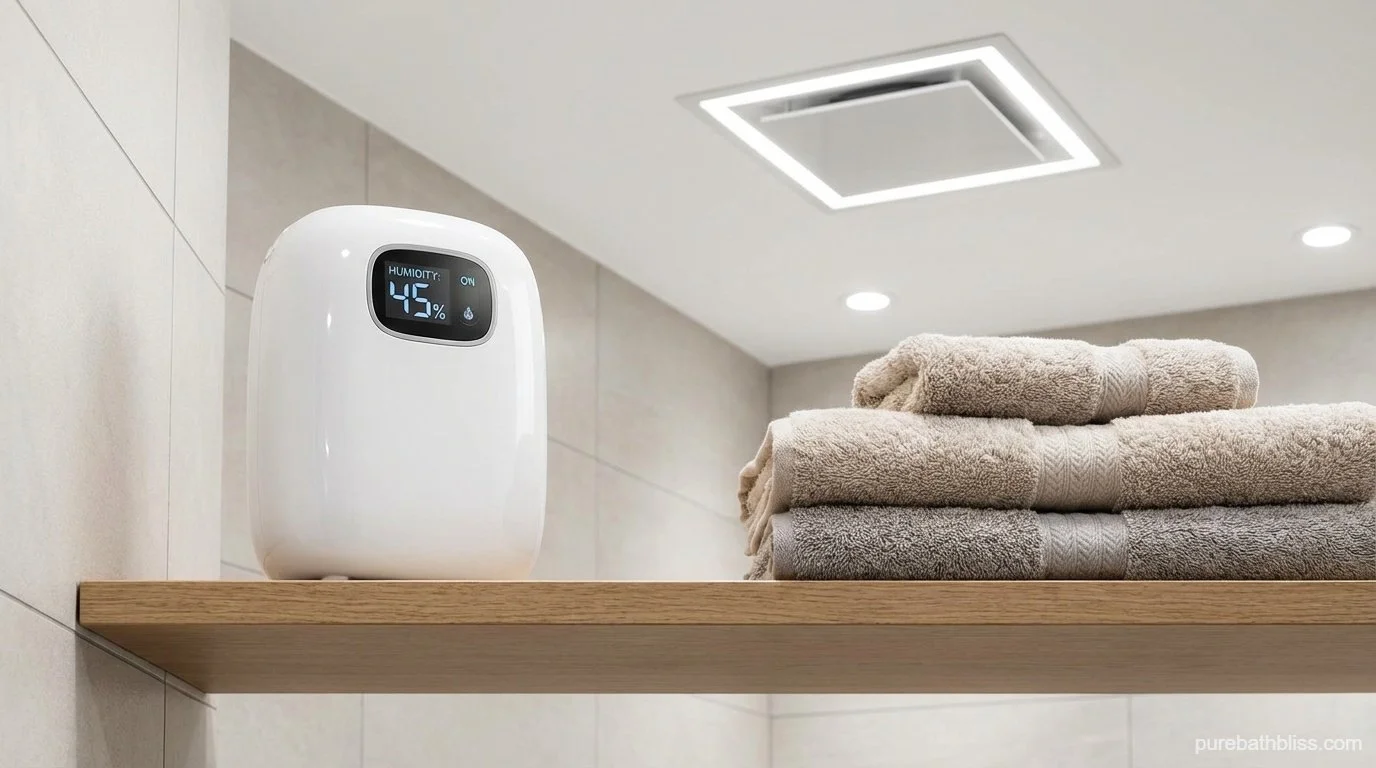
You step out of the shower. The mirror is foggy. The air feels heavy. The towels are damp.
You flip the switch for the ceiling fan (which sounds like a jet engine taking off), but 20 minutes later, the room still feels like a swamp.
This is the "Bathroom Moisture Trap." And if you are trying to prevent mold naturally, this lingering humidity is your worst enemy.
We get this question constantly at PureBathBliss: "If I have an exhaust fan, why would I need a dehumidifier? Aren't they doing the same thing?"
The short answer is: No.
They are two different tools that solve two different physics problems. Depending on your home’s age, your climate, and your bathroom’s layout (especially if you are windowless), relying on just one might be the reason your grout keeps turning black.
Here is the definitive breakdown of the Fan vs. Dehumidifier debate—and how to know which one you actually need.
The Exhaust Fan: The "Heavy Lifter"
Think of your exhaust fan as the bouncer at a club. Its job is to physically remove bad air from the room and throw it outside.
What it does: It sucks up air containing steam, odors, and heat and pushes it through ductwork to the outdoors.
Best for: The "Active" phase. It is designed to handle the massive spike in steam while you are showering.
The Limitation: Fans rely on airflow replacement. If your bathroom door is sealed tight and there is no gap at the bottom, the fan is trying to suck air out of a vacuum. It can’t work efficiently. Plus, most builder-grade fans are woefully underpowered for the size of the room.
The Dehumidifier: The "Finisher"
Think of a dehumidifier as a sponge. It doesn't move air out of the room; it processes the air inside the room.
What it does: It pulls air over cold coils, condensing the moisture into water droplets, which collect in a tank. It physically removes the water from the air.
Best for: The "Passive" phase. It is incredible at drying out damp towels, bath mats, and the water absorbed into the drywall after the fan has been turned off.
The Limitation: Small dehumidifiers work slowly. They cannot keep up with the steam generated by a hot shower in real-time.

The Showdown: Which One Do You Need?
To decide, diagnose your bathroom using these three scenarios.
Scenario A: The "Windowless Box"
Your Setup: No window, standard ceiling fan.
The Problem: Even with the fan on, the mirror stays foggy for 30+ minutes. Towels smell musty after one use.
The Verdict: You Need Both.
Why: Without a window to let in dry, fresh air, your fan is struggling. A dehumidifier is the only way to actively pull that moisture out of the fabrics and walls.
The Strategy: Run the fan during the shower. Run the dehumidifier for 1 hour after.
Scenario B: The "Old Charm" Rental
Your Setup: A window, but no exhaust fan at all.
The Problem: In winter, opening the window is freezing. In summer, opening the window just lets in humid air.
The Verdict: Dehumidifier is Mandatory.
Why: You have no mechanical ventilation. A dehumidifier is your only defense against mold.
Top Tip: Look for a "Desiccant" dehumidifier if your bathroom is cold; they work better in low temperatures than standard compressor units.
Scenario C: The "Modern Sanctuary"
Your Setup: A newer home with a powerful, quiet fan.
The Problem: Occasional steam, but it clears quickly.
The Verdict: Stick with the Fan.
Why: If your mirror clears within 5 minutes of the shower stopping, your fan is doing its job. You can skip the gadget and just add a moisture-loving plant like a Peace Lily to handle the rest.
What to Buy: A Quick Guide
Not all dehumidifiers are created equal. Avoid the tiny $20 "mini" ones on Amazon—they are basically toys.
1. The "Peltier" (Thermo-Electric) Models
Best for: Small powder rooms or half-baths.
Pros: Silent, small, cheap ($40–$60).
Cons: Very slow. Removes maybe 1 pint of water a day.
2. The Compressor Models (The Real Deal)
Best for: Full bathrooms with showers.
Pros: Powerful. Can dry a damp room in 20 minutes.
Cons: Larger, heavier, and makes a humming noise (white noise).
Price: $150+.
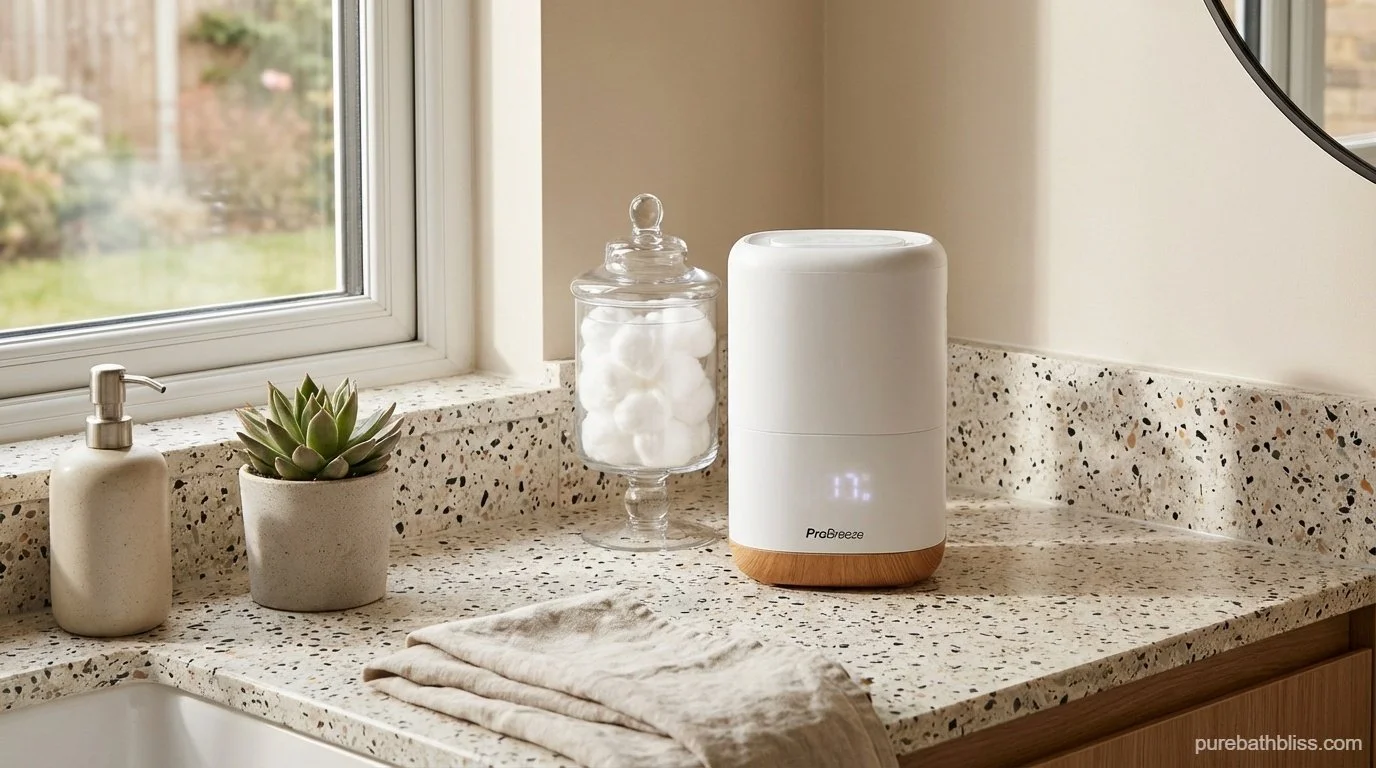
The Bottom Line
If you are fighting a losing battle against black grout spots or funky-smelling towels, stop scrubbing and start drying.
Mold cannot grow without moisture. While an exhaust fan is your first line of defense, a dehumidifier is the secret weapon that ensures your Zero-Waste Sanctuary stays crisp, dry, and healthy.
You have mastered the air. Now, let’s make it smell like a spa. Forget the toxic plugins—here is How to Make a Chic Reed Diffuser for Under $10.