There is a specific quality to October that no other month has. It arrives gradually, in the angle of the afternoon light first, then in the smell of the air, then in the way the evenings feel earlier and heavier than you expected. By mid-October the shift is undeniable. The days are shorter than the nights. The body starts asking for different things than it asked for in September, and different again from what August wanted.
Halloween gets most of October's attention, which makes sense. But Halloween is one night. The rest of October is something quieter and in some ways more interesting, a month-long transition into the darker half of the year that human beings have been marking with ritual for thousands of years. The ancient Celtic festival of Samhain, which is the origin of Halloween, was not primarily about costumes and candy. It was about acknowledging the turning of the year, the drawing inward, and the particular kind of rest that the darker months require.
The bathroom is the right room for this. Here is the October self-care ritual built around it, from the first week of the month through Halloween night itself.
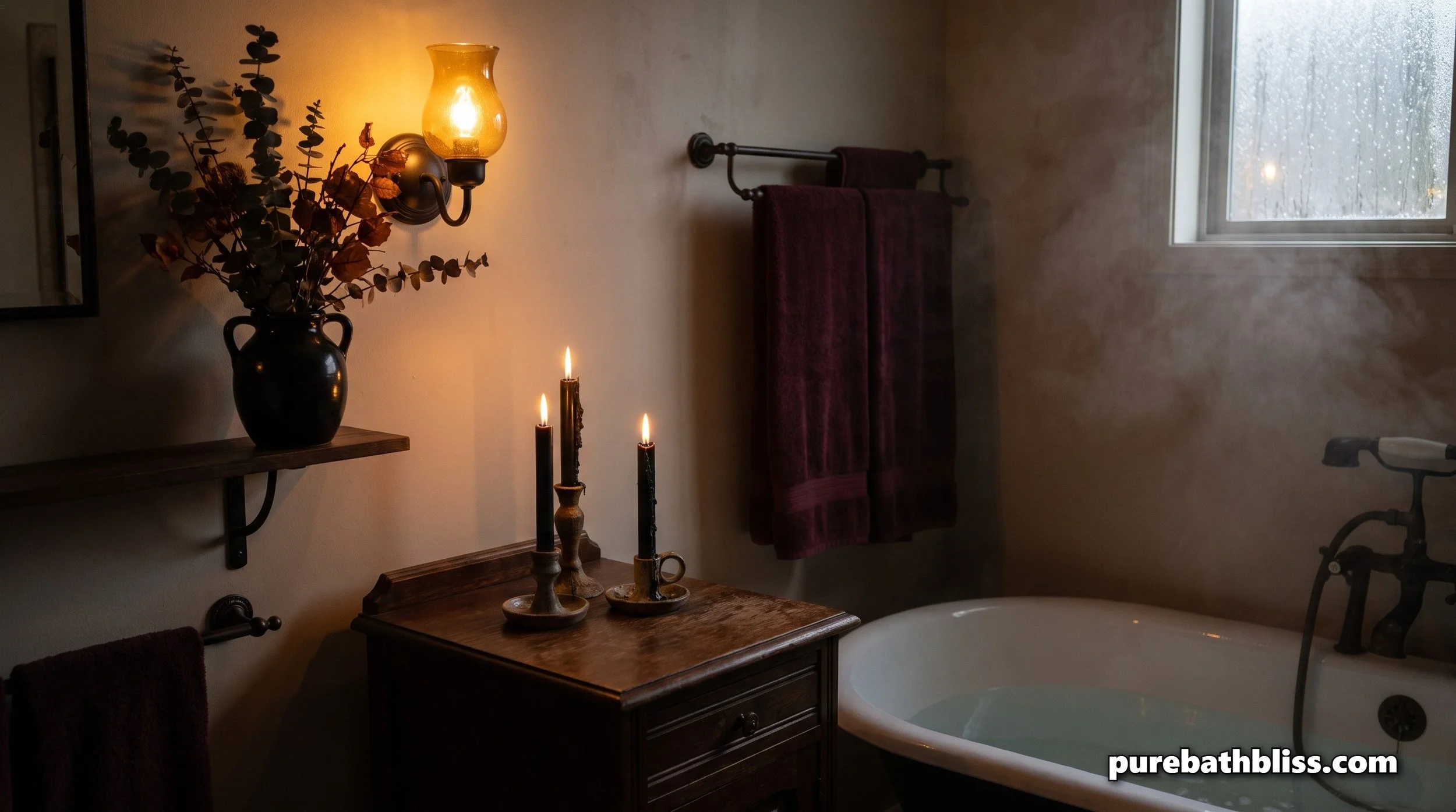
Why October Specifically Asks for This
The body responds to seasonal light changes in measurable ways. As day length shortens through October, melatonin production begins earlier in the evening and serotonin levels can fluctuate, producing the low-grade restlessness or mild melancholy that many people notice in autumn without being able to name. This is not pathology. It is biology. The body is preparing for a different season of life, one that historically involved slower days, more darkness, more rest, and more time spent indoors in warmth.
The problem is that modern life does not adjust to this signal. The schedule stays the same. The screen time stays the same. The stimulation level stays the same. The body is asking to slow down and the calendar is not listening. The result is a kind of low-grade friction that many people carry through October without quite identifying its source.
A deliberate evening ritual in the bathroom, practiced consistently through October, is one of the most effective ways to work with the seasonal signal rather than against it. Not because a bath fixes anything, but because the act of creating a warm, dark, quiet space and entering it intentionally at the end of the day teaches the nervous system that the transition from day to night is worth marking. Over time, that nightly signal becomes a reliable anchor in a month that often feels like it is moving too fast toward something.
The October Bathroom: Setting the Stage
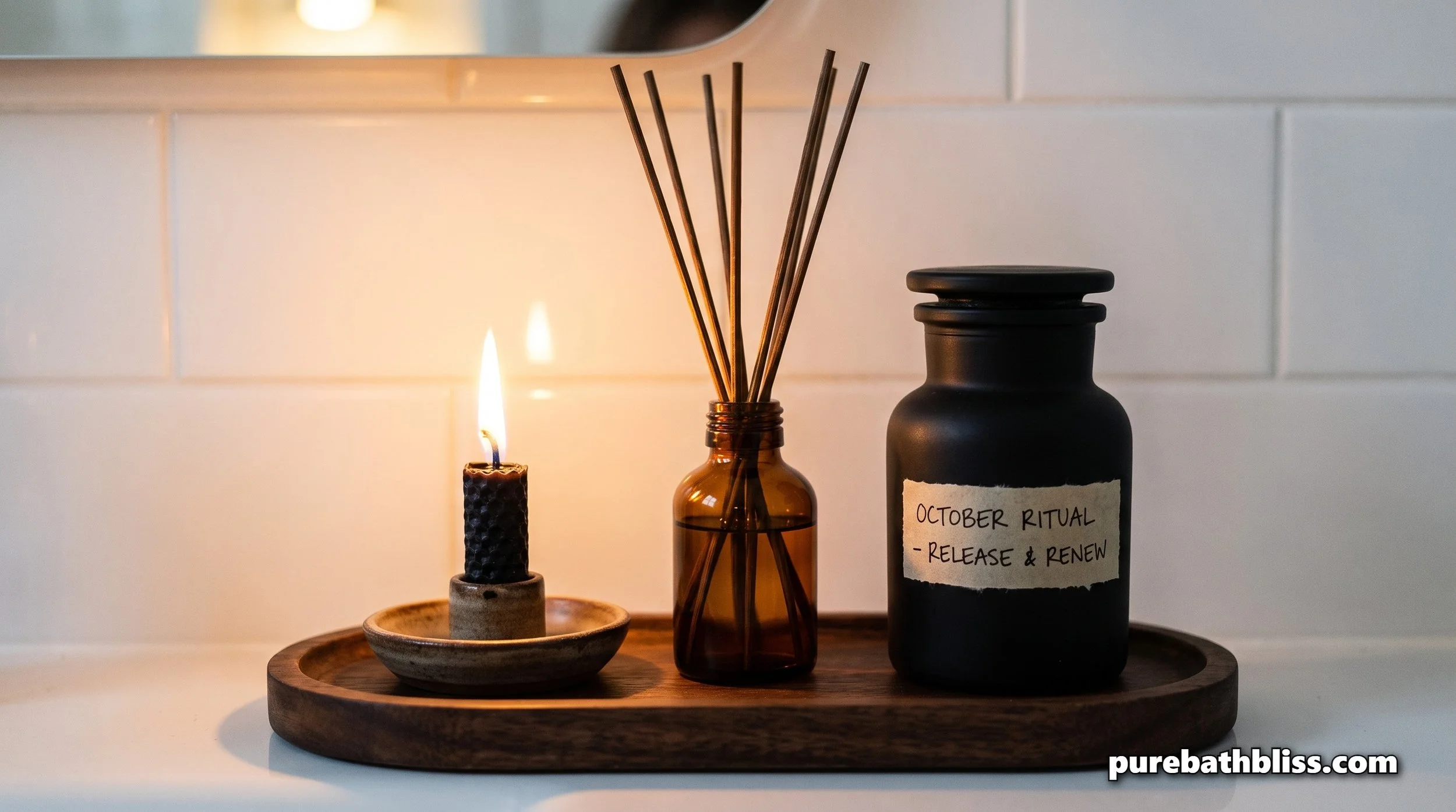
The physical environment of the bathroom matters as much as what you do in it. A brightly lit, cluttered bathroom does not support the kind of quiet nervous system downregulation that an October evening ritual is designed to produce. The stage needs to be set before the ritual begins.
The lighting is the most important element and the easiest to change. Switch off the overhead bathroom light and use candles or a single warm-toned lamp instead for the evening ritual. The shift from overhead lighting to candlelight produces a genuine physiological effect on melatonin and cortisol levels. It is not aesthetic preference. It is neurological signal. Three black beeswax candles on the vanity, positioned safely away from anything flammable, produce enough light to navigate the bathroom comfortably while creating the amber warmth that the nervous system reads as evening and rest. Our guide to making DIY beeswax candles for the bathroom covers both the DIY recipe and the scent blends that suit October specifically, with the clove and cedarwood combination being the most seasonally appropriate.
The scent layer follows naturally from the candles. For October, the reed diffuser blend that suits the ritual is the woody autumn combination: cedarwood 40 percent, sandalwood 30 percent, vetiver or patchouli 30 percent. This is a deliberately darker, more grounding scent profile than the summer citrus and eucalyptus combination, and it reads as October in the same way that certain music reads as autumn. It is not decoration. It is environment.
The October bathroom setup is covered in detail in our Halloween bathroom makeover guide and our fall bathroom refresh. The combination of dark towels, dried botanicals, amber lighting, and atmospheric scent takes about thirty minutes to put together and lasts the entire month.
The October Morning Ritual: The Spooky Season Shower
October mornings are dark in a way that July mornings are not, and the morning shower carries more weight as a result. For many people it is the first genuinely warm and sensory thing that happens in a day that starts in the dark. It is worth treating accordingly.
Hang silver dollar eucalyptus in the shower, bruised with a rolling pin before tying, and add a few dried cedar stems or dark fern fronds to the bundle for a more atmospheric visual effect than standard eucalyptus alone. The eucalyptol released by the steam hits the sinuses and the nervous system simultaneously, producing a genuine physiological alertness that is meaningfully different from the artificial alertness of caffeine. On a dark October morning, that distinction matters. Our guide to hanging eucalyptus in the shower correctly covers the bruising technique that doubles the scent release, the varieties that work best in autumn, and how long a bundle lasts.
The water temperature is worth adjusting slightly for October mornings. A shower that starts warm and finishes with thirty seconds of genuinely cold water activates the sympathetic nervous system briefly, releasing norepinephrine and producing an alertness that carries through the morning. It is not the full cold immersion we cover in the ice bath guide. It is thirty seconds of cold at the end of a warm shower, a brief contrast that sends a clear signal to a body that is otherwise reluctant to wake up on a dark autumn morning.
The October Evening Ritual: The Sanctuary Bath
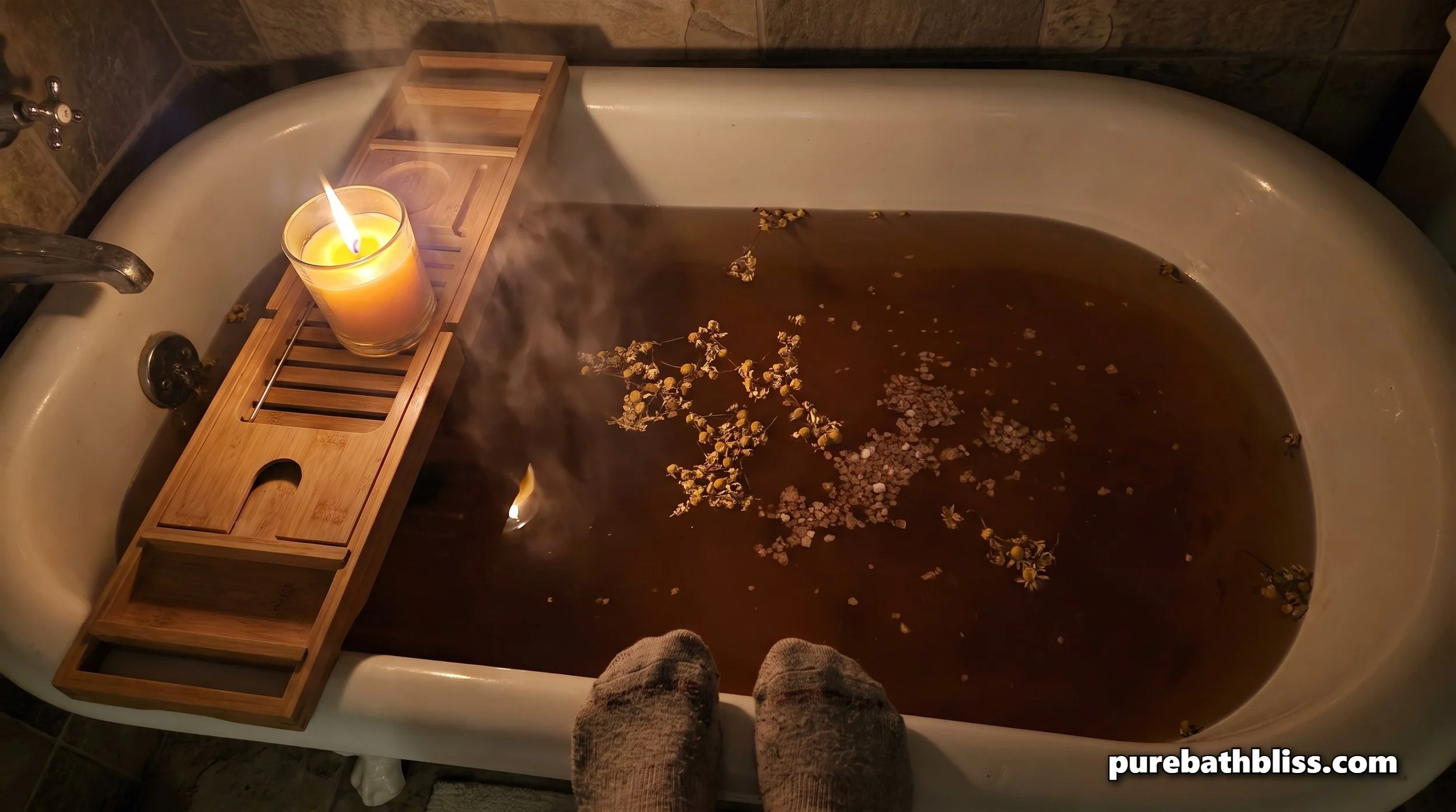
The evening ritual is where October self-care lives most completely. Not every evening, and not with any particular pressure of performance. Two or three times a week is enough to establish the rhythm that the ritual is designed to create.
The bath itself follows the therapeutic soaking protocol we cover in our Epsom salt and magnesium flakes guide, adapted for October specifically. One cup of magnesium chloride flakes dissolved in warm water at 39 to 40 degrees Celsius. Three chamomile tea bags steeped in a cup of hot water and added to the bath. Five drops of cedarwood essential oil pre-diluted in a teaspoon of fractionated coconut oil. No phone. No podcast. No task. Twenty minutes of genuine stillness in warm, dark, scented water.
The stillness is the hardest part for most people and also the most important part. The magnesium supports nervous system downregulation. The warm water activates the parasympathetic response. The chamomile provides mild sedative support through apigenin. But none of these work at full effect if the brain is processing information simultaneously. The bath is the pause. The stillness is not incidental to it. It is the entire point.
What to do with the mind during the stillness is a fair question. Not nothing, because the mind does not do nothing. The practice that most people find most compatible with a dark October bath is simply noticing: the warmth of the water, the smell of the cedarwood, the sound of the occasional creak of the house settling, the quality of the candlelight on the ceiling. Noticing rather than thinking. Presence rather than processing. This is not mysticism. It is the same attentional practice that underlies most evidence-based stress reduction protocols, applied to the most naturally conducive environment in the house for it.
The Spooky Season Scent Ritual
Scent is the sense most directly connected to memory and emotion, and October has a specific olfactory character that is unlike any other month. The combination of cold air, dry leaves, wood smoke, and the warm spices of autumn baking creates a composite smell that the limbic system files under something like comfort, return, and preparation.
The bathroom scent ritual for October is about leaning into this deliberately rather than accidentally. A reed diffuser with the dark woody blend running continuously provides the passive baseline. The beeswax candle adds a warm, slightly honeyed foreground note when it is lit. The eucalyptus in the shower adds the aromatic morning counterpoint. And for the bath specifically, a small amount of clove and cedarwood in the bath water, properly diluted in carrier oil, adds the final spice note that makes the whole olfactory picture unmistakably October.
The complete natural scent approach to the bathroom, covering which oils to use, the delivery methods that work best in a steam environment, and how to layer them without any one note dominating, is covered in our guide to making your bathroom smell like a spa without synthetic fragrance. The October versions of those blends simply shift the palette from citrus and eucalyptus toward cedar, clove, and vetiver.
Halloween Night: The Ritual Closes the Month
Halloween night is worth treating as the culmination of the October ritual rather than just the holiday at the end of it. After the trick-or-treating is done and the kids are in bed from their post-candy magnesium bath, there is usually a quiet hour or so for the adults in the house before sleep. This is the right moment for the most complete version of the October ritual.
Light all three candles. Run the bath with the full magnesium and chamomile protocol. Add the cedarwood and clove blend. Turn off every light in the bathroom. Sit in the dark water with the candles as the only illumination and do genuinely nothing for twenty minutes. The Halloween bathroom you decorated at the beginning of the month, the dark botanicals, the amber light, the atmospheric scent, all of it was leading to this moment. It is the most deliberately designed room in the house on the one night of the year when the atmosphere is exactly right for a genuine ritual of rest and transition.
November arrives the next morning with its own demands. October deserves a proper closing. The bathroom is the right place to give it one.
The October Bathroom Ritual at a Glance
| Ritual Element | When | What It Does | Time Required | Frequency |
|---|---|---|---|---|
| Set the October bathroom | First week of October | Creates the physical environment for the month. Dark towels, dried botanicals, amber lightbulb, autumn diffuser blend. | 30 minutes once | Once at the start of the month |
| Spooky season shower | Morning | Eucalyptus steam aromatherapy. Optional 30-second cold finish for alertness on dark mornings. | Standard shower duration | Daily |
| Candle and scent ritual | Evening | Amber candlelight supports melatonin. Cedarwood and clove scent signals transition to evening mode. | 2 minutes to set up | Every evening during bathroom routine |
| The sanctuary bath | Evening, 60 to 90 minutes before bed | Magnesium absorption, parasympathetic activation, cortisol reduction, sleep onset preparation. | 20 minutes | 2 to 3 times per week |
| Halloween closing ritual | Halloween night after kids are in bed | The most complete version of the October ritual. Full atmosphere, full mineral bath, full stillness. Marks the transition out of October. | 30 to 40 minutes | Once, on Halloween night |
The ritual does not require every element every day. Pick the one or two that fit your schedule on any given evening and let the rest be aspirational. A single candle and twenty minutes in the bath is enough. The consistency of returning to the same quiet space at the same time of evening is more important than the completeness of any single session. That consistency is what teaches the nervous system that October evenings are for slowing down, and that lesson carries well past Halloween into the months that genuinely need it.