Transparency Note: We independently select these products based on research and user reviews. If you buy something through our links, we may earn a commission.
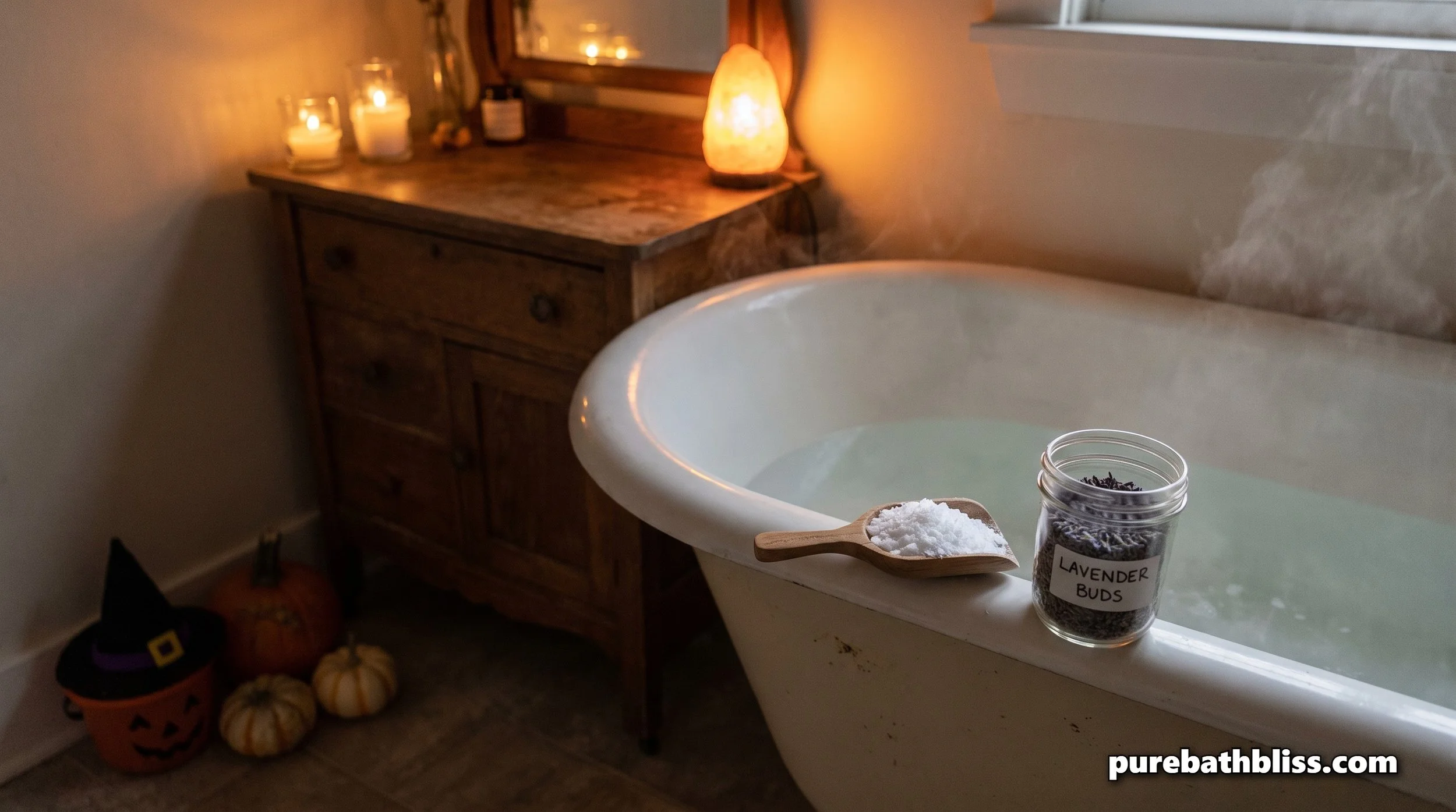
By nine on Halloween night, our house has a specific energy. The kids are back from trick-or-treating, the candy haul is spread across the kitchen table for inspection, and nobody is remotely ready for bed. The combination of sugar, excitement, cold air, and the sheer sensory overload of Halloween night creates a state of activation in children that a standard bedtime routine cannot reliably manage.
We started doing a warm magnesium bath as part of the post-Halloween routine about three years ago and the difference is consistent and noticeable. Not because it has some magic detox power, but because the combination of warm water, dissolved magnesium, and a genuinely calm bathroom environment activates the parasympathetic nervous system in a way that nothing else in the wind-down toolkit does as reliably. Within twenty minutes of getting out of the bath, children who were bouncing off the walls are genuinely ready for sleep.
Here is the recipe, the science behind why it works, and the complete post-Halloween wind-down routine that uses the bath as the centerpiece.
What Actually Happens During a Sugar Rush
The sugar rush is real, though it is slightly different from how it is popularly understood. According to Dr. Mike Ren at Baylor College of Medicine, a sugar high is a temporary spike in blood glucose that leads to increased energy, elevated mood, and heightened alertness. The body responds to this spike by releasing insulin rapidly, which then causes blood glucose to drop, sometimes sharply, producing the familiar crash of irritability, fatigue, and difficulty regulating emotions.
On Halloween night specifically, the sugar rush is compounded by several other activation factors: the physical activity of walking a neighborhood for an hour or two, the social stimulation of interacting with neighbors and friends, the emotional excitement of the costume and the candy haul, and often a later-than-usual start to the bedtime routine. The child arriving home is not just sugared up. They are physiologically and neurologically activated across multiple systems simultaneously.
The transition from that state to sleep requires more than just putting them in bed and hoping for the best. The nervous system needs genuine downregulation, not just the removal of stimulation. This is where the warm bath earns its place in the post-Halloween routine.
Why a Warm Bath Works
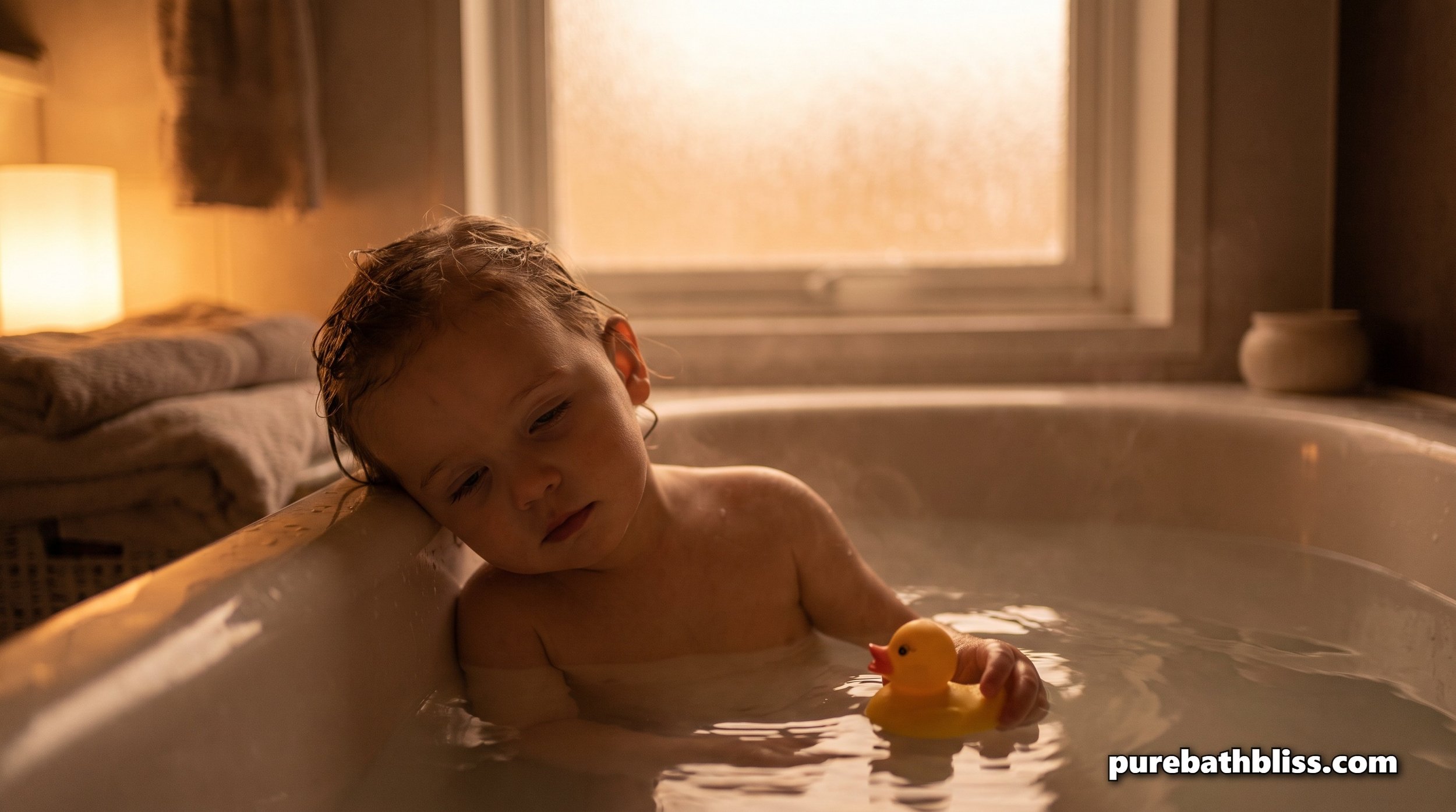
Warm water immersion activates the parasympathetic nervous system, the rest-and-digest branch that counteracts the sympathetic fight-or-flight activation that trick-or-treating has been running all evening. The warmth causes vasodilation, heart rate decreases, and cortisol levels drop. The steam creates a mild sensory envelope that reduces the input load from the environment. The combination is the physiological equivalent of a hard reset on an overstimulated nervous system.
The sleep benefit comes from what happens after the bath. Core body temperature needs to drop slightly for sleep onset to occur. When a child exits a warm bath, their body dissipates the accumulated heat and core temperature drops, which mimics and reinforces the natural pre-sleep temperature decline. This is the same mechanism we cover in the adult context in our Epsom salt and magnesium flakes therapeutic bath guide. The timing matters: a bath taken sixty to ninety minutes before the intended sleep time produces the best sleep onset results because the temperature drop coincides with lying down in bed.
On Halloween, where bedtime is likely already running late, getting the bath started as soon as you are home from trick-or-treating gives you the best chance of hitting that timing window.
Why Magnesium Specifically
Magnesium is involved in over 300 enzymatic reactions in the human body, including the regulation of the nervous system, the production of serotonin and melatonin, and the management of cortisol. Magnesium deficiency is associated with heightened anxiety, poor sleep quality, and difficulty regulating stress responses, all of which are relevant to a child who has just spent three hours in full Halloween activation mode.
The transdermal absorption of magnesium through bath water is a genuinely supported mechanism. Magnesium chloride flakes dissolve in warm water and the magnesium ions are absorbed through the skin during a soak. Magnesium chloride has a higher bioavailability and skin absorption rate than magnesium sulfate (Epsom salt), making it the better choice for this specific application where the goal is nervous system support and sleep promotion rather than muscle recovery.
A word of honesty about the word "detox": the body's actual detoxification systems are the liver and kidneys, and no bath ingredient meaningfully accelerates those processes. What a magnesium bath genuinely does is support the nervous system's downregulation through mineral absorption, warm water physiology, and the ritual environment. That is still a meaningful and real benefit, worth pursuing for exactly what it is rather than for exaggerated claims about toxin elimination.
The Halloween Wind-Down Bath Recipe
For Children Ages 2 to 6
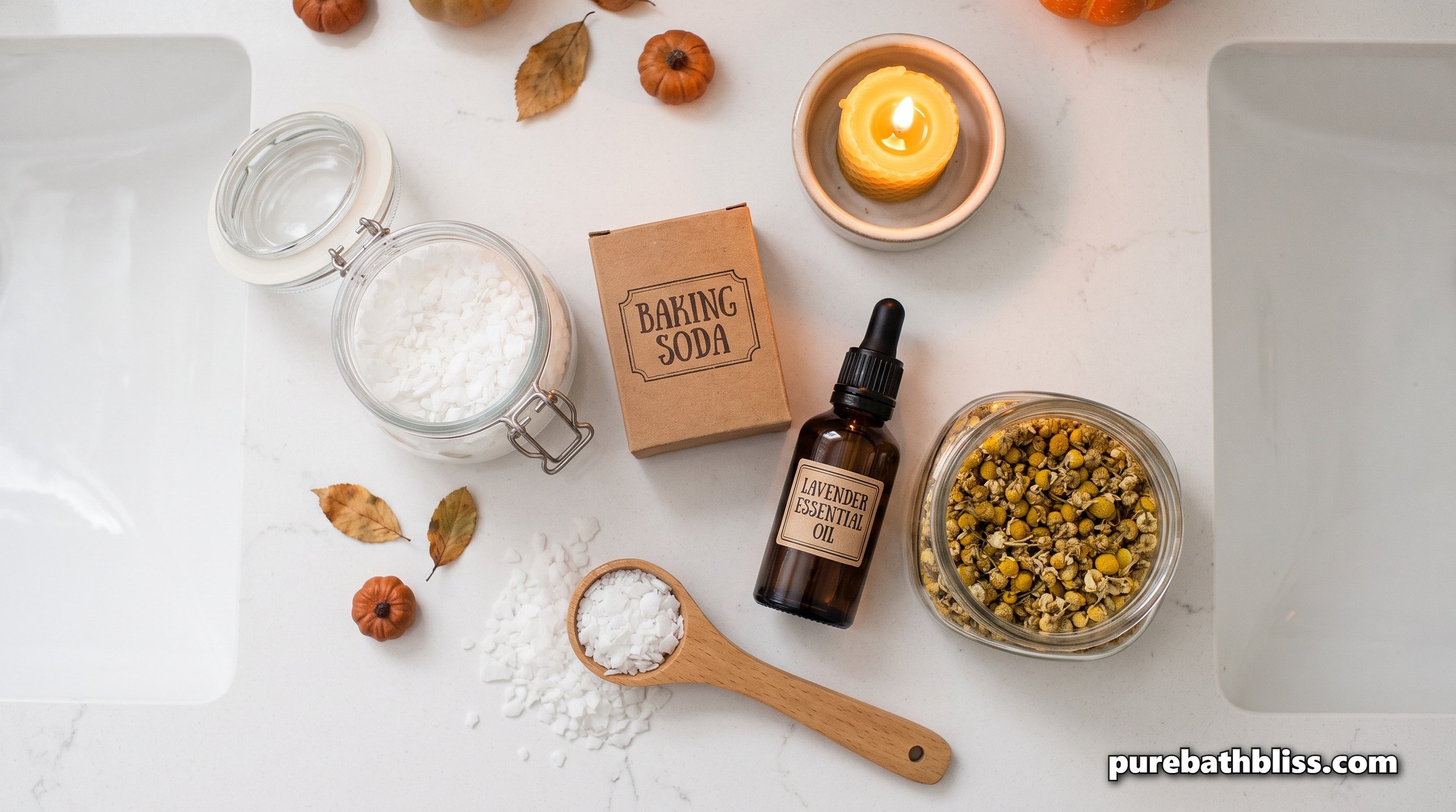
¼ cup magnesium chloride flakes
2 tablespoons baking soda
2 chamomile tea bags steeped in one cup of hot water for five minutes, then added to the bath
Water temperature: warm but not hot, around 37 to 38 degrees Celsius
No essential oils for children under 3. For ages 3 to 6, one drop of properly diluted lavender in a teaspoon of carrier oil only.
For Children Ages 6 and Up
¼ cup baking soda
3 chamomile tea bags or a handful of dried chamomile flowers in a muslin bag
3 drops lavender essential oil pre-mixed into a teaspoon of fractionated coconut oil, added to the running water
Water temperature: 38 to 39 degrees Celsius
Method
Step 1: Draw the bath before the children finish their candy inspection and costume removal. Having the bath ready to get into removes the friction of waiting and helps maintain the wind-down momentum.
Step 2: Add the magnesium flakes under the running water so they dissolve fully before the child gets in. Add the baking soda the same way. Stir with your hand to confirm both are fully dissolved.
Step 3: Add the chamomile tea or muslin bag. Chamomile contains apigenin, a compound with documented mild sedative properties that binds to the same brain receptors as benzodiazepines at much lower intensity. The effect is gentle but real and chamomile is the most appropriate herbal addition to a children's bath for sleep purposes.
Step 4: If using lavender for older children, add the pre-diluted essential oil to the running water, not directly to the bath. Never add undiluted essential oil directly to a child's bath water.
Step 5: Soak for fifteen to twenty minutes. Do not let the bath run cold. Top up with warm water if needed to maintain temperature. The temperature maintenance is what keeps the parasympathetic activation sustained.
Age-Appropriate Dosing Guide
| Age | Magnesium Flakes | Baking Soda | Chamomile | Essential Oils | Water Temp |
|---|---|---|---|---|---|
| Under 2 | Consult pediatrician first | 1 tablespoon maximum | 1 tea bag only | None | 36 to 37°C |
| 2 to 6 years | ¼ cup | 2 tablespoons | 2 tea bags | None under 3. Ages 3 to 6: 1 drop lavender in 1 tsp carrier oil only. | 37 to 38°C |
| 6 to 12 years | ½ cup | ¼ cup | 3 tea bags or a muslin bag of dried chamomile | 3 drops lavender pre-diluted in 1 tsp carrier oil | 38 to 39°C |
| 12 and up | 1 cup | ¼ cup | 3 to 4 tea bags or dried chamomile in muslin bag | 5 drops lavender pre-diluted in 1 tsp carrier oil. Can add 2 drops cedarwood. | 39 to 40°C |
A note on essential oil safety for children specifically: lavender is the most studied and generally regarded as the safest essential oil for children over three when properly diluted. Even so, a single drop in a carrier oil is the maximum for a bath. The goal here is a gentle calming note in the steam rather than an aromatherapy treatment, and restraint produces a better and safer result than a heavy hand with the oils.
The Bathroom Environment During the Bath
The bath recipe is one half of the wind-down. The bathroom environment is the other half. A brightly lit bathroom with the overhead light on full, a loud exhaust fan, and a pile of costume accessories on the floor is not going to support the nervous system downregulation the magnesium bath is designed to create. The environment needs to match the intention.
Dim the lights or switch off the overhead and use the night light or a beeswax candle safely positioned on the vanity out of reach. The amber light of a candle or a warm-toned lamp is meaningfully different from overhead lighting in terms of its effect on melatonin suppression. Blue-spectrum overhead lights suppress melatonin production. Warm amber light does not. For a child you are trying to bring to sleep, the light environment matters in a quantifiable way.
Keep the bathroom quiet. The bath is not the time for music, audiobooks, or excited conversation about which candy is the best. The goal is sensory reduction, not sensory engagement. If the child wants to talk, respond calmly and quietly. Gentle conversation is fine. Stimulating conversation is counterproductive.
For the Halloween-decorated bathroom we covered in our Halloween bathroom makeover guide, the black beeswax candle and amber lighting we recommend for October actually double as the perfect wind-down environment for exactly this post-trick-or-treat bath. The dark, warm, atmospheric bathroom that works for Halloween decor is the same environment that works for nervous system downregulation.
The Post-Bath Routine
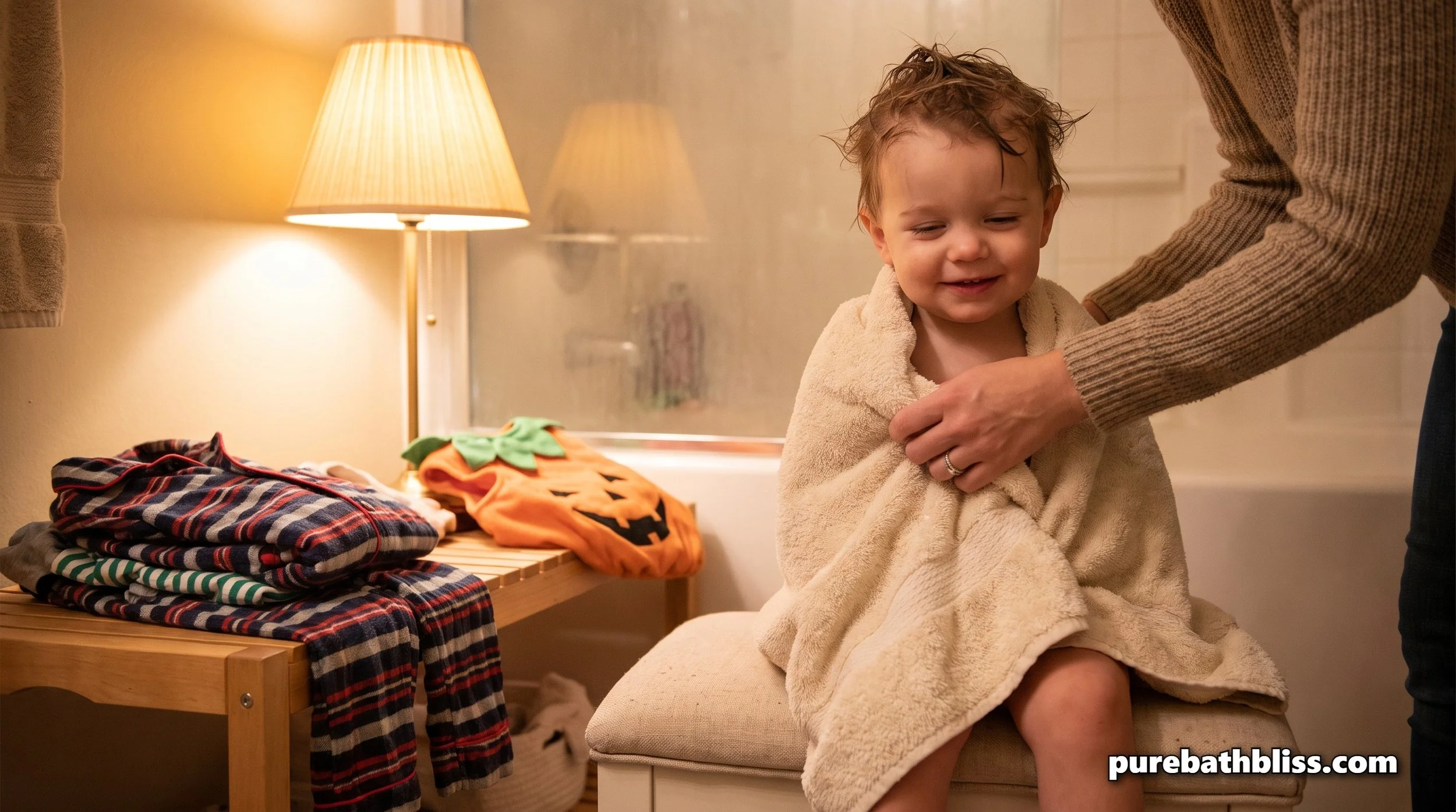
What happens in the fifteen minutes after the bath determines whether the bath's work is preserved or immediately undermined. The window between exiting the bath and getting into bed should be as calm and low-stimulation as the bath itself.
Pat dry gently and moisturize. The bath water, even with gentle ingredients, can be slightly drying on children's skin. A quick application of fragrance-free moisturizer on still-damp skin takes thirty seconds and makes a meaningful difference, particularly if the child was also wearing face paint that was removed earlier in the evening. The skin has been through a lot on Halloween and the moisturizer step is worth the thirty seconds.
Pajamas, not more candy. This sounds obvious but the transition from bath to bed is the point where the candy negotiation often reignites. Have a clear, calm, predetermined position on this before Halloween night. In our house the rule is that candy happens before the bath, not after. The bath marks the end of Halloween night, not a pause in it.
No screens after the bath. The blue light from a phone, tablet, or television resets the melatonin suppression that the warm bath and amber lighting spent twenty minutes supporting. Five minutes of screen time after the bath effectively undoes the neurological wind-down work. One story or quiet conversation in dim light is the right transition to sleep.
Give the bath time to work. Do not expect children to fall asleep the moment they are in bed after the bath. The core temperature drop that triggers sleep onset takes thirty to sixty minutes after exiting the bath. The bath is the preparation for sleep, not an instantaneous sedative. Patience in the post-bath period and a calm sleep environment are what allow the bath's physiological effect to complete.
The Complete Halloween Wind-Down Routine at a Glance
| Step | What Happens | Time | Why It Matters |
|---|---|---|---|
| Arrive home | Candy inspection, costume removal, one small treat if not already over-candied | 10 minutes | Allows the excitement to settle slightly before bath. Have the bath running during this step. |
| Face paint removal | Oil method or warm water method depending on paint type | 5 to 10 minutes | Do this before the bath so the bath water stays clean and the magnesium works on clean skin. |
| Magnesium wind-down bath | Warm bath with magnesium flakes, baking soda, chamomile, optional diluted lavender. Dim lights, quiet environment. | 15 to 20 minutes | Activates parasympathetic nervous system. Magnesium absorption supports nervous system downregulation. |
| Dry and moisturize | Pat dry gently, apply fragrance-free moisturizer to damp skin | 3 to 5 minutes | Maintains skin hydration after bath and face paint removal. Keeps the calm routine going. |
| Pajamas and quiet transition | One quiet story or calm conversation. No screens, no candy, dim lights. | 10 minutes | Allows core temperature to begin dropping post-bath, which triggers sleep onset. Screens or stimulation at this stage resets the melatonin suppression. |
| Lights out | Sleep | 30 to 60 minutes after bath exit | Core temperature has dropped enough for sleep onset. The bath has done its work. |
The entire routine from arriving home to lights out takes forty-five to sixty minutes when it runs smoothly. Halloween will run later than a regular night regardless, and accepting that a slightly later bedtime is inevitable rather than fighting it reduces the stress on everyone involved. The goal is a calm transition to sleep, not hitting an exact time. The bath is what makes that transition reliable.
Using the Halloween Bath Bombs You Already Made
If you made the DIY Halloween bath bombs from our DIY Halloween bath bombs guide, the galaxy or witch's cauldron recipes are genuinely good companions to this wind-down routine. Drop one in at the start of the bath to add the fizzing, color-changing element that gives children an active visual focus during the soak without requiring any stimulating engagement from them. The bath bomb occupies their attention while the magnesium and chamomile do their work. The combination of the visual spectacle of the bath bomb and the physiological effect of the magnesium soak is actually more effective at holding an excited child in the bath for the full fifteen to twenty minutes than either element alone.