Natural Bath Products for Sensitive Skin: What Actually Works and Why
Transparency Note: We independently select these products based on research and user reviews. If you buy something through our links, we may earn a commission.
Two of my four kids have sensitive skin. One gets eczema flares triggered by synthetic fragrance in bath products, the other reacts to sulfates with a rash that can take three days to settle. I spent a lot of time reading ingredient labels before I found what worked for both of them, and the process taught me more about skin barrier biology than I ever expected to learn as a carpenter.
The good news is that sensitive skin in the bath is not a mystery once you understand what the skin barrier actually is, what specific compounds disrupt it, and which natural ingredients have genuine clinical evidence behind their calming and restorative properties. The less good news is that the sensitive skin bath product category is one of the most heavily marketed in personal care, with terms like hypoallergenic, dermatologist-tested, and natural used in ways that do not mean what most people think they mean.
Here is the complete picture: what the skin barrier science actually says, which ingredients are worth buying and why, what to avoid and the specific label names to look for, and three DIY bath recipes that use ingredients most people already have at home and that the evidence genuinely supports for sensitive and eczema-prone skin.
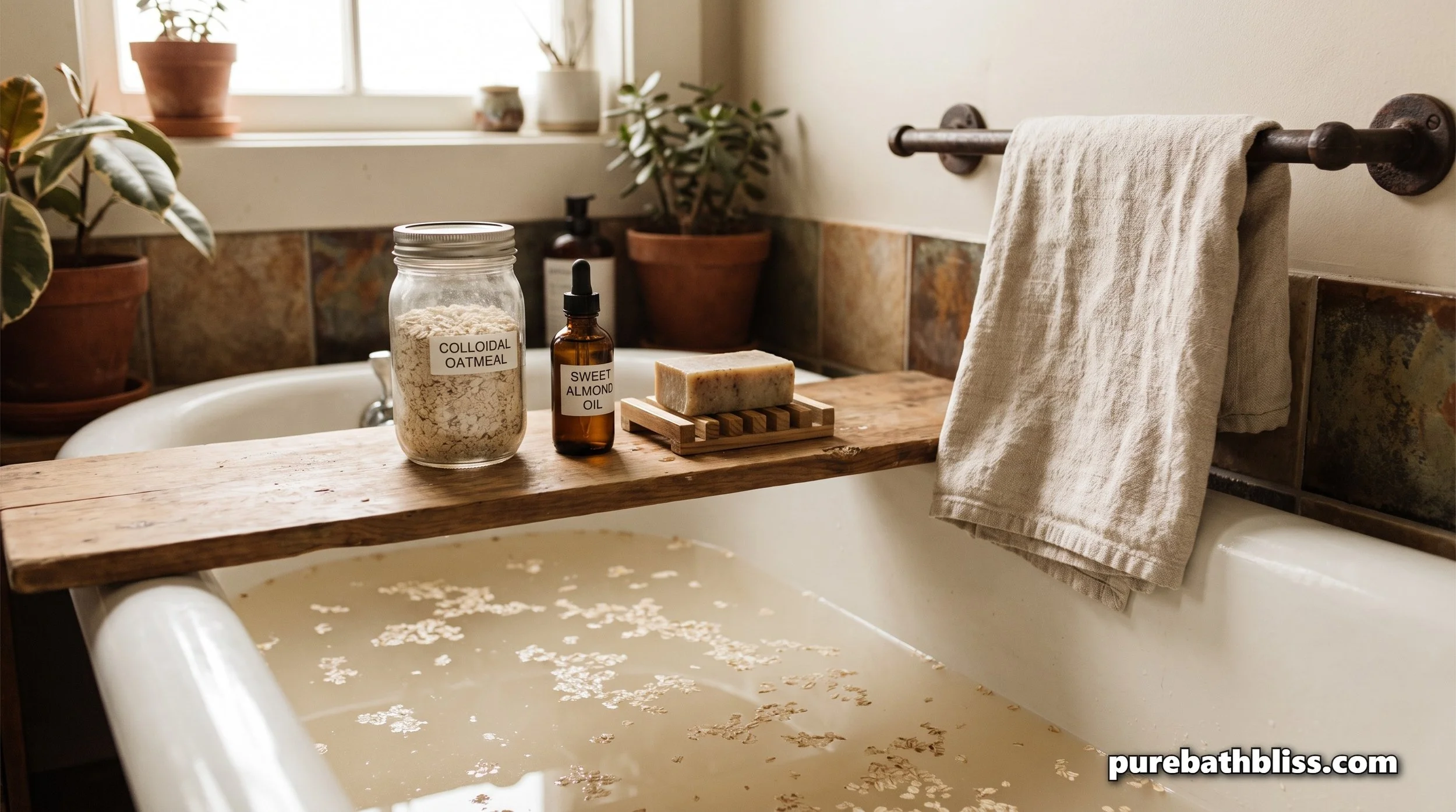
The Skin Barrier: What It Is and Why the Bath Disrupts It
The skin barrier is the outermost layer of skin, called the stratum corneum, and it functions like a well-built brick wall. The skin cells, called corneocytes, are the bricks. The intercellular lipids, primarily ceramides, cholesterol, and fatty acids, are the mortar that holds them together and prevents water from escaping and irritants from entering. When this lipid mortar is intact, skin stays hydrated, calm, and resistant to environmental irritants. When it is disrupted, water escapes, irritants penetrate, and the inflammatory response that produces redness, itching, and eczema flares follows.
The bath environment disrupts the skin barrier in several specific ways that are worth understanding before choosing what goes into the water.
Hot water. Water temperature above about 37 degrees Celsius begins to dissolve the lipid layer that holds the skin barrier together. The hotter and longer the bath, the more significant the lipid stripping. This is why sensitive skin patients are consistently advised to bathe in lukewarm rather than hot water. A bath warm enough to be comfortable but not steaming is the right temperature for sensitive skin regardless of what products are used.
Surfactants in bath products. Surfactants are the compounds that produce foam and lather in soaps, bubble baths, and bath washes. They work by surrounding and lifting oils from surfaces, which is what makes them effective cleansers and also what makes the aggressive ones, particularly sodium lauryl sulfate, damaging to the skin barrier. SLS strips the same lipid layer that the barrier depends on, exposing the skin cells beneath and dramatically increasing transepidermal water loss. We covered the full surfactant science in our guide to organic soap versus synthetic detergent bars, which applies directly to bath product selection for sensitive skin.
Synthetic fragrance. Synthetic fragrance compounds, listed on labels as "fragrance" or "parfum," are the single most common trigger for contact dermatitis and eczema flares in bath products. The fragrance category can contain dozens to hundreds of undisclosed synthetic compounds, many of which are known skin sensitizers. The mechanism is both irritant contact dermatitis, a direct chemical irritation response, and allergic contact dermatitis, an immune-mediated reaction that can develop after repeated exposures with no initial reaction. Our guide to harmful chemicals in shampoo and body wash covers the fragrance disclosure problem in detail.
The Ingredients With Genuine Clinical Evidence
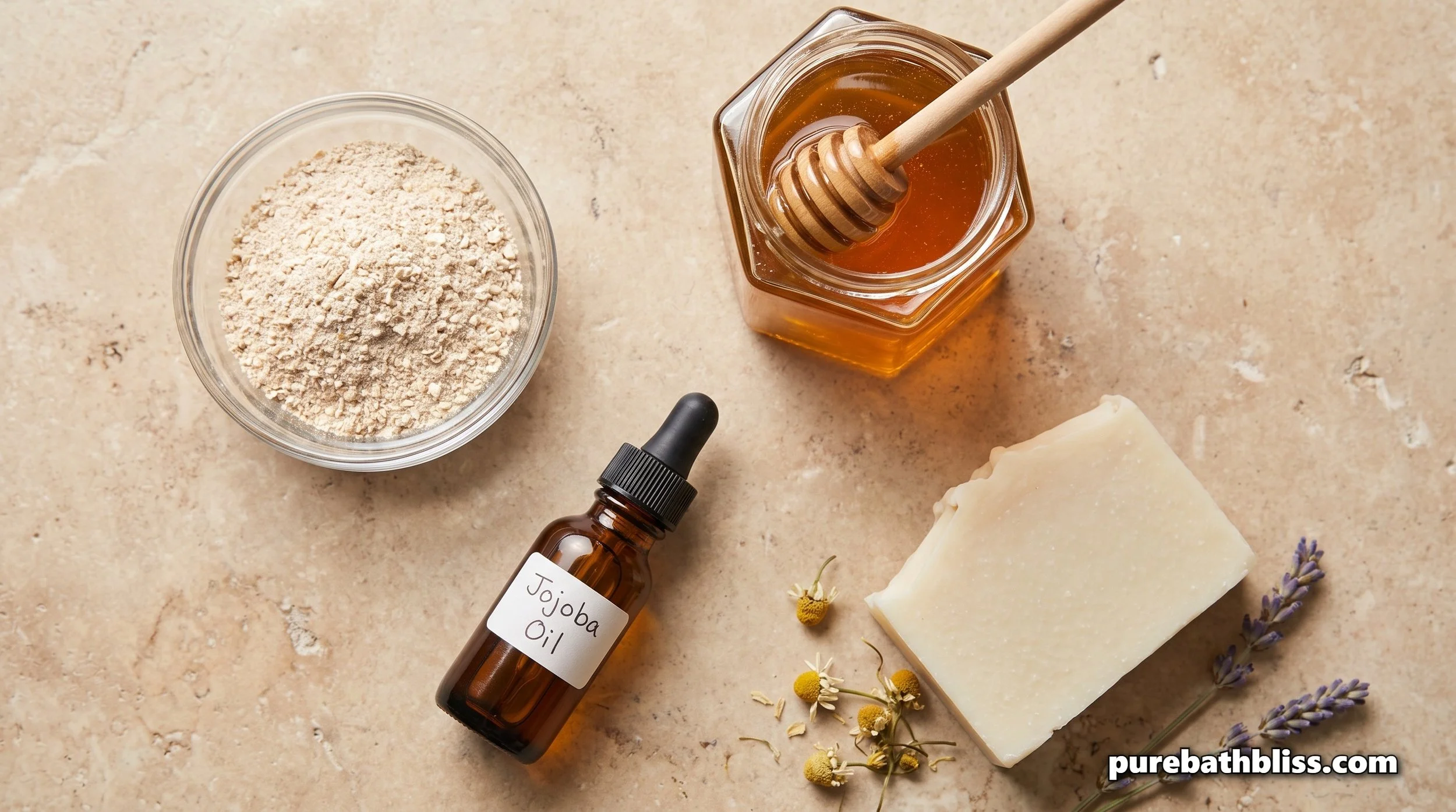
Colloidal Oatmeal: The Most Evidence-Backed Natural Bath Ingredient Available
Colloidal oatmeal is finely ground oat grain, Avena sativa, processed to a particle size that remains suspended in bathwater rather than sinking. The milling process releases the oat's bioactive compounds, including avenanthramides, which are polyphenol antioxidants with potent anti-inflammatory properties, beta-glucans, which form a hydrophilic film on the skin surface that reduces transepidermal water loss, and starches and proteins that buffer the skin's pH toward its naturally acidic optimal range.
The clinical evidence for colloidal oatmeal is more robust than for any other natural bath ingredient. It is classified by the FDA as an over-the-counter skin protectant, which is a regulatory designation that requires clinical evidence of efficacy rather than simply manufacturer claims. A 2025 study published following the World Congress of Pediatric Dermatology found that colloidal oatmeal emollient application reduced eczema flare risk by 44 percent compared to control groups. A 2020 clinical study confirmed that a one percent colloidal oatmeal cream significantly improved both hydration and overall barrier function in patients with atopic dermatitis. Research consistently shows colloidal oatmeal reduces itching, scaling, and redness while improving the transepidermal water loss measurements that indicate how well the barrier is functioning.
For a bath soak, one cup of finely ground colloidal oatmeal dissolved under running warm water produces water with a slightly milky quality that coats the skin during the soak and leaves a protective film after patting dry. Plain organic rolled oats ground in a blender or coffee grinder until they reach a powder fine enough to mix into water without settling are an effective substitute for commercially prepared colloidal oatmeal. The fineness of the grind matters: coarsely ground oats do not suspend in water effectively and produce the messy bath experience that gave oatmeal baths an inconvenient reputation.
Magnesium: The Therapeutic Bath Mineral
Magnesium dissolved in bathwater, typically from Epsom salts (magnesium sulfate) or magnesium chloride flakes, has a documented calming effect on skin inflammation through transdermal absorption. Our dedicated guide to Epsom salts versus magnesium flakes covers the transdermal absorption mechanism and the clinical differences between the two forms in detail. For sensitive skin specifically, magnesium chloride flakes are the preferred form because magnesium chloride is more bioavailable transdermally than magnesium sulfate and is less likely to produce the drying effect that some people experience from Epsom salt baths at high concentrations.
Carrier Oils: Replacing Lost Lipids After the Bath
The most effective time to apply a moisturizing oil to sensitive skin is within three minutes of leaving the bath while the skin is still slightly damp. This timing, called the soak and seal method, allows the oil to lock residual moisture into the skin before evaporation strips it. Jojoba oil is chemically similar to the skin's own sebum, making it the most compatible oil for most skin types including acne-prone sensitive skin. Sunflower oil has a high linoleic acid content that specifically supports ceramide synthesis in the skin, making it particularly useful for eczema-prone skin where ceramide production is impaired. Sweet almond oil is a lighter option well-suited to the full-body application needed after a bath.
Raw Honey: The Humectant and Antimicrobial Addition
Raw honey in a bath soak serves two functions. As a humectant it draws moisture toward the skin surface rather than simply coating it, which provides a different and complementary moisturizing mechanism to the oil-based barrier repair approach. As a natural antimicrobial, Manuka honey specifically has documented efficacy against Staphylococcus aureus, a bacterium that colonizes the skin of most people with atopic dermatitis and that is directly linked to flare frequency and severity. A quarter cup of raw honey dissolved in warm bath water before getting in provides both benefits without the sticky residue that undiluted honey application would produce.
What to Avoid: The Label Guide
| Category | Avoid | Label Names to Watch For | Seek Instead | Why It Matters for Sensitive Skin |
|---|---|---|---|---|
| Surfactants | Aggressive synthetic surfactants | Sodium lauryl sulfate (SLS), sodium laureth sulfate (SLES), ammonium lauryl sulfate | Decyl glucoside, sodium cocoyl isethionate, castile soap (saponified plant oils) | SLS strips the lipid barrier, dramatically increasing transepidermal water loss and triggering eczema flares. |
| Fragrance | Any synthetic fragrance or masking scent | Fragrance, parfum, aroma, scent | Fragrance-free confirmed by ingredient list. Named essential oils at low dilution only. | Leading cause of contact dermatitis. Undisclosed compound blend. Extended bath contact time increases sensitization risk. |
| Preservatives | Parabens, formaldehyde releasers | Methylparaben, propylparaben, DMDM hydantoin, quaternium-15, imidazolidinyl urea | Sodium benzoate, potassium sorbate, vitamin E (tocopherol) as natural preservatives. Or use dry DIY recipes with no preservatives needed. | Parabens are skin irritants and endocrine disruptors. Formaldehyde releasers are carcinogens and skin sensitizers. |
| Dyes | Synthetic colorants | D&C Red 33, FD&C Blue 1, D&C Yellow 10, any FD&C or D&C color designation | No colorant. Natural bath products have no functional need for color. | No skin benefit. Several associated with allergic contact reactions in sensitive skin. |
| Alcohols | Drying alcohols | Isopropyl alcohol, SD alcohol, denatured alcohol, alcohol denat | Fatty alcohols are fine: cetyl alcohol, stearyl alcohol, cetearyl alcohol are conditioning, not drying. | Drying alcohols aggressively strip surface moisture and compound the barrier disruption from hot water and surfactants. |
| Colloidal oatmeal | — | — | Seek: Avena sativa kernel flour, colloidal oatmeal. FDA-classified skin protectant. 44% eczema flare reduction in 2025 study. | The most evidence-backed natural bath ingredient available. Anti-inflammatory, barrier-repairing, itch-reducing. |
| Carrier oils | Mineral oil and petrolatum as primary moisturizers | Mineral oil, liquid paraffin, petrolatum (these coat rather than integrate with the skin barrier) | Jojoba oil, sunflower oil, sweet almond oil, rosehip oil — plant-derived, structurally compatible with skin lipids. | Plant oils integrate into the lipid barrier. Mineral oil creates an occlusive coating that traps moisture but does not repair the barrier itself. |
The label reading skills that apply to shampoo and body wash apply equally to bath products, with a few additional considerations specific to the bath environment. Bath products are left on the skin for the entire duration of the soak rather than rinsed off immediately, which means irritant exposure time is significantly longer than for rinse-off products. An ingredient that might be tolerated in a rinse-off body wash may produce a reaction in a bath soak at the same concentration simply because of the extended contact time.
The hypoallergenic label problem. Hypoallergenic is not a regulated term in the United States or Canada. It means only that the manufacturer believes the product is less likely to cause an allergic reaction. There is no FDA or Health Canada standard that a product must meet to use this label. It is a marketing claim rather than a certification.
Unscented versus fragrance-free. These are not the same thing on a product label. Fragrance-free means no aromatic compounds were added. Unscented can mean that a masking fragrance was added to neutralize the scent of other ingredients, which means the product may still contain synthetic fragrance compounds despite having no perceptible smell. For sensitive skin, fragrance-free confirmed by checking the ingredient list for the absence of the word "fragrance" or "parfum" is the standard worth applying.
The essential oil caveat. Natural essential oils are not automatically safe for sensitive skin. Citrus oils including bergamot, lemon, and grapefruit are phototoxic at certain concentrations and can trigger reactions when used in a bath followed by sun exposure. Cinnamon and clove oils are among the most common natural skin sensitizers. Peppermint and eucalyptus are contraindicated for children under two. The general guidance for essential oils in a bath for sensitive skin is to limit total essential oil volume to five drops per bath dissolved in a carrier oil before adding to the water, to test any new oil with a patch test before using in a full bath, and to avoid the high-sensitization-risk oils above entirely for reactive skin. Our guide to reducing toxic chemicals in the bathroom covers the broader ingredient avoidance framework that applies across all personal care categories.
The Products Worth Buying
For colloidal oatmeal. Aveeno Soothing Bath Treatment uses 100 percent natural colloidal oatmeal, is fragrance-free, paraben-free, and dye-free, and is the dermatologist-recommended colloidal oatmeal bath treatment with over seventy years of clinical track record. It is also the form most studied in clinical trials on eczema. Individual pre-measured packets dissolve completely without leaving residue in the tub.
For bulk DIY colloidal oatmeal. Bulk colloidal oatmeal powder for use across multiple baths at significantly lower cost per use than individual treatment packets. Store in a glass jar with a wooden scoop for the cleanest and most waste-free presentation.
For carrier oil application. Organic cold-pressed jojoba oil is the most versatile post-bath oil for sensitive skin. Apply to damp skin immediately after leaving the bath for maximum moisture retention. A 16-ounce bottle lasts several months of full-body post-bath application.
For natural soap. Dr. Bronner's Pure-Castile Unscented Baby Bar Soap is the fragrance-free, no-added-scent version of the castile soap we recommend across multiple guides on this site. USDA organic certified, four-ingredient label, no synthetic compounds. Suitable for the most reactive sensitive skin including babies and eczema-prone adults.
The same clean ingredient principle that applies to bath products applies in the kitchen where what goes on your hands affects what contacts the bath surfaces and plumbing your family uses. Our sister site Pure Kitchen Bliss covers eco-friendly dish soap alternatives that use the same plant-derived surfactant standards as the bath products above, keeping the synthetic chemical reduction consistent across both rooms.
Three DIY Bath Recipes With Evidence Behind Them
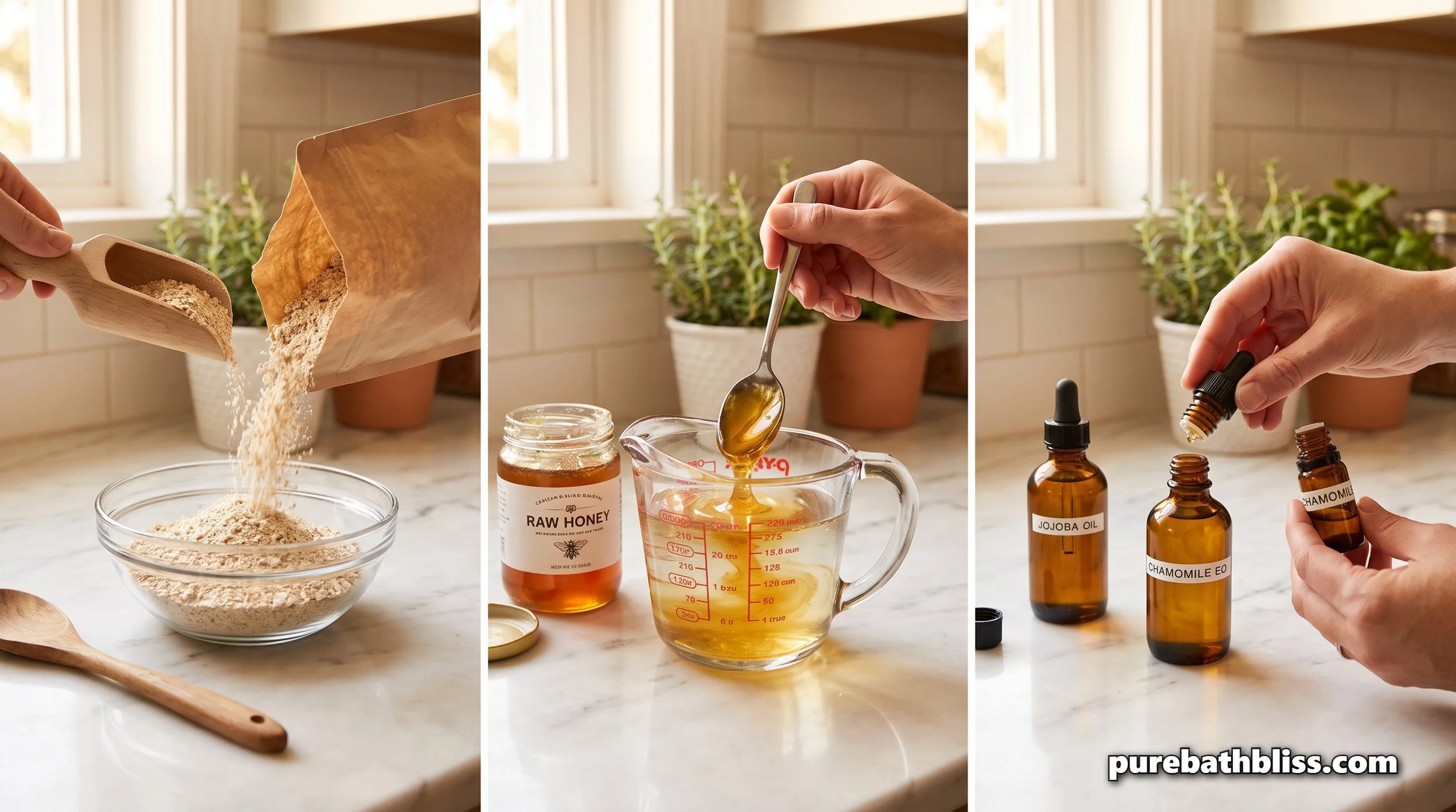
Recipe 1: Calming Colloidal Oatmeal and Honey Soak
What it does: Repairs the lipid barrier, reduces inflammation via avenanthramides, draws moisture into the skin via honey humectancy, provides gentle antimicrobial action.
Ingredients: 1 cup finely ground colloidal oatmeal (grind plain organic rolled oats to a fine powder in a blender), 1 quarter cup raw organic honey, 5 drops chamomile essential oil dissolved in 1 tablespoon jojoba oil.
Method: Run the bath to lukewarm temperature. Pour the colloidal oatmeal directly under the running water so it disperses evenly. Add the honey to the running water and stir briefly. Add the chamomile and jojoba blend last. Soak for fifteen to twenty minutes maximum. Pat skin dry rather than rubbing, leaving slight dampness. Apply additional jojoba oil to the still-damp skin immediately after leaving the bath.
Frequency: Daily for flare management, two to three times per week for general sensitive skin maintenance.
Recipe 2: Magnesium and Jojoba Calming Bath
What it does: Provides transdermal magnesium for inflammation calming and muscle relaxation, replaces lost lipids via jojoba oil application, no fragrance compounds of any kind.
Ingredients: 2 cups magnesium chloride flakes, 2 tablespoons jojoba oil.
Method: Dissolve magnesium chloride flakes in a small amount of hot water first to ensure complete dissolution, then add to a lukewarm bath. Add jojoba oil to the bath water. Soak for twenty minutes. The oil will coat the skin during the soak and provide a light moisturizing film after patting dry. No additional moisturizer is needed for most skin types after this soak.
Frequency: Two to three times per week. Avoid daily use of magnesium chloride baths for eczema-prone children under three without dermatologist guidance as the concentration effects on immature skin are less well studied than for adults.
Recipe 3: Moisturizing Oil Soak for Extreme Dryness
What it does: Bypasses the cleansing and stripping step entirely for skin that is too compromised to tolerate even gentle surfactant contact. Pure lipid replacement without any cleansing action.
Ingredients: Half a cup organic jojoba oil or sunflower oil, 5 drops lavender essential oil (optional, omit for the most reactive skin).
Method: Add oil directly to a lukewarm bath. Get in after the bath is full to reduce slipping risk. The oil will coat the skin during the soak. Rinse briefly with lukewarm water only, no soap. Pat dry gently. The skin will have a light oil coating that absorbs within thirty minutes and significantly reduces the tightness and itching that follow a standard bath for severely dry or eczema-affected skin.
Important safety note: Oil in the bathtub creates a slip hazard. Use a non-slip bath mat both inside and immediately outside the tub when using oil-based bath recipes. This is the one practical installation detail that makes oil baths safe for daily use, and it is worth doing before using this recipe for the first time.
The Patch Test: The Non-Negotiable First Step with Any New Product
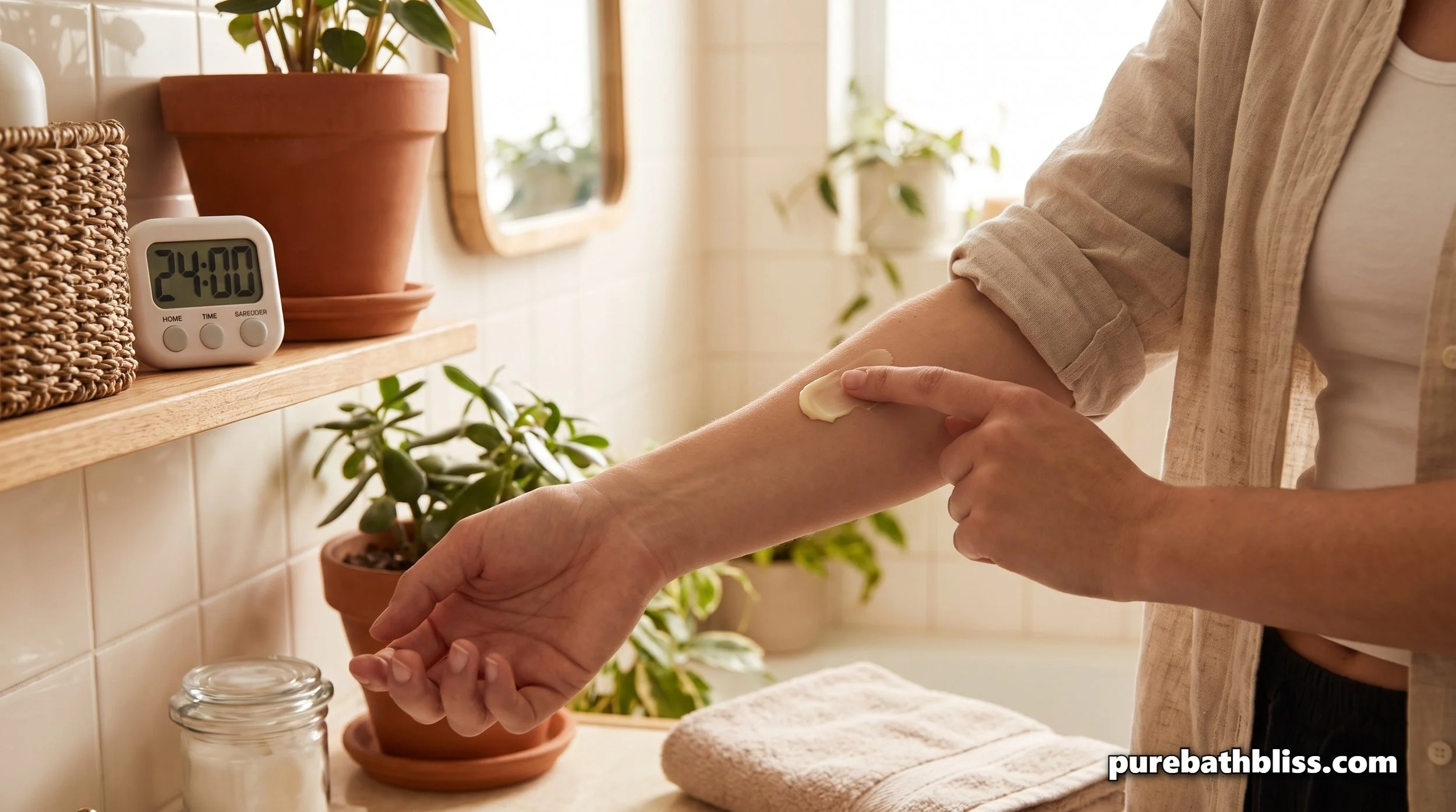
Even natural ingredients can trigger reactions in highly sensitive skin, and a full bath is not the place to discover that a new ingredient is a problem for you or your child. The patch test takes ninety seconds and eliminates the risk of a full-body reaction from a new product or DIY recipe.
Apply a small amount of the product or recipe to the inner forearm, which is sensitive skin but easily monitored. Cover loosely with a bandage if desired. Leave for twenty-four hours. If there is no redness, itching, swelling, or warmth at the site after twenty-four hours, the product is likely safe for full-body use on your skin type. If any reaction appears, identify which ingredient is new in this product compared to products you have used without reaction, and test that ingredient alone before using the full product.
For children's sensitive skin specifically, the patch test is the most important single habit because children cannot reliably describe or locate discomfort until it is significant, which means a reaction that an adult would identify at early onset can be well established before a parent becomes aware of it. Our guides to natural ingredients for eczema and dry skin and to organic post-bath skincare for babies cover the age-specific considerations for children's sensitive skin in more detail.