Harmful Chemicals in Shampoo and Body Wash: What to Avoid and Why It Matters in 2026
Originally published Oct 16, 2025 · Updated July 22, 2026
Transparency Note: We independently select these products based on research and user reviews. If you buy something through our links, we may earn a commission.
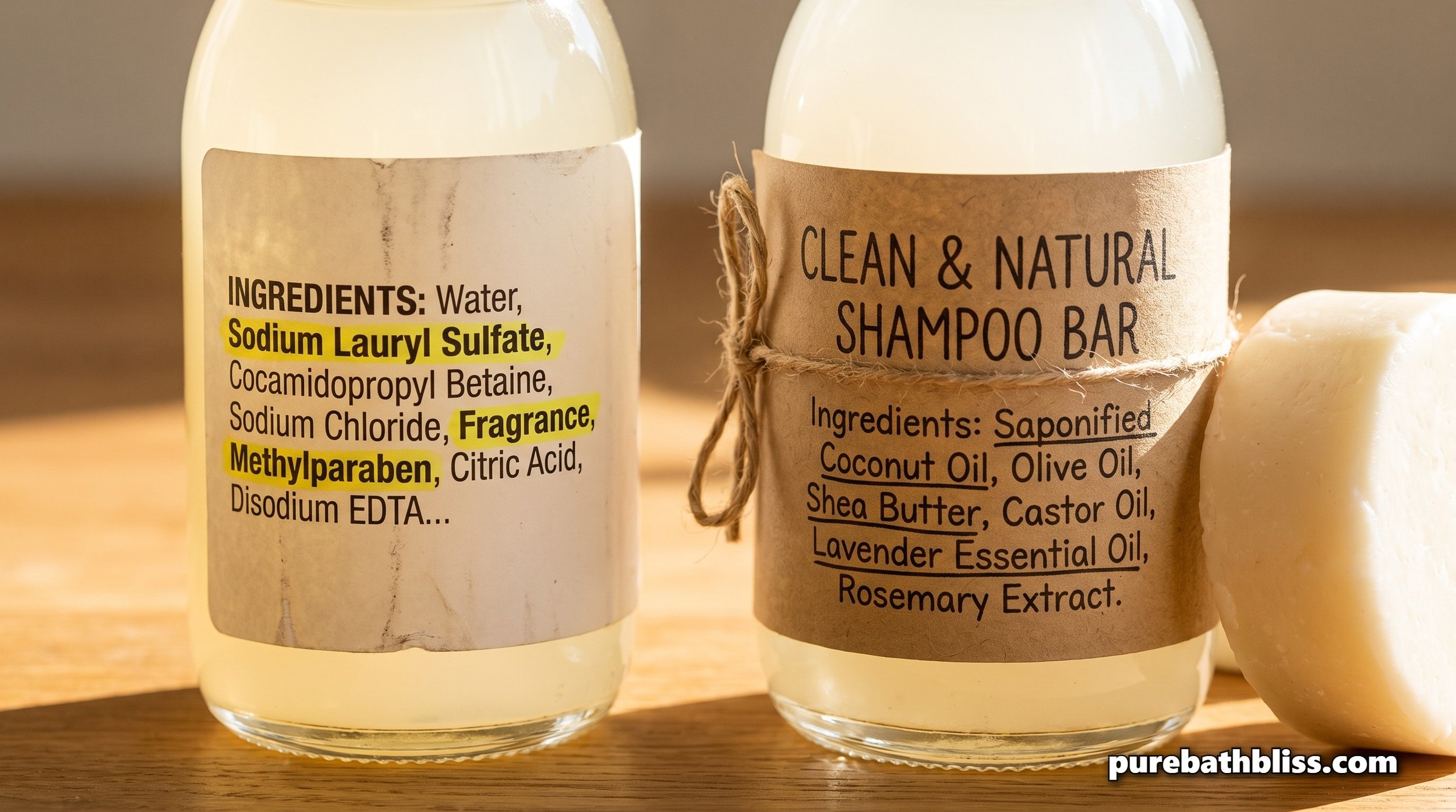
For years I had a dry, flaky scalp that I attributed to hard water. I tried clarifying shampoos, medicated formulas, the expensive salon brands, and the budget drugstore versions. Nothing worked consistently. It was only when I started reading ingredient labels, something I had been doing with building materials for my entire career but had never applied to personal care products, that I found the answer. The first ingredient in most of the shampoos I had been using was sodium lauryl sulfate, a synthetic detergent surfactant that strips the scalp of its natural oils more aggressively than anything I would use to clean a bathroom tile. Switching to a sulfate-free formula cleared the problem within two weeks.
That experience changed how I approach every product that goes in the shower. As someone who has spent a career thinking about what building materials do to structures over time, the parallel to personal care products is obvious once you see it. The compounds you expose your body to daily, in warm water that opens your pores and with steam that carries volatile compounds into your lungs, accumulate over months and years in ways that single-use exposure testing does not capture.
The Environmental Working Group estimates that the average person is exposed to dozens of chemicals daily through personal care products. Shampoo and body wash are among the highest-exposure categories because of the daily frequency, the full-body or full-scalp skin contact, and the shower environment that maximizes absorption and inhalation. Here is exactly what the research says about the compounds worth avoiding and how to find them on labels designed to obscure rather than disclose.
Why the Shower Is the Highest-Risk Environment for Chemical Exposure
Understanding why shampoo and body wash matter more than most other personal care products requires understanding what the shower environment does to skin permeability and chemical absorption.
Warm water hydrates and softens the stratum corneum, the outermost layer of skin that acts as the primary barrier against environmental compounds. A hydrated stratum corneum is more permeable than a dry one, which is why dermatologists recommend applying moisturizer to damp skin immediately after bathing for maximum absorption. The same permeability that makes post-shower moisturizer more effective also makes synthetic compounds in shampoo and body wash more readily absorbed during the shower itself.
The steam component adds a second exposure route. Hot shower steam carries volatile organic compounds from any product being used into the enclosed shower space, where they are inhaled directly into the respiratory system. The combination of dermal absorption from direct skin contact and respiratory absorption from steam inhalation makes the shower one of the highest total-exposure environments for personal care product ingredients. This is why the concentration of a compound that might be considered low-risk in a single application can become meaningful at daily exposure across years.
The Six Ingredient Categories Worth Knowing
1. Sulfates: SLS and SLES
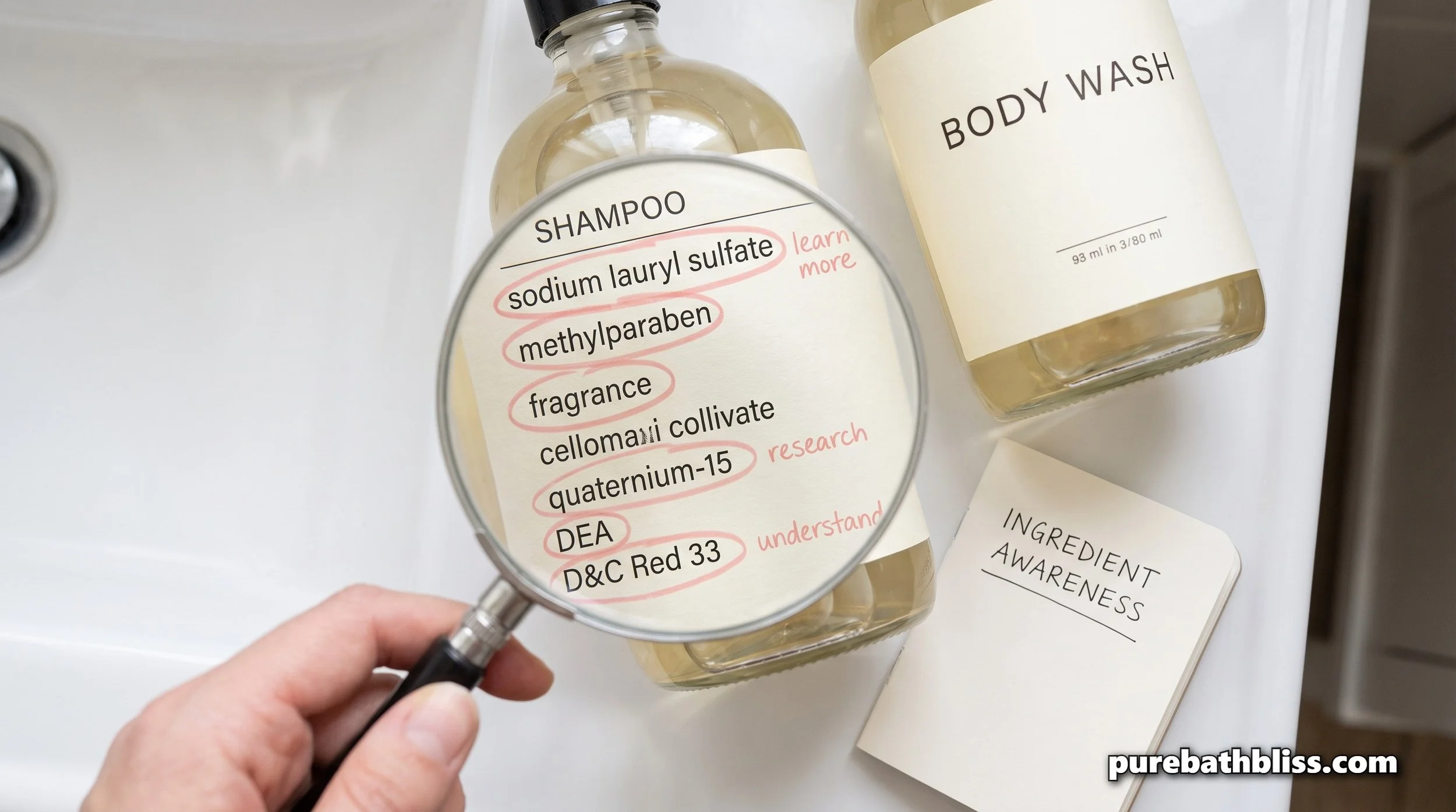
Sodium lauryl sulfate (SLS) and sodium laureth sulfate (SLES) are the synthetic surfactants responsible for the large, persistent lather that most commercial shampoos and body washes produce. They are effective at removing oils and dirt, which is what makes them popular in formulation. They are also, as the research we covered in our guide to organic soap versus synthetic detergent bars documents, up to 1,000 times more toxic to human skin cells than natural soap fatty acid salts in direct cell culture testing. On the scalp specifically, SLS disrupts the acid mantle, strips natural sebum, and damages the hair cuticle over repeated use. The dry, itchy, flaky scalp I described at the start of this article is one of the most common presentations of SLS sensitivity, and it is routinely misattributed to hard water, dandruff, or genetic predisposition rather than to the surfactant in the product being used to treat it. SLES is slightly milder than SLS but remains a synthetic petroleum-derived surfactant with similar, if less acute, barrier disruption effects.
2. Parabens
Parabens, specifically methylparaben, ethylparaben, propylparaben, and butylparaben, are synthetic preservatives that prevent bacteria and mold growth in water-based products, extending shelf life to two to three years. They are effective preservatives and they are also, according to a 2019 study published in the journal Dermatitis, associated with endocrine activity, carcinogen concerns, effects on fertility and spermatogenesis, and ecological disruption. Parabens have been detected in breast cancer tissue and in cord blood and amniotic fluid. The research does not conclusively establish causation, but the detection in breast tissue and in amniotic fluid, indicating the compounds cross the placental barrier, is the basis for the precautionary avoidance that most non-toxic personal care brands apply. The ChemFORWARD 2025 Beauty and Personal Care Ingredient Intelligence Report noted that parabens are among the compounds appearing in fewer products overall as the industry responds to consumer pressure, but they remain present in a significant proportion of mass-market shampoos and body washes.
3. Phthalates Hidden Under "Fragrance"
Phthalates in personal care products are almost never listed by name on the label. They are concealed under the ingredient designation "fragrance" or "parfum," which is legally permitted to represent any combination of hundreds of undisclosed synthetic compounds without individual disclosure. Phthalates are added to fragrance formulations to help scent compounds adhere to surfaces and to extend their release duration. They are endocrine disruptors linked in research to reproductive issues, precocious puberty in girls, lower fertility in men, and developmental problems in children exposed prenatally. A study by researchers at Silent Spring Institute found that people who avoided products with parabens, triclosan, and synthetic fragrances were twice as likely to be in the group with the lowest levels of these chemicals in their body compared to those who used standard commercial products. The practical implication is straightforward: if a shampoo or body wash lists "fragrance" or "parfum" as an ingredient, the specific compounds providing that scent are unknown and may include phthalates.
4. Formaldehyde Releasers
Formaldehyde is a known human carcinogen classified by both the International Agency for Research on Cancer and the US National Toxicology Program. It is used in personal care products as a preservative but almost never listed by that name. Instead, formaldehyde-releasing preservatives that slowly emit formaldehyde over the product's shelf life appear under names that most consumers cannot recognize: quaternium-15, DMDM hydantoin, imidazolidinyl urea, diazolidinyl urea, and bronopol are the most common. In August 2025, Washington State adopted the Formaldehyde in Cosmetics Rule under the Toxic-Free Cosmetics Act, the most comprehensive restriction of formaldehyde and all formaldehyde releasers in beauty and personal care products in the United States to date. Major retailers including Sephora, Target, and CVS have been taking action to reduce formaldehyde-releasing agents from their house brand products in response to research and advocacy. The compound remains legal and present in many mass-market products nationally.
5. DEA and TEA Compounds
Diethanolamine (DEA) and triethanolamine (TEA) are pH adjusters and foam boosters used in shampoos and body washes. DEA can react with other ingredients in a formula to form nitrosamines, compounds classified as probable human carcinogens by the International Agency for Research on Cancer. The reaction is not guaranteed in every formulation but is sufficiently documented that the European Union restricts DEA in cosmetics. In the United States, DEA remains legal in personal care products. On a label, look for cocamide DEA, lauramide DEA, DEA-cetyl phosphate, or any compound ending in -DEA.
6. Synthetic Dyes
Synthetic dyes in shampoos and body washes have no function beyond making the product visually appealing in the bottle. They contribute nothing to cleaning performance, hair condition, or skin health. D&C Red 33, FD&C Blue 1, and D&C Yellow 10 are among the most common, and several are classified as potential carcinogens or endocrine disruptors in EWG's Skin Deep database. The ChemFORWARD 2025 report specifically rated D&C Red 27 and 28 with D ratings for potential reproductive, hormonal, and immune system disruption and accumulation in both humans and wildlife. A shampoo that is bright blue or vivid green has been colored that way to sell itself, not to benefit your scalp.
The Quick Reference Label Guide
| Ingredient Category | What to Look For on Label | Primary Concern | EU Status | Verdict |
|---|---|---|---|---|
| Sulfates | Sodium lauryl sulfate (SLS), sodium laureth sulfate (SLES), ammonium lauryl sulfate | Skin barrier disruption, acid mantle damage, scalp oil stripping, hair cuticle damage | Legal but restricted in leave-on products | Avoid in rinse-off products where possible |
| Parabens | Methylparaben, ethylparaben, propylparaben, butylparaben, isoparaben | Endocrine disruption, detected in breast cancer tissue and cord blood | Several restricted or banned, particularly in leave-on products | Avoid |
| Phthalates via fragrance | Fragrance, parfum, aroma — phthalates are not individually listed | Endocrine disruption, reproductive effects, developmental concerns, undisclosed chemical exposure | Many phthalates banned in cosmetics | Avoid any product listing "fragrance" or "parfum" |
| Formaldehyde releasers | Quaternium-15, DMDM hydantoin, imidazolidinyl urea, diazolidinyl urea, bronopol | Slowly release formaldehyde, a known human carcinogen. Skin sensitizer and allergen. | Formaldehyde banned in cosmetics. Releasers increasingly restricted. | Avoid |
| DEA and TEA compounds | Cocamide DEA, lauramide DEA, DEA-cetyl phosphate, triethanolamine | Can react with other ingredients to form nitrosamines, probable human carcinogens | DEA restricted in cosmetics | Avoid where possible |
| Synthetic dyes | D&C Red 33, FD&C Blue 1, D&C Yellow 10, D&C Red 27 and 28 | No skin benefit. Potential carcinogen, endocrine disruptor, or bioaccumulation concern depending on specific dye. | Several banned. EU has stricter approved dye list than US. | Avoid. No functional reason for colored shampoo or body wash. |
| Named essential oils | Lavender oil, peppermint oil, tea tree oil, etc. — named specifically | Known safety profile. Can be researched individually. Allergen potential for sensitive individuals. | Legal with labeling requirements for known allergens | Generally keep. Patch test for sensitive skin. |
The regulatory context for 2026 is worth noting. The Modernization of Cosmetics Regulation Act (MoCRA), which came into force in the United States in 2022, expanded FDA oversight of personal care products for the first time since 1938. However, MoCRA does not ban the six ingredient categories above, most of which remain legal in the US while being restricted or banned in the European Union and increasingly in US states. California, Washington, Vermont, Maryland, and Oregon have enacted their own laws prohibiting specific toxic chemicals in personal care products. If you are buying products that meet California's stricter standards specifically, the product is likely significantly cleaner than the national minimum. Our guide to reducing toxic chemical load in the bathroom covers the regulatory picture across all bathroom product categories and the specific swaps that make the most difference per effort invested.
How to Read a Label in 60 Seconds
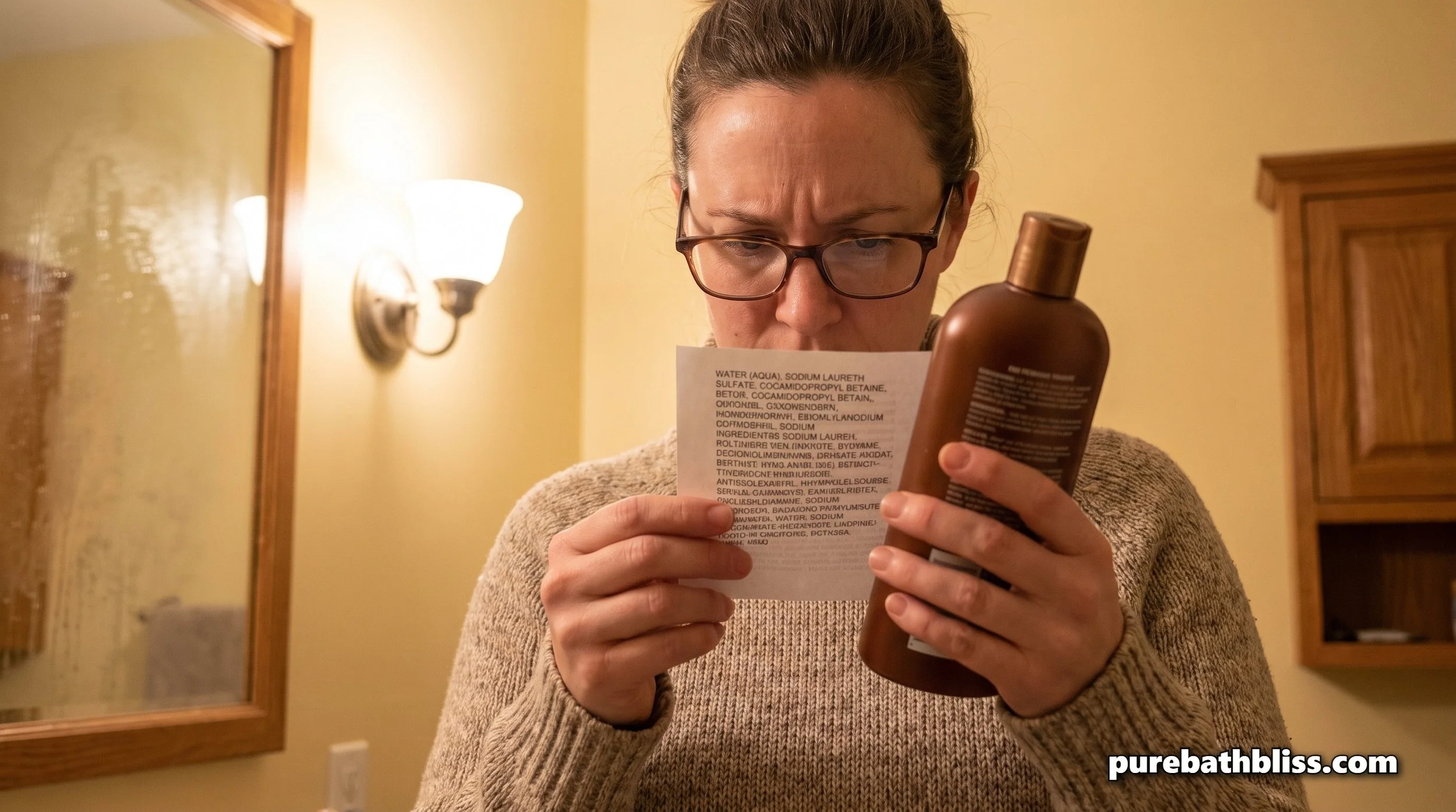
Ingredient lists on personal care products are required by US law to be listed in descending order of concentration. The first five ingredients are the primary ones and represent the bulk of the formula. Everything after about the tenth ingredient is present in concentrations typically below one percent.
Step 1: Check positions one through five. If sodium lauryl sulfate, sodium laureth sulfate, or any paraben appears in the first five ingredients, the product has a high concentration of those compounds. This is where most of the exposure concern is concentrated. An SLS at position fifteen in the ingredient list represents a much smaller concern than SLS at position two.
Step 2: Scan for "fragrance" or "parfum." These words can appear anywhere in the list regardless of concentration because they represent an undisclosed blend. Their presence means the scent source is unknown. A product scented with pure essential oils will list them by name, typically as "lavender oil," "peppermint oil," or similar.
Step 3: Check for formaldehyde releasers by name. Quaternium-15, DMDM hydantoin, imidazolidinyl urea, diazolidinyl urea, bronopol. These names are deliberately technical and easy to overlook. A simple search on your phone while standing in the aisle will confirm what any unfamiliar ingredient is.
Step 4: Look for certification marks. EWG Verified, USDA Organic, and MADE SAFE are the three most meaningful third-party certifications for personal care products in North America. Each requires independent verification of ingredient safety rather than self-certification by the manufacturer. A product with any of these marks has been reviewed against a defined safety standard rather than relying on the manufacturer's own claims.
What to Buy Instead
The transition from conventional to clean shampoo and body wash does not require buying everything at once or spending significantly more per month. The one-in-one-out approach works well here: when a current product runs out, replace it with a clean alternative. Over three to six months the entire shower routine transitions without a large upfront cost.
For shampoo. Sulfate-free liquid shampoos with plant-derived surfactants like sodium cocoyl isethionate or decyl glucoside are the most direct replacements for conventional shampoos. They lather differently, typically with a creamier and less voluminous foam, but clean the scalp equally effectively. Shampoo bars that use saponified plant oils as their base, the same cold-process chemistry as the natural soap bars we cover in our guide to organic soap versus synthetic detergent, eliminate parabens, synthetic fragrance, and formaldehyde releasers simultaneously because they require far fewer preservatives than water-based liquid formulas.
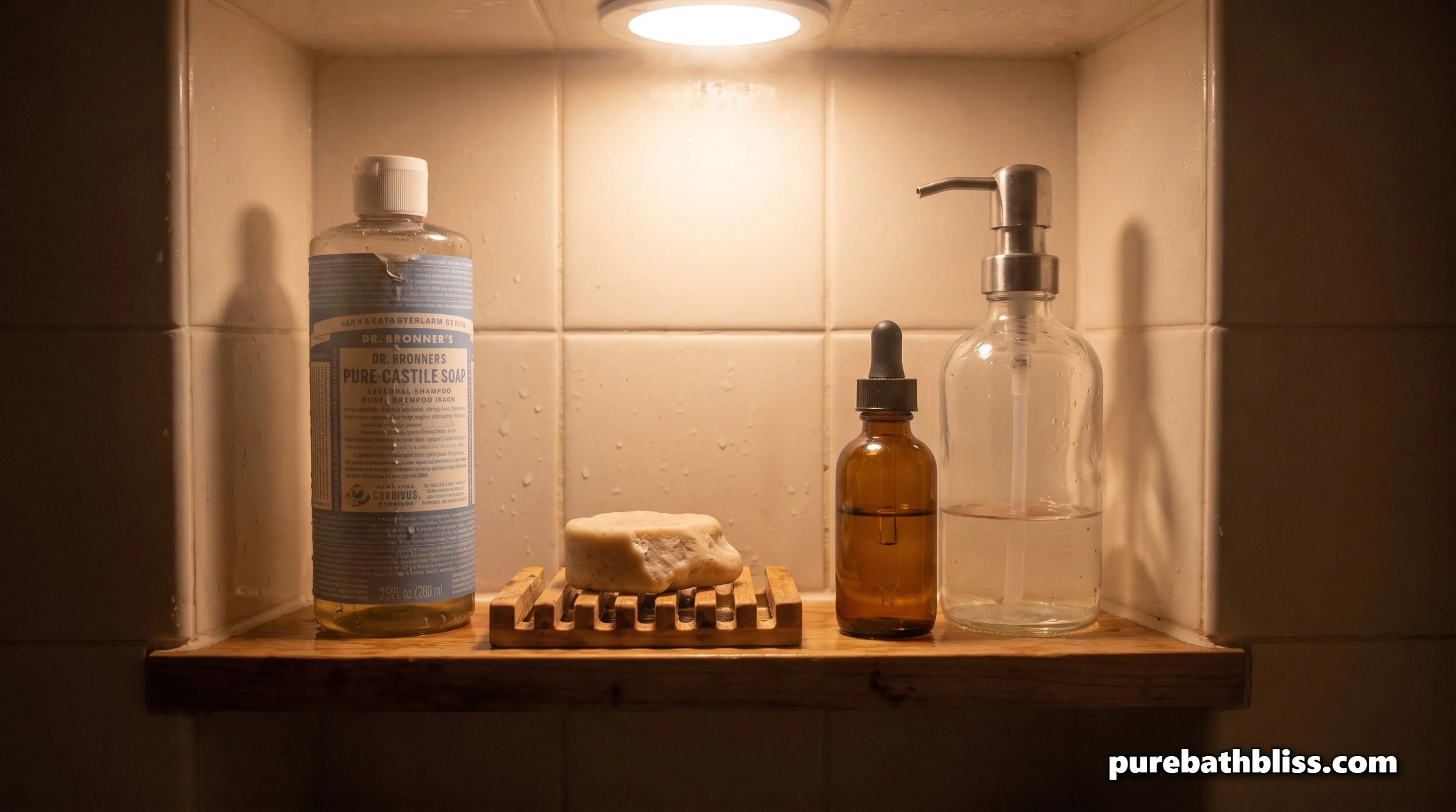
For body wash. Dr. Bronner's Organic Castile Soap in liquid form is the most versatile clean body wash available. USDA organic certified, fair trade, ingredient list that reads as a saponified oil blend with named essential oils and nothing undisclosed. The liquid version dilutes well with water for a gentler formula. A tablespoon in a small amount of water makes a perfectly effective body wash with none of the synthetic compound concerns of conventional body washes.
For scalp health specifically. Pure aloe vera gel applied to the scalp before shampooing is the most effective single addition for anyone with scalp irritation, dryness, or flaking that has not responded to medicated treatments. The anti-inflammatory and humectant properties of aloe calm scalp irritation while the subsequent sulfate-free shampoo cleans without compounding the barrier disruption. This was the combination that finally cleared my own scalp issue after years of trying medicated products.
The bulk buying argument. Once you find clean versions of both shampoo and body wash that you like, buying in the largest available format reduces the cost per wash significantly and reduces plastic packaging waste simultaneously. Dr. Bronner's gallon jugs, decanted into a smaller amber glass dispenser in the shower, cost a fraction per wash compared to individually purchased bottles and eliminate the plastic packaging concern simultaneously.
The Honest Reality of the Transition
There are two genuine adjustments most people experience when switching from sulfate-based to sulfate-free shampoo. The first is the lather difference. Sulfate-free shampoos produce a smaller, less dramatic foam than SLS formulas. This is aesthetic rather than functional. The cleansing performance is equivalent. The scalp adjusts within two to three weeks and most people stop noticing the difference.
The second is the transition period scalp. Some people experience an oilier scalp for two to four weeks after switching from SLS to sulfate-free shampoo. This happens because the scalp has been compensating for repeated SLS stripping by overproducing sebum, and it takes a few weeks for sebum production to recalibrate to the lower stripping level of the new shampoo. The transition period is real and worth knowing about before interpreting it as the new product not working.
The broader bathroom chemical load picture, covering which product categories produce the highest exposure and the priority order for making swaps that produce the most meaningful reduction per effort, is covered in our comprehensive guide to reducing toxic chemicals in the bathroom. Shampoo and body wash sit near the top of that priority list because of the daily full-body contact in the highest-absorption environment in the house. The investment in reading one label and making one swap is among the highest-return actions available in a non-toxic bathroom transition.