The Unseen Guest: 5 Toxic Chemicals Hiding in Your Bathroom (and How to Swap Them)
In the pursuit of a Sustainable Sanctuary, we often focus on the visible, the aesthetic tile, the plush towels, and the sleek fixtures. But as a curator of a healthy home, the most important elements are the ones you can’t see.
Modern bathrooms are a hotspot for "silent" toxins. Because bathrooms are small, humid, and often poorly ventilated, chemicals released from cleaners, cabinetry, and even toilet paper can reach high concentrations quickly.
Here are the five most common toxic offenders currently hiding in your bathroom and the organic, high-performance swaps to replace them.
1. Formaldehyde: The Off-Gassing Giant
Formaldehyde isn't just for science labs; it’s a common binder used in MDF (Medium Density Fiberboard) and particleboard cabinetry. When exposed to the high heat and humidity of a shower, these cabinets "off-gas" formaldehyde into the air you breathe.
The Risk: Classified as a known carcinogen, it can cause respiratory irritation, headaches, and skin rashes.
The Sanctuary Swap: Look for Greenguard Gold Certified furniture or solid wood cabinetry finished with zero-VOC oils. When buying step stools for your children, prioritize solid bamboo or birch over pressed wood.
2. PFAS: The "Forever Chemicals" in Your Paper
Recent studies have found PFAS (per- and polyfluoroalkyl substances) in many major toilet paper brands. These chemicals are used to prevent paper from sticking to the manufacturing machinery, but they never break down in your body or the environment.
The Risk: Linked to endocrine disruption, decreased fertility, and immune system suppression.
The Sanctuary Swap: Switch to Bamboo Toilet Paper or 100% recycled rolls that are TCF (Totally Chlorine Free). Even better, install a Non-Electric Bidet to reduce your paper dependency altogether.
3. Phthalates: The "Fragrance" Trap
If your bathroom cleaner, candle, or soap lists "Fragrance" or "Parfum" on the label, it almost certainly contains phthalates. These are used to make scents last longer, but they are "hormone mimics."
The Risk: Phthalates are known endocrine disruptors that can interfere with reproductive health and development, especially in children.
The Sanctuary Swap: Choose products scented only with 100% Pure Essential Oils. Better yet, use our DIY Tea Tree Daily Mist to keep your shower fresh without the synthetic cloud.
4. Chlorine Bleach: The Infrastructure Killer
We’ve spoken before about how Bleach Destroys Your Plumbing, but its impact on your health is just as severe. When bleach reacts with other organic matter in your toilet or drain, it can create toxic fumes.
The Risk: Potent respiratory irritant; passive exposure in children has been linked to a higher frequency of infections and chronic cough.
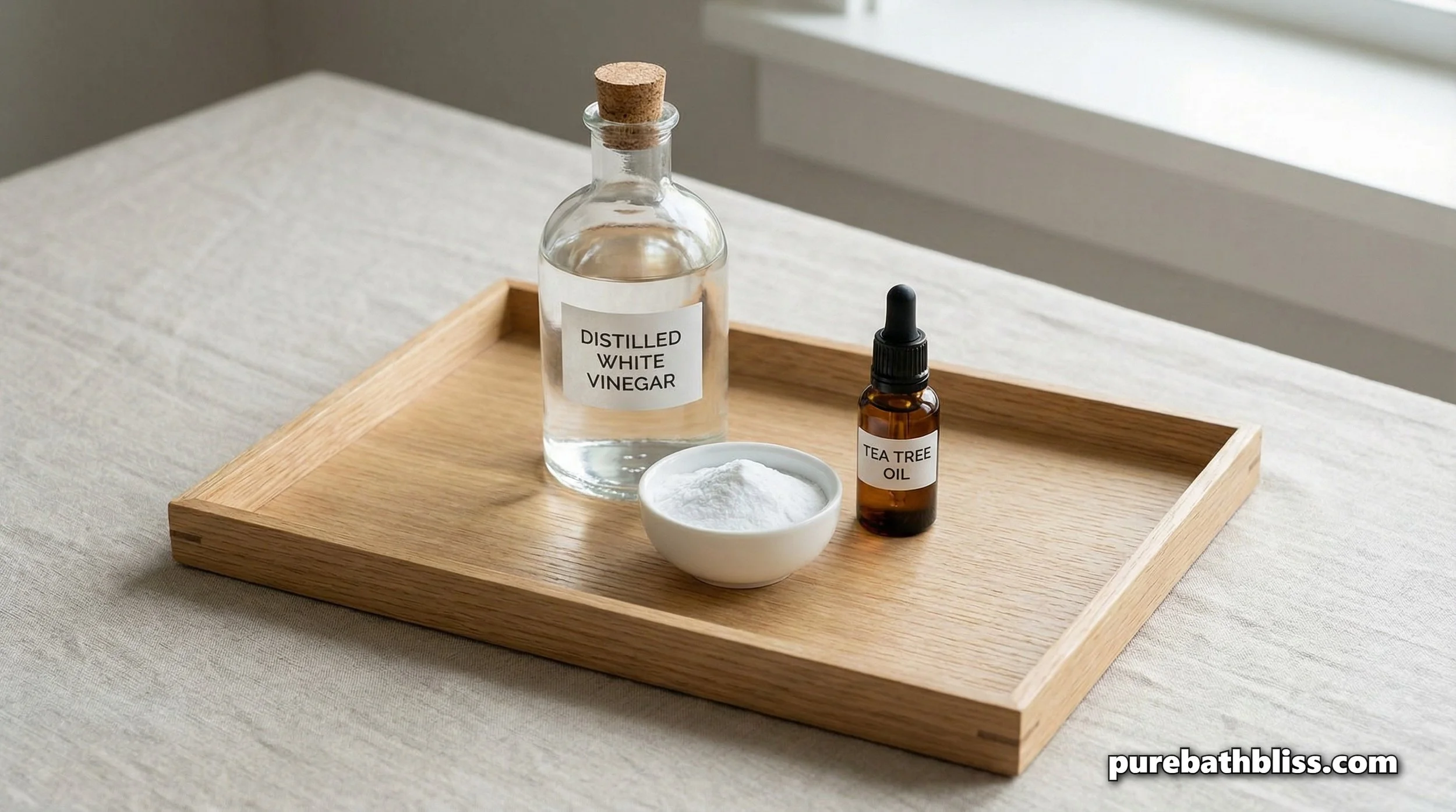
The Sanctuary Swap: Use Hydrogen Peroxide or Distilled White Vinegar (stored and used separately) for disinfecting. They are just as effective at killing germs without the corrosive "chemical burn" of chlorine.
5. PVC: The Hidden Plasticizer
That "new shower curtain" smell? That’s the scent of PVC (Polyvinyl Chloride) off-gassing. PVC is often used in shower curtain liners and even some bath mats to make them waterproof.
The Risk: PVC contains phthalates and lead, and its production releases dioxins, some of the most toxic chemicals on earth.
The Sanctuary Swap: Replace plastic liners with Hemp, Organic Cotton, or Linen curtains. These can be tossed in the washing machine and, when paired with good ventilation, won't develop mold.
Conclusion: Tending to Your Air
Creating a Sustainable Sanctuary isn't about perfection; it’s about making informed swaps that reduce the "toxic load" on your family and your home. By removing these five offenders, you aren't just cleaning your bathroom, you’re purifying the very air that fuels your daily rituals.