The Invisible Balance: How to Manage Humidity in Your Home
Humidity is the silent force that dictates the health of your sanctuary. You cannot see it, and unless it is extreme, you might not even feel it, but your home certainly knows when it’s there. Managing the moisture content of your indoor air is perhaps the most critical task in home stewardship. It is the invisible line between a space that feels fresh, airy, and resilient and one that harbors mold, encourages wood rot, or irritates your respiratory system.
In a well-managed home, humidity exists in a "Goldilocks" zone, not too wet, not too dry. When you master this balance, you are doing more than just feeling comfortable; you are actively extending the life of your building materials and creating an environment where your family can breathe easier. This is not about managing a "problem"; it is about optimizing your home’s climate to support a truly healthy way of living.
1. The Goldilocks Zone: Understanding Relative Humidity
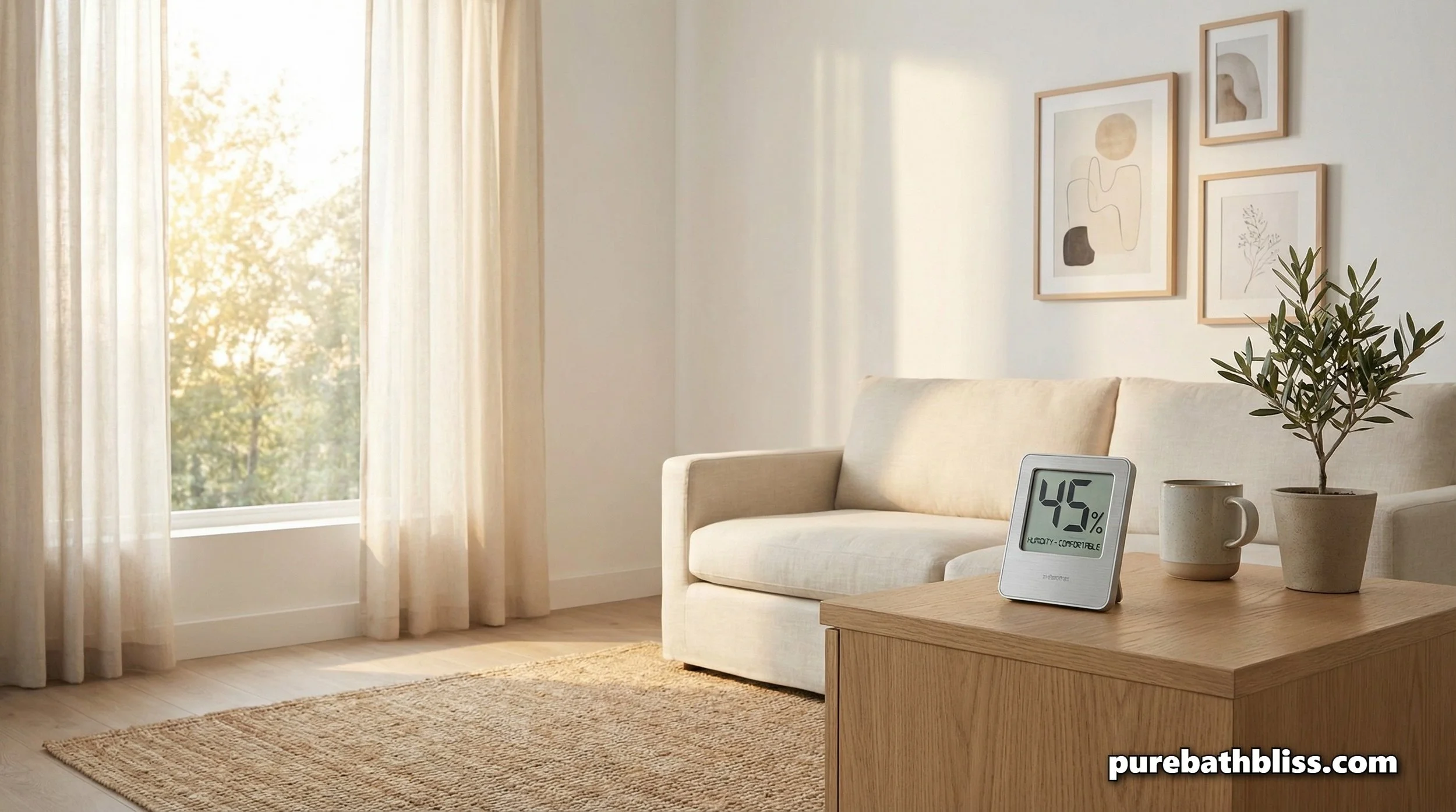
To manage your home’s air quality, you first need to understand Relative Humidity (RH). This measures the amount of water vapor present in the air compared to the maximum amount the air could hold at that current temperature.
When your indoor RH is consistently between 30% and 50%, you are in the ideal zone for a healthy home.
If it drops below 30%: Your air is too dry. This causes wood floors to shrink and gap, wooden furniture to crack, and, more importantly, can cause your skin to crack and your respiratory passages to dry out, making you more susceptible to airborne viruses.
If it rises above 60%: You have entered the "Danger Zone." At this level, dust mites thrive, mold spores germinate, and the wood in your home begins to absorb excess moisture, leading to "stiff" doors, peeling wallpaper, and that familiar, musty odor that signals organic decay.
Managing this balance is an act of maintenance, not a one time fix. It requires a mix of good habits and high performance infrastructure.
2. The Bathroom as a Humidity Engine
If you are reading this, you are likely working to curate a Sustainable Sanctuary within your home. The bathroom is almost always the most intense humidity engine in your house. Every shower you take releases gallons of water into the air in the form of steam.
If your home’s ventilation is weak, this steam doesn't just dissipate; it migrates. It travels into your drywall, seeps into the wood framing, and clings to your windows, leading to issues like the Black Residue on Your Windowsill we discussed previously.
Proper ventilation is the first line of defense. As a builder, I cannot stress this enough: your bathroom exhaust fan is not optional. It is a piece of mechanical equipment that requires regular care. If your fan is sluggish, it’s not just a minor annoyance; it is a structural liability. Ensure your fan is pulling enough air to clear the room within 15 to 20 minutes of your shower ending. If it cannot, the humidity will remain trapped, seeking out the coldest surfaces in the room to condense upon.
3. The Structural Impact: When Humidity Goes Rogue
When you allow humidity to remain unbalanced for long periods, your home begins to tell a story through the physical degradation of its materials. This is what we call "Building Pathology."
The Mold Cycle
Mold needs three things to grow: food (paper, dust, wood), warmth, and moisture. In a bathroom, you have the food and the warmth in abundance. When humidity spikes, you provide the moisture. If you are cleaning mold off your walls or sills regularly, you are not failing at cleaning, you are failing at moisture control. You must address the ventilation or the source of the excess water to stop the cycle.
Wood and Paint Decay
Wood is hygroscopic; it absorbs and releases moisture based on the air around it. When humidity is high, wood swells. When it dries, it shrinks. Constant cycling of this nature causes paint to crack, caulk to fail, and cabinet doors to warp. By keeping your home’s RH stable, you essentially "lock" your home’s materials in a state of stasis, preventing the wear and tear that leads to expensive repairs later on. For more on how to protect your fixtures and wood from this cycle, review our How to Waterproof Your Bathroom Plants guide.
4. The Toolkit: Solutions for Moisture Control
Managing humidity is rarely about one single tool; it is about an ecosystem of solutions.
Mechanical Ventilation
This is your primary tool. Every bathroom should have a high-CFM (Cubic Feet per Minute) exhaust fan that vents outside the home, not just into the attic. If you have an older home, you may be surprised to find your fan vents into the crawlspace, which is a recipe for disaster. Ensure your path of exhaustion is clear and direct.
Dehumidification (The Active Solution)
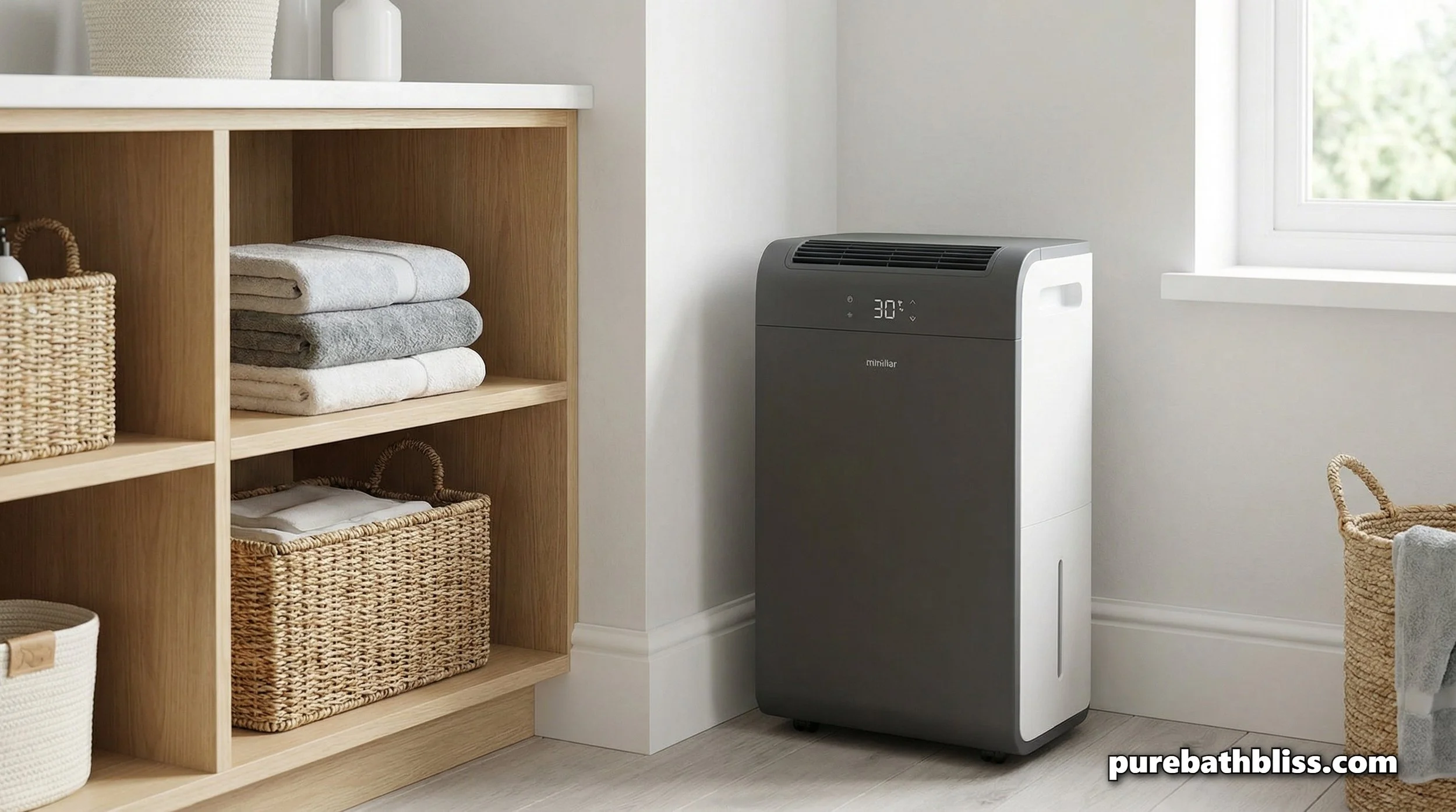
In high-humidity climates or during damp seasons, a high quality dehumidifier can be a lifesaver. Modern units are quiet and energy efficient and can be set to a specific RH percentage, allowing them to turn on only when needed. Placing one in a central location or in a damp basement/bathroom area can stabilize your entire home’s climate.
Natural Desiccants (The Passive Solution)
For smaller spaces like closets, pantries, or window sills, passive desiccants work wonders. Using Natural Mineral Salt Bowls is an elegant, non-toxic way to draw moisture out of the air in specific zones, preventing that localized condensation that leads to mildew.
5. Humidity Management Matrix
Use this reference table to keep your home's climate in the "Goldilocks Zone."
| Relative Humidity (RH) | Home Environment | Action Required |
|---|---|---|
| Below 30% | Too Dry | Use a humidifier or add house plants. |
| 30% – 50% | Ideal (The Sanctuary Zone) | Maintain current ventilation habits. |
| 50% – 60% | Slightly High | Increase ventilation; use ceiling fans. |
| Above 60% | Danger Zone | Use dehumidifier; check for leaks/ventilation failure. |
6. Daily Habits: The Stewardship Ritual
Maintaining a home is not just about the equipment you buy; it is about the rituals you perform. You can have the most expensive ventilation system, but if you don't use it, it serves no purpose.
The Fan-First Policy: Always turn your fan on before you turn on the shower. This allows the system to establish an airflow pattern before the heavy steam load begins.
The Window Check: If you see condensation on your windows in the morning, do not ignore it. It is a signal that your humidity is too high for the current temperature. Open the windows briefly, wipe down the glass, and check your ventilation performance.
Clear the Paths: Ensure your furniture, curtains, and decor aren't blocking air vents or returns. Good air circulation is essential for a stable climate.
7. Troubleshooting the "Persistent Damp"
If you are managing your humidity correctly and you still feel a persistent dampness or smell mustiness, it is time to look at the "hidden" moisture sources. Check the following:
The Crawlspace or Basement: Is there a moisture barrier installed? Are there water stains on the foundation walls?
Exterior Grading: Is water pooling against your home’s foundation when it rains? This is a common, invisible source of basement humidity.
Plumbing Leaks: Sometimes, a slow pinhole leak behind a wall can create enough ambient moisture to make a room feel perpetually damp. If your humidity levels are inexplicably high, a professional moisture test is a smart investment.
For more deep-dives on keeping your space resilient, check out our Sanctuary Reset Guide, which breaks down the seasonal tasks you can perform to keep your infrastructure in check.
Conclusion: A Resilient Way of Living
Managing the humidity in your home is one of the most rewarding aspects of "Pure" living. It takes your home from a passive shell that you simply occupy to a managed system that actively protects your health and your assets. When you pay attention to the invisible, the visible parts of your home, the walls, the floors, and the air you breathe will stay in peak condition for decades.
Stewardship is about being proactive. By monitoring your levels, understanding your ventilation, and treating your home with this level of attention, you are ensuring that your sanctuary remains exactly that: a place of restoration and peace.