The Lush Sanctuary: How to Waterproof Your Bathroom Plants
Transparency Note: We independently select these products based on research and user reviews. If you buy something through our links, we may earn a commission.
A bathroom filled with greenery is the ultimate expression of a Sustainable Sanctuary. The humidity naturally mirrors the environment many tropical plants crave, turning a sterile space into a restorative living room. However, there is a technical friction between the "lush life" of a plant and the delicate infrastructure of your home. As a builder, I have seen far too many custom vanities and wooden shelves ruined by the slow, insidious "wicking" of water trapped beneath a decorative pot.
You do not need to choose between a verdant, thriving plant collection and the integrity of your cabinetry. By treating your plant setup as a mechanical system, where drainage and moisture barriers are prioritized, you can enjoy the growth without the risk of rot, mold, or bubbling paint.
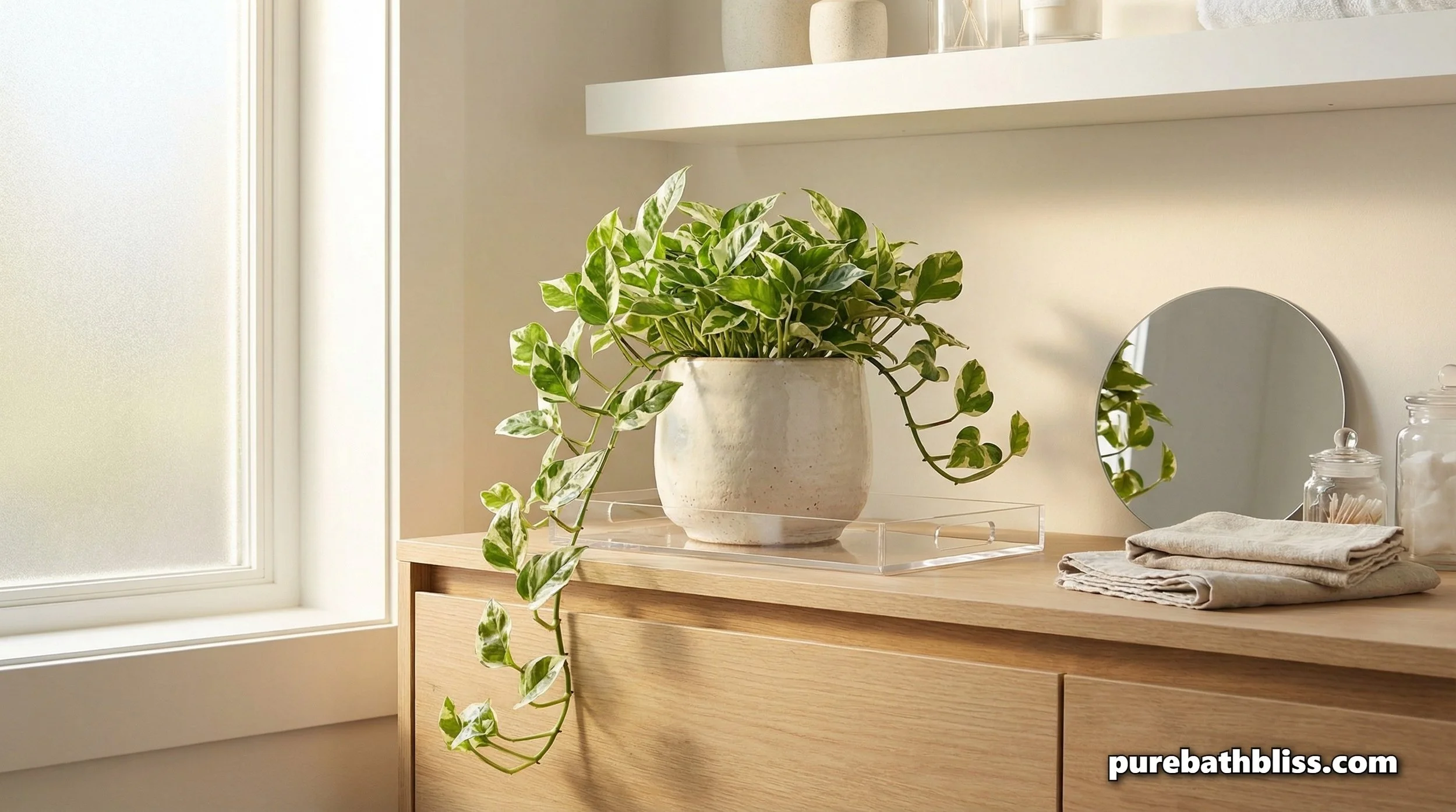
1. The Infrastructure Challenge: Why Moisture Wicks
To protect your shelves, you must first understand the physics of the environment. Wood, paint, and drywall are porous materials. When you place a pot directly on a surface, you create a "microclimate" trapped between the pot and the shelf.
Even if you don't overwater, the pot's exterior can sweat due to condensation, or the saucer underneath can overflow. If water gets trapped, it relies on capillary action, the ability of a liquid to flow in narrow spaces, to move into the wood or drywall. This leads to substrate degradation, where the wood fibers swell and the protective paint finish peels away. To stop this, you have to break the physical connection between the water source and the shelf.
2. Step One: The Drainage Mechanics
The most common mistake is assuming a decorative pot is a drainage solution. It is not. Most decorative pots are water-tight, meaning any excess water from irrigation simply sits at the bottom, eventually creating a stagnant "swamp" around the roots.
The Inner-Pot Strategy
Your plant should always live in a nursery pot with drainage holes. This nursery pot then sits inside the decorative, water-tight outer pot. This allows you to remove the plant for watering and ensures that water doesn't pool against the roots.
Creating a Buffer Zone
Inside the decorative pot, place a layer of expanded clay pebbles or small gravel at the base. This serves as a "sump" zone. If you accidentally water your plant too heavily, the excess drains into the gravel layer rather than sitting against the plant’s root system. This prevents root rot and ensures the plant is never sitting in standing water, which in turn reduces the likelihood of that water ever leaking out onto your shelf.
3. Barrier Protection: Shielding the Substrate
If your plants must sit on a wood or painted surface, you need a physical barrier that is both decorative and functional.
The "Air Gap" Method
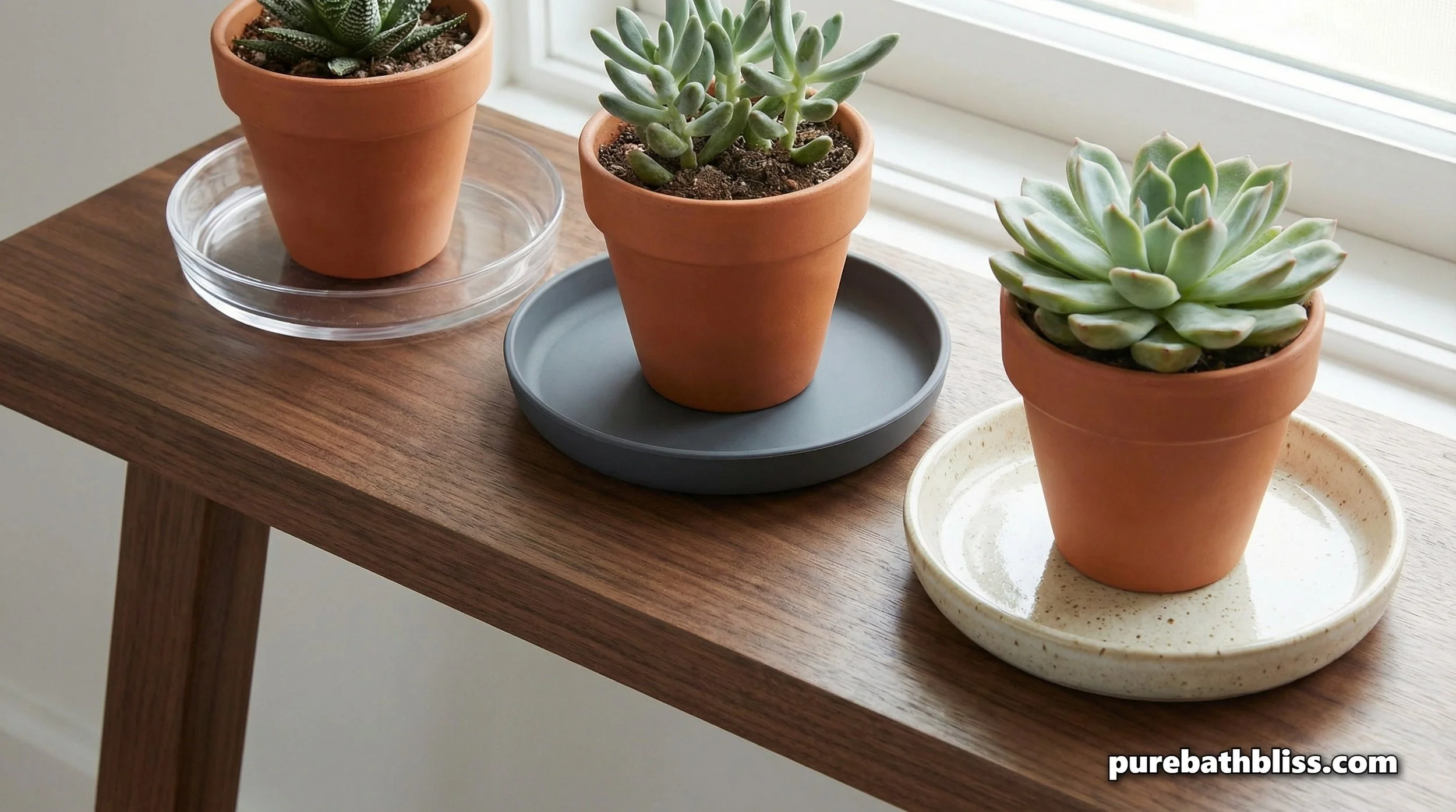
The most effective way to protect a shelf is to lift the pot entirely. Using a decorative trivet or small wooden feet creates an air gap between the pot and the shelf. This airflow is crucial; it allows any accidental moisture to evaporate rather than being absorbed into the shelf material.
Waterproof Trays and Mats
For a modern, invisible look, use clear acrylic or silicone mats. Acrylic trays are superior because they are rigid and waterproof, holding any potential spill until you can wipe it up. Silicone mats are excellent for glass or stone surfaces, as they are non-slip and prevent the pot from scratching the finish of your vanity or shelf. When choosing these, ensure they are slightly larger than the base of the pot to account for any splash-back during your watering ritual.
4. Coating and Sealing: The Builder's Approach
If you are building custom shelving for your bathroom or if you want to fortify existing ones, you must treat the wood with the right finish. Wax is a temporary repellant, but it will not stand up to constant moisture exposure.
The Polyurethane Shield
For bathroom vanities and shelves, I recommend a high-quality, water-based polyurethane. It forms a hard, impenetrable seal that prevents water from penetrating the grain of the wood. If you prefer a more natural look, look for "Marine-Grade" spar varnishes. They are specifically engineered for the high-humidity, high-UV environments of boats and outdoor furniture, making them perfect for the "wet zones" of your bathroom.
The Edge-Grain Defense
The most vulnerable part of any wooden shelf is the edge. Water will always find the path of least resistance. Ensure your polyurethane or varnish is applied heavily to the edges, this is where the wood fibers are most exposed and most likely to soak up spilled water.
5. The Watering Ritual: A Maintenance Best Practice
The best way to keep your shelves waterproof is to stop watering your plants on the shelf.
The Sink Flush
The "Builder-Curator" way to water plants is to bring them to the sink. By taking the plant out of its outer pot and flushing it under the faucet, you ensure the soil is thoroughly saturated and all excess water has drained out before you place it back on the shelf.
This prevents the "drip-down" that happens when you water a plant in place. It also gives you the chance to inspect the plant for pests and wipe the leaves—a vital task in a bathroom, where dust and humidity can combine to clog a plant's ability to undergo transpiration.
6. Troubleshooting: Identifying Early Water Damage
If you are worried that damage has already occurred, look for these subtle signs:
Paint Discoloration: If the paint on your vanity cabinet appears darker or "fuzzy" around the edges where the plant sits, it is absorbing moisture.
Tacky Caulk: If the silicone seal where your shelf meets the wall feels sticky or is pulling away, moisture is getting trapped behind the shelf.
Musty Odors: This is the most reliable indicator of mold development. If your shelf smells "earthy" even when the plant is dry, you likely have trapped moisture in the shelf material.
If you find these signs, it is time to move the plant, strip the affected area, let it dry for a few days, and re-seal it with a moisture-resistant finish. For more on maintaining the overall moisture levels of your space, refer back to our guide on the Sanctuary Reset: Seasonal Bathroom Maintenance.
7. Comparison Matrix: Drainage Solutions
| Protection Method | Material | Best For | Maintenance Level |
|---|---|---|---|
| Acrylic Tray | Rigid Plastic | Small pots; modern aesthetic. | Low (Wipe occasionally) |
| Silicone Mat | Flexible Polymer | Large pots; non-slip needs. | Low (Dishwasher safe) |
| Raised Trivet | Metal or Wood | Maximum airflow. | Medium (Check for surface dust) |
| Marine-Grade Varnish | Polyurethane | Custom Shelving/Vanities. | High (Requires initial application) |
8. Wellness and Longevity: The Plant-Shelf Balance
A plant in the bathroom is more than a design element; it is a living component of your air quality and mental well-being. By taking the time to "waterproof" the infrastructure, you move from a reactive state of cleaning up spills to a proactive state of stewardship.
When we create these physical barriers and establish rituals like the "Sink Flush," we are essentially creating a layer of protection that allows the house and the nature inside it to coexist without conflict. This is the essence of a Sustainable Sanctuary: a home where everything has its place, its protection, and its purpose.
Builder-Curator Essentials
The Protection: Clear Acrylic Drip Trays - Invisible, waterproof, and easy to clean.
The Seal: Water-Based Polyurethane Satin Finish - For sealing wood shelving against humidity.
The Maintenance: Microfiber Utility Cloths - To keep your shelf surfaces dry and dust-free.
The Ritual: Moisture-Meter for Indoor Plants - To avoid overwatering and potential spills.