Why is There Black Stuff on My Windowsill? (And How to Fix It)
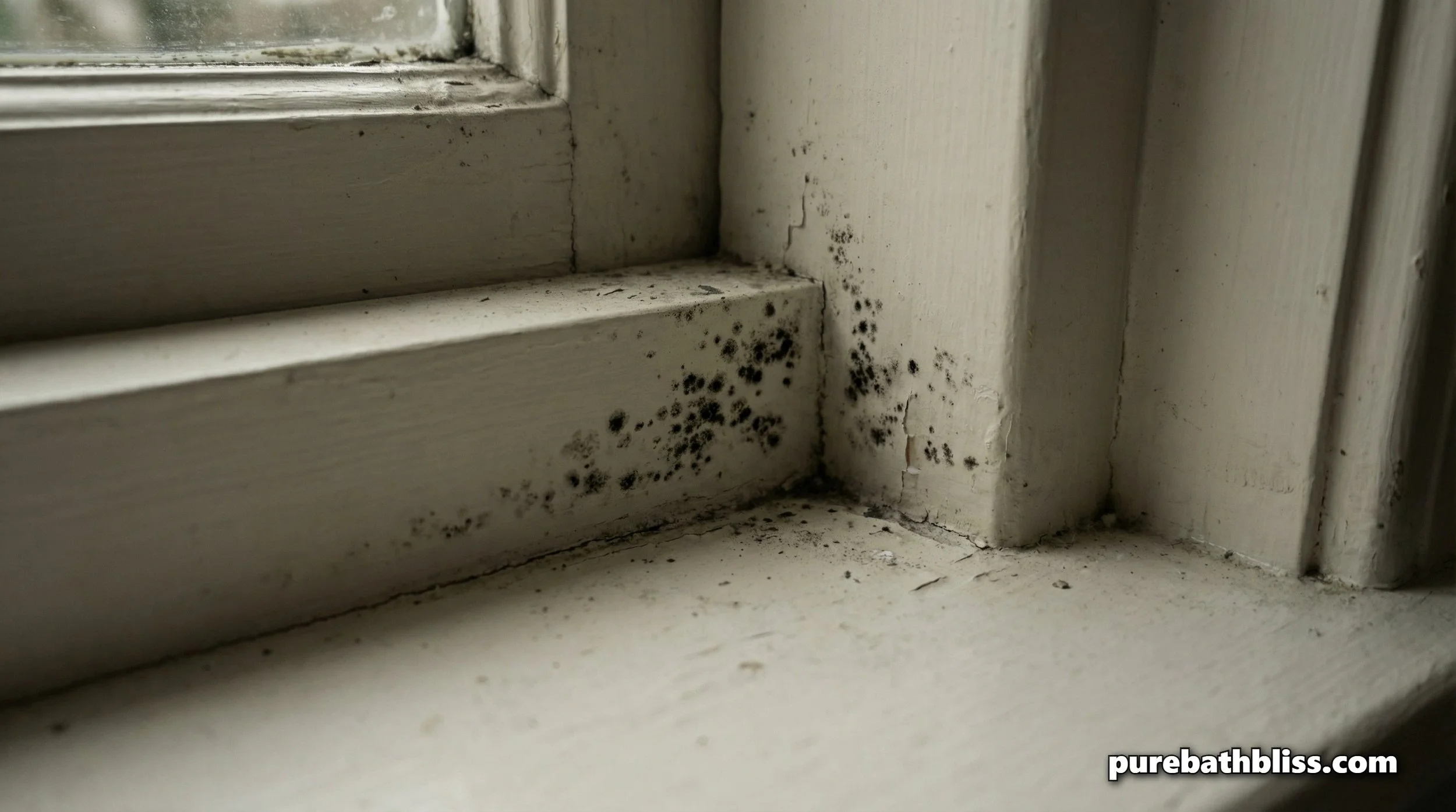
We have all been there: you are performing a morning wipe-down, perhaps tending to your How to Waterproof Your Bathroom Plants, and you notice those persistent black specks or smears on the windowsill. It is disheartening, especially in a space you have worked hard to keep clean.
That "black stuff" is rarely just dust. More often than not, it is a combination of mold and mildew thriving in a micro-environment that is perfectly suited for its growth. While it is easy to assume this means your home is "dirty," it is actually a sign of a structural and environmental imbalance. In a Sustainable Sanctuary, we don't just scrub the symptoms away; we treat the conditions that allow the mold to exist in the first place.
1. The Physics of the "Black Stuff" (Thermal Bridging)
To understand why this happens, we have to look at how your home interacts with the elements. This comes down to a concept called Thermal Bridging.
Your window is the coldest part of your wall assembly. During the winter or even on chilly spring evenings, the glass and the window frame become cold. When the warm, moist air inside your home (especially in bathrooms and kitchens) touches that cold surface, it undergoes a phase change. It transitions from an invisible gas into a liquid. This is condensation.
The water then trickles down and pools on the sill. Over time, that water collects household dust, skin cells, and organic fibers. This mixture creates a "biofilm," an nutrient-rich layer of organic matter that provides the perfect food source for mold spores. If you leave that moisture sitting there, the mold establishes a colony, resulting in those telltale black stains.
2. The "Pure" Cleaning Method: Removing the Mold
Do not reach for the industrial-strength bleach. While bleach can kill mold on the surface, its high surface tension often prevents it from penetrating into the porous materials like wood or drywall, and it can actually damage the finish of your window frames and caulking over time.
The Vinegar-Peroxide Ritual
For a non-toxic, highly effective cleaning solution:
Safety First: Put on a pair of gloves and a simple N95 mask. Even if it is a small spot, you don't want to inhale mold spores as you scrub.
Apply Vinegar: Spray undiluted white vinegar directly onto the black residue. Let it sit for at least 15 minutes. The acetic acid in the vinegar is excellent at breaking down the cellular structure of mold.
Scrub: Use a soft-bristled nylon brush (an old toothbrush works well) to gently agitate the area.
The Final Polish: If any discoloration remains, dampen a cloth with 3% Hydrogen Peroxide and gently wipe the area. Hydrogen peroxide is a natural oxidizer that will lift the pigment of the stain without the harshness of bleach.
Dry Completely: This is the most critical step. Once cleaned, use a dry, clean microfiber cloth to ensure there is zero moisture left on the sill.
3. Prevention: Breaking the Condensation Cycle
The goal is to stop the moisture from pooling in the first place. This requires a multi-layered approach to humidity management.
The Salt Bowl Method
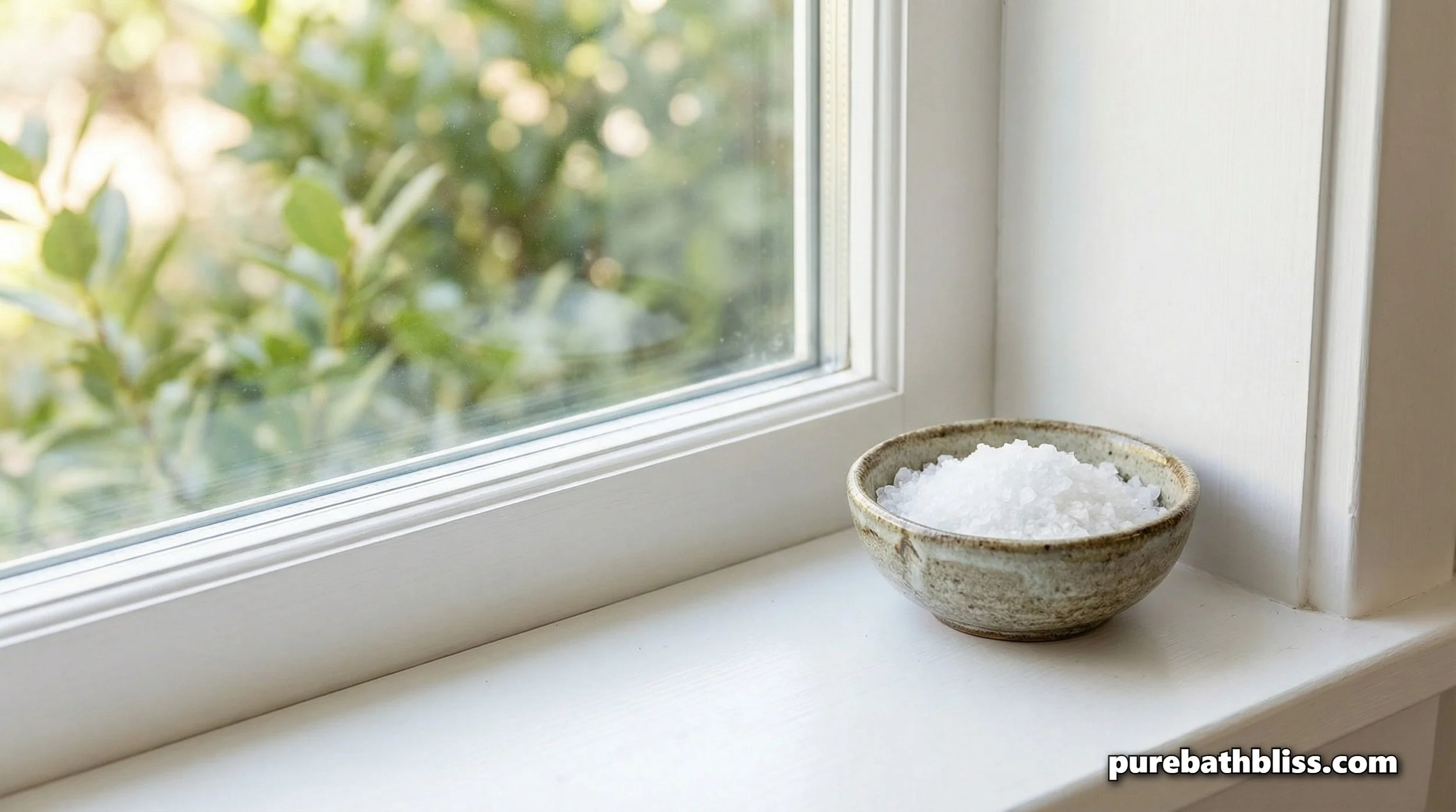
If your bathroom or kitchen is prone to window condensation, you need to draw the moisture out of the air before it reaches the glass. We have a detailed guide on the Salt Bowl Method, a simple, elegant way to use desiccant properties to lower ambient humidity in small rooms.
Ventilation Hygiene
Check your ventilation routines. Are you running your exhaust fan for at least 20 minutes after you finish your shower? If your fan isn't moving enough air, as we discussed in our Sanctuary Reset Guide, the humidity stays trapped in the room and migrates to the window, regardless of how much you try to prevent it.
Evaluate Your Window Treatments
Do you have heavy, blackout curtains or blinds that sit inside the window frame? These can block airflow, preventing the warm air of the room from reaching the glass. This keeps the glass colder and encourages even more condensation to form behind the curtains, where you cannot see it. Try to leave the curtains open during the day, or switch to blinds that allow for airflow at the bottom.
4. Infrastructure Check: Is it Surface Mold or Seal Failure?
If you clean the sill and manage the humidity and the black residue returns within a week or two, you may be looking at a deeper infrastructure issue.
Failed Insulated Glass Units (IGU): If the black residue is inside the glass pane (i.e., you cannot wipe it off because it is between the layers of glass), your window seal has failed. This is not mold; it is a structural failure of the unit.
Caulking Failure: Inspect the exterior of your window frame. If the external caulking is cracked or missing, rain can enter the wall cavity and migrate toward the sill. This creates a "wet wall" condition that will foster mold growth regardless of your indoor cleaning habits. This requires a professional assessment to prevent long-term structural rot.
5. Summary: Identification & Action Matrix
Use this reference table to determine if you are dealing with a surface issue or something that requires professional intervention.
| Observation | Probable Cause | Recommended Action |
|---|---|---|
| Spotty black dots on sill | Condensation/Surface Mold | Clean with Vinegar/Peroxide; manage humidity. |
| Discoloration INSIDE glass | Failed Window Seal | Contact a window glazier for unit replacement. |
| Musty smell, clean sill | Wall Cavity Moisture | Professional moisture test for the wall. |
| Sill feels soft/spongy | Long-term Water Rot | Remove sill; repair/replace wood framing. |
6. Pro-Troubleshooting: Why It Always Comes Back
If you are doing all the right things and the mold persists, look at the Dew Point of your home. If your home is very cold, the windows will always be a magnet for moisture. However, if your home is very humid (perhaps from a large family, constant cooking, or lack of proper ventilation), you are providing a buffet for mold.
A high-quality hygrometer (a small device that measures humidity) can be a game-changer. Aim for a relative humidity between 30% and 50%. If your home is consistently above 60%, you need to increase your ventilation or consider a high-performance dehumidifier.
7. A Final Note on Home Stewardship
Finding mold on a windowsill is not a failure of character; it is simply a data point. It is your home telling you that the humidity levels are out of balance or that the thermal envelope needs attention.
Treat this as an opportunity to perform a "deep-system check." Once you clean the sill, adjust your habits, and perhaps add a Salt Bowl to the area, you’ll likely find that the black residue disappears for good. Your home is a living system, when you listen to the subtle cues it gives you, you can keep it resilient and comfortable for years to come.