Open vs. Closed Bathroom Cabinets
In the world of interior design, the "open vs. closed" debate is a classic. You see it in kitchens, and you certainly see it in bathrooms. Open shelving offers that airy, aspirational "spa" look, while closed cabinetry promises a clean, hidden, and efficient storage solution.
As a builder and curator of home wellness, I look at this not just from an aesthetic standpoint, but from a perspective of material health and daily ritual. Your bathroom is a high-humidity, high traffic zone. The decisions you make about cabinetry aren't just about what looks good today; they are about how your space will handle steam, dust, and daily wear ten years from now.
Choosing the right storage requires balancing the "Sanctuary Style" you desire with the "Infrastructure Reality" of your home’s environment. Let’s break down the logic so you can choose the right storage architecture for your needs.
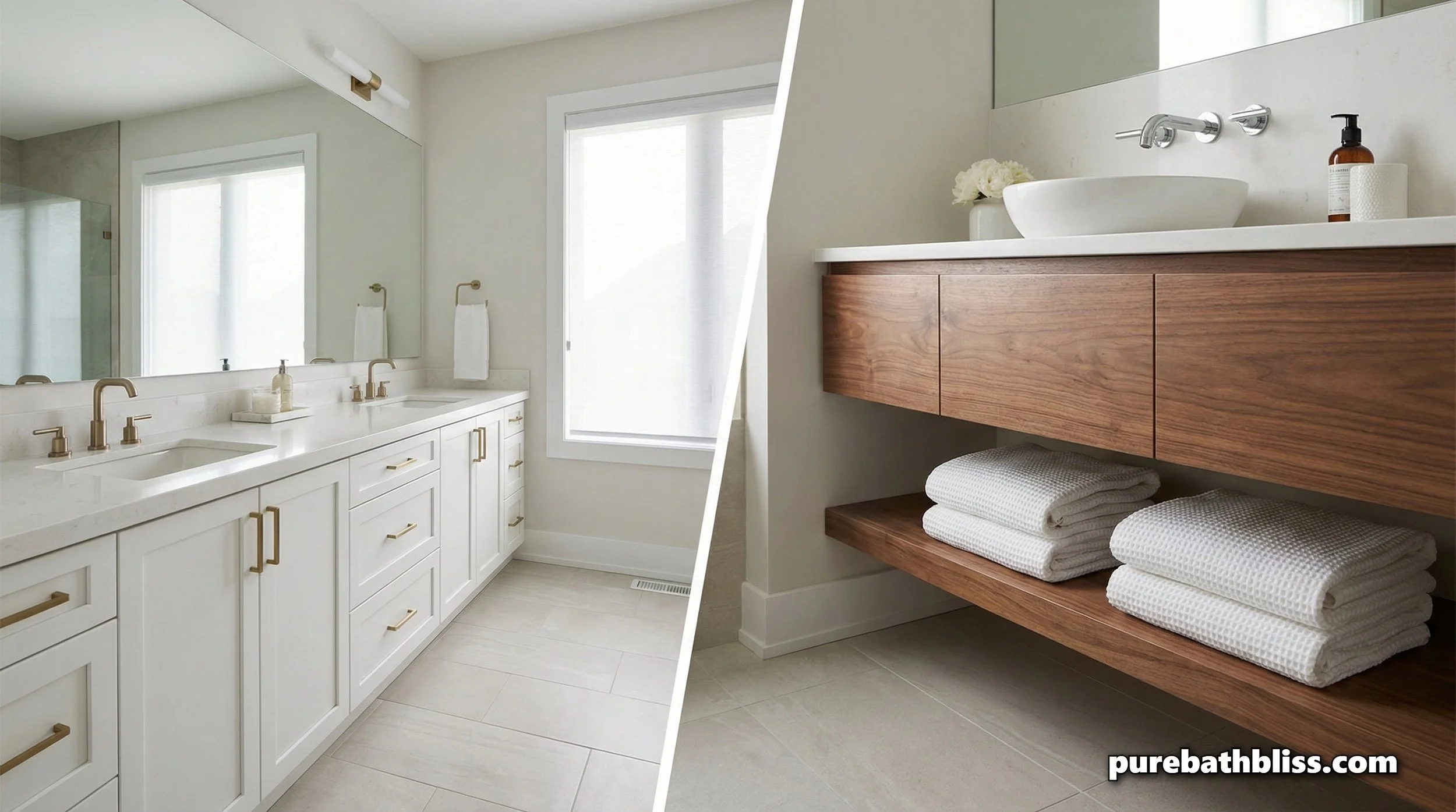
1. The Appeal of Open Shelving: The Curated Sanctuary
Open shelving is undeniably beautiful. It forces a certain level of discipline, turning your everyday items into part of your decor.
Accessibility: In a smaller sanctuary, open shelves can make the room feel much larger. There is no visual "block" of solid wood, which keeps the eye moving and the space feeling open.
The Ritual of Display: When you have high-quality, organic materials, like thick, plush cotton towels or apothecary-style glass bottles, open shelving allows these items to breathe and take center stage. It’s the ultimate "Sanctuary Style" move.
Airflow: Because the items aren't trapped in a dark, sealed box, they are less likely to develop that "stale" smell that can sometimes plague bathroom cabinets.
The Trade-off: The Humidity Factor
Here is the builder's reality check: Open shelving exposes everything to the steam of your shower. Every time you run a hot shower, that steam condenses on your towels, your products, and the shelves themselves. If you are not meticulous about Managing Humidity Levels in the Home, open shelving can become a landing zone for dust-caked moisture, which creates a prime environment for mold spores.
2. The Logic of Closed Cabinetry: The Protective Shield
Closed cabinetry is the "infrastructure-first" choice. It is the workhorse of the bathroom. If open shelving is about display, closed cabinetry is about stewardship and protection.
Visual Silence: The bathroom is a place of restorative calm. A dozen different shampoo bottles, brightly colored plastic tubes, and messy hair tools create "visual noise." Closed doors act as a visual mute button, instantly lowering the stress level of the room.
The Protective Barrier: Cabinet doors shield your supplies from water splashes, hairspray mist, and the constant cycle of steam. This keeps your cotton supplies crisp and your lotions from degrading due to rapid temperature fluctuations.
Dust Mitigation: Even in a "Pure" home, dust happens. In an open-shelf bathroom, that dust settles on your clean towels. With closed doors, the dust stays on the cabinet front, where a quick swipe with a microfiber cloth clears it away, keeping your interior storage truly clean.
The Trade-off: The Hidden Habit
Closed cabinetry can become a "dumping ground" for things you don’t need. It’s easy to shove items into a cabinet and forget about them, leading to an accumulation of expired products and clutter that is just as stressful as having it out in the open, you just don't have to look at it.
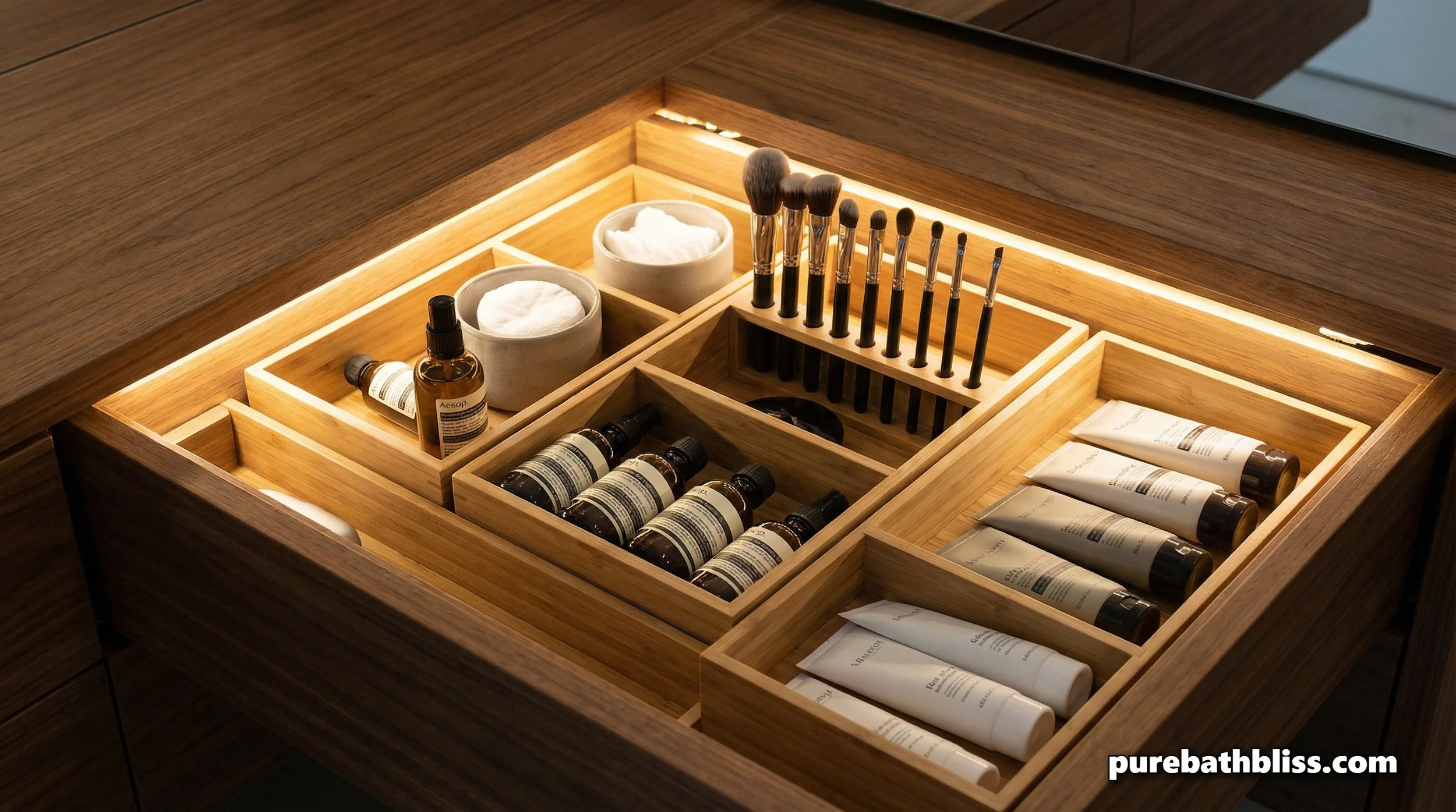
3. The Builder-Curator Hybrid Approach
You do not have to choose just one. In my experience, the most resilient, functional bathrooms utilize a Hybrid Architecture.
Use Closed Cabinetry for the "Daily Grinders"
The items you use every day, the products that are functional but visually "loud", belong behind closed doors. This includes your daily skincare, medical supplies, cleaning agents, and hair tools. Keeping these hidden preserves the "Sanctuary" aesthetic and keeps these items protected from the moisture of the room.
Use Open Shelving for the "Sanctuary Rituals"
Reserve your open shelving for items that elevate the room’s look and are rotated frequently. This means your fresh, clean guest towels, a curated selection of glass canisters for cotton swabs, or a hearty, humidity-loving plant. Because you are using these items daily or refreshing them weekly, dust has no time to settle, and moisture doesn't have time to degrade them.
4. Technical Deep Dive: Designing for Moisture
If you are planning a renovation—whether it’s a full gut or a simple vanity update—you need to account for moisture resistance.
Material Matters: If you choose open shelving, do not use raw or stained wood unless it is sealed with a Marine-Grade Varnish or a high-performance, water-resistant polyurethane. Bathroom air is not "normal" air; it is corrosive to untreated wood.
Hardware Hygiene: For closed cabinets, the hinges are the weakest link. In a high-humidity room, look for "soft-close" hinges that are stainless steel or powder-coated. Cheap, zinc-plated hardware will rust in a bathroom over time, leading to stiff doors and eventual hardware failure.
Air Circulation: If you have closed cabinets, consider using doors with subtle detailing, like shaker style frames or even decorative mesh inserts—that allow for a minimal amount of air exchange. This prevents the interior from becoming a vacuum of stale air.
5. Maintenance Comparison Matrix
Use this guide to determine which storage style fits your lifestyle and maintenance capacity.
| Feature | Open Shelving | Closed Cabinetry |
|---|---|---|
| Visual Impact | Adds character and spaciousness. | Minimizes noise; clean aesthetic. |
| Maintenance | Requires frequent dusting/styling. | Low; wipes clean instantly. |
| Hygiene | Exposed to steam/dust. | Protected from environment. |
| Organization | Must stay curated/neat. | Can hide "active" clutter. |
6. Pro-Tip: The "Sanctuary" Edit
Whether you choose open or closed, the key to a functional bathroom is the periodic edit. Once every season, during your Sanctuary Reset Guide, take everything out of your storage areas.
Why? Because even in closed cabinets, expired products build up. In open shelving, decor items lose their "spark" and start to look like clutter.
The Process: Wipe down the surfaces, check the hinges, discard anything that has expired (yes, skincare expires!), and restock with only what you use. This ritual of editing is just as important as the storage system itself.
Conclusion: Stewardship of Your Space
The choice between open and closed cabinetry isn't about following a trend; it is about choosing the system that best supports your family’s daily life. If you love the look of open shelving but hate cleaning, choose closed and add a single, high-quality open shelf for your favorite décor. If you crave the spa-like minimalism of open shelves, commit to the maintenance required to keep those items fresh.
Your bathroom is a reflection of how you treat yourself. By selecting storage that respects the physical reality of the room, the humidity, the water and the steam, you are building a home that is as functional as it is beautiful.