Essential Oils for the Bathroom: The Complete Guide to What Works, What the Science Says, and How to Use Them Safely
Transparency Note: We independently select these products based on research and user reviews. If you buy something through our links, we may earn a commission.
My wife started putting eucalyptus in our shower a few years ago and I dismissed it as a wellness trend until I used it during a head cold and genuinely felt the difference. That was enough to make me look more carefully at what the research actually says about essential oils rather than relying on the marketing language that surrounds the category.
The essential oil industry has a credibility problem created largely by overclaiming. Products marketed to cure disease, eliminate pathogens from the air, and detoxify the body are everywhere in this category and most of those claims are not supported by any clinical evidence. At the same time, dismissing essential oils entirely ignores a genuine body of peer-reviewed research showing that specific compounds in specific oils produce specific measurable physiological effects, and that the bathroom is one of the most effective rooms in the house for delivering those effects through steam and diffusion.
Here is the honest version: what each of the six most useful bathroom essential oils actually contains, what the compounds in them demonstrably do, how to use them effectively in the shower and bath, the safety rules that the lifestyle guides consistently understate, and three DIY blends with exact ratios that are genuinely worth making.
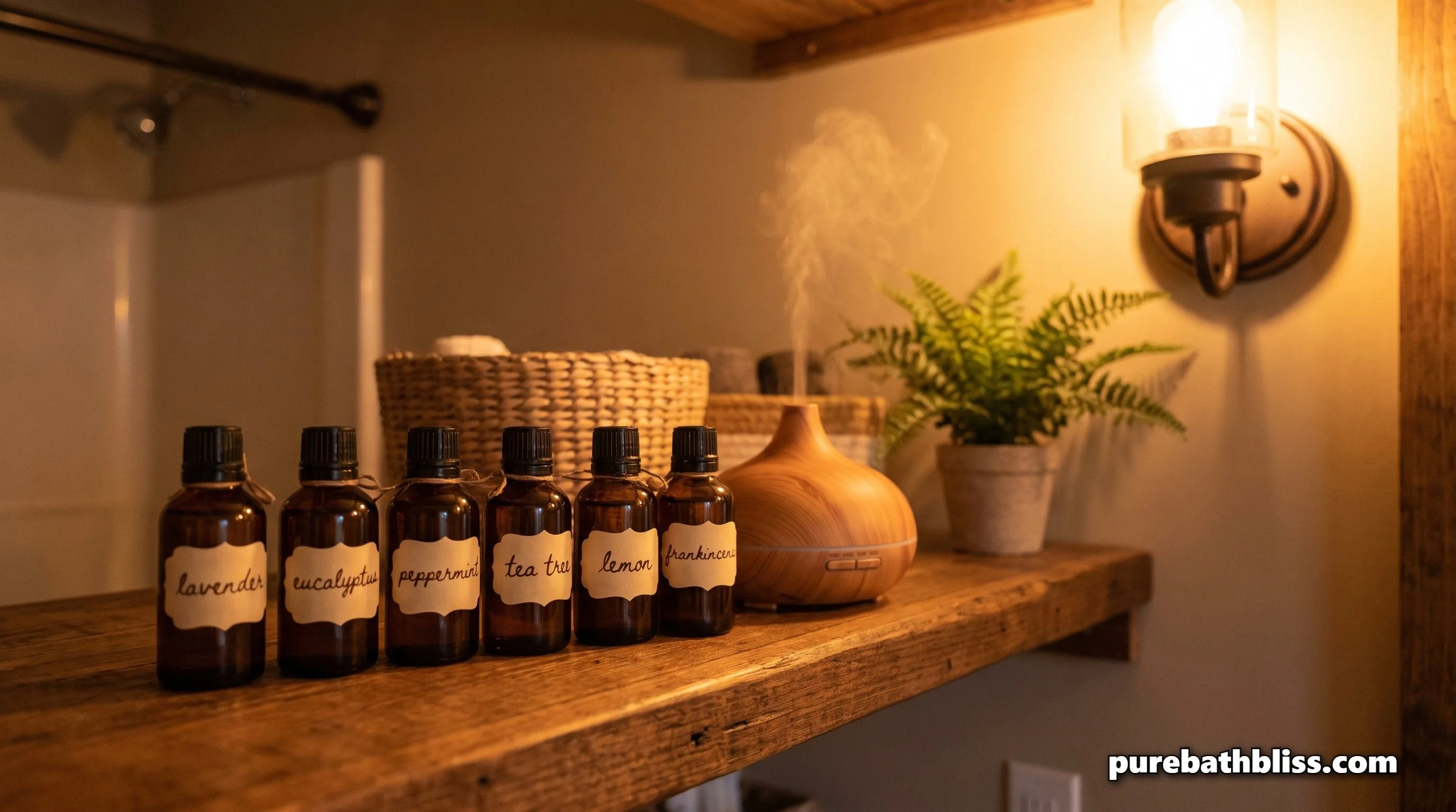
Why the Bathroom Is the Best Room for Essential Oils
The bathroom delivers essential oil compounds to the body through two mechanisms that most other rooms cannot replicate: steam inhalation and warm water skin contact.
Steam inhalation in the shower is the most efficient delivery route for aromatic compounds. Hot shower steam carries volatile organic compounds from essential oils directly into the respiratory tract at concentrations significantly higher than those achievable with a diffuser in a standard room. The warm, enclosed shower space concentrates the aromatic compounds. The steam opens nasal passages and airways, increasing the surface area available for absorption. A few drops of eucalyptus on the shower floor produce a respiratory effect in two to three minutes that a diffuser running for thirty minutes in a larger room cannot match.
The warm bath delivers aromatic compounds through both inhalation from the surface of the water and, for oils properly dispersed in a carrier, through skin absorption. The warm water that opens the skin's pores and increases permeability for moisturizing compounds does the same for essential oil molecules dissolved in a carrier oil. The key word is dissolved: essential oil dropped directly into bathwater floats on the surface in concentrated droplets that contact skin unevenly and can cause localized irritation. Essential oil pre-mixed into a carrier oil before adding to the bath disperses evenly through the water and contacts skin at a safe, consistent dilution. This distinction matters practically and we cover it in detail in the usage section below.
The Six Essential Oils Worth Having in the Bathroom
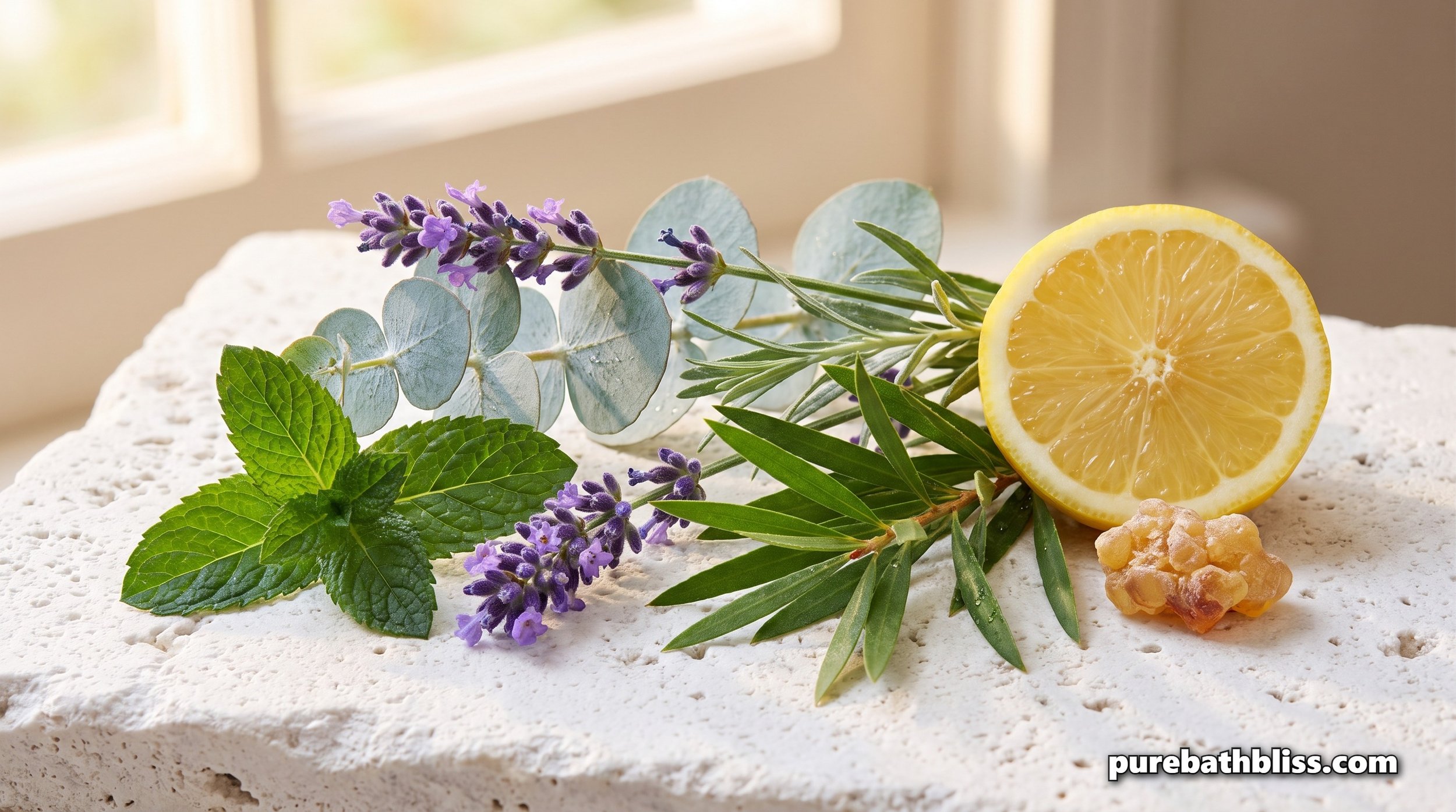
1. Lavender — The Compound Is Linalool
Lavender essential oil is approximately 25 to 45 percent linalool, a monoterpene alcohol that is the most studied aromatic compound for anxiolytic and sedative effects. Linalool modulates GABA-A receptors in the central nervous system, the same receptor type targeted by benzodiazepine medications, producing measurable reductions in anxiety and cortisol levels. A 2019 systematic review in Frontiers in Psychiatry covering 15 randomized controlled trials found lavender aromatherapy produced statistically significant reductions in anxiety measures compared to control conditions. The effect is real, the mechanism is understood, and the bathroom bath setting where lavender oil dispersed in a carrier produces both inhalation and skin contact exposure is one of the most effective delivery environments available. For evening baths specifically, five drops of pure organic lavender essential oil dispersed in one tablespoon of jojoba carrier oil added to the bath is the format with the most evidence behind it for sleep improvement. Our guide to DIY lavender beeswax candles for the bathroom extends the linalool exposure into the post-bath wind-down period.
2. Eucalyptus — The Compound Is 1,8-Cineole
Eucalyptus globulus essential oil is 60 to 90 percent 1,8-cineole, also called eucalyptol, an oxide compound that acts directly on the mucociliary apparatus of the respiratory tract. 1,8-cineole increases the beating frequency of the cilia lining the airways, which accelerates clearance of mucus and reduces nasal congestion. It also has demonstrated bronchodilatory effects in clinical studies of patients with asthma and COPD. The shower is the ideal delivery environment for eucalyptus because the hot steam carries 1,8-cineole molecules directly into the nasal passages and airways at a high concentration. Two to three drops on the shower floor away from the direct water stream, or on a washcloth hung near the shower head, is sufficient. The steam does the rest. Note that eucalyptus is contraindicated for children under two and should be used with caution around children under ten. It is also toxic to cats and dogs and should not be diffused in rooms that pets access regularly. Our guide to hanging eucalyptus in the shower correctly covers the fresh bundle alternative that provides the same 1,8-cineole release more slowly over one to three weeks.
3. Tea Tree — The Compound Is Terpinen-4-ol
Tea tree oil is 30 to 48 percent terpinen-4-ol, a monoterpene that disrupts bacterial and fungal cell membranes, producing the antimicrobial activity that tea tree is most commonly claimed to provide. A 2023 systematic review published in Frontiers in Pharmacology covering randomized controlled trials of Melaleuca alternifolia oil confirmed antimicrobial and anti-inflammatory effects with a favorable safety profile in clinical applications. The relevant applications for the bathroom specifically are cleaning surfaces prone to mold and mildew, where tea tree mixed with white vinegar and water produces genuine antimicrobial activity, and treating minor fungal skin issues in the bath. Tea tree is not recommended for passive diffusion in the bathroom as its medicinal scent is too intense for extended ambient exposure. It is specifically a functional cleaning and topical use oil rather than an ambient one. Tea tree is toxic to cats and dogs even at low diffused concentrations and should not be diffused in pet-accessible spaces.
4. Peppermint — The Compound Is Menthol
Peppermint oil is 35 to 55 percent menthol, a cyclic terpene alcohol that activates TRPM8 cold receptors in the skin and mucous membranes, producing the cooling and refreshing sensation that makes peppermint the most effective morning shower oil available. The TRPM8 activation does not lower skin temperature. It creates the neurological perception of cooling by the same mechanism that makes cold water feel colder with menthol present. The mood-elevating effect is real and rapid, typically within thirty seconds of inhalation. Two drops on the shower floor in the morning is enough. Peppermint is contraindicated for children under two, should be used sparingly around children under ten, and is one of the oils most commonly associated with adverse reactions in pets. It should also not be used near the face of infants as it can cause respiratory distress.
5. Lemon and Citrus — The Compound Is Limonene
Lemon essential oil is 60 to 80 percent d-limonene, a cyclic terpene with demonstrated mood-elevating and mildly anxiolytic effects in clinical literature and a clean, bright scent that genuinely freshens air rather than masking odors. Limonene also has mild antimicrobial properties that make lemon the right citrus choice for the all-purpose cleaning spray recipe below. The important safety caveat for citrus oils is photosensitivity: cold-pressed citrus oils including lemon, bergamot, lime, and grapefruit contain furanocoumarins that can cause phototoxic skin reactions when applied topically and followed by sun exposure. Steam diffusion and diffuser use carry no photosensitivity risk. Topical application followed by staying indoors is also safe. Direct skin application before sun exposure is not.
6. Frankincense — The Compound Is Alpha-Pinene
Frankincense essential oil from Boswellia serrata is rich in alpha-pinene and incensole acetate, compounds that have demonstrated anti-inflammatory and mood-modulating effects in research. A study published in the FASEB Journal found incensole acetate activated TRPV3 channels in the brain, producing an anxiolytic and antidepressant effect in animal models. Frankincense is the deepest and most contemplative of the bathroom oils, best suited to a slow evening bath rather than a morning shower, and it blends exceptionally well with lavender for a combined linalool and incensole acetate effect that is broader than either oil alone.
The Safety Rules That Most Guides Understate
Essential oil safety is genuinely important and the guidance in most lifestyle guides is insufficient. Here are the rules that matter for a bathroom where multiple family members including children and pets may be present.
Never apply undiluted to skin. Essential oils are highly concentrated lipophilic compounds that penetrate the skin rapidly. Undiluted application can cause chemical burns, sensitization reactions that make future use of that oil permanently reactive, and systemic effects from rapid dermal absorption at high concentrations. The safe dilution ratio for bath use is five to ten drops of essential oil per tablespoon of carrier oil. For topical application outside the bath, two to five drops per teaspoon of carrier oil is the standard adult range.
Age restrictions that are not optional. Eucalyptus and peppermint are contraindicated for children under two years old and should be used with caution for children under ten. Both contain compounds that can cause respiratory distress in young children at low concentrations. Lavender and chamomile are the oils with the most favorable pediatric safety profiles. When in doubt with children under two, diffuse nothing or use only properly diluted lavender or chamomile.
Pet toxicity is serious and commonly underestimated. Tea tree oil is toxic to cats and dogs even at low concentrations, including from diffused ambient exposure. Peppermint, eucalyptus, and citrus oils are also toxic to cats specifically. If you have cats, these oils should not be diffused in rooms the cats access. Dogs are more tolerant of low diffused concentrations but should not be exposed to high concentrations or topical application. Always ensure the bathroom door can be closed when diffusing oils that are toxic to household pets.
Quality matters more than price. The essential oil market contains a significant proportion of adulterated oils, meaning pure oil blended with cheaper synthetic compounds or carrier oils without disclosure. The label claim "pure" or "natural" has no regulatory definition in the United States or Canada. Third-party tested oils from brands that publish their GC/MS testing results, gas chromatography and mass spectrometry analysis that confirms the compound profile of each batch, are the standard worth applying when buying. Price is an indirect indicator: a genuine therapeutic-grade lavender oil cannot be produced and sold profitably at $5 for a 10ml bottle. If the price seems too low for the volume, the oil is almost certainly adulterated.
How to Use Essential Oils in the Bathroom
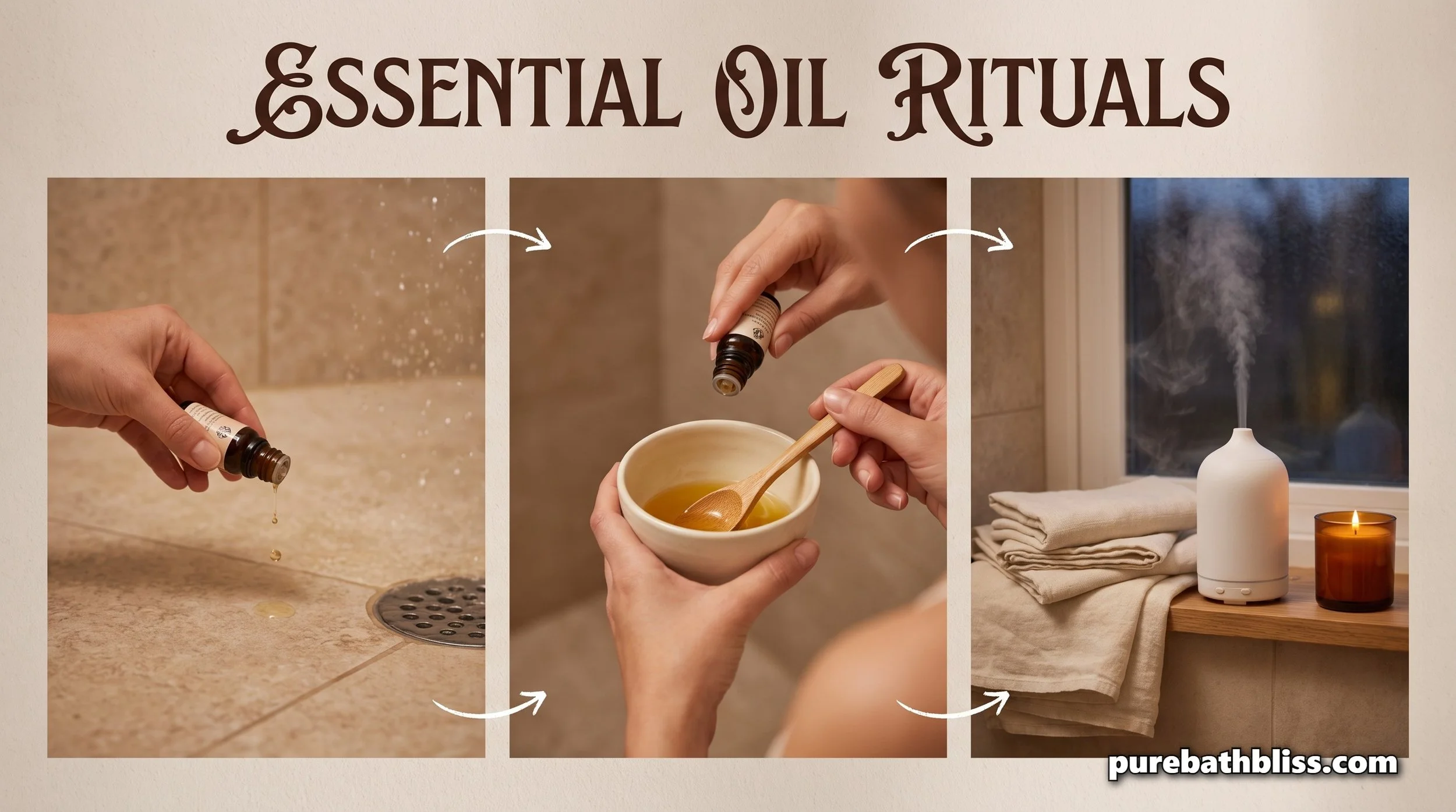
In the Shower
Two to three drops of oil on the shower floor, positioned away from the direct water stream so the oil is not immediately rinsed away. The heat of the floor and the surrounding steam carry the volatile compounds into the shower air within thirty to sixty seconds. Alternatively, two drops on a washcloth hung over the shower head or door handle release the oil slowly as steam passes over the cloth. This method wastes less oil and provides a more consistent aromatic concentration throughout the shower. The eucalyptus shower steam technique and a more detailed guide to getting maximum benefit from it is covered in our guide to hanging eucalyptus in the shower correctly.
In the Bath
Always pre-mix with a carrier oil before adding to bathwater. Five to ten drops of essential oil per tablespoon of jojoba, sweet almond, or sunflower oil. Add the pre-mixed blend to the running water as the bath fills, not after you get in, so it disperses evenly. The carrier oil suspends the essential oil molecules in the water rather than letting them float as concentrated droplets on the surface. Our guide to therapeutic bath soaks with Epsom salts and magnesium flakes covers combining essential oils with magnesium compounds in the bath for a combined aromatherapy and transdermal mineral effect.
In a Diffuser
An ultrasonic diffuser uses water and ultrasonic vibration to create a cool mist that carries aromatic compounds into the air without heat, which preserves the volatile compounds better than heat-based diffusers. In a bathroom the diffuser works best when the door is closed for fifteen to twenty minutes to allow the aromatic concentration to build, then the door is opened or the exhaust fan run to refresh the air. Run the diffuser for thirty to sixty minutes maximum rather than continuously. Continuous diffusion can cause headache and olfactory fatigue where the scent becomes imperceptible despite still being present at high concentration.
As a Cleaning Spray
One cup white vinegar, one cup water, fifteen drops lemon essential oil, five drops tea tree essential oil in a glass spray bottle. The acetic acid in the vinegar dissolves mineral scale. The limonene in the lemon oil contributes additional degreasing action. The terpinen-4-ol in the tea tree provides genuine antimicrobial coverage against the bathroom mold and mildew species that thrive in humid conditions. Shake before each use as the oils will separate from the water between applications. Do not use on natural stone surfaces as the vinegar acidity will etch and damage marble, limestone, or travertine over time.
Three DIY Bathroom Blends Worth Making
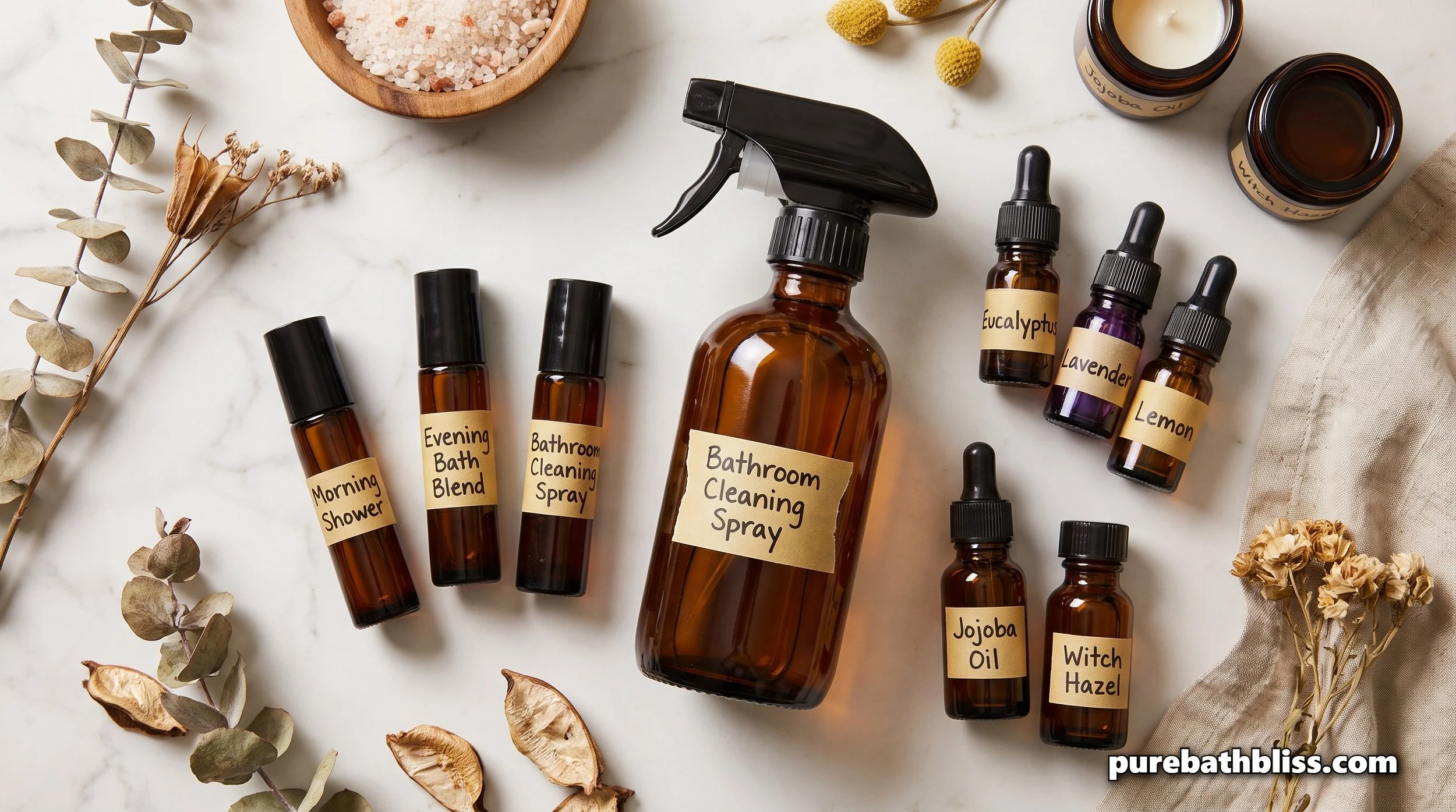
Morning Shower Blend
Purpose: Alertness, respiratory clearing, mood elevation for the day ahead.
Formula: 3 drops eucalyptus, 2 drops peppermint, 1 drop lemon. Apply two to three drops of this blend to the shower floor or a washcloth each morning.
Why it works: The 1,8-cineole from eucalyptus clears nasal passages. The menthol from peppermint activates TRPM8 receptors for an immediate alerting effect. The limonene from lemon elevates mood and brightens the aromatic profile. The three compounds work on different receptor systems and complement rather than compete with each other.
Evening Bath Blend
Purpose: Anxiety reduction, cortisol lowering, preparation for sleep.
Formula: 5 drops lavender, 2 drops frankincense, 1 drop chamomile. Pre-mix in one tablespoon of jojoba carrier oil before adding to the bath.
Why it works: Linalool from lavender modulates GABA-A receptors. Incensole acetate from frankincense activates TRPV3 channels for additional anxiolytic effect. Chamomile's apigenin has mild sedative properties via GABA-A receptor binding similar to linalool. The three compounds reinforce the same calming mechanism through slightly different pathways. This is the blend we use at home on evenings when the day has been long.
Antimicrobial Bathroom Diffuser Blend
Purpose: Air freshening and passive antimicrobial action in the bathroom between cleaning sessions.
Formula: 3 drops lemon, 2 drops lavender, 1 drop tea tree. Run in an ultrasonic diffuser for thirty minutes with the bathroom door closed.
Why it works: Lemon limonene freshens the air. Lavender linalool provides a calming aromatic background. A single drop of tea tree provides terpinen-4-ol antimicrobial coverage without the scent becoming too medicinal or intense. Do not use this blend in rooms accessible to cats. The DIY reed diffuser guide on this site at our DIY reed diffuser guide covers making a passive slow-release version of this aromatic approach that requires no electricity and releases compounds gradually over two to four weeks.
The Essential Oil Reference Guide
| Oil | Key Compound | Demonstrated Effect | Best Bathroom Use | Safety Notes |
|---|---|---|---|---|
| Lavender | Linalool (25 to 45%) | GABA-A modulation. Anxiety reduction confirmed in 15 RCTs per 2019 Frontiers in Psychiatry review. | Evening bath blend, diffuser, shower floor for sleep preparation | Most favorable pediatric profile of the six oils. Avoid undiluted on skin. Dilute in carrier for bath. |
| Eucalyptus | 1,8-Cineole or eucalyptol (60 to 90%) | Mucociliary clearance acceleration. Bronchodilatory effect. Nasal congestion reduction. | Morning shower floor. Washcloth near showerhead. Fresh bundle over shower head. | Contraindicated under age 2. Caution under age 10. Toxic to cats and dogs. Do not diffuse in pet rooms. |
| Tea Tree | Terpinen-4-ol (30 to 48%) | Antimicrobial confirmed in 2023 Frontiers in Pharmacology systematic review of RCTs. Disrupts bacterial and fungal cell membranes. | Cleaning spray only. Not for passive diffusion due to intensity. Diluted topical use. | Toxic to cats and dogs even at diffused concentrations. Do not use in pet-accessible spaces. |
| Peppermint | Menthol (35 to 55%) | TRPM8 cold receptor activation. Immediate alerting and mood-elevating effect. Nasal passage opening. | Morning shower floor. 2 drops maximum. Not for bath use near face. | Contraindicated under age 2. Can cause respiratory distress in infants. Toxic to cats. Use sparingly. |
| Lemon | d-Limonene (60 to 80%) | Mood elevation. Mild antimicrobial. Air freshening via genuine odor neutralization rather than masking. | Diffuser, cleaning spray, morning shower blend. | Phototoxic if applied topically before sun exposure. Diffusion and bath use are safe. Cold-pressed only for best activity. |
| Frankincense | Alpha-pinene and incensole acetate | TRPV3 channel activation. Anxiolytic and antidepressant effects in research. Anti-inflammatory via boswellic acids. | Evening bath blend, diffuser during meditation or slow bath. | Generally well-tolerated. Dilute in carrier for bath use. Patch test for sensitive skin. |
Essential oils work best in the bathroom when they are used consistently, in the right format for the delivery environment, at safe dilutions, and from quality sources. The bathroom's steam and enclosed space make it one of the most effective rooms in the house for aromatic compound delivery. The same natural material approach that drives the soap and cleaning product choices covered across this site applies to essential oils: know what the active compound is, understand the mechanism behind the claimed benefit, buy from sources that can prove purity, and use at appropriate dilutions. The oils that meet those standards are genuinely useful additions to a bathroom routine. The ones that do not are expensive water.