Bar Soap vs Liquid Soap: The Honest Comparison for Skin, Hygiene, and the Environment
Transparency Note: We independently select these products based on research and user reviews. If you buy something through our links, we may earn a commission.
I switched from liquid body wash to bar soap about four years ago, partly because of the plastic packaging waste and partly because I had started reading ingredient labels and wanted to know exactly what was going in the shower with me and my kids every morning. The transition took some adjustment. The lather is different. The storage is different. The way your skin feels immediately after is different. Some of those differences are real and some are just unfamiliarity.
The bar soap versus liquid soap question comes up constantly in our household and in the comments on this site, and most of the guides I have read online either declare a winner without explaining the reasoning or treat the comparison so superficially that the reader is no better informed afterward. The reality is that both formats clean skin effectively, the bacteria concern about bar soap is genuinely not supported by the evidence, and the meaningful differences between them are in pH chemistry, surfactant type, skin barrier effects over time, environmental cost, and cost per use.
Here is the full comparison with the science behind each point and a clear framework for deciding which makes sense for your household and your skin type.
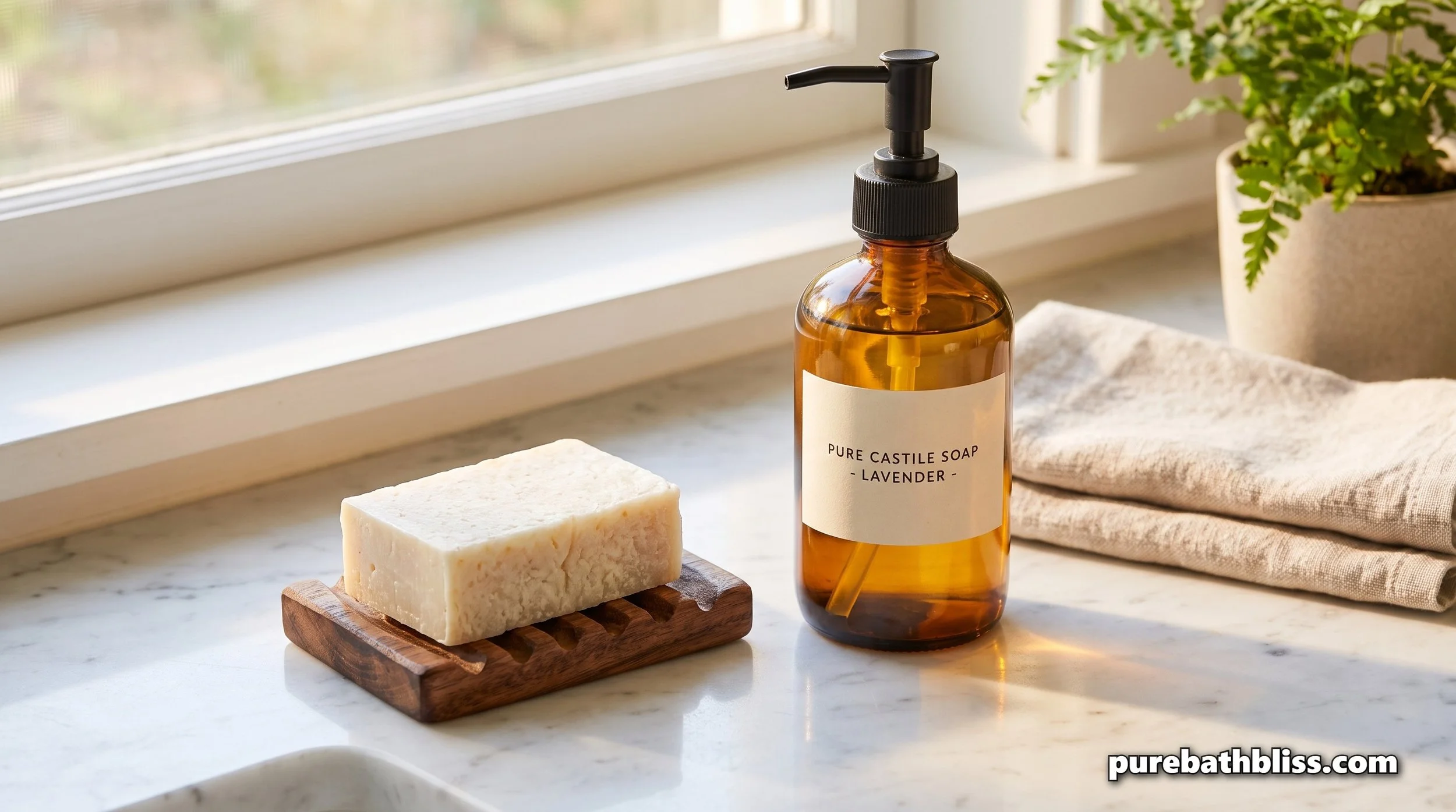
What Bar Soap and Liquid Soap Actually Are
The chemistry of how bar soap and liquid soap are made is where the meaningful comparison begins, because the production process determines the pH, the surfactant type, and ultimately what each one does to the skin barrier.
True bar soap is produced through saponification, the reaction between fats or oils and an alkali, either sodium hydroxide (lye) for bar soap or potassium hydroxide for liquid castile soap. When fats react with lye, the lye is consumed entirely in the chemical reaction, producing soap molecules and glycerin as a byproduct. A properly made bar of soap contains no lye in the finished product because it has been fully converted during saponification. The glycerin produced during saponification is what gives natural bar soap its skin-softening properties. Many commercial soap manufacturers extract the glycerin to sell separately for use in cosmetics, which is why cheap commercial bar soaps often feel drying compared to handmade cold-process soaps where the glycerin remains in the bar. Our guide to organic soap versus synthetic detergent bars covers the saponification chemistry and glycerin extraction process in full detail.
Most commercial liquid body wash is not technically soap in the saponification sense. It is a synthetic detergent formulation, a syndet, built from petroleum-derived surfactants, most commonly sodium lauryl sulfate or sodium laureth sulfate, combined with water, thickeners, preservatives, fragrance, and conditioning agents. The surfactants in a syndet formulation are more aggressive at stripping oils from surfaces than saponified soap, which is what produces the squeaky-clean sensation that many people associate with feeling thoroughly washed but that is actually the feeling of the skin barrier's lipid layer being removed.
The third category most comparisons miss is the syndet bar, a bar-format synthetic detergent rather than a true saponified soap. Syndet bars are pH-balanced to approximately 5.5, matching the skin's natural acid mantle, and avoid the alkalinity problem of traditional bar soap. Dove Beauty Bar is the most widely known syndet bar. For people who want the environmental advantages of bar format without the pH concerns of traditional soap, syndet bars are the relevant middle ground that the bar versus liquid binary usually ignores.
The pH Question: Why It Matters More Than Most Guides Explain
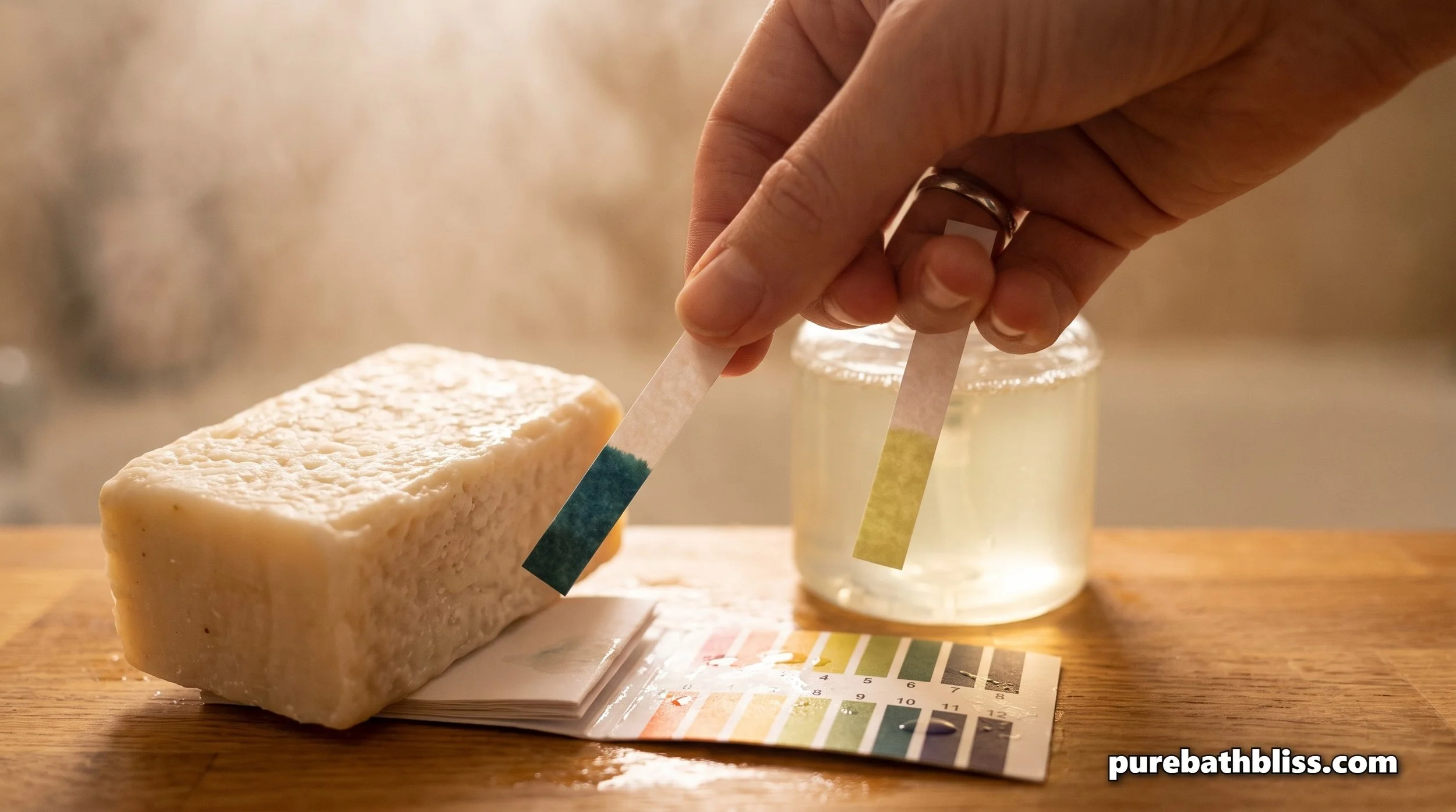
The skin's acid mantle sits at a pH of approximately 4.5 to 5.5. This slightly acidic environment is maintained by sebum, sweat, and the natural microbiome of the skin, and it serves as a protective barrier against pathogenic bacteria and environmental irritants. When the skin's pH is disrupted upward toward neutral or alkaline, the barrier function is compromised, transepidermal water loss increases, and the conditions for irritation, dryness, and eczema flares are created.
Traditional bar soap produced through saponification has a pH of approximately 7.5 to 10, which is alkaline relative to the skin's ideal pH. This is not a manufacturing defect. It is an inherent property of the saponification chemistry. Washing with an alkaline product temporarily raises the skin's pH above its optimal range. For most people with normal skin, the skin's buffering system restores the pH to normal within one to two hours after washing. For people with sensitive skin, eczema, rosacea, or compromised barrier function, the pH elevation from repeated bar soap use can extend beyond the skin's ability to self-correct, producing the dryness and irritation that drives many people away from bar soap.
Liquid synthetic detergent body washes are typically formulated at a pH of 5 to 7, significantly closer to the skin's natural pH than traditional bar soap. This pH advantage is the legitimate clinical reason that dermatologists often recommend liquid over bar for patients with sensitive or compromised skin. It is not that liquid soap is inherently better or more natural. It is that the pH of the formulation more closely matches the skin's optimal environment.
The practical implication is straightforward. For normal, resilient skin, the pH of traditional bar soap is not a significant concern because the skin restores its own pH efficiently. For sensitive, eczema-prone, or compromised skin, a syndet bar or pH-balanced liquid cleanser is the clinically appropriate recommendation. This is not a bar versus liquid question. It is a pH-matched formulation question.
The Germ Myth: Setting the Record Straight
The concern that bar soap harbors and transfers bacteria is the most persistent myth in this category and the one most consistently unsupported by the evidence.
The foundational study on this question was conducted by Heinze and Yackovich in 1988 and published in Epidemiology and Infection. Researchers deliberately contaminated bar soaps with concentrations of bacteria five times higher than those typically found on used household bars. Test subjects then washed their hands with the contaminated bars. Bacterial counts on the subjects' hands after washing were no higher than before washing. The wash action of soap and water removes surface microbes faster than they can transfer from the bar to the skin. The 1965 Armed Forces study reached the same conclusion with similar methodology. Multiple peer-reviewed replications since have consistently found no clinically meaningful bacterial transfer from bar soap to skin during normal hand or body washing.
Liquid soap dispensers have their own bacterial contamination problem that the bar soap hygiene narrative consistently overlooks. A 2011 study published in Applied and Environmental Microbiology found that 25 percent of public restroom refillable soap dispensers were contaminated with fecal bacteria. The pump mechanism and the reservoir interior of a refillable dispenser are rarely cleaned and provide a warm, moist environment for bacterial growth. A bar of soap rinsed and allowed to dry between uses is bacteriologically no more concerning than a dispenser and significantly less concerning than a poorly maintained one.
The practical guidance is simple. Rinse the bar under running water before use to remove any surface debris. Store it on a draining soap dish rather than in standing water. A bar that dries between uses has minimal surface bacterial load and poses no meaningful hygiene concern for a household where each person uses their own bar or where the bar is in a shower used only by healthy adults.
The Environmental Case: Packaging, Carbon, and Water
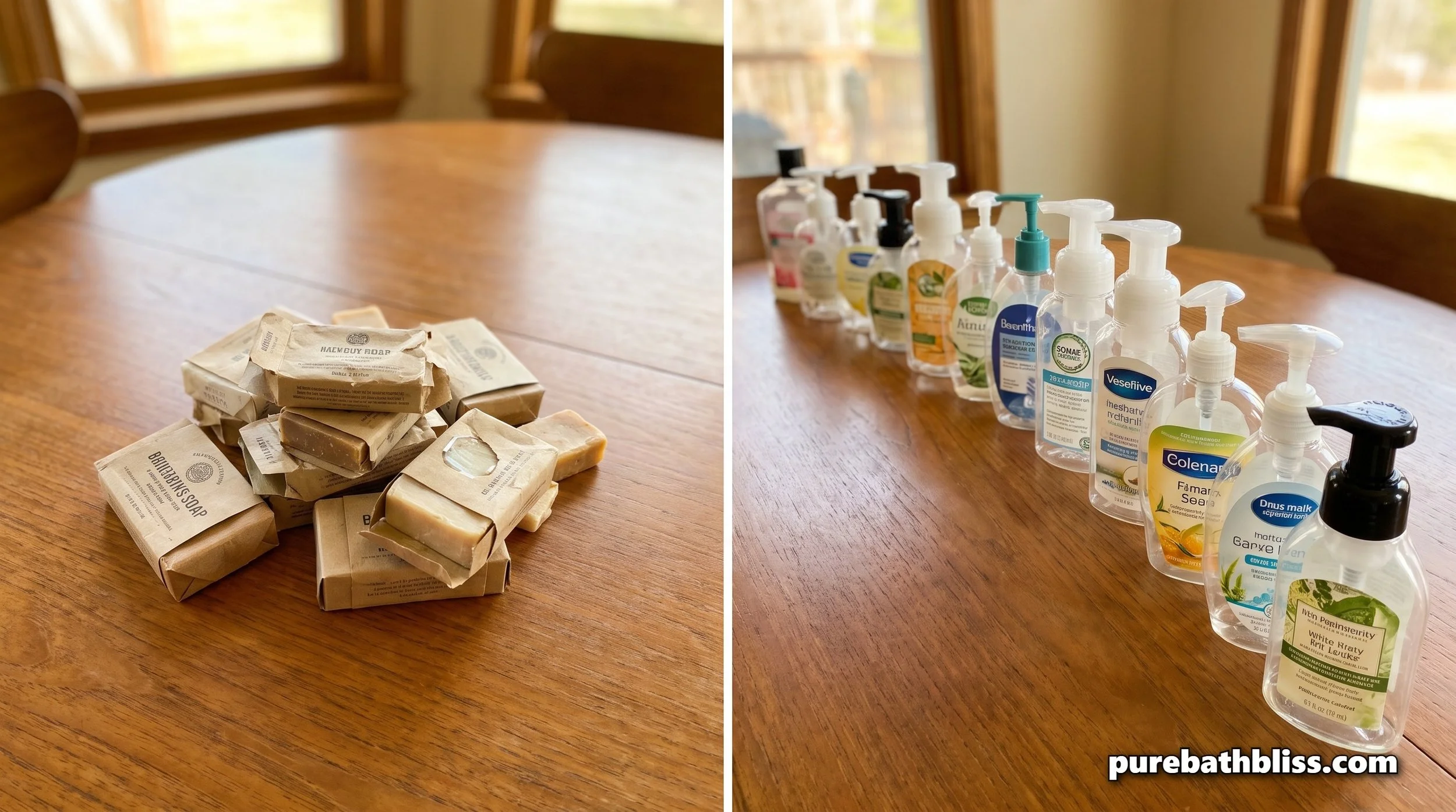
The environmental comparison between bar and liquid soap is less straightforward than the packaging argument alone suggests, but the conclusion still favors bar soap by a significant margin when the full lifecycle is considered.
Packaging. Bar soap is typically packaged in paper or cardboard, both readily recyclable and biodegradable. Liquid soap comes in plastic bottles, the majority of which are not recycled in practice regardless of their recyclability classification. The plastic bottle also adds weight and volume to transportation, increasing the carbon footprint of shipping. A year's supply of bar soap for one person produces a fraction of the packaging waste of the equivalent liquid soap supply.
Water content. Liquid soap is approximately 60 to 80 percent water by weight. Bar soap has a much lower water content, typically under 10 percent after the curing process. The water in liquid soap is being transported from the manufacturer to the consumer at significant energy cost. Concentrated liquid soap refills and waterless soap bars reduce this transport footprint, but standard liquid soap in a pump bottle is essentially shipping water with a small amount of active ingredient.
Concentration and use per wash. Studies comparing bar soap to liquid soap usage found that people use approximately six times more liquid soap per handwash than bar soap to produce equivalent cleaning results. The concentrated solid format of bar soap produces more cleaning efficacy per gram of product than the diluted liquid format. A 100-gram bar of soap typically outlasts the equivalent price point in liquid soap by two to three times, which compounds the packaging and transport advantage.
The honest environmental verdict. Bar soap wins on packaging, transportation footprint, water content, and product concentration per use. The advantage is not marginal. The same non-toxic home approach that applies to bath products applies in the kitchen, where plant-based concentrated cleaning products reduce the same packaging and transport footprint. Our sister site Pure Kitchen Bliss covers eco-friendly dish soap alternatives including zero-waste dish soap bars that apply the same solid-format environmental logic to kitchen cleaning.
The Ingredient Transparency Difference
Bar soap and liquid soap differ significantly in the complexity of their ingredient lists, and this difference has practical implications for people trying to reduce synthetic compound exposure in the bathroom.
A traditional cold-process bar soap made from saponified plant oils has an ingredient list of three to six items: the oils used, the lye that converted them, water, and any added botanicals or essential oils. Every ingredient is either a natural plant oil or its saponification product. There is nothing on the list that requires a chemistry degree to evaluate.
A standard commercial liquid body wash has an ingredient list of twenty to thirty items, including synthetic surfactants, synthetic thickeners, synthetic preservatives, synthetic fragrance, synthetic colorants, and pH adjusters. The synthetic fragrance entry alone can represent dozens of undisclosed individual compounds. We covered the specific compounds to watch for and the label names they hide under in our guide to harmful chemicals in shampoo and body wash. The same ingredient concerns, parabens, formaldehyde releasers, synthetic fragrance, and synthetic dyes, apply equally to liquid body wash.
The ingredient transparency advantage of bar soap is genuine and significant. A five-ingredient bar soap can be fully evaluated in thirty seconds. A twenty-five-ingredient liquid body wash requires label-reading skills that most consumers have not developed. For households prioritizing non-toxic product selection, the shorter and more interpretable ingredient list of a quality bar soap is a meaningful practical advantage over liquid formulations.
The Products Worth Buying in Each Category
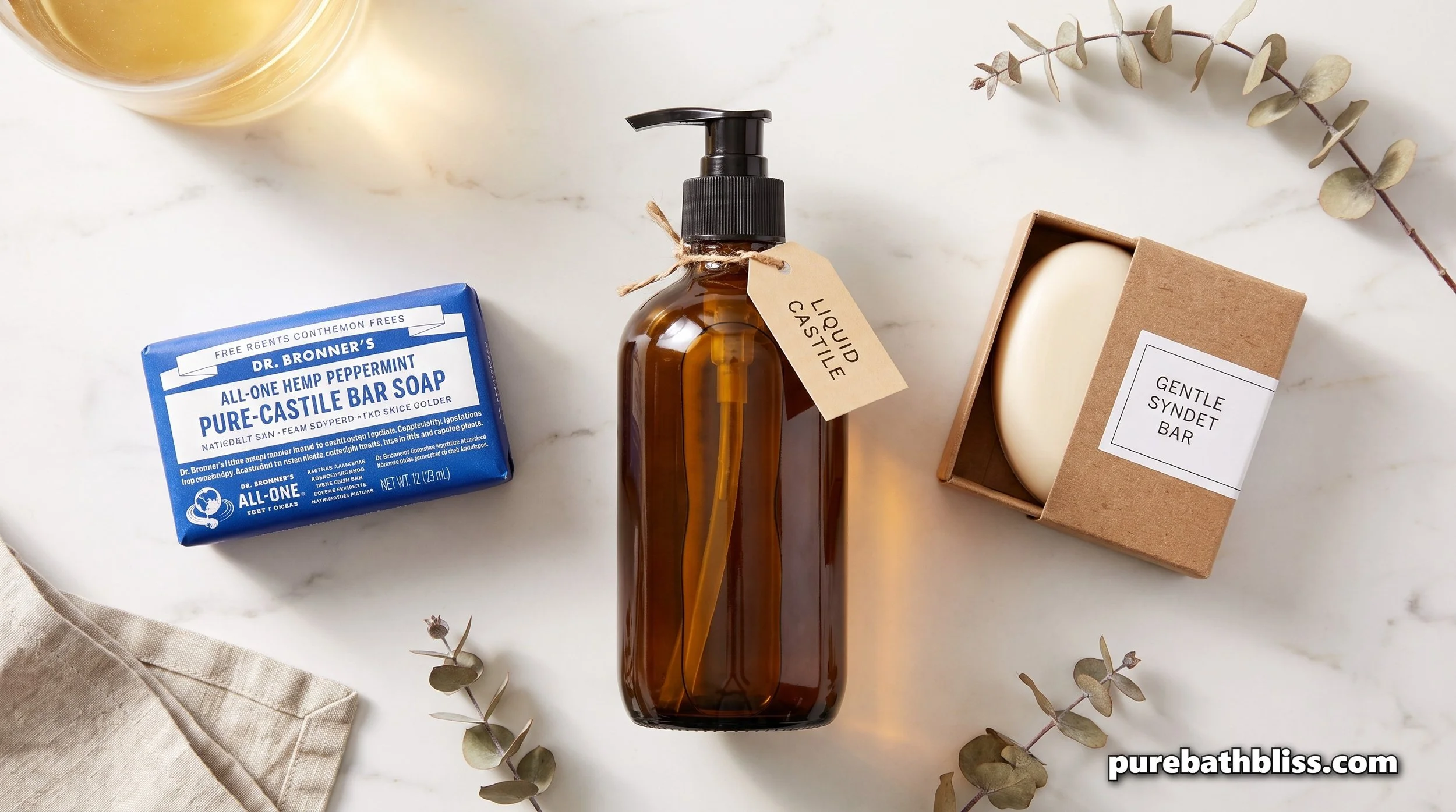
Best Bar Soap: Natural Cold-Process Castile
Dr. Bronner's Pure-Castile Bar Soap in the unscented Baby version is the benchmark natural bar soap for households prioritizing clean ingredients and environmental credentials. USDA organic certified, fair trade, saponified hemp and coconut oils with retained glycerin, four-ingredient label, fully biodegradable and packaged in recycled paper. At this price point it is also significantly more affordable per wash than premium liquid body washes with comparable natural credentials.
Best Liquid Option: Concentrated Castile
Dr. Bronner's liquid castile soap in a large format bought once and decanted into a smaller dispenser is the cleanest liquid option in the category and significantly reduces the plastic packaging waste of buying individually sized bottles. The liquid castile formula is potassium hydroxide saponified rather than sodium hydroxide, making it naturally liquid rather than a synthetic detergent formulation. Dilute at a ratio of one part soap to three parts water in the dispenser for a body wash consistency.
Best for Sensitive Skin: Syndet Bar
Dove Sensitive Skin Unscented Beauty Bar is the most widely available syndet bar with a dermatologist-recommended pH-balanced formulation for sensitive and eczema-prone skin. It is not a natural product by the standards of the other two recommendations, but it is the appropriate clinical recommendation for people whose skin cannot tolerate the alkalinity of traditional saponified soap and who want the bar format's packaging and cost advantages over liquid synthetic detergent body washes.
Best Storage for Bar Soap
A self-draining wooden soap dish in teak or bamboo is the storage upgrade that makes bar soap practical and mold-free. The drainage slots allow water to run off the base of the bar between uses so the bar dries completely rather than sitting in a puddle. A bar that dries between uses lasts significantly longer, produces less mushiness and soap scum on the dish, and avoids the mold problem that gives poorly stored bar soap its reputation for being messy.
The Complete Comparison
| Factor | Natural Bar Soap | Syndet Bar | Liquid Body Wash | Liquid Castile Soap |
|---|---|---|---|---|
| pH | 7.5 to 10. Alkaline. Temporarily disrupts acid mantle. | 5 to 6.5. pH-balanced. Matches skin's natural range. | 5 to 7. Generally pH-balanced. | 8 to 9. Alkaline. Same as bar castile. |
| Surfactant type | Saponified natural fatty acids. Gentle. Biodegradable. | Synthetic surfactants but milder than SLS-based body wash. | Typically SLS or SLES. Aggressive. Strips lipid barrier. | Saponified plant oils. Same as bar castile but potassium-based. |
| Ingredients | 3 to 8 ingredients. Fully interpretable. No synthetic preservatives needed. | 10 to 15 ingredients. Some synthetic components. | 20 to 30 ingredients typically. Preservatives, fragrance, dyes, thickeners. | 5 to 10 ingredients. Cleaner than standard liquid body wash. |
| Packaging | Paper or cardboard. Biodegradable and recyclable. | Paper or cardboard. Same advantage as natural bar. | Plastic bottle. Low recycling rate in practice. | Plastic bottle. Better in large format with glass decant dispenser. |
| Cost per wash | Lowest. Bar soap lasts 2 to 3 times longer per dollar than liquid. | Low. Similar cost per wash to natural bar. | Highest. People use 6x more liquid soap per wash than bar soap for equivalent cleaning. | Low to moderate. Better in large format. |
| Bacteria concern | Not supported by evidence. Wash action removes surface bacteria before transfer. | Not a concern. | Dispenser reservoir can harbor bacteria if not cleaned. 25% contamination rate in public dispensers per 2011 study. | Same dispenser concern as body wash if using a shared pump. |
| Best for | Normal skin. Non-toxic priority. Environmental priority. Cost priority. | Sensitive, eczema-prone, or compromised skin wanting bar format benefits. | Preference for liquid format. Not recommended over bar for non-toxic priority. | Liquid preference with cleaner ingredients. Best in large format with glass decant dispenser. |
The verdict is not a universal winner. For normal skin with no specific sensitivities, a natural cold-process bar soap is the superior choice on ingredient transparency, environmental footprint, cost per use, and plastic reduction. For sensitive, eczema-prone, or compromised skin, a syndet bar delivers the bar format's environmental advantages with a pH profile that is clinically more appropriate than traditional saponified soap. For households that prefer liquid format, concentrated liquid castile soap in large format with a glass dispenser is the cleanest option available, with a shorter ingredient list and better environmental credentials than any standard commercial liquid body wash. The choice between formats is less important than the choice of what is in the formula, and the ingredient transparency advantage of natural bar soap over commercial liquid body wash is the single most underreported aspect of this comparison.