How to Unclog a Drain with Baking Soda and Vinegar (And When It Won't Work)
Originally published October 2025, Updated July 2026
Transparency Note: We independently select these products based on research and user reviews. If you buy something through our links, we may earn a commission.
With four kids, slow drains are a regular occurrence in our house. Hair, soap scum, toothpaste, the gradual accumulation of everything that goes down a bathroom sink or shower drain over weeks of family use. The first time I dealt with it I reached for a commercial drain cleaner, poured it in, and watched it work. I also noticed the fumes were significant enough that I left the room while it did its job. In an enclosed bathroom with limited ventilation, that did not feel like a great trade.
The baking soda and vinegar method has been our standard approach ever since. It works reliably on the kinds of clogs that develop gradually in a family bathroom, it costs almost nothing, and nothing in it requires ventilation or gloves. The important caveat is that it does not work on everything, and knowing where it works and where it does not saves you time and frustration.
Here is the complete method, the science behind it, and the honest breakdown of what it can and cannot handle.
Why This Works: The Chemistry in Plain Language
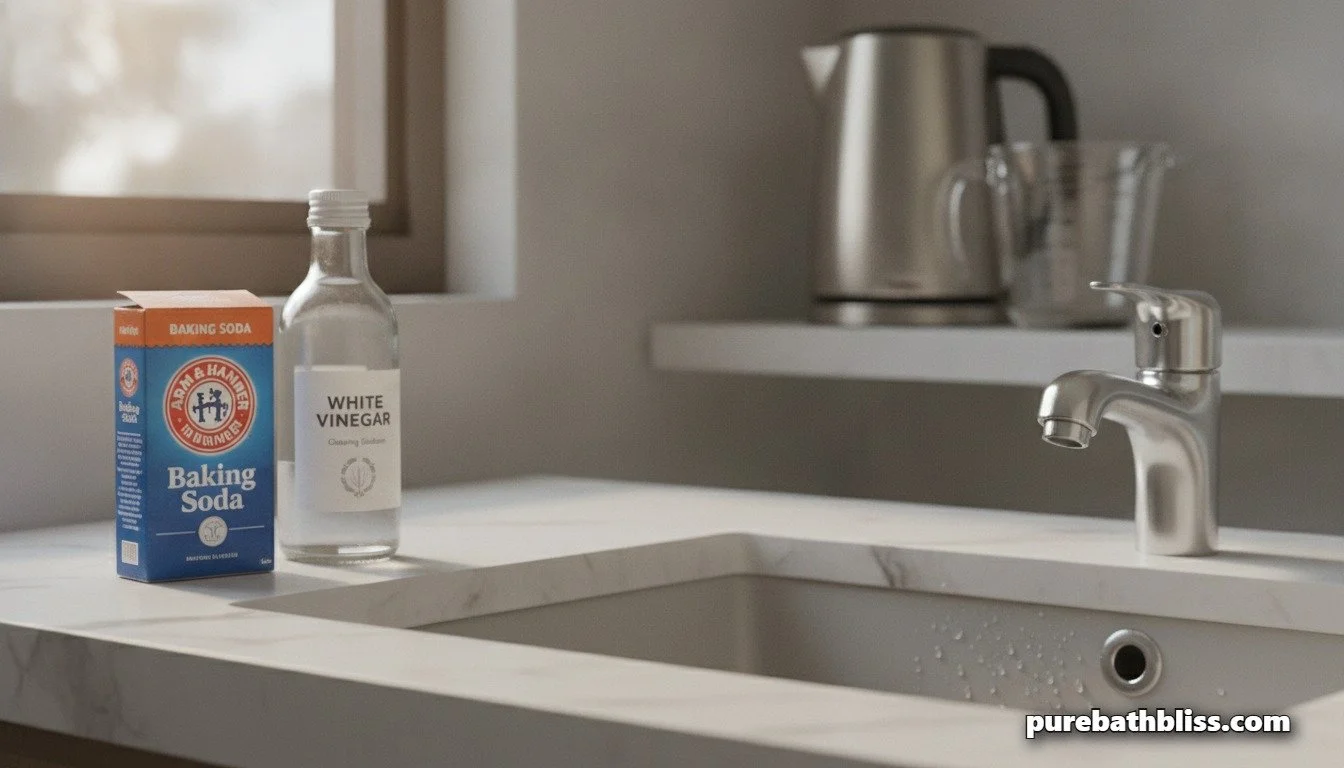
Baking soda is sodium bicarbonate, an alkaline compound. White vinegar is a 5 percent solution of acetic acid. When they meet in the drain they react to produce carbon dioxide gas, water, and sodium acetate. The reaction is fast and produces a vigorous fizzing that you can both hear and feel through the drain cover.
The CO₂ gas is the active cleaning agent. As it is produced rapidly in the confined space of the drain pipe, it agitates and physically disrupts the biofilm layer that is causing the slow drain. This biofilm, a combination of soap scum, hair, skin cells, toothpaste residue, and bacteria, is what most bathroom drain clogs are made of. The mechanical agitation of the CO₂ combined with the mildly acidic environment of the vinegar loosens and breaks down that organic material so the hot water flush can carry it away.
An important clarification: the fizzing is not dissolving the clog chemically in the way a strong acid or alkaline commercial cleaner does. It is physically agitating and disrupting it. This is why the method works well on soft, gradual organic buildup and much less well on dense physical obstructions. The chemistry is real but the mechanism is mechanical rather than dissolving.
What It Works On and What It Does Not
| Clog Type | Will This Method Work? | Notes |
|---|---|---|
| Slow drain from gradual biofilm buildup | Yes — ideal application | The most common bathroom drain problem. One to two treatments usually clears it. |
| Soap scum and grease buildup | Yes — works well | The vinegar's acidity helps break down fatty acid deposits alongside the CO₂ agitation. |
| Drain odour without blockage | Yes — works very well | Use smaller quantities weekly as maintenance. Disrupts the bacterial biofilm causing the smell. |
| Hair clog in the P-trap | Partial — may loosen but not clear | CO₂ agitation can loosen early-stage hair clogs. Dense or compacted hair needs a drain snake. |
| Complete blockage with standing water | Unlikely alone | Worth trying once. Usually requires a drain snake for full clearance. |
| Foreign object in the drain | No | Jewellery, small toys, or solid objects require manual removal or a plumber. |
| Multiple slow drains throughout the house | No | Main sewer line blockage. Requires a professional plumber. |
For a completely blocked drain with standing water that will not move at all, this method is worth trying once but is unlikely to be sufficient on its own. A drain snake is the right mechanical tool for a full blockage. Our guide to the best drain snakes for hair clogs covers the three tools that work best in a family bathroom, including the one that navigates the P-trap without disassembly.
The Method: Step by Step
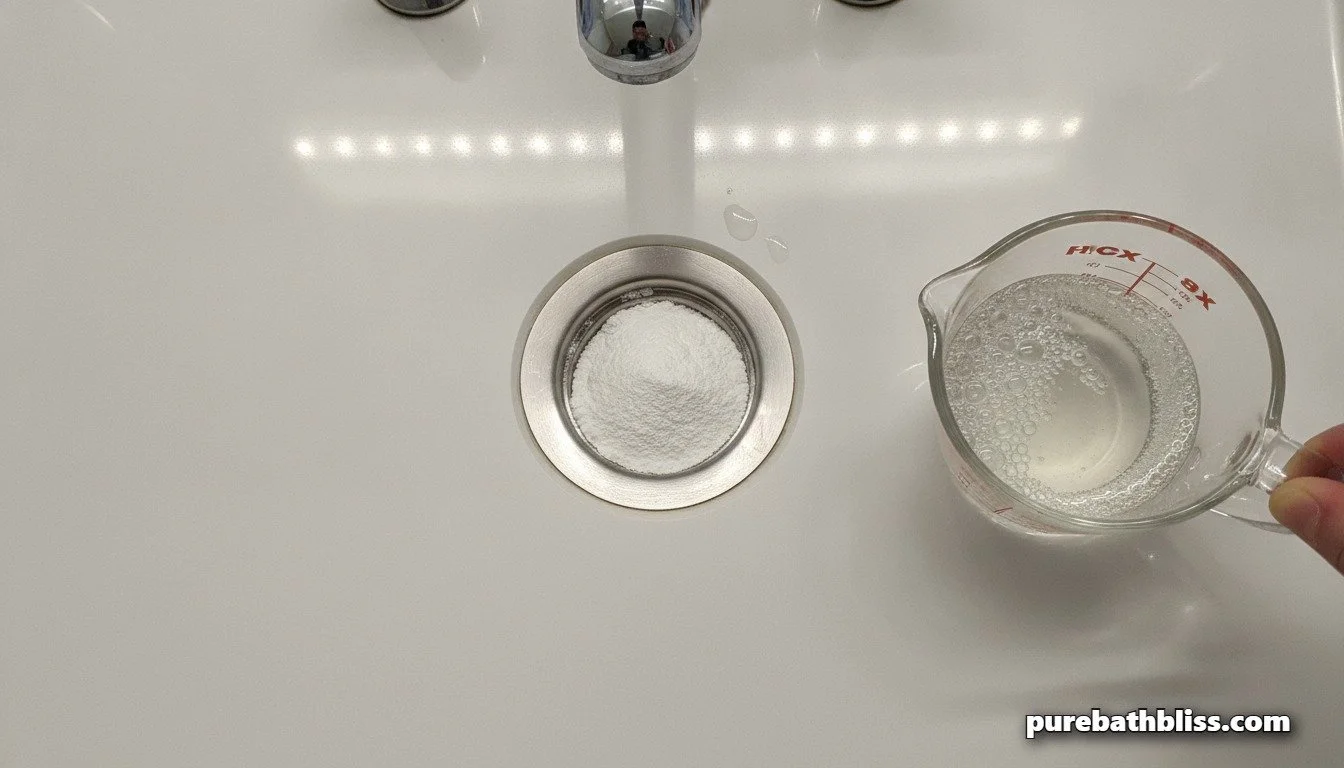
What You Need
Half a cup of baking soda
One cup of white vinegar
A full kettle of boiling water
A drain stopper, wet rag, or folded cloth to cover the drain
Step 1: Remove Standing Water
If there is standing water in the sink or shower, remove as much as possible before starting. A cup or small container works fine. The baking soda needs to reach the drain and the clog directly rather than being diluted by standing water before it gets there.
Step 2: Pour Baking Soda Down the Drain
Pour half a cup of baking soda directly into the drain. If the drain opening is small, use a funnel or a folded piece of paper to direct it in rather than having it spread across the drain cover. Let it sit for five minutes before the next step. This gives the dry powder time to settle into the pipe rather than sitting on top of any residual water.
Step 3: Add the Vinegar and Cover the Drain Immediately
Pour one cup of white vinegar directly over the baking soda and immediately cover the drain with a stopper, a wet rag, or a folded cloth pressed firmly over the opening. This step is the one most people skip and it is the most important part of the method. Covering the drain traps the CO₂ gas inside the pipe rather than letting it escape upward, which forces the fizzing action against the clog rather than into the room. The difference in effectiveness between a covered and uncovered drain is significant.
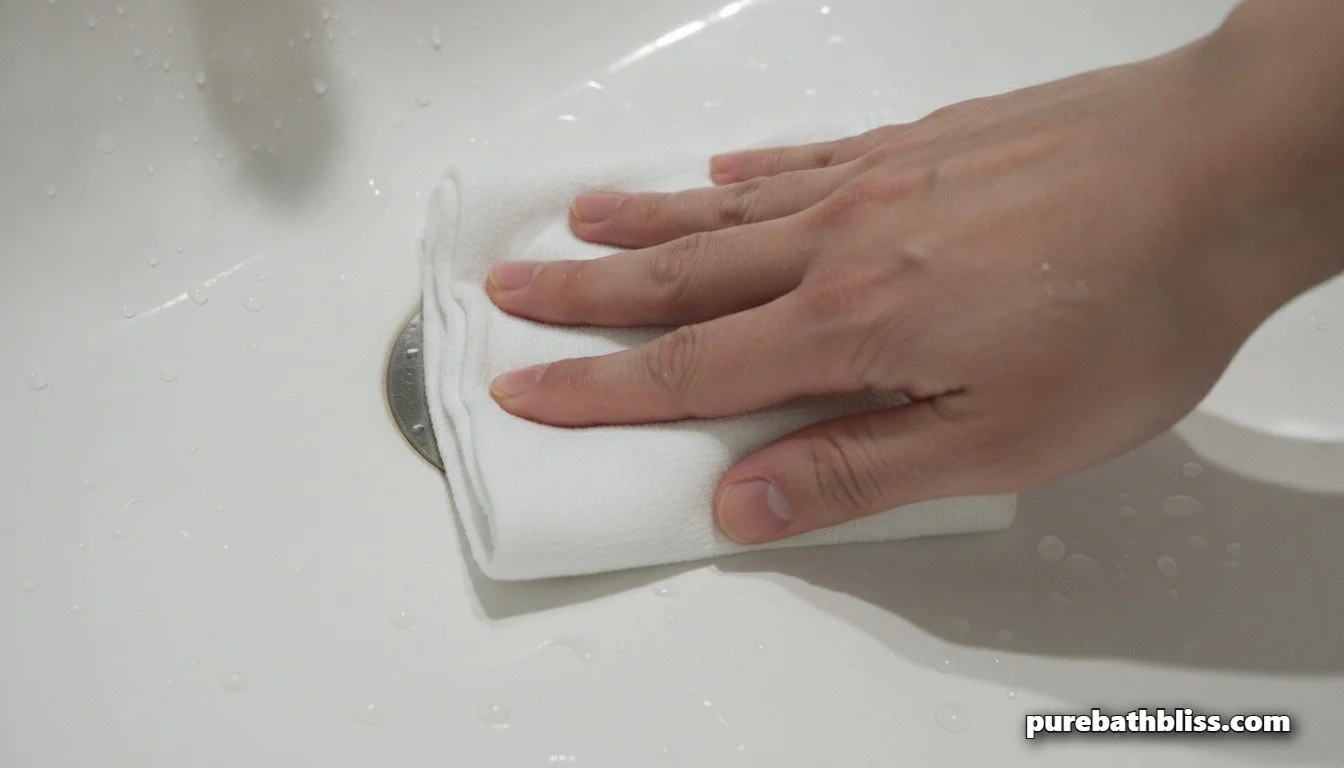
Step 4: Wait 30 Minutes
Leave it completely undisturbed for at least thirty minutes. For a slow drain that has been developing over weeks, an hour is better. For a persistent or older buildup, leaving it overnight with the drain covered produces meaningfully better results. The CO₂ agitation is happening during this time and the mild acid environment is working on the organic material. Patience here is what separates a treatment that works from one that does nothing.
Step 5: Flush with Boiling Water
Remove the cover and pour a full kettle of boiling water slowly and steadily down the drain. The boiling water flushes the loosened debris through the pipe and carries the sodium acetate byproduct away. Hot tap water is less effective than a kettle for this step, the higher temperature is what melts and flushes any greasy residue that the fizzing has loosened. Run the tap for another thirty seconds after the kettle to confirm whether the drain is clearing.
Step 6: Repeat if Needed
For a slow drain that has improved but not fully cleared, repeat the treatment the following day. Two consecutive treatments are usually sufficient for a gradual organic buildup that has been developing over months. If the drain is still slow after two treatments, the clog is likely a physical hair blockage that requires a drain snake rather than additional chemical treatment.
The Odour Variant: When the Problem Is Smell Not Slow Draining
A drain that smells bad but still drains normally is a biofilm problem rather than a blockage problem. The same baking soda and vinegar treatment addresses it effectively because the CO₂ agitation disrupts the bacterial biofilm that is producing the hydrogen sulfide gas responsible for the sulfur smell.
For this application, use smaller quantities: a quarter cup of baking soda and half a cup of vinegar. Cover the drain, wait fifteen minutes, and flush with hot water. Do this weekly as a maintenance habit and the sulfur smell will not return. If the smell persists after several weekly treatments, the source is more likely in the P-trap or a dry trap in an infrequently used drain rather than in the biofilm itself. Our full guide to why your bathroom sink smells like sulfur covers all the specific causes and the P-trap cleaning protocol for each one.
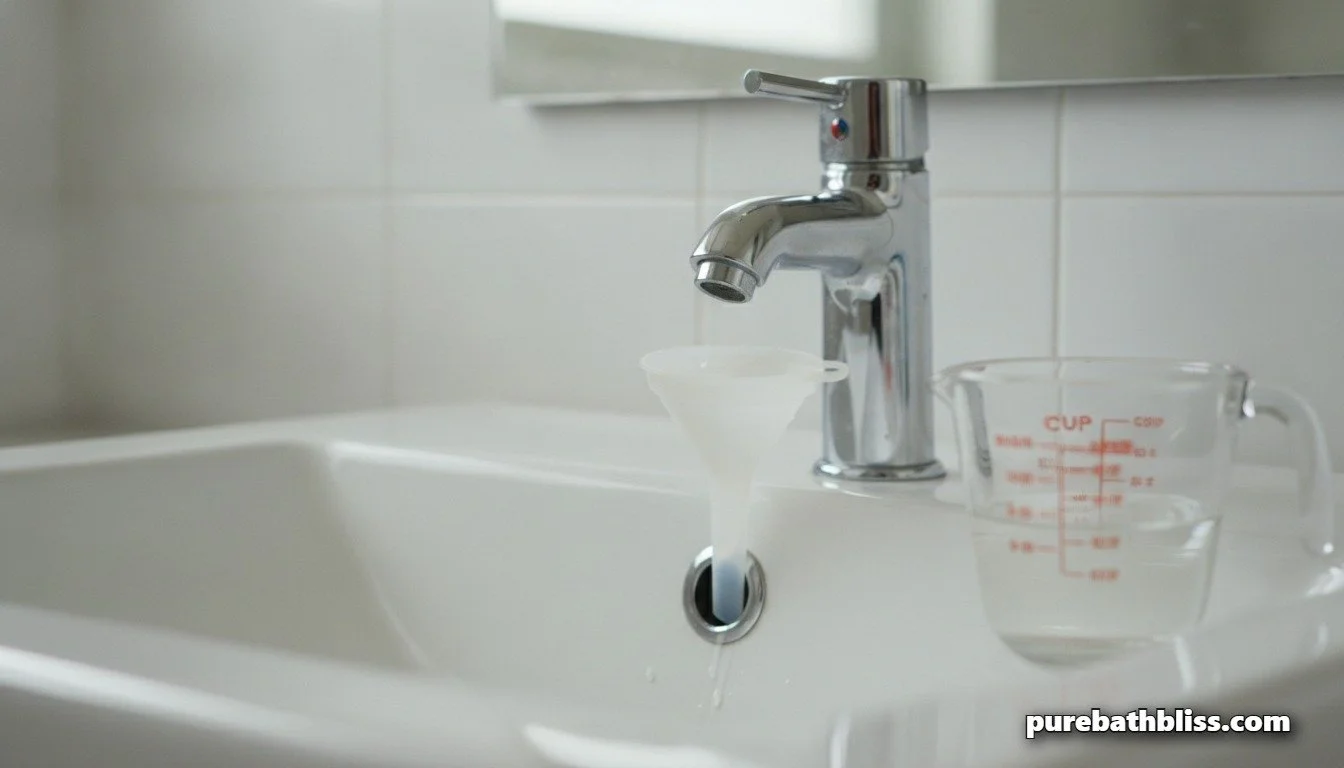
The sink overflow hole is a frequently missed odour source that the drain treatment does not reach. Bacteria accumulates in the overflow channel and produces the same sulfur or musty smell as a drain biofilm, but because it is in a separate channel it requires its own treatment. Our guide to the sink overflow hole covers the funnel method for getting baking soda and vinegar into the overflow channel where a regular drain flush cannot reach.
Important Safety Rules
Never use this method after a commercial chemical drain cleaner. Commercial drain cleaners contain strong acids or strong alkalis, sulfuric acid and lye being the most common. If vinegar contacts sulfuric acid residue in the pipe the reaction is violent and can produce dangerous heat and splashing. If baking soda contacts lye the reaction is equally hazardous. If you have poured any commercial cleaner down the drain, flush the pipe thoroughly with large volumes of water and wait at least twenty-four hours before using the baking soda and vinegar method.
Do not mix vinegar and hydrogen peroxide in the same container. Used sequentially on a surface is fine. Combined in a bottle they form peracetic acid which is a skin and respiratory irritant. For drain treatment, use one or the other, not both simultaneously.
Monthly Prevention: Keeping the Drain Clear Before It Slows
The most effective drain maintenance is preventing the biofilm from accumulating in the first place. A scaled-down version of this treatment once a month keeps most bathroom drains clear indefinitely without ever needing to address a full clog.
Once a month, pour a quarter cup of baking soda down every bathroom drain, follow with half a cup of white vinegar, cover for ten minutes, and flush with hot water. This takes about two minutes per drain and costs pennies. It is the single most effective drain maintenance habit available without tools or commercial products. Our vinegar bathroom cleaning guide covers this and six other applications where white vinegar outperforms commercial products in a bathroom context.
It is also worth knowing that the dish soap you use contributes to how quickly biofilm builds up in the first place. Synthetic surfactants in conventional dish soaps leave a residue that accelerates biofilm formation in pipes throughout your home, not just in the kitchen. Our sister site Pure Kitchen Bliss covers exactly this in their guide to eco-friendly dish soaps that are gentler on your plumbing, which is worth reading if you are trying to reduce how often drain maintenance is needed.
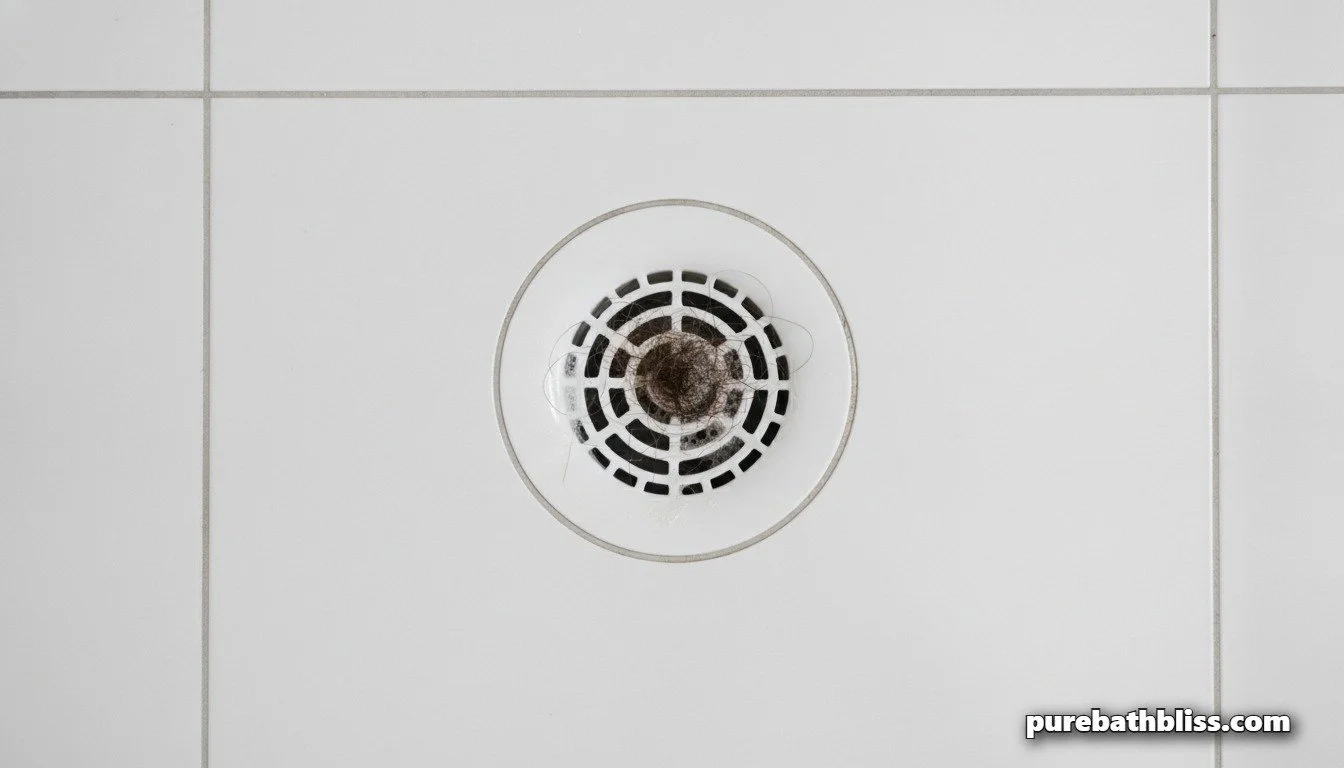
A silicone hair catcher over the shower drain is the other half of the prevention equation. Hair is the primary structural material that holds a bathroom drain clog together. Soap scum, skin cells, and bacteria attach to the hair matrix. Remove the hair before it enters the drain and the biofilm builds significantly more slowly. Empty the hair catcher after every shower. It takes five seconds and eliminates the primary cause of the problem entirely.
When to Call a Plumber
Some drain problems are beyond the scope of any DIY method and trying to address them at home wastes time and can make the situation worse.
Multiple drains slow or gurgling simultaneously is the most important warning sign. If your sink, shower, and toilet are all draining slowly or making gurgling sounds at the same time, the blockage is in the main sewer line, not in any individual fixture. No amount of baking soda and vinegar addresses a main line blockage. This requires a professional with a drain camera and a motorised snake or hydro-jetting equipment.
Sewage backing up into the tub or shower when you flush the toilet is a plumbing emergency. Call a plumber immediately.
A drain that clears and re-clogs within a week despite regular treatment suggests either a significant physical obstruction further down the line or a structural issue with the pipe itself. Both require professional diagnosis.