Why Onyx Is Replacing Marble in Bathroom Design (And What It Costs to Install)
I've been renovating bathrooms for a long time. And in that time, I've watched trends come and go, subway tile, shiplap, vessel sinks, open shelving. Most of them cycle out within a few years. But every once in a while, a material shift comes along that isn't really a trend at all. It's a genuine upgrade.
That's what's happening with onyx right now. TikTok design creators have been pushing this hard in 2026, and for once, the hype is actually justified. Onyx is showing up in high-end bathroom renovations the way marble did a decade ago, except the people choosing it aren't just doing it for the look. They're doing it because it's smarter.
As a Red Seal carpenter who has installed both materials in client bathrooms, I want to give you an honest breakdown. Not the glossy showroom pitch, the real contractor's perspective on what onyx is, why it's gaining ground on marble, what it actually costs, and whether it makes sense for your bathroom.
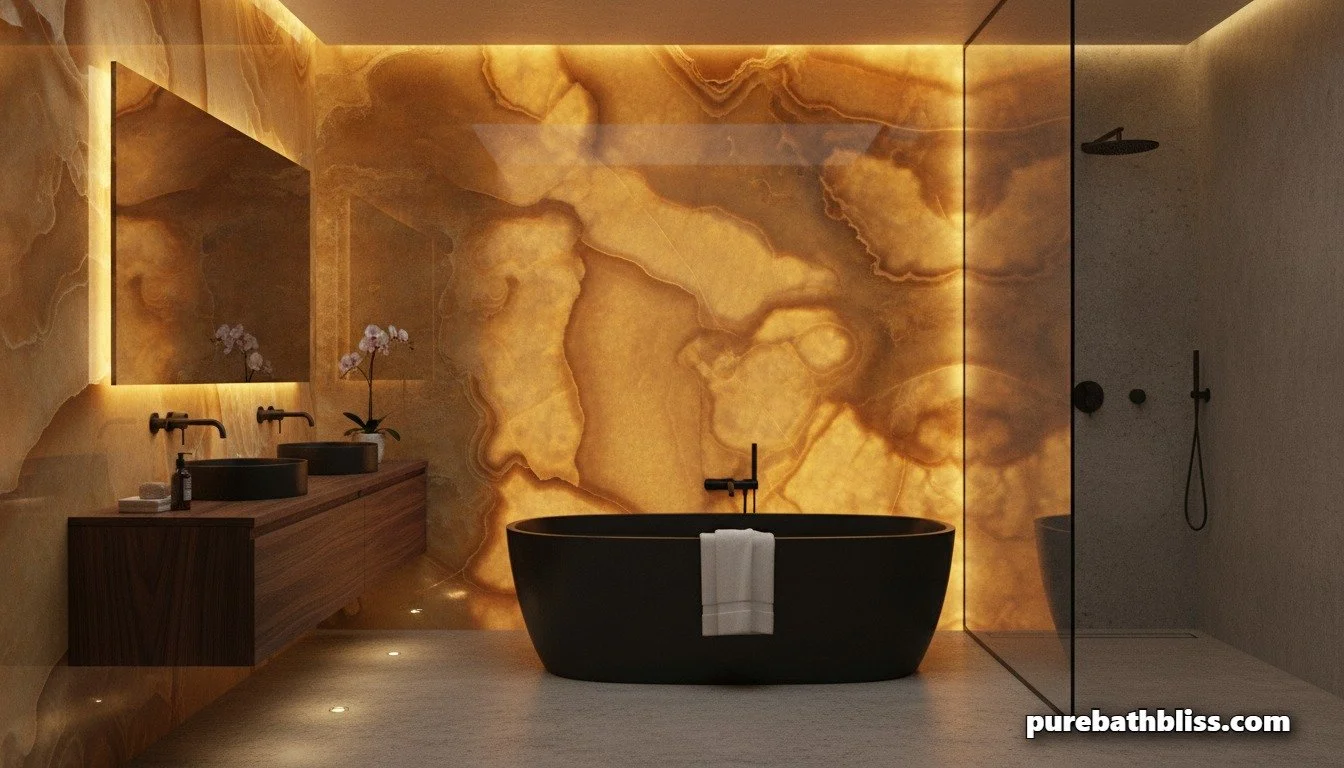
First — What Actually Is Onyx?
Onyx is a natural stone formed from calcium carbonate, specifically calcite, deposited by spring water over thousands of years. It's part of the same mineral family as marble, which is why the two are often compared. But the way they form is different, and that difference is what gives onyx its most distinctive quality: translucency.
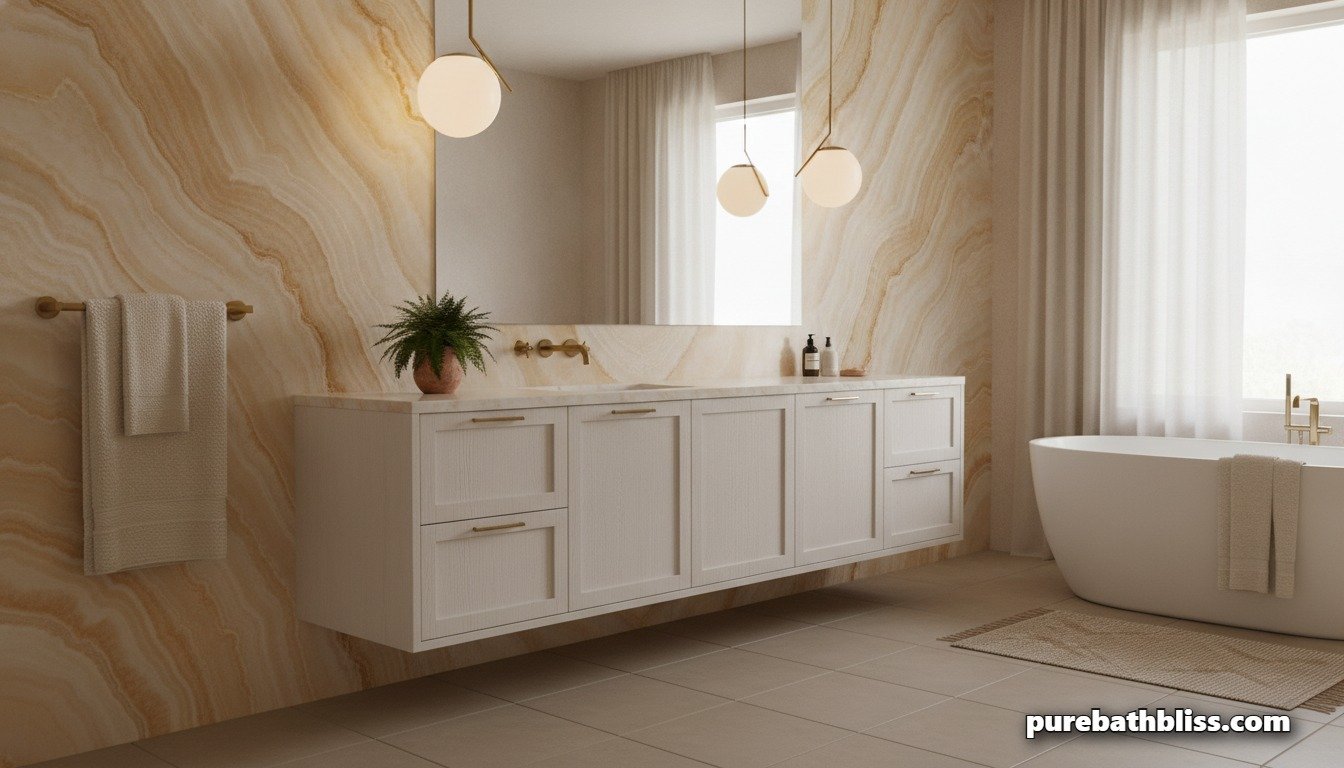
Unlike marble, which is opaque, onyx allows light to pass through it. When backlit, which is increasingly how designers are using it, onyx glows from within, showing off its natural veining in a way no other stone can replicate. Beige, gold, green, black, white, rust, the color range is wider than marble, and every slab is completely unique.
It comes in two main forms for bathroom use: natural stone onyx (quarried directly, like marble) and cultured onyx (an engineered composite of crushed stone and polyester resin). Both have their place, and I'll cover the differences in the cost section below.
What you need to know upfront: onyx is softer than marble and granite. That's the trade-off for its beauty. It scores a 6–7 on the Mohs hardness scale compared to marble's 3–4, which actually makes natural onyx harder than marble, but it's still more prone to etching and scratching than granite or quartz. In a bathroom, where you're not dropping cast iron pans on it, that's manageable. In a kitchen, it's a problem.
Why Marble Has Dominated Bathrooms — And Why That's Changing
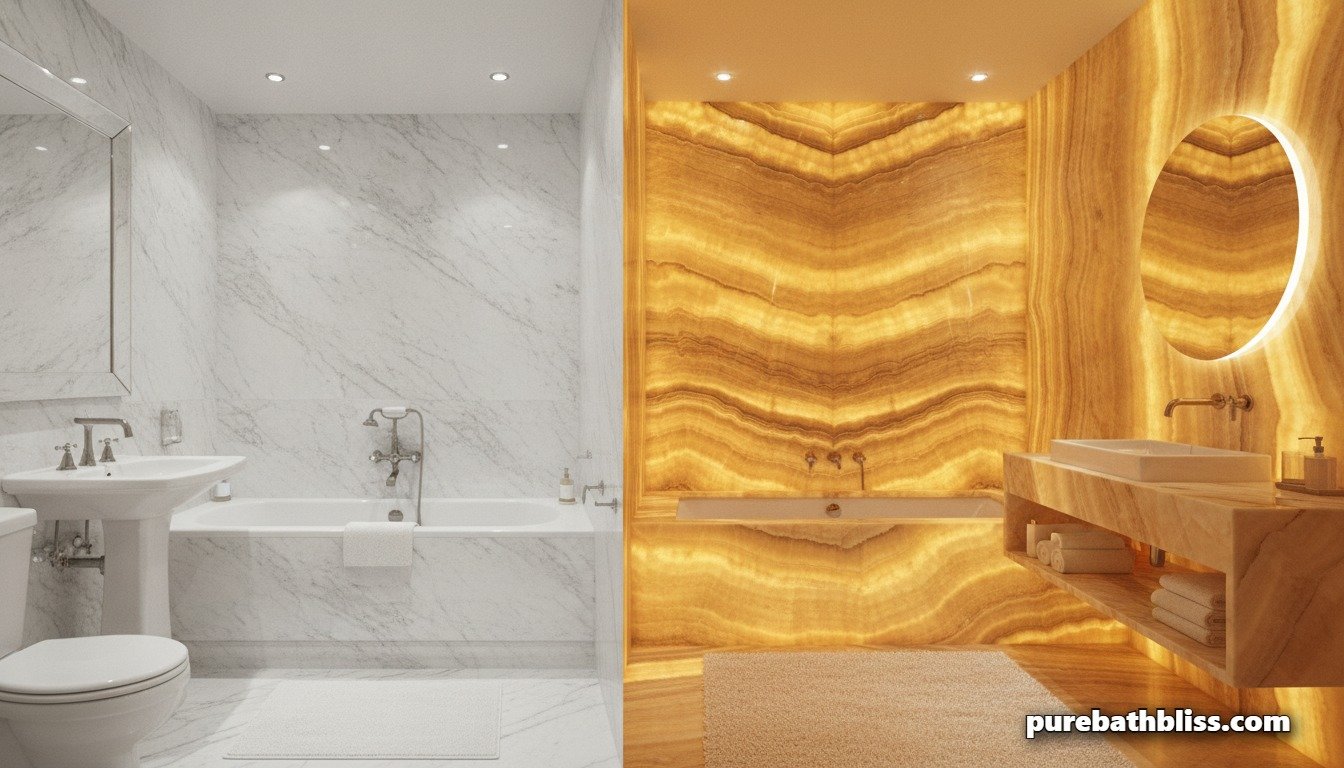
Marble became the default luxury bathroom material for good reasons: it's beautiful, it's been a symbol of wealth and quality for thousands of years, and it's widely available. Carrara and Calacatta marble in particular became so synonymous with high-end bathrooms that they ended up in everything from $500,000 custom builds to mid-range tile imitations at Home Depot.
But that ubiquity is part of the problem. Marble is everywhere now. And its maintenance demands haven't changed just because the price dropped.
Here's what I tell my clients about marble:
It etches easily, any acidic substance (lemon juice, some cleaners, even some shampoos) will leave a dull mark on the surface
It needs to be sealed every 6–12 months to stay stain-resistant
Polished marble on a bathroom floor is a slip hazard when wet
Grout lines in marble tile installations are a perpetual maintenance issue
White and light marbles show every water spot, soap smear, and toothpaste splash
In a house with four kids, marble bathroom floors are basically a full-time job. I know because I installed some in my own home early on and spent years maintaining them.
Onyx solves several of these problems, but it trades them for a different set of considerations. That's the honest picture. Let's get into it.
The Real Pros of Onyx in a Bathroom
1. The Visual Impact Is Unmatched
There is no other natural stone that does what backlit onyx does. When you install onyx panels on a feature wall or vanity backsplash and run LED strip lighting behind them, the effect is genuinely dramatic, warm, glowing, and completely unlike anything you can achieve with marble, tile, or engineered stone. For a master bathroom designed around a spa-like experience, this is the ceiling of what natural materials can offer.
2. No Grout Lines
This is the practical advantage that doesn't get enough attention. When onyx is installed as large-format panels or slabs, which is how it's typically used, there are no grout lines. That matters enormously for maintenance. Grout lines in a shower or on a bathroom floor are where mold, soap scum, and bacteria take up permanent residence.
If you've spent any time scrubbing tile grout, you know exactly why the no-grout-line argument is compelling. We wrote a full piece on why upgrading to epoxy and urethane grout is one of the best infrastructure moves you can make, but with onyx panels, you eliminate the problem entirely.
3. Lighter Than You'd Expect
Onyx is significantly lighter than granite and even lighter than some dense marbles. As a contractor, this matters. Lighter stone puts less strain on cabinetry and subfloor structures, which is particularly valuable in older homes or second-floor bathroom remodels where weight loading is a real consideration.
4. Cool to the Touch
Onyx has natural thermal properties that keep it cool even in a warm, steamy bathroom. For shower walls and vanity surfaces, this is a pleasant tactile quality that adds to the spa-like feel people are chasing with this material.
5. Unique Every Time
Because it's a natural stone, no two slabs are identical. The veining, colour variation, and translucency patterns are completely one-of-a-kind. If you want a bathroom that looks like nobody else's, and in 2026, that's increasingly what people are after, onyx delivers that in a way engineered materials never can.
The Honest Cons — What the TikTok Videos Don't Tell You
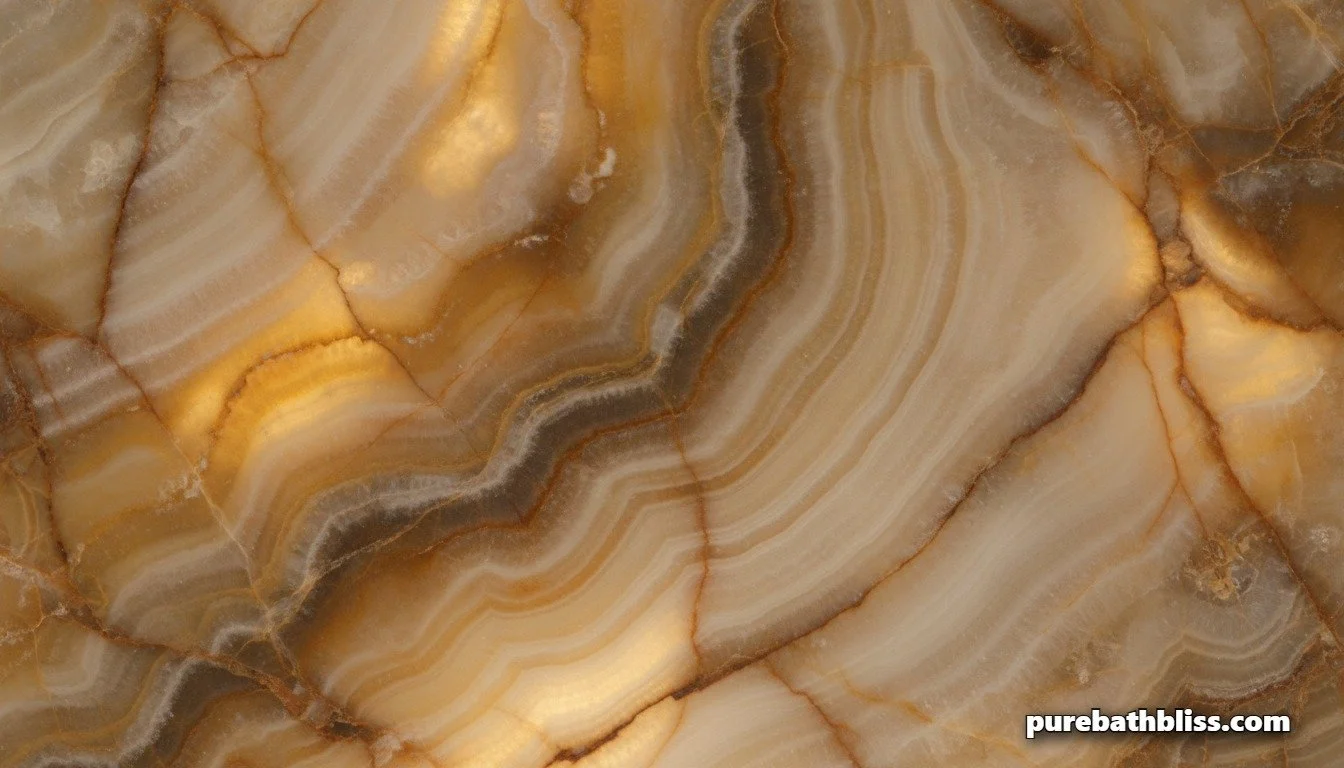
1. It Scratches More Easily Than Granite or Quartz
Natural onyx is softer than granite and quartz, which means it can be scratched by abrasive cleaners, rough surfaces, or even rings and jewellery dragged across a vanity. For shower walls and feature panels, where contact is gentle, this isn't a major issue. For a heavily used vanity countertop in a family bathroom, you need to think carefully about whether the maintenance commitment is realistic for your household.
2. Acidic Cleaners Will Damage It
Like marble, onyx is calcite-based, which means it reacts to acid. Vinegar, citrus-based cleaners, and many commercial bathroom cleaners will etch the surface over time. You need to clean onyx with pH-neutral soap and warm water only. This is a non-negotiable maintenance rule, and it means your usual cleaning products are off the table.
3. It Needs Regular Sealing
Natural onyx needs to be sealed every 6–12 months to protect it from staining and moisture penetration. Sealing costs between $100 and $1,200 depending on the size of the installation and the type of sealant used. This is the same maintenance reality as marble, it doesn't go away just because the material looks different.
4. It's Not a DIY Install
Onyx is fragile and heavy enough to cause serious injury if mishandled. The cutting and fabrication requires specialist equipment. Improper installation, particularly improper sealing at joints, can lead to water damage behind the panels. This is not a weekend project. Budget for professional installation from a contractor experienced specifically with natural stone. Saving money on installation here is not worth the risk.
Natural Onyx vs. Cultured Onyx — Which One Are You Actually Buying?
This is a distinction that catches a lot of homeowners off guard, so I want to be clear about it.
Natural onyx is quarried stone, the real thing. It has the translucency, the unique veining, and the prestige of a genuine natural material. It also has the fragility, the maintenance requirements, and the price tag to match.
Cultured onyx is an engineered composite made from crushed natural stone mixed with polyester resin and finished with a gel coat. It replicates the look of onyx, including backlighting capability in some products, while being more durable, easier to maintain, and significantly less expensive. It's non-porous, so it doesn't require sealing. It's also what many shower panel systems (including The Onyx Collection, which is widely used in North American bathroom renovations) are made from.
For most family bathrooms, cultured onyx is the smarter choice. You get 80% of the look for significantly less cost and maintenance. If you're doing a high-end master bathroom where authenticity matters and you're committed to the maintenance routine, natural onyx is worth the investment.
What Does It Actually Cost? Real Numbers for 2026
| Material | Materials Only (per sq ft) | Installed (per sq ft) | Sealing Required |
|---|---|---|---|
| Natural Onyx | $40–$250 | $50–$200 | Yes — every 6–12 months |
| Cultured Onyx | $75+ (panels) | Varies — often below tile remodel cost | No — non-porous surface |
| Carrara Marble | $5–$15 | $10–$30 | Yes — every 6–12 months |
| Calacatta Marble | $13–$30 | $15–$50 | Yes — every 6–12 months |
| Onyx Floor Tile | $20–$60 | $20–$60 | Yes — every 6–12 months |
Breaking it down clearly:
Natural onyx runs $40–$250 per square foot for materials alone, with installed costs typically landing between $50–$200 per square foot depending on your location, slab size, and the complexity of the installation. Full bathroom projects, a feature wall, vanity countertop, and shower surround, can run $1,500 to $8,000 or more. Rare colors like pink onyx can push material costs up to $355 per square foot.
Cultured onyx shower panels are considerably more accessible. Full shower installations with cultured onyx typically come in below the cost of a comparable natural tile remodel, and because the install is faster (no grout, prefabricated panels), labor costs are lower too.
For comparison, marble flooring runs $10–$40 per square foot installed for standard varieties, with premium options like Calacatta reaching $15–$30 per square foot installed. Natural onyx is more expensive than most marbles, but cultured onyx is competitive with mid-range marble tile.
One budget note: always add 10–15% to your material estimate for cuts, waste, and breakage. With a stone as fragile as natural onyx, this buffer is not optional.
Where Onyx Works Best in a Bathroom
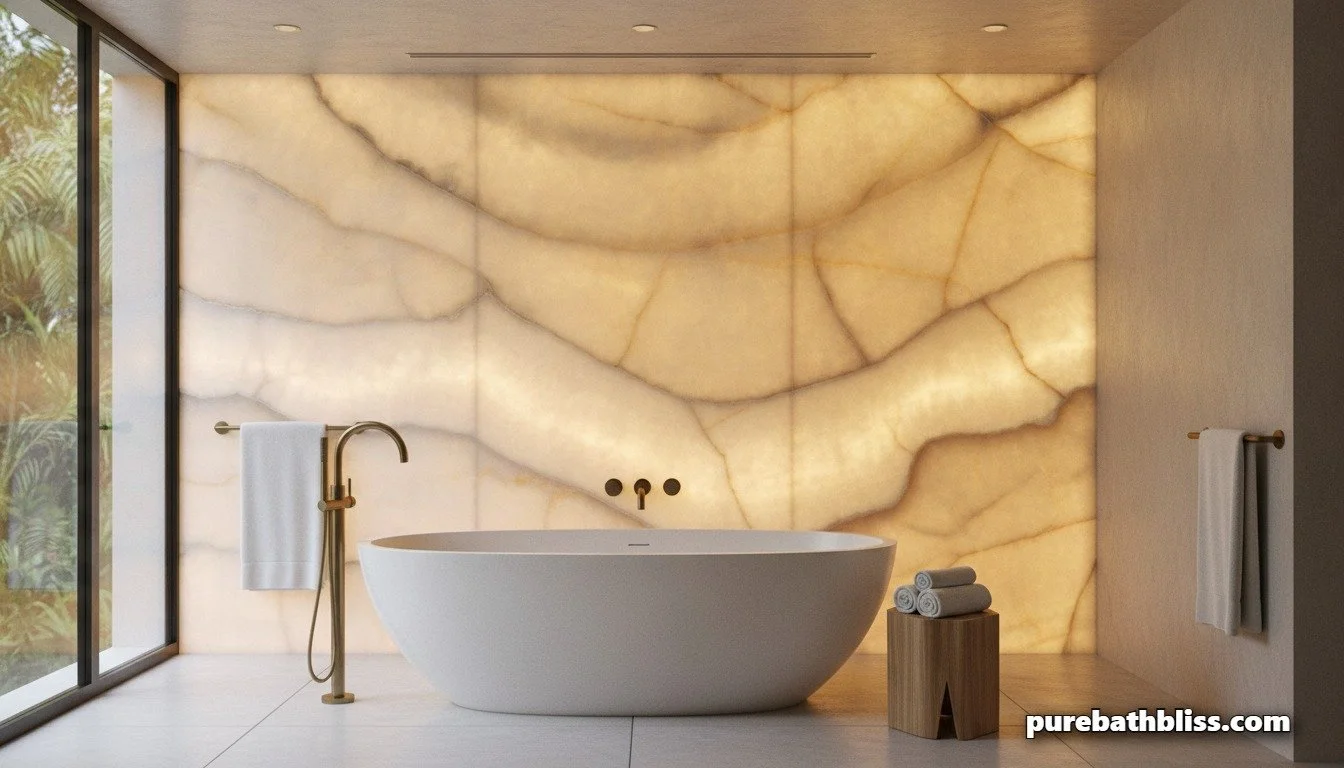
Not every surface in a bathroom is equally suited to onyx. Here's how I'd think about placement:
Feature wall behind a freestanding tub or vanity, This is the highest-impact, lowest-risk application. A backlit onyx wall panel here is genuinely stunning, and because it's not a high-contact surface, the durability limitations matter less.
Shower walls — Cultured onyx panels are excellent here. No grout lines means no mold habitat, and the non-porous surface cleans easily. Natural onyx works too but requires strict pH-neutral cleaning products.
Vanity countertop — Works well in a master bathroom where the usage is moderate and careful. Not ideal for a kids' bathroom where the countertop takes a beating daily.
Floor — I'd approach this cautiously. Onyx floor tiles ($20–$60 per square foot installed) are stunning but require a honed or textured finish for slip resistance, and the foot traffic will accelerate surface wear. For floors, I often recommend pairing onyx walls with a more durable floor material like porcelain or quartzite.
How to Maintain Onyx So It Lasts a Lifetime
If you're making this investment, protecting it properly is non-negotiable. Here's the maintenance protocol I recommend to clients:
Daily: Wipe down surfaces with a soft cloth and warm water after use. Don't let water pool or sit on the stone.
Weekly: Clean with a pH-neutral stone cleaner or mild dish soap and warm water. Never use vinegar, bleach, abrasive scrubbers, or citrus-based products.
Every 6–12 months: Reseal with a quality penetrating stone sealer. This is the single most important maintenance step for natural onyx.
Damage: Minor scratches can often be buffed out with a fine stone polishing compound. Chips and cracks need professional attention — don't DIY stone repairs on a material this expensive.
One thing worth flagging if you're doing a broader bathroom refresh alongside an onyx installation: the grout choices for any surrounding tile work matter just as much as the stone itself. We covered this in detail in our guide to high-performance epoxy and urethane grouts, if you're going grout-free with onyx panels but still using tile elsewhere in the room, upgrading the grout is the right move.
Is Onyx Right for Your Bathroom? My Honest Take
Here's the framework I use with clients when they ask me whether onyx makes sense for their project.
Onyx is a great choice if: you're doing a master bathroom or ensuite that won't see heavy daily family traffic, you want a statement feature wall or backsplash with genuine visual impact, you're committed to the maintenance routine, and you're working with a realistic budget that includes professional installation.
Stick with marble or consider cultured onyx if: you have young kids using the space daily, you want a lower-maintenance option, or you're working to a tighter budget. Cultured onyx gives you most of the look with less upkeep, and for a family home, that's often the smarter trade.
Neither is right if: you're looking for a floor material that can handle heavy traffic without showing wear. For floors, I consistently recommend porcelain tile that mimics natural stone, the durability-to-aesthetics ratio is simply better for high-traffic surfaces.
The TikTok creators aren't wrong that onyx is having a moment. They're also not telling you about the sealing schedule or the pH-neutral cleaner rule. That's the gap I want to fill. Go in with your eyes open, budget properly, and hire the right contractor, and onyx can genuinely transform a bathroom in a way very few materials can.
And if you're planning a renovation and want to get the full picture on what makes a bathroom truly low-maintenance, start with our Bathroom Purge guide, it covers the big-picture principles of building a bathroom that works for your life, not just for a photoshoot.