The 5-Minute Fix: How to Silence That Annoying Running Toilet Without Calling a Plumber
It’s 2 a.m. You’re half-asleep when the hiss… drip… hiss starts again. That running toilet isn’t just annoying—it’s draining your wallet and wasting thousands of gallons of water. A plumber? $150+ for a 5-minute job.
Stop.
You don’t need tools, experience, or a pro. Three common culprits cause 95% of running toilets—and each fix takes under 5 minutes. You’ll silence the noise, save $200+ yearly, and cut water waste by up to 4,000 gallons daily.
Grab a towel. Let’s fix it—now.
Why You Must Fix It Now (The Eco & Cost Factor)
A running toilet isn’t “normal”—it’s a leak on steroids.
The Hidden Waste
Minor drip: 200 gallons/day wasted.
Major stream: 4,000+ gallons/day—enough to fill a hot tub.
Cost:
$50–$500/month on your water bill.
30% of household water down the drain.
Eco impact: Treated, pumped, heated water flushed away—carbon footprint of 1,000 plastic bottles.
The Basic Mechanics
Flush: Flapper lifts, water drains.
Fill: Float drops, fill valve opens.
Stop: Float rises, valve shuts.
Problem: Seal breaks → water leaks → float drops → valve refills endlessly.
Your mission: Restore the seal. 5 minutes. Zero cost (almost).
The 3 Most Common Causes (And Their Fixes)
90% of running toilets = one of these. Tools needed: Hands, towel, $5 flapper (optional).
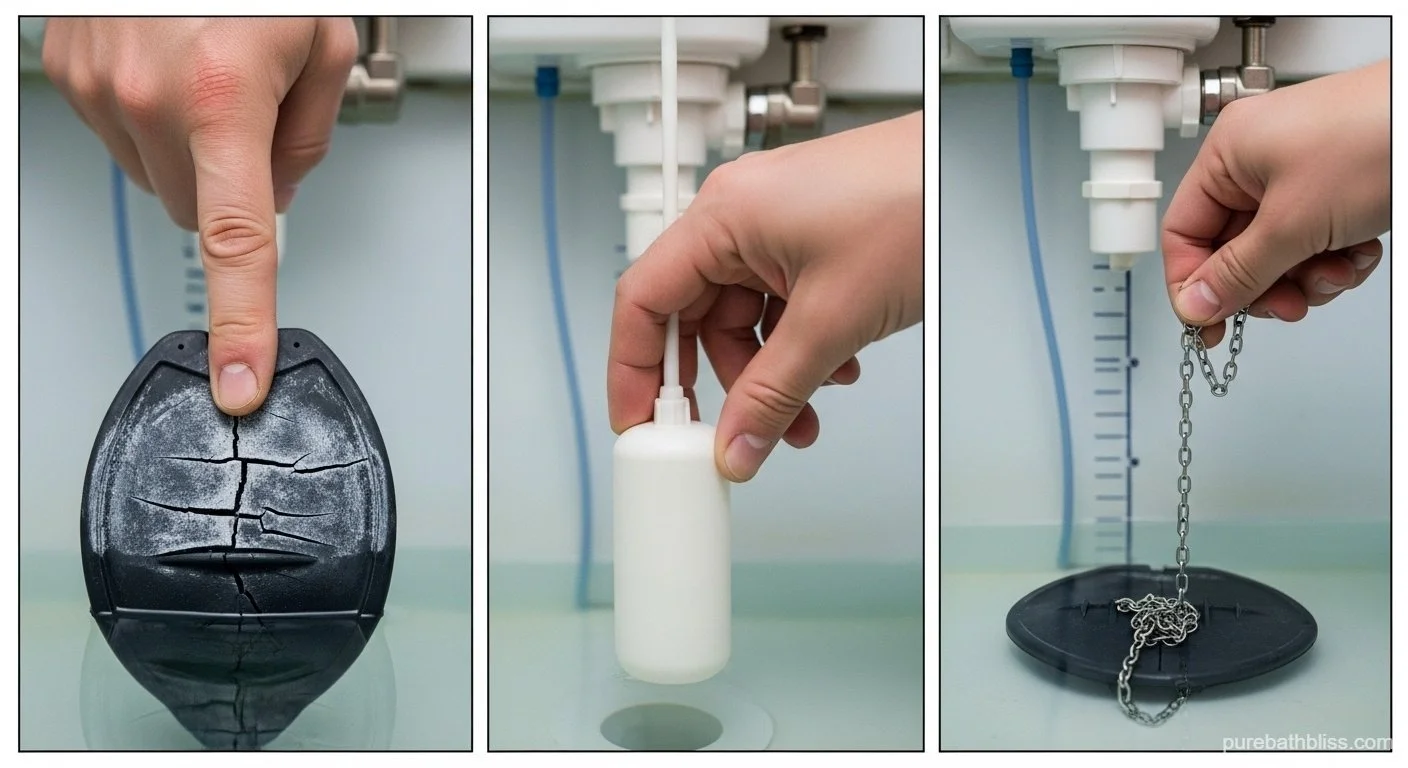
Cause 1: The Faulty Flapper (The Most Common Culprit)
Problem: Rubber flapper warped, cracked, or mineral-crusted → no seal.
Signs: Hiss after flush, water trickling into bowl.
Fix: Replace the Flapper (4 minutes)
Turn off water (valve behind toilet—twist clockwise).
Flush & drain tank (hold handle).
Unhook old flapper:
Lift arms off pegs.
Pull off overflow tube.
Install new universal flapper ($5–$8, any hardware store):
Snap onto pegs.
Slide over overflow tube.
Turn water on. Test flush.
Pro Tip: Silicone flappers last 5–10 years (vs. 1–2 for rubber).
Cause 2: The Maladjusted Float (The Easy Tweak)
Problem: Float set too high → water spills into overflow → constant refill.
Signs: Water level at or above overflow tube.
Fix: Lower the Float (2 minutes)
Float cup (modern toilets):
Pinch clip on fill valve.
Slide cup down so water stops 1 inch below overflow.
Float arm (older toilets):
Turn screw counterclockwise (lowers arm).
Or gently bend arm downward.
Test: Flush. Water should stop 1 inch below overflow.
Cause 3: The Tangled/Short Chain
Problem: Chain too tight or tangled → flapper can’t close fully.
Signs: Flapper half-open, water trickling.
Fix: Adjust the Chain (1 minute)
Unhook chain from flush lever.
Shorten 1–2 links (or untangle).
Rehook with ¼–½ inch slack when flapper closed.
Test flush—flapper should drop flat.
The Leak Test: Proving the Fix Worked
Don’t trust silence—test it.
The Food Coloring/Dye Test
Lift tank lid.
Drop 5–10 drops food coloring (or dye tablet, $1/pack) into water.
Wait 15 minutes—no flushing.
Check bowl:
Color = still leaking. Re-adjust.
Clear = fixed!
Repeat monthly—catches silent leaks.
Long-Term Prevention
Keep it fixed—forever.
Regular Flapper Checks
Every 6 months: Dye test.
Every 2–3 years: Replace flapper preemptively.
Cost: $5 vs. $500 water bill.
Eco-Friendly Cleaning
Avoid bleach tablets—corrode rubber.
Safe clean:
1 cup white vinegar in tank monthly.
Soak 1 hour, flush.
Removes mineral buildup on flapper seat.
Conclusion
You just saved:
$200+ yearly
30,000+ gallons of water
One plumber visit
That hiss is gone. Your wallet’s fuller. The planet’s happier.
You fixed plumbing—like a pro.
Now that your toilet is silent and leak-free, make sure your shower is running just as efficiently! Check out our guide on finding the best water-saving showerhead.