Why Are There Tiny Flies in My Bathroom in Summer? (And How to Get Rid of Them)
Transparency Note: We independently select these products based on research and user reviews. If you buy something through our links, we may earn a commission.
Every summer, without fail, someone in our house notices little flies in the bathroom. They appear suddenly, hover near the sink or the shower, and seem to multiply overnight. The first time it happened I assumed it was a cleanliness issue and scrubbed everything down. The flies were back within two days. The second time I assumed it was the plants. Turned out to be the drain. The third time it was the plants. Getting the identification right first is what makes the fix actually work.
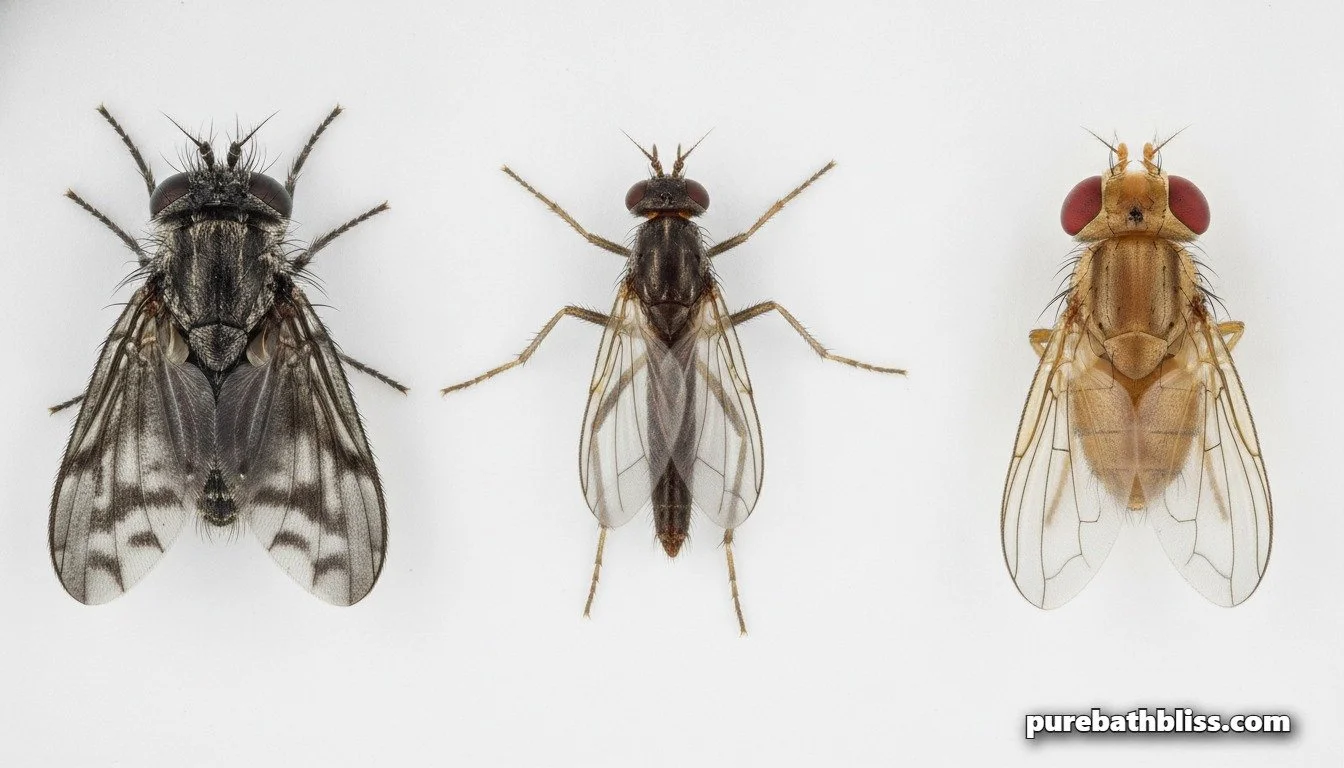
What most people call "bathroom flies" or "summer gnats" are actually three completely different insects: drain flies, fungus gnats, and fruit flies. They look similar at a glance but they breed in different places, they respond to different treatments, and you can waste a lot of time and effort treating the wrong source. The whole process gets much simpler once you know which one you are dealing with.
Here is how to identify each one, where it comes from, and exactly how to eliminate it using non-toxic methods.
Why Summer Makes It Worse
All three of these insects thrive in warm, humid conditions. Summer hits bathrooms particularly hard because indoor temperatures rise, shower steam takes longer to dissipate, drain biofilm grows faster in the heat, and houseplants that live in bathrooms get more irregular watering in summer when routines change. The conditions that were keeping these populations in check during cooler months tip in their favour as temperatures rise.
Drain flies in particular are weak fliers and tend to stay close to their breeding source, which is why you almost always see them near the sink or shower rather than elsewhere in the house. They enter from outside through gaps around pipes and windows, find the warm biofilm in your drain, and set up residence. One female drain fly can lay 30 to 100 eggs in the drain biofilm. At summer temperatures those eggs hatch in as little as 32 to 48 hours. The population can explode within a week.
Step 1: Identify Which Fly You Have
Getting this right first saves you significant time. Look closely at the flies. They are small but the distinguishing features are visible to the naked eye if you can get close enough, or with a basic magnifying glass.
| Feature | Drain Fly | Fungus Gnat | Fruit Fly |
|---|---|---|---|
| Size | 2 to 5mm, small | 2 to 3mm, very small | 3 to 4mm, small |
| Appearance | Fuzzy, moth-like body, hairy wings held flat like a tent when resting | Slender, mosquito-like body, long dangly legs, delicate wings | Rounded body, large distinctive red or dark eyes, striped abdomen |
| Colour | Dark grey to tan, looks like a tiny fuzzy moth | Dark brown or black, almost translucent wings | Tan to brown with red or dark eyes, distinctive colouring |
| Where you see them | Resting on walls and ceilings near the sink or shower, very close to the drain | Flying in slow erratic patterns near plant soil, rarely far from a plant | Near overripe fruit, drains with food residue, rubbish bins |
| Breeding source | Organic biofilm inside drain pipes and on drain covers | Moist potting soil of overwatered houseplants | Fermenting organic matter, usually in the kitchen not the bathroom |
| Tape test result | Flies stuck to tape placed over drain | Flies stuck to tape placed on plant soil | Usually nothing — source is elsewhere in the house |
| Bites? | No | No | No |
If you are still not sure which one you have after looking at them, the tape test is the most reliable diagnostic. Lay a piece of clear tape sticky-side-down over your drain or over the soil of any bathroom plants and leave it overnight. If flies are stuck to the drain tape in the morning, you have drain flies. If they are stuck to the plant soil tape, you have fungus gnats. If you have flies but neither tape catches anything, check whether there is overripe fruit or a rubbish bin nearby, even just outside the bathroom door, and you likely have fruit flies travelling into the bathroom rather than breeding in it.
It is also possible to have more than one species at the same time. Drain flies in the shower drain and fungus gnats in an overwatered bathroom plant are not unusual together, especially in summer. Treat each source separately.
How to Get Rid of Drain Flies
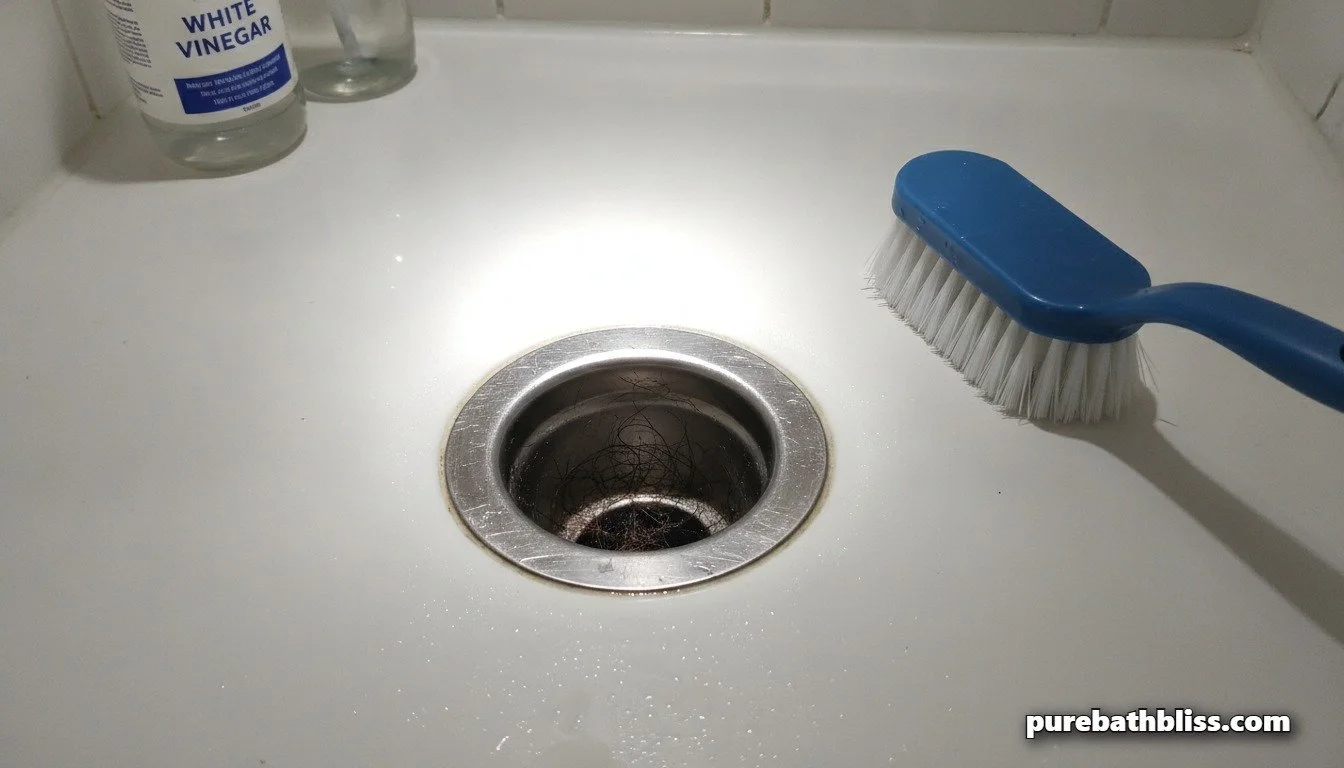
Drain flies do not come up through the water in the drain. They emerge from the slimy organic biofilm that coats the inside walls of the drain pipe, the P-trap, and the drain cover itself. This biofilm is made up of soap scum, hair, skin cells, toothpaste residue, and bacteria. It is the same material that causes the sulfur smell we cover in our bathroom sink sulfur smell guide, and the treatment is essentially the same. You have to physically remove the biofilm, not just pour something over it.
What does not work: pouring bleach down the drain. Bleach is a disinfectant, not a physical cleaner. It kills surface bacteria but does not dissolve or remove the biofilm layer, which means the eggs and larvae deeper in the slime survive, and the population bounces back within days.
What works:
Step 1: Remove the drain cover and scrub it thoroughly with a stiff brush and dish soap. The underside of the drain cover is typically coated in biofilm and is where many eggs are laid. Scrub until it is visibly clean.
Step 2: Use a drain brush or a flexible pipe brush to physically scrub the inside walls of the drain pipe as far down as you can reach. The goal is mechanical removal of the biofilm layer, not just flushing it.
Step 3: Pour half a cup of baking soda down the drain, followed by one cup of white vinegar. Let it fizz for ten minutes. The carbon dioxide reaction physically agitates the pipe walls and helps loosen residual biofilm. This is the same method from our vinegar bathroom cleaning guide.
Step 4: Follow immediately with a full kettle of boiling water poured slowly down the drain. The heat kills larvae and helps flush dislodged biofilm through the pipe.
Step 5: Repeat nightly for five to seven days. The existing adult flies will die within their natural lifespan of about twelve days. The treatment prevents new generations from emerging. By day seven with consistent treatment, the population should be gone.
For drains that are infrequently used, like a guest bathroom shower drain or a floor drain, a dry P-trap is often the issue. The water seal in the P-trap evaporates when the drain is not used regularly, allowing sewer flies to travel up through the pipe. The fix is simply to pour a cup of water down unused drains every two weeks to maintain the seal.
A flexible drain brush makes steps one and two considerably more effective than using any kind of liquid treatment alone. It is the tool that actually removes the breeding environment rather than just treating the surface of it.
How to Get Rid of Fungus Gnats from Bathroom Plants
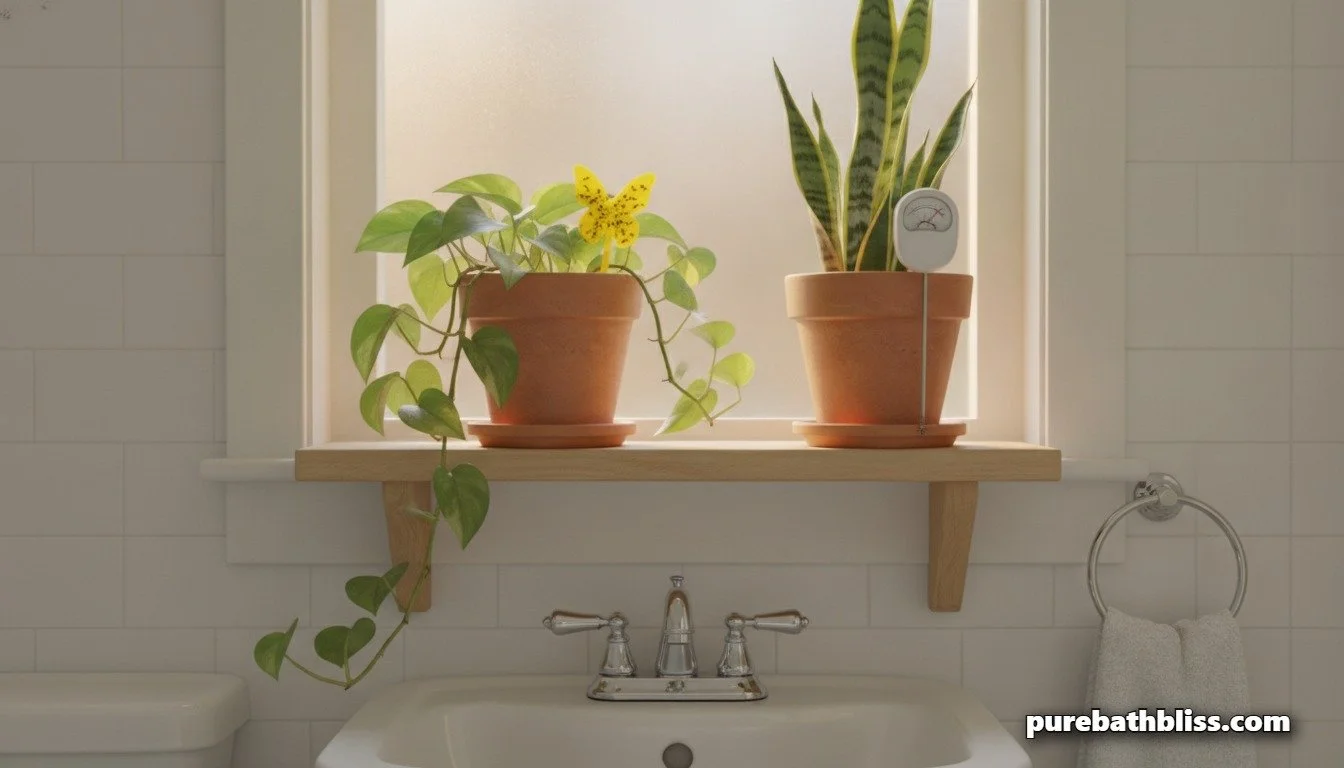
Fungus gnats are the fly most likely to appear when you have bathroom plants, and they are caused by one thing almost every time: overwatered soil. The larvae of fungus gnats live in the top inch or two of moist potting mix where they feed on fungus and organic matter. They do not come from outside the plant or from the bathroom environment. They are either already in the potting soil when you bring a plant home or they are attracted to consistently moist soil from a window or door.
The adult gnats themselves are harmless to humans, but the larvae can damage plant roots if the population is large enough, and the adults are genuinely irritating if you have dozens of them flying around a small bathroom.
The fix has three parts:
Let the soil dry out. Stop watering the affected plant and let the top two inches of soil dry out completely before watering again. Fungus gnat larvae cannot survive in dry soil. This interrupts the breeding cycle within one to two weeks. In a bathroom with shower steam providing ambient humidity, the soil stays moist longer than in other rooms, so your watering schedule may need to be even more conservative than you think.
Yellow sticky traps in the soil. Yellow sticky traps inserted into the soil catch adult gnats before they can lay more eggs. They are the most effective way to reduce the adult population while the soil drying interrupts the larval cycle. Replace them every week or two.
Bottom watering. When you do water, water from the bottom by placing the pot in a tray of water and letting the soil absorb moisture upward rather than pouring from the top. This keeps the top inch of soil dry, which is exactly where the larvae live, while still hydrating the root zone. It is the most effective long-term prevention strategy for fungus gnats in bathroom plants.
For persistent infestations where soil drying alone does not resolve the problem after two to three weeks, beneficial nematodes mixed into the top layer of soil is the most effective organic treatment. These are microscopic worms that specifically prey on fungus gnat larvae without harming the plant or leaving any chemical residue.
If you are adding new plants to your bathroom, check the soil before bringing them inside. If you see adult gnats flying out when you disturb the soil in the store, choose a different plant. Introducing an infested plant is the most common way fungus gnats establish themselves in a home. Our guides to 7 unkillable bathroom plants and the 5 indoor trees for your bathroom cover specific species that are less prone to fungus gnat problems because of their watering requirements. Snake plants, ZZ plants, and cacti all prefer to dry out between waterings, which naturally discourages fungus gnat larvae from establishing.
How to Get Rid of Fruit Flies in the Bathroom
Fruit flies in a bathroom are almost always wandering in from elsewhere in the house rather than breeding in the bathroom itself. They breed in fermenting organic material: overripe fruit, the residue in a sink overflow hole, a recycling bin with a rinsed-but-not-fully-cleaned juice bottle, or even a dirty sink drain with food particle residue in a house where the bathroom and kitchen are nearby.
The first step is finding the actual breeding source, which is almost never the bathroom itself. Walk through the house and look for any fermenting organic matter: fruit bowls, open wine bottles, damp vegetable scraps, full rubbish bins. Eliminating the source is the only way to stop the population. Trapping adults while the breeding source remains active simply keeps the numbers manageable rather than eliminating the problem.
The apple cider vinegar trap is the most effective DIY method for capturing adults. Pour an inch of apple cider vinegar into a small glass, add a drop of dish soap (which reduces the surface tension so they cannot land safely), and cover with plastic wrap poked with small holes. Fruit flies are attracted to the fermentation smell, enter through the holes, and cannot get back out. Place these near the source and anywhere you are seeing flies.
For the sink drain specifically, the overflow hole is a frequently missed breeding spot. A small amount of organic residue builds up in the overflow channel and creates exactly the fermenting environment fruit flies are looking for. Flushing the overflow hole with boiling water and a vinegar flush once a week eliminates it as a breeding site. Our sink overflow hole guide covers exactly how to clean this hidden spot.
The fruit fly and kitchen connection is worth flagging explicitly. If you are seeing fruit flies in your bathroom regularly in summer, the breeding source is very likely in your kitchen. Overripe fruit, the compost bin, the recycling, and even the sponge on the kitchen sink can all harbour populations that spread throughout the house. Our sister site Pure Kitchen Bliss covers exactly how to manage kitchen pest sources including the fruit bowl conditions that attract flies in the first place.
The Summer Prevention Routine
Once you have dealt with an infestation, these five habits prevent them from returning each summer.
Weekly drain flush. A kettle of boiling water poured slowly down every bathroom drain once a week prevents biofilm from accumulating to the point where drain flies can breed. Thirty seconds per drain, once a week. This is the single highest-impact prevention step for drain flies and also helps with the sulfur smell problem that often accompanies biofilm buildup.
Drain covers on unused drains. A silicone drain cover placed over a shower or floor drain that is not in daily use blocks the entry point for drain flies without preventing the drain from functioning when needed. Remove it when the drain is in use and replace it afterward.
Water bathroom plants from the bottom. Bottom watering keeps the top inch of soil dry, which is the primary prevention strategy for fungus gnats. It is also better for most bathroom plants since it prevents the overwatering that is the leading cause of root rot.
Check new plants before bringing them inside. Shake the pot gently and look for adult gnats emerging. If you see any, treat the soil before introducing the plant to your bathroom. A week of allowing the top inch to dry out completely before bringing it inside is usually sufficient.
Run the exhaust fan consistently. All three of these flies are attracted to warm, humid environments. Reducing the ambient humidity in the bathroom through consistent exhaust fan use after every shower makes the room less hospitable. Twenty minutes of fan run time after a shower reduces the humidity level significantly and also slows the biofilm growth in the drain by reducing the amount of condensation that runs down into it.
Quick Reference: Which Fly, Which Fix
| Fly Type | Breeding Source | Primary Fix | Timeline to Clear | Prevention |
|---|---|---|---|---|
| Drain fly | Drain pipe biofilm | Scrub drain physically, baking soda and vinegar flush, nightly boiling water for 7 days | 7 to 14 days | Weekly boiling water flush, cover unused drains |
| Fungus gnat | Overwatered plant soil | Let soil dry out completely, yellow sticky traps, switch to bottom watering | 2 to 3 weeks | Bottom watering, allow soil to dry between waterings, check new plants |
| Fruit fly | Fermenting organic matter, usually in kitchen | Find and eliminate breeding source, apple cider vinegar traps, clean overflow hole | 3 to 7 days once source is removed | Weekly overflow hole flush, manage fruit bowl, empty rubbish frequently |
The most important thing to take away from this guide is that identification comes before treatment. An overwatered plant will not be fixed by cleaning the drain, and a drain biofilm problem will not be fixed by a vinegar trap. Get the identification right and the fix is usually straightforward, quick, and requires nothing you do not already have at home.