The Japanese Bathroom Philosophy That Will Change How You Think About Bath Time
Transparency Note: We independently select these products based on research and user reviews. If you buy something through our links, we may earn a commission.
A few years ago I read something that genuinely changed how I think about the bathroom. It was a single sentence in a piece about Japanese domestic culture: "In Japan, you do not get clean in the bath. You get clean before the bath."
I had been using the bath the way most North Americans do, as a slightly more indulgent version of a shower. You fill the tub, you get in, you wash, you get out. The bath is the cleaning event. But in Japanese bathing culture, the tub, called the ofuro, is not where cleaning happens at all. You shower first, wash your body and hair completely at a separate washing station outside the tub, and only then lower yourself into the ofuro water. The water in the tub stays clean. The whole family uses the same bath water in sequence, a practice called oyu wo morau, sharing the hot water. The bath is not a cleaning ritual. It is a recovery ritual.
That distinction sounds small. The implications of it are significant. When the purpose of the bath shifts from getting clean to actively recovering from the day, everything about how you approach it changes: the temperature, the duration, the preparation, the environment, and what you do afterward. Here is the full philosophy, the science that supports it, and how to bring it into your own bathroom tonight without spending anything on renovations.
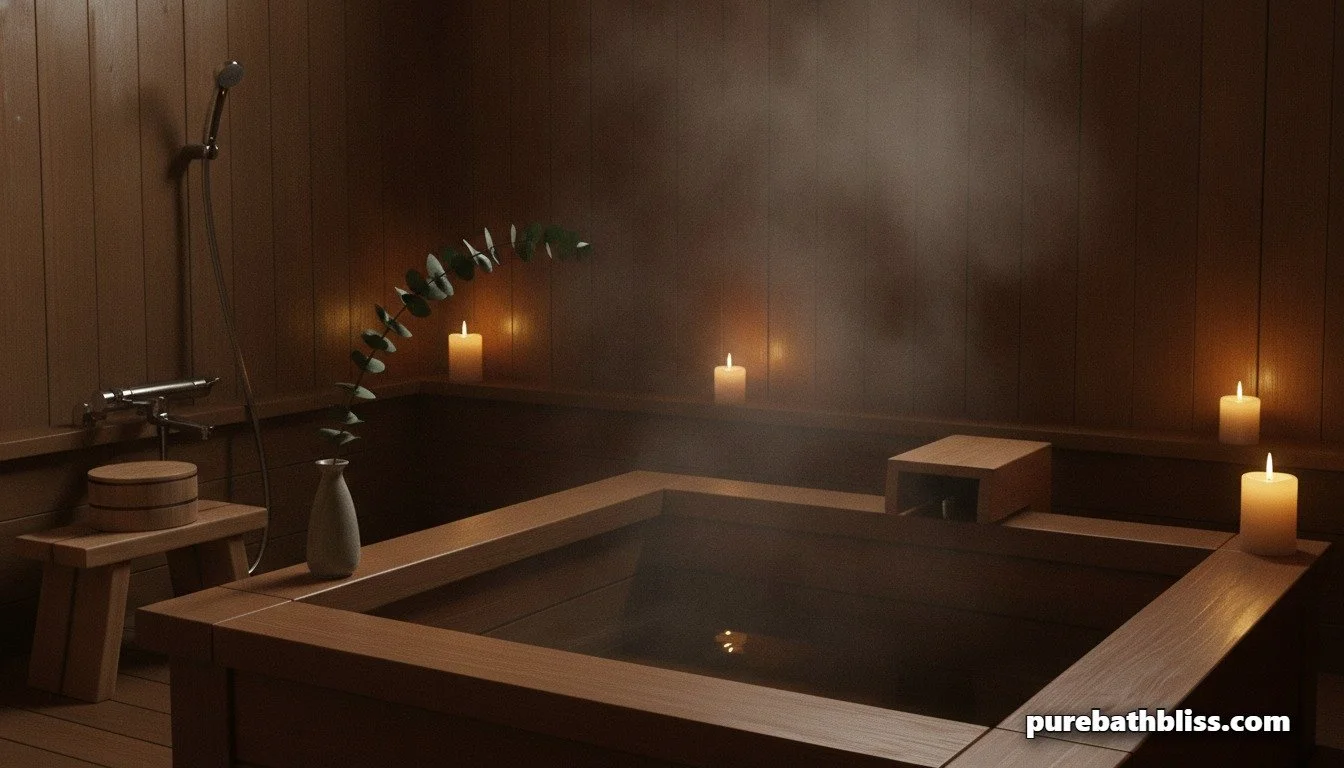
What the Ofuro Actually Is
The word ofuro (お風呂) translates literally as "honourable bath." The ritual of daily hot bathing in Japan dates back over a thousand years, rooted in the purification practices of Buddhism and Shinto. It evolved from communal temple bathing into the deeply personal domestic ritual it is today, where the evening bath is as non-negotiable a part of daily life as dinner. Japan consistently ranks among the highest in the world for longevity, and while no single factor explains that, daily hot immersion as a recovery practice is a topic of genuine scientific interest.
The ofuro tub itself is typically deeper than a Western bathtub, designed for sitting upright with the water at shoulder height rather than lying down with the water at chest height. The soaking is deep rather than long in the horizontal sense. The standard temperature is 40 to 42 degrees Celsius, which is meaningfully hotter than the average Western bath temperature of around 37 degrees. That temperature difference is not incidental. It is the mechanism through which most of the physiological benefits of the ritual are delivered.
The ofuro is used in the evening, not the morning. This timing is also deliberate. The thermal response to hot water immersion, specifically the drop in core body temperature that occurs in the hour after you exit a hot bath, is a documented trigger for sleep onset. The Japanese evening bath is structurally positioned to prepare the body for sleep, not to wake it up.
The Science Behind Hot Water Immersion
The health benefits of regular hot bathing have accumulated a genuine evidence base in the last two decades, much of it coming from Japanese researchers studying their own population's bathing habits.
Cardiovascular effects. A 2020 study published in the journal Heart, which followed over 30,000 Japanese adults for nearly twenty years, found that those who took a daily bath had a 28 percent lower risk of cardiovascular disease and a 26 percent lower risk of stroke compared to those who bathed less than twice a week. The mechanism is straightforward: immersion in hot water causes vasodilation, the expansion of blood vessels, which improves blood flow and reduces blood pressure. The heart rate increases mildly, providing a cardiovascular workout equivalent to light exercise. Over time, repeated sessions improve arterial flexibility and reduce markers of cardiovascular risk.
Muscle recovery. Hot water immersion accelerates the clearance of metabolic byproducts from muscle tissue, particularly lactate, and reduces delayed onset muscle soreness when used within a few hours of physical exertion. The hydrostatic pressure of the water also reduces peripheral oedema, the mild swelling that accumulates in the legs and feet over the course of a day spent standing or sitting. For anyone who works physically or spends long hours on their feet, the ofuro is genuinely therapeutic rather than just pleasant.
Sleep quality. The sleep benefit of the evening bath is one of the most robustly documented effects in the research. Core body temperature needs to drop by approximately one to two degrees Celsius for sleep onset to occur. When you exit a hot bath, the body dissipates the accumulated heat rapidly, producing a drop in core temperature that mimics and reinforces the natural pre-sleep temperature decline. A 2019 meta-analysis in Sleep Medicine Reviews found that bathing in water at 40 to 42 degrees Celsius, one to two hours before bed, reduced sleep onset latency by an average of ten minutes and improved sleep quality scores significantly.
Stress and mental recovery. Hot water immersion activates the parasympathetic nervous system, the rest-and-digest branch of the autonomic nervous system that counteracts the sympathetic fight-or-flight activation that most people accumulate throughout a working day. Cortisol levels drop. Heart rate variability, a marker of stress resilience, improves. The effect is not merely relaxation in the colloquial sense. It is measurable physiological deactivation from the state of alert that modern life keeps most adults in for most of their waking hours.
The Philosophy Behind the Practice
Understanding why the ofuro works so well requires understanding the broader Japanese concept of ma (間), which translates roughly as negative space or the pause between things. Ma is not empty time. It is considered as important as the activity itself. The ofuro is a daily ma, a deliberate pause between the public self and the private self, between the demands of the day and the recovery of the night.
This connects to another Japanese concept that has become increasingly studied in wellness research: the idea that environment shapes mental state. The practice of shinrin-yoku, forest bathing, is the most widely known expression of this, where immersion in a natural environment produces measurable psychological and physiological benefits simply through sensory engagement with the surroundings. The ofuro applies the same principle to the domestic environment. The bathroom, approached with the right intentionality, becomes a recovery space rather than a utility space. The preparation of the bath, the temperature of the water, the scent in the room, the absence of devices, all of it signals to the nervous system that a transition is occurring.
This is not mysticism. It is how the nervous system responds to environmental cues. The same mechanism that makes a cluttered, harshly lit bathroom feel stressful makes a warm, dimly lit, fragrant bathroom feel restorative. The ofuro ritual works in part because of the hot water, and in part because the entire practice is designed to send the right signals to the nervous system at the right time of day.
How to Practice the Ofuro Ritual in Any Bathroom
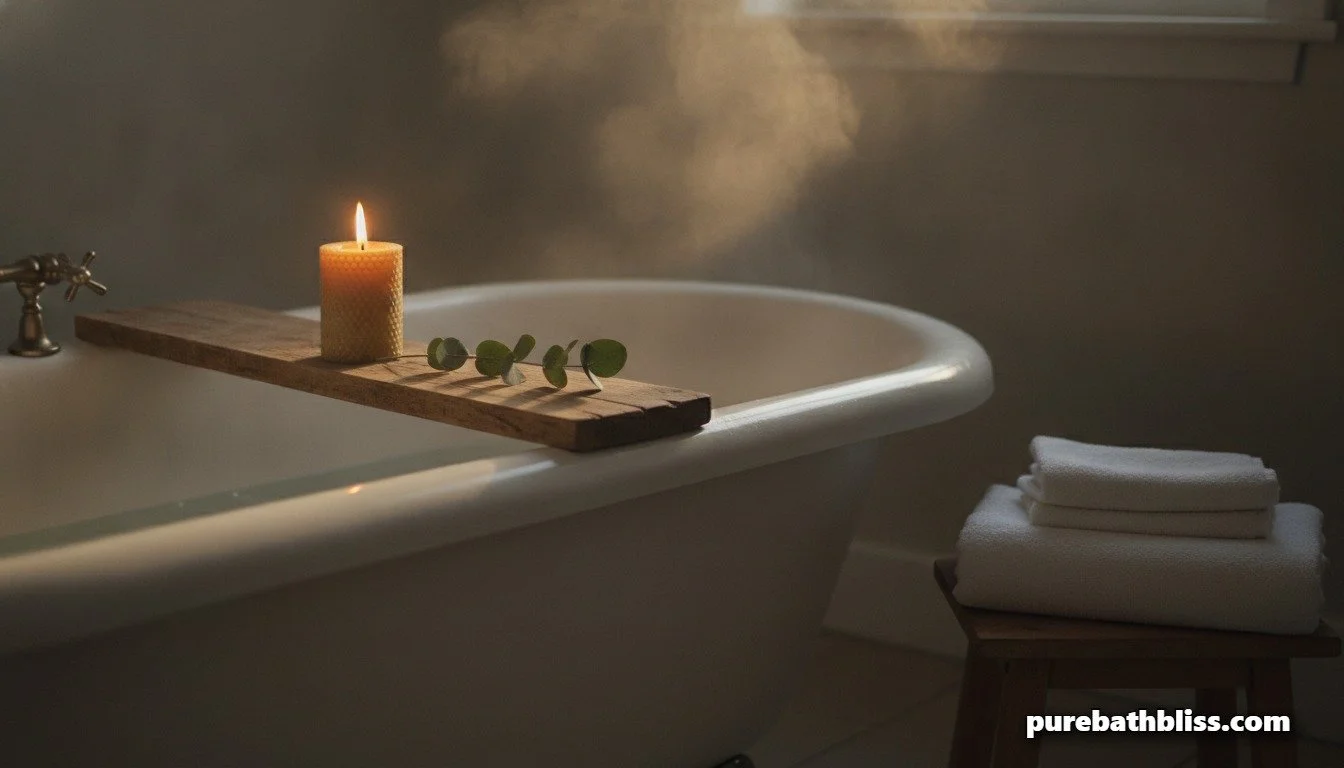
You do not need a Japanese soaking tub to practice the ofuro philosophy. Any bathtub, approached with the right intention and the right preparation, can serve as the daily recovery ritual. What changes is not the hardware but the approach.
Step 1: Wash Before You Bathe
The single most important shift is also the simplest. Shower first. Wash your body and hair completely before you get in the bath. This keeps the bath water clean, which matters both hygienically and psychologically. Clean water at the right temperature is a fundamentally different sensory experience from bath water that smells of shampoo and soap. If you have a shower over the bath, turn the bath taps on after you have finished showering. If you have a separate shower, use it first and then move to the bath.
Step 2: Get the Temperature Right
The standard ofuro temperature is 40 to 42 degrees Celsius. Use a bath thermometer to calibrate this accurately the first few times until you can reliably judge it by feel. The water should feel hot but immediately tolerable. Our Epsom salt and magnesium flakes guide covers how mineral additions interact with water temperature and the specific concentrations that enhance the therapeutic effect of hot immersion.
Step 3: Prepare the Environment First
TBefore you fill the tub, dim the lights or switch to candlelight. A pure beeswax candle is the right choice here, burning cleanly without the VOC load of paraffin in a small enclosed space. If you hang eucalyptus in your shower, move the bundle near the bath where the filling tub's steam will begin releasing the eucalyptol before you even get in. Our guide to hanging eucalyptus correctly covers the bruising technique that doubles the scent release.
Step 4: The Duration and the Stillness
The standard ofuro soak is fifteen to twenty minutes. Not five minutes while you check your phone. Not thirty minutes with a podcast playing. Fifteen to twenty minutes of genuine stillness, no devices, no content, no tasks. This is where the practice departs most significantly from the Western approach to the bath, and it is also where most of its benefit lives. The parasympathetic activation that produces the stress recovery effect requires sustained, undisrupted quiet. The nervous system does not switch into recovery mode if you are simultaneously processing information or social stimulation. The stillness is not incidental to the ritual. It is the ritual.
Step 5: The Timing and What Comes After
Take the ofuro one to two hours before you intend to sleep. The core temperature drop that triggers sleep onset takes approximately sixty to ninety minutes to reach its full effect after you exit the bath. If you bathe too close to bed, the body is still warm when you lie down, which actually delays rather than promotes sleep. One to two hours before bed is the sweet spot documented in the sleep research.
After the bath, pat dry gently, apply your moisturiser while the skin is still slightly damp, and move to whatever your pre-sleep routine is. The transition from bath to sleep should be as quiet as the bath itself. Bright screens, stimulating content, and stressful conversations in the period after the bath undermine the physiological preparation the bath has done. Think of the post-bath period as the cool-down after exercise: the work is done, what you do with the recovery window determines how much of the benefit you actually retain.
What to Add to the Water
| Addition | Amount | Primary Benefit | Notes |
|---|---|---|---|
| Plain hot water (traditional) | 40 to 42°C | Vasodilation, parasympathetic activation, temperature therapy | The authentic ofuro. Nothing added. Purity is part of the philosophy. |
| Magnesium chloride flakes | 2 cups per bath | Sleep quality, nervous system support, skin hydration | Zechstein-sourced preferred. Dissolve before getting in. Best pairing with ofuro temperature. |
| Hinoki essential oil | 5 to 8 drops in a carrier oil | Authentic Japanese scent profile, antimicrobial, deeply calming | Always dilute in a carrier oil before adding to bath water. Never add undiluted essential oil to bath water. |
| Eucalyptus essential oil | 5 drops in carrier oil | Respiratory clarity, antimicrobial, energising | Better suited to morning baths. Hinoki or lavender preferable for evening ofuro. |
| Baking soda | Half cup per bath | Neutralises chlorine in tap water, softens skin, mild alkalising effect | Simple and inexpensive. Particularly useful if your tap water has a strong chlorine smell. |
| Avoid: Bubble bath, foaming agents, synthetic fragrance | None | No therapeutic benefit | Strip the skin's natural barrier, introduce synthetic compounds into a steamy enclosed space, and contradict the purity principle of the ofuro. |
The traditional Japanese ofuro uses plain hot water. Purity is part of the philosophy. That said, natural mineral additions do enhance the physiological benefit. Magnesium chloride flakes, particularly Zechstein-sourced, at two cups per bath enhance the skin absorption of magnesium which supports the parasympathetic nervous system activation and sleep quality the ofuro is specifically designed to promote.
Hinoki essential oil, extracted from the Japanese cypress tree traditionally used for ofuro tubs, comes as close as you can get to an authentic sensory experience without the actual hinoki tub. Always dilute five to eight drops in a tablespoon of carrier oil before adding to bath water. Never add undiluted essential oil directly to bath water.
For scent during the bath itself rather than in the water, a wooden bath tray resting across the tub holds your candle and any dried botanicals at exactly the right height to release scent into the steam without any risk of anything falling into the water.
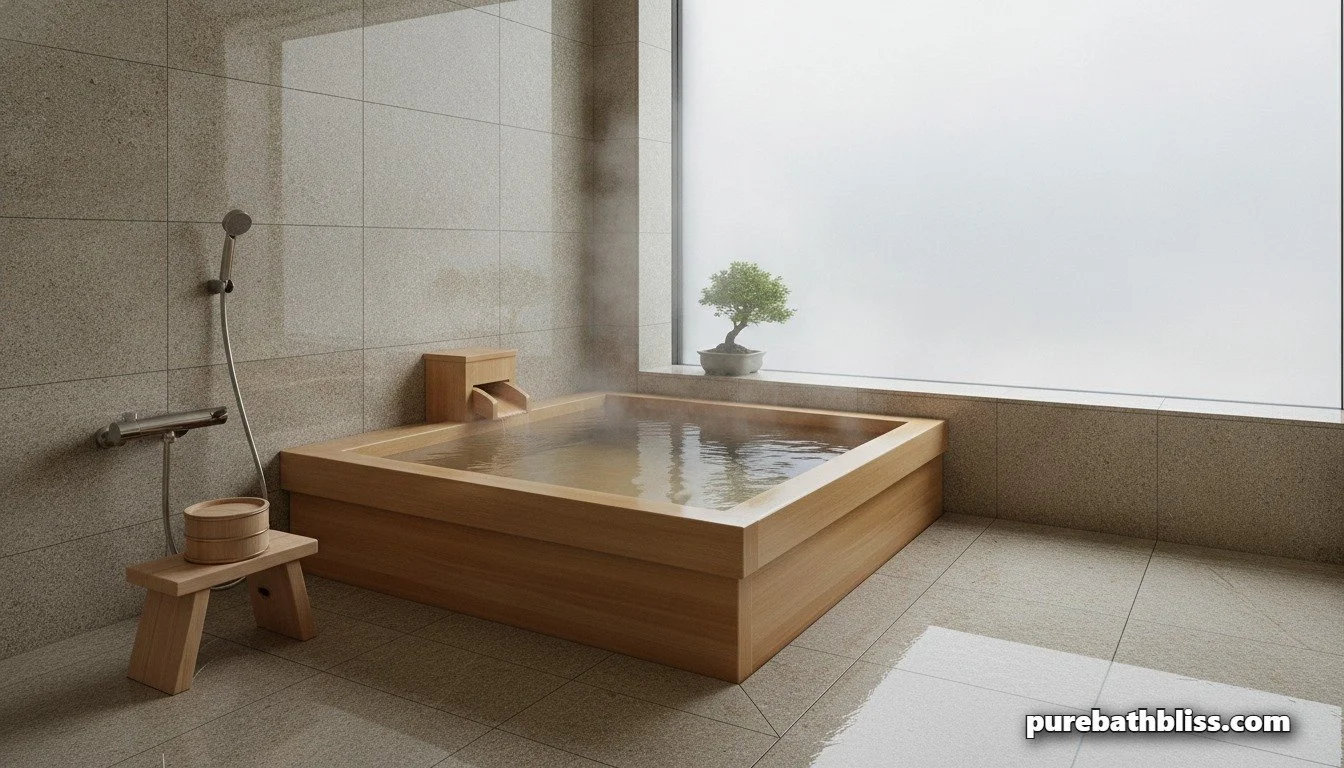
The Ofuro Tub: For Those Who Want the Full Experience
| Tub Type | Depth | Heat Retention | Approximate Cost | Best For |
|---|---|---|---|---|
| Traditional hinoki cypress ofuro | 55 to 65cm | Excellent — wood insulates naturally | $3,000 to $15,000+ | Authentic experience, long-term investment, bathroom renovation context |
| Stainless steel soaking tub | 50 to 60cm | Very good — metal holds temperature well | $2,000 to $8,000 | Durable, easy to clean, modern aesthetic, long lifespan |
| Deep acrylic soaking tub | 45 to 55cm | Moderate — acrylic loses heat faster than wood or metal | $800 to $3,000 | Most accessible option, widely available, good starting point |
| Cast iron freestanding tub | 35 to 45cm (typically) | Excellent once warm — takes longer to heat up | $1,500 to $6,000 | Beautiful but typically too shallow for authentic ofuro soaking |
| Standard Western bathtub | 30 to 38cm | Poor to moderate | Already installed | Sufficient for practicing the ofuro philosophy. Not ideal for full shoulder-depth immersion. |
The traditional ofuro tub is made from hinoki cypress, a wood with natural antimicrobial properties, a distinctive warm scent, and extraordinary durability in wet conditions. A well-maintained hinoki tub lasts decades and actually improves with age as the wood develops a natural patina.
If a full ofuro tub is not in the budget, a deep acrylic soaking tub is the most accessible starting point. The key specification is depth: a minimum of 50 centimetres of water depth for a proper shoulder-height soak. Most standard Western bathtubs fall short of this, which is why the practice can be approximated in a standard tub but fully realised only with the right depth.
The Wider Japanese Bathroom Philosophy
The ofuro is the centrepiece of Japanese bathroom culture but it sits within a broader philosophy of the bathroom as a genuinely distinct and respected room in the home. In Japanese homes, the toilet is almost always in a completely separate room from the bathing area, a separation that makes practical and psychological sense. The bathroom itself, the washing and bathing space, is clean by definition rather than cleaned after the fact. The washing station, the stool, the bath itself, are all kept meticulously because they are used for the express purpose of recovery, not just hygiene.
The design philosophy follows. Japanese bathrooms tend toward simplicity, natural materials, minimal visual complexity, and a deliberate absence of clutter. Nothing in the room competes for attention with the act of bathing. A single wooden bucket. A low stool. The tub. A folded towel. This is the environment that signals recovery to the nervous system, not the over-accessorised, product-covered bathroom that has become the Western default.
Bringing this philosophy to a Western bathroom does not require a renovation. It requires editing. Remove everything from the bath surround that does not serve the bathing ritual. Find a place for the products, the toys, the bottles, and the accumulated clutter that does not involve the edge of the tub. What remains is the space, and the space is what makes the ritual possible. For anyone who wants to explore how scent specifically contributes to the spa-like quality of the Japanese bathroom atmosphere, our guide to making your bathroom smell like a spa without synthetic fragrance covers the specific essential oil combinations and delivery methods that work best in a steam environment.
Starting Tonight
The ofuro ritual does not require special equipment, expensive products, or a bathroom renovation. It requires a bathtub, hot water at the right temperature, and twenty minutes of undivided quiet. Those twenty minutes, practiced consistently, produce measurable improvements in sleep quality, stress recovery, and cardiovascular markers over months and years. The Japanese have known this for a thousand years. The research is now catching up.
Start tonight. Shower first. Fill the tub to 40 degrees. Light a candle. Leave your phone in another room. Get in and do nothing for twenty minutes. That is the entire practice. Everything else, the hinoki oil, the magnesium flakes, the deep soaking tub, is refinement on top of something that works exactly as it is.