What are the health risks of synthetic bathroom fragrance plug-ins?
In our collective quest to create a clean, inviting sanctuary, we often think about fragrance as the finishing touch. We want our bathrooms to smell like a coastal spa or an open pine forest. To achieve this continuously, millions of homeowners rely on synthetic plug-in air fresheners. They are cheap, low-maintenance, and promise to mask unpleasant odors around the clock.
But behind those synthetic scents lies a severe, invisible trade-off for your indoor air quality. When you step into a small, enclosed bathroom that has a warm chemical warmer active, you aren't walking into a clean space, you are walking into a highly concentrated bubble of volatile organic compounds.
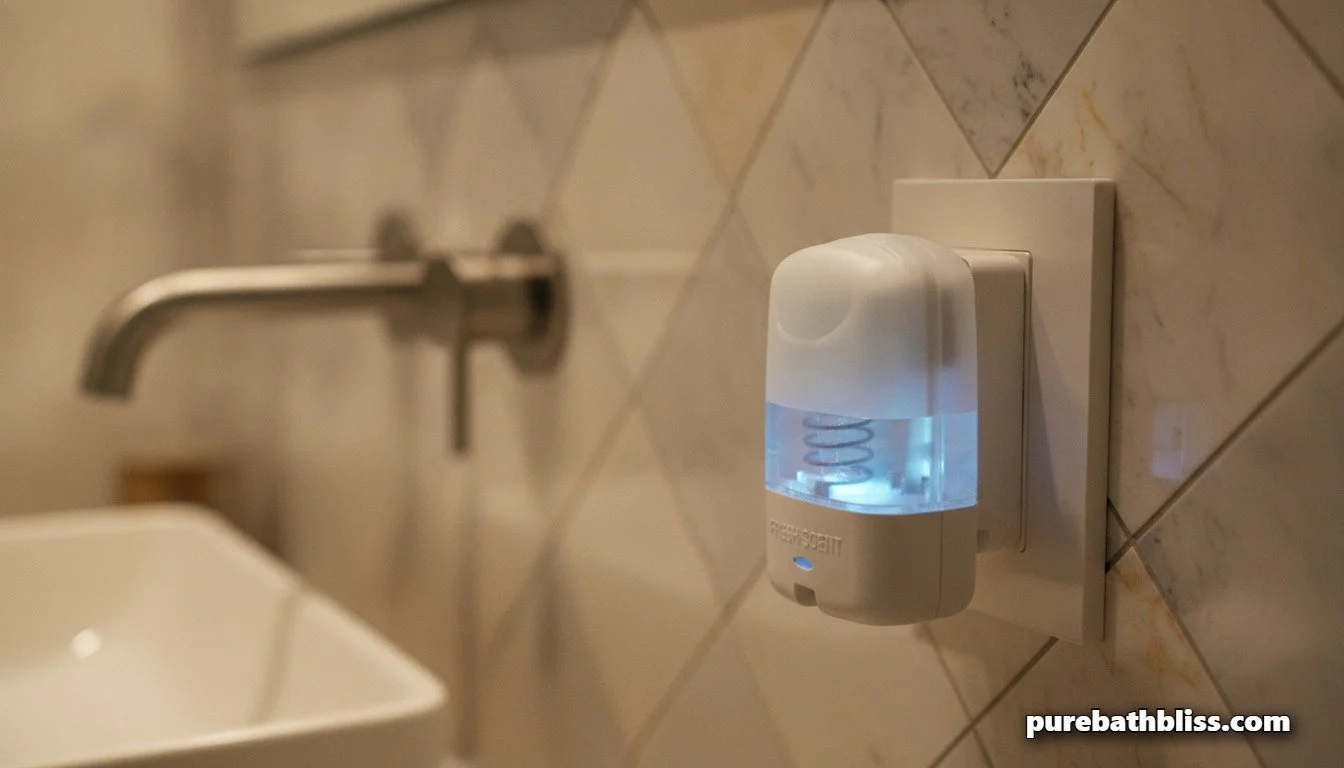
The Chemistry of Artificial Atomization
Synthetic plug-ins operate by using a tiny, internal heating element to continuously warm a reservoir of chemical oils. This heat atomizes the liquid, transforming it into a micro-vapor that can float through the air.
The primary health risk stems from what is hidden inside that chemical soup. Independent laboratory testing has revealed that standard synthetic plug-ins are primary sources of formaldehyde (a known human carcinogen) and phthalates (hazardous chemicals used to make fragrances last longer that can disrupt hormones).
When these chemical oils are continuously heated inside a small, poorly ventilated bathroom, they quickly reach concentrations that can trigger asthma attacks, sinus headaches, and severe respiratory irritation. This risk compounds rapidly if you haven't yet corrected your underlying structural ventilation issues using our budget bathroom mold prevention guide.
The Budget-Friendly, Chic Alternative
You do not have to live with a stale bathroom to protect your respiratory health. The absolute best fix for your home health—and your wallet—is to unplug the synthetic warmers entirely and pivot to an all-natural, mechanical diffusion method.
The Fix: Create an organic, DIY Reed Diffuser. Instead of relying on electricity and heat to force chemicals into your lungs, reed diffusers use simple capillary action to gently pull natural plant oils up through porous wooden sticks, releasing a subtle, continuous scent safely into the air.
This upgrade looks incredibly elegant on a shelf, matches the clean lines of a curated apothecary countertop display, and can be built for pennies using items you likely already have around the house.
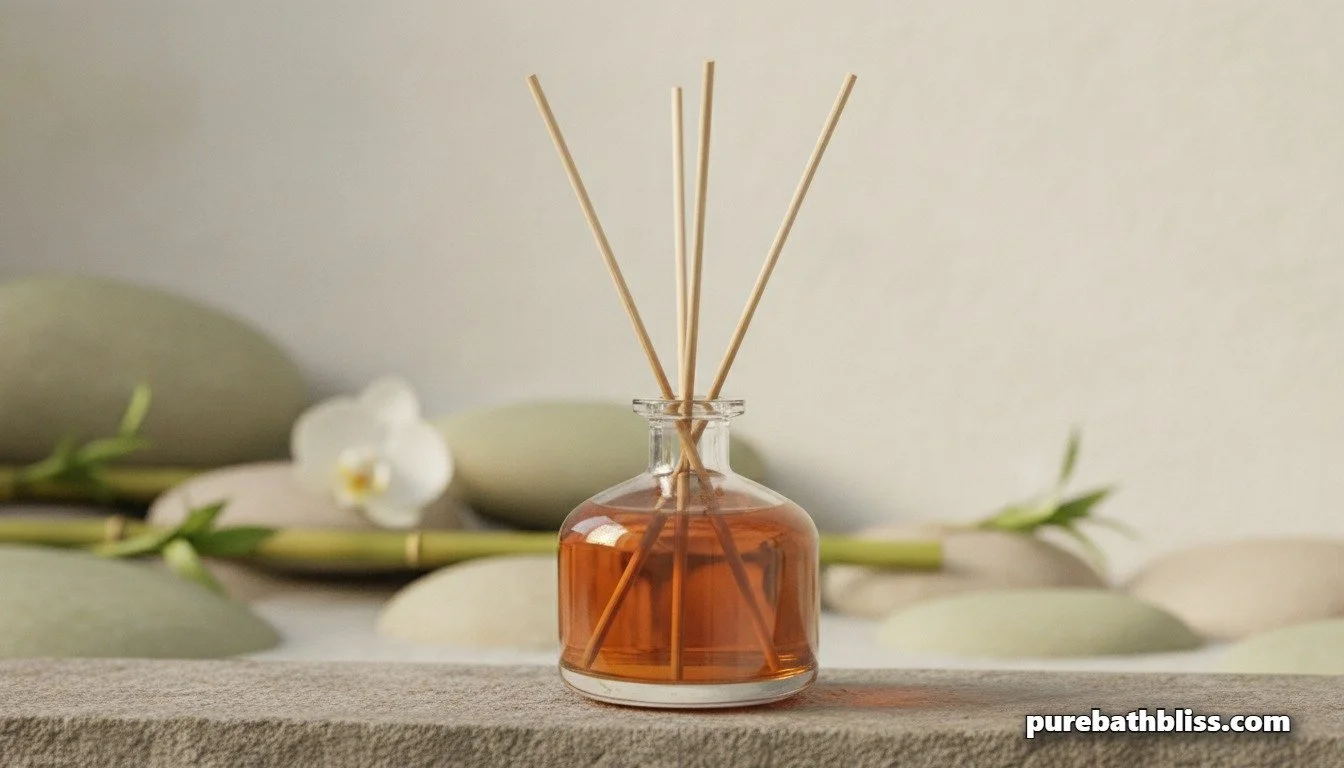
How to Build Your All-Natural Diffuser
Setting up your clean fragrance station takes less than five minutes and completely eliminates artificial chemical off-gassing from your daily routine.
The Ingredients:
The Vessel: An old glass jar, a spent cosmetic bottle, or a small ceramic vase with a narrow neck (a narrow opening prevents the base oil from evaporating too quickly).
The Base: 1/4 cup of a light carrier oil, such as sweet almond oil or safflower oil.
The Accelerator: 1 tablespoon of rubbing alcohol or high-proof vodka. This thins the carrier oil, allowing it to travel smoothly up the wooden reeds.
The Scent: 20 to 30 drops of pure, therapeutic-grade essential oils.
Mix the ingredients directly inside your glass vessel and drop in 5 to 6 natural rattan diffuser reeds. To keep the fragrance fresh, simply flip the wooden sticks upside down once a week. This natural scent profile works beautifully alongside a clean, non-toxic environment to ensure your breathing zone stays completely pure, echoing the material choices outlined in our non-toxic shower curtain liner guide.
Synthetic Plug-Ins vs. Natural Reed Diffusers
| Feature | Synthetic Plug-In Air Fresheners | All-Natural DIY Reed Diffuser |
|---|---|---|
| Mechanism | Electrical heating elements that atomize chemicals. | Natural capillary action through porous wood. |
| Air Toxins | Formaldehyde, phthalates, high VOCs. | Zero synthetic chemicals; pure plant extracts. |
| Average Cost | Continuous cost for plastic plastic refills. | Pennies to replenish using bulk carrier oils. |
| Visual Style | Bulky, institutional plastic blocks. | Artisanal glass, amber bottles, or ceramics. |
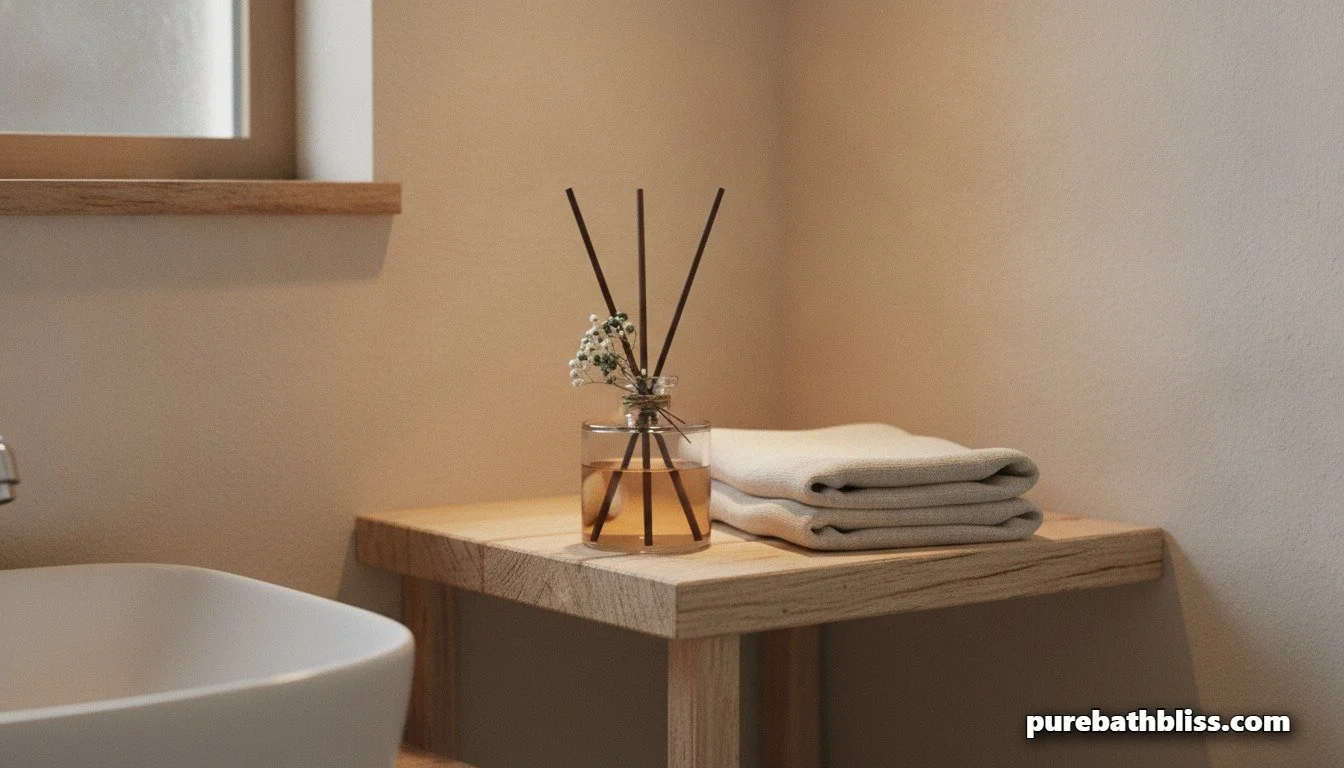
Summary: Protecting Your Breathing Zone
True luxury should never come at the cost of your physical well-being. By swapping out aggressive, synthetic heating units for a clean, plant-based reed diffuser, you clean up your home's air chemistry while introducing an intentional, artisanal touch to your space. Protect your respiratory health, ditch the synthetic toxins, and let your bathroom breathe naturally.