The "Color-Drenched" Powder Room: Why Painting the Ceiling Changes Everything
For decades, well-meaning home improvement shows and traditional design manuals have repeated the exact same rule: if you are decorating a small bathroom or a cramped powder room, you must paint the walls crisp, bright white to "make the space feel bigger."
But let's be honest. When you paint a tiny, windowless half-bath stark white, it rarely feels larger. Instead, it ends up looking clinical, institutional, and entirely devoid of personality. You don’t feel like you’re standing in a high-end oasis; you feel like you’re in a well-lit closet.
The ultimate "lightbulb moment" for small-space design is to stop fighting the room's limited footprint and start leaning into it. Instead of trying to create an illusion of vast space, you can embrace the intimacy to build a dramatic, luxurious "jewel box." The design technique sweeping high-end interiors is known as Color Drenching, and its most important rule is that you must never leave the ceiling white. Here is why painting your ceiling changes everything and how to execute this moody, sophisticated aesthetic flawlessly.
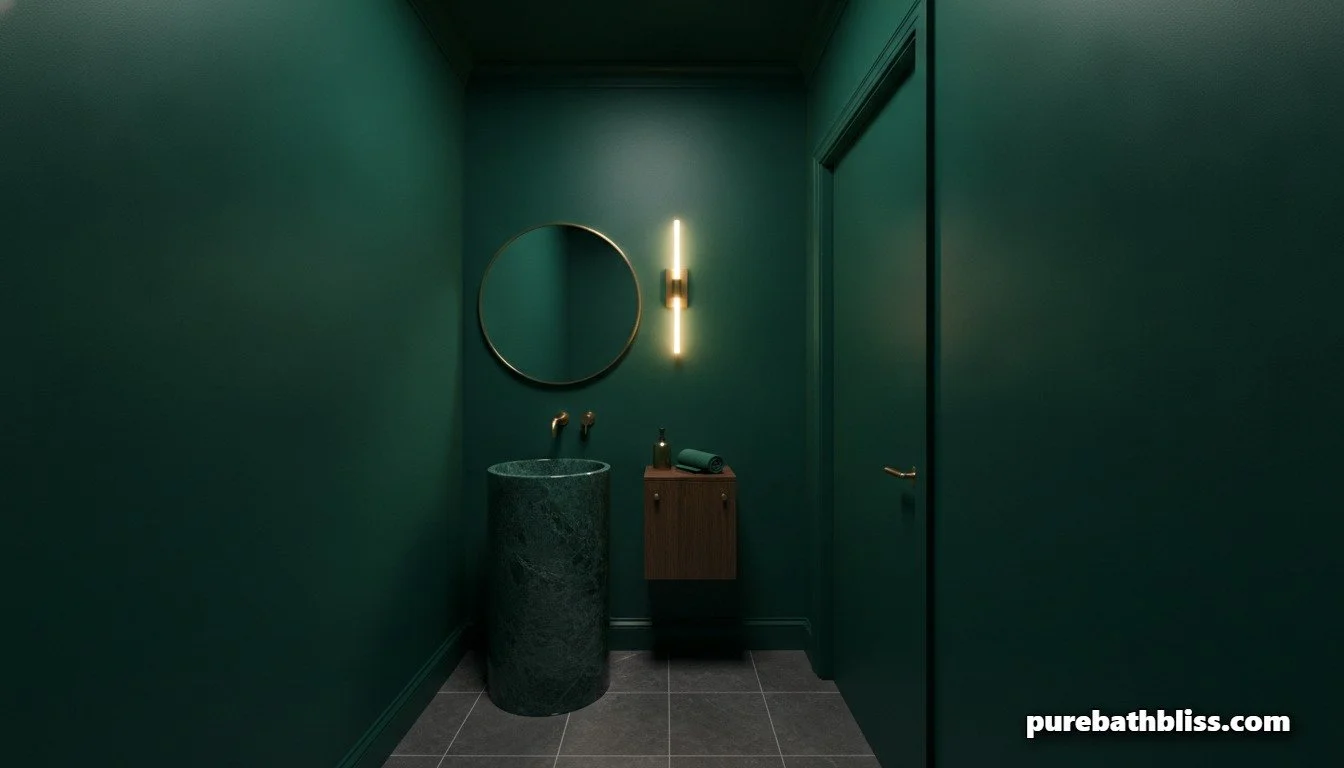
Erasing the Spatial Horizon
When you paint a room the traditional way, colored walls paired with a standard white ceiling and white baseboards, your eyes naturally track the harsh contrasting lines where the walls end and the ceiling begins. In a small powder room, this visual boxing grid constantly reminds your brain exactly how small and enclosed the room is.
The Fix: Color drenching involves painting your walls, baseboards, crown molding, doors, and the ceiling in the exact same hue. By wrapping the entire architecture in a single pigment, you effectively erase the visual horizons of the room. The corners soften, the ceiling line disappears, and the spatial boundaries blur completely. Because your eyes can no longer locate the exact seams of the architecture, the room actually feels mysterious and infinitely more expansive.
The Power of the Chalky Matte Finish
When dipping a room in a bold, enveloping color, the sheen of your paint is just as critical as the pigment itself. Glossy or semi-gloss finishes reflect light sharply, creating harsh glares that can make a drenched space feel chaotic or aggressive.
The Fix: Opt for a premium, rich matte or flat finish specifically engineered for high-moisture environments. A velvety matte finish absorbs light rather than bouncing it around, lending an incredible depth and texture to the walls.
Whether you select a deep charcoal, an earthy forest olive, or a moody dark plum, a matte finish makes the color feel like a comforting textile wrapper. This soft, velvety backdrop acts as the ultimate stage for showcasing a styled apothecary countertop display or an elegant pedestal sink.
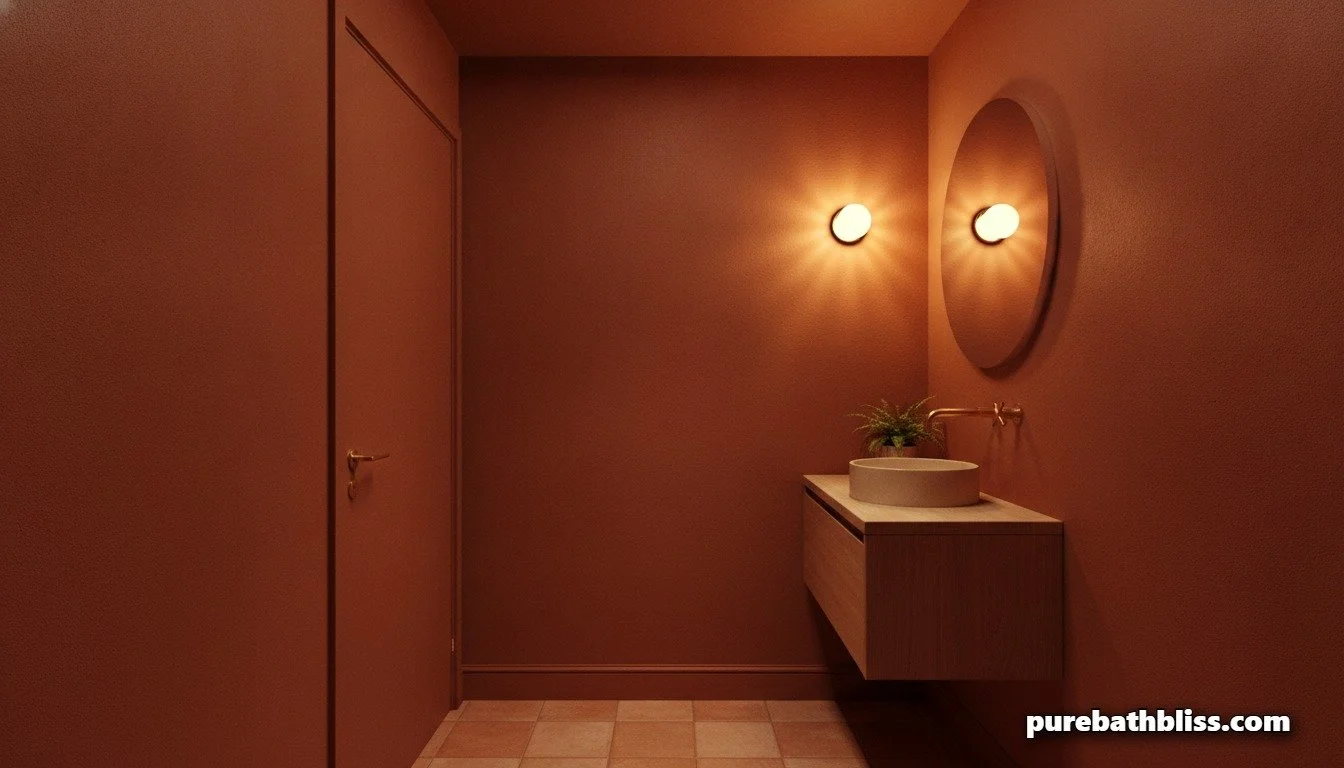
Lighting the Jewel Box
The biggest fear homeowners have when considering a drenched, dark ceiling is that the room will feel like a gloomy cave. However, a dark room only feels like a cave if the lighting is flat and uninspired. When done correctly, a drenched room becomes an masterclass in atmospheric luxury.
The Fix: Ditch harsh, center-mounted flush ceiling lights that blast the entire room with blinding glare. Instead, employ targeted, layered lighting. Use warm, low-wattage side sconces to frame your vanity mirror, keeping the illumination soft and localized.
Positioning your fixtures strategically allows you to create a beautiful, shadow-free grooming field. This moody layering works beautifully with the specialized layout and safety guidelines inside our bathroom lighting IP-ratings safety guide, ensuring your fixtures handle any drifting steam perfectly while maintaining a high-end boutique hotel atmosphere.
Traditional Painting vs. The Color-Drenched Method
| Design Metric | Traditional White-Ceiling Approach | The Color-Drenched Approach |
|---|---|---|
| Visual Boundaries | High-contrast seams draw attention to the room's small scale. | Continuous color erases lines, blurring spatial corners. |
| Atmosphere Feel | Often sterile, clinical, or feels like a temporary closet utility. | Intimate, luxurious, and reads like an intentional design choice. |
| Hardware Contrast | Metal fixtures blend neutrally against standard bright backdrops. | Metallic accents, brass, and stone pop with intense clarity. |
| Lighting Integration | Relies on high-output ambient light to fight shadows. | Thrives on low-level accent lighting and glowing paths. |
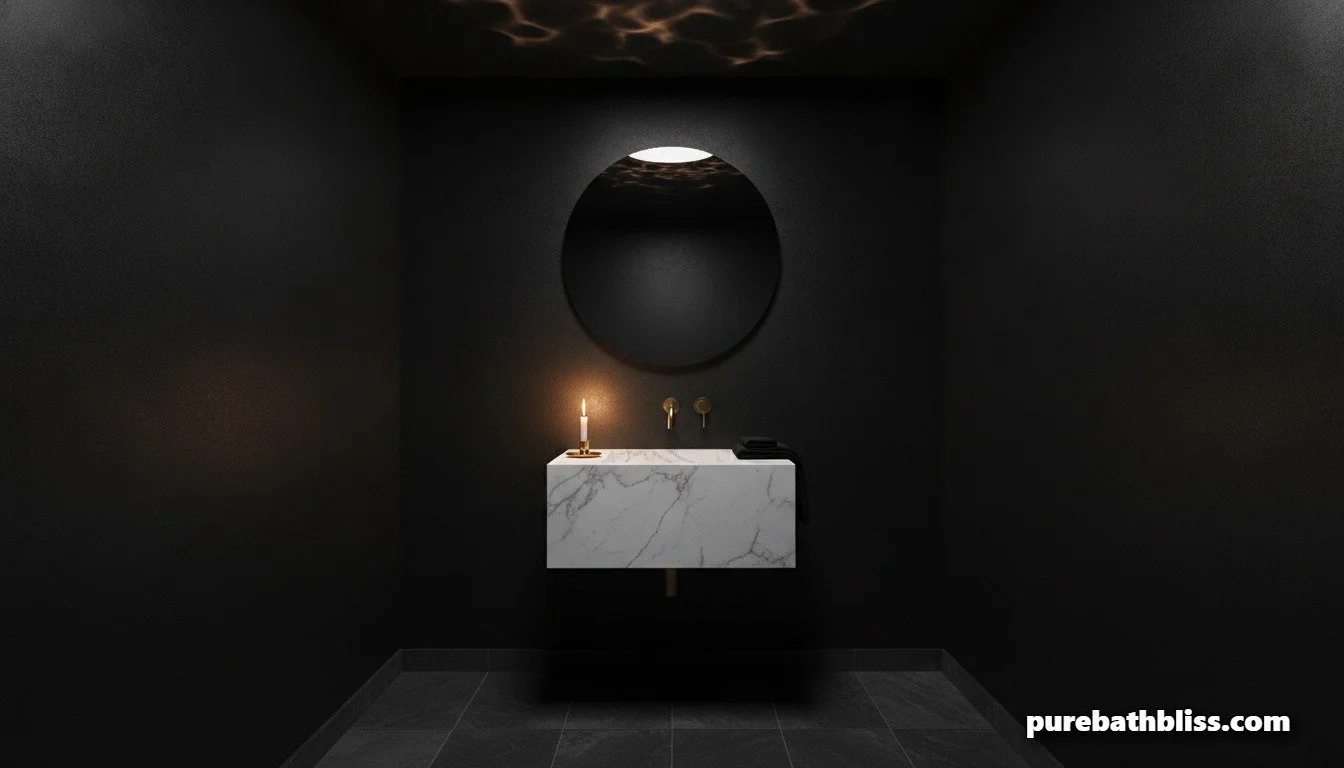
Summary: Claim Your Architectural Drama
You don't need a sprawling master suite to make a powerful design statement. Powder rooms are the absolute perfect playground for experimental design because they are transitional spaces, rooms you and your guests step into for just a few minutes at a time. By taking the plunge, drenching the entire architecture, and wrapping the color right across the ceiling, you elevate an ordinary utility room into an unforgettable aesthetic destination.