English Ivy Care: Your Bathroom’s Natural Mold-Fighter
Transparency Note: We independently select these products based on research and user reviews. If you buy something through our links, we may earn a commission.
When you think of English Ivy (Hedera helix), you might picture grand brick estates or secret gardens. But in a Sustainable Sanctuary, this classic climber is one of our most hard-working functional tools.
While most plants are loved for their looks, English Ivy is famous for its lungs. Studies (including those by NASA) have shown that English Ivy is exceptionally good at filtering airborne mold spores and household toxins like formaldehyde. In the damp, humid environment of a bathroom, this makes it an essential ally in keeping your sanctuary healthy.
1. Why It’s the Ultimate Bathroom Climber
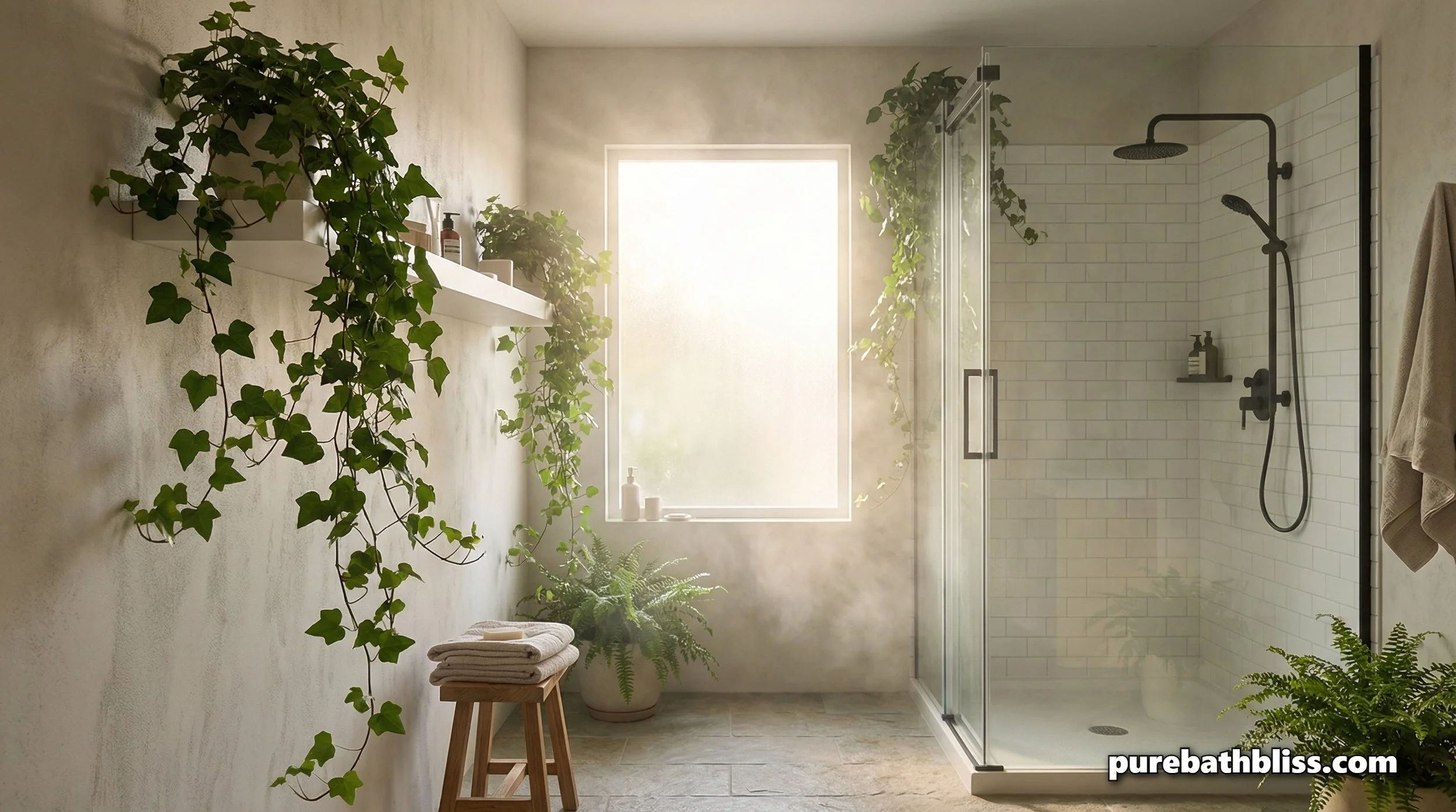
English Ivy loves the cooler, humid air that bathrooms often provide. Because it is a "vining" plant, it doesn't take up precious counter space.
The Strategy: Place it on top of a medicine cabinet or hang it from the ceiling. As the vines grow, they will naturally trail downward, creating a "living curtain" that cleans the air as it grows.
2. Light: Bright is Better
While Ivy is hardy, it is not a "low light" plant. To keep those leaves variegated (if you have a patterned variety) and lush, it needs bright, indirect light.
The Ideal Spot: Near a window. If the light is too low, the plant will become "leggy," meaning the stems grow long and thin with very few leaves.
The Tech Fix: If your bathroom lacks a window, this is the perfect plant to place near your Smart Mirror. The consistent LED light will help it maintain its dense foliage.
3. Watering: The Goldilocks Zone
English Ivy likes to stay moist, but it hates "wet feet" (sitting in water).
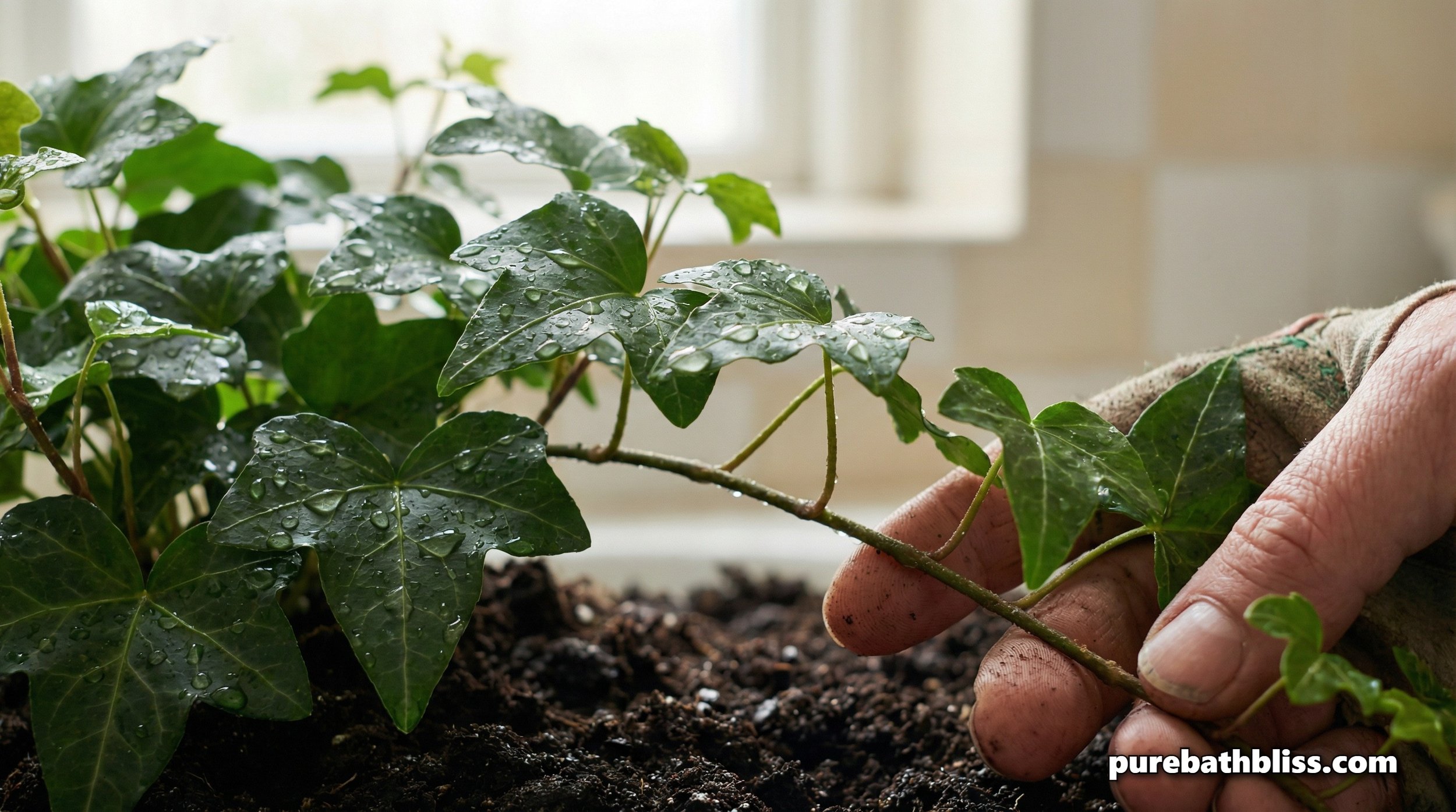
The Method: Wait until the top inch of soil feels dry before watering. When you do water, give it a thorough soak until water runs out of the drainage holes.
Pro-Tip: Ivy loves a "shower" of its own! Every few weeks, use your showerhead to rinse the dust off the leaves. This prevents spider mites and helps the plant "breathe" better.
4. Humidity and Airflow
While Ivy loves the humidity of a shower, it also needs airflow.
The Rule: If your bathroom is windowless and stays "soggy" all day, the Ivy might develop root rot. Ensure you use your bathroom fan or leave the door open after a shower to let the air circulate.
5. Troubleshooting Common Ivy Issues
Dry, Crispy Leaves: This usually means the air is too dry or the soil has dried out completely. Increase your misting or watering frequency.
Sticky Residue on Leaves: This is often a sign of "scale" or aphids. Simply wipe the leaves down with a cloth dipped in a mixture of water and a drop of organic Castile soap.
Rapid Shedding: Usually caused by a sudden change in temperature (like an AC vent blowing directly on it).
Conclusion
English Ivy is the perfect blend of traditional elegance and modern function. By adding this climber to your bathroom, you aren't just decorating, you're actively improving the air quality of your home.
English Ivy Essentials
The Support: Small Indoor Trellis for Climbing Plants.
The Soil: Well-Draining Organic Potting Mix.
The Cleaner: Organic Neem Oil Spray (for pests).