Why Your Shower Curtain Liner Might Be Polluting Your Indoor Air (And What to Buy Instead)
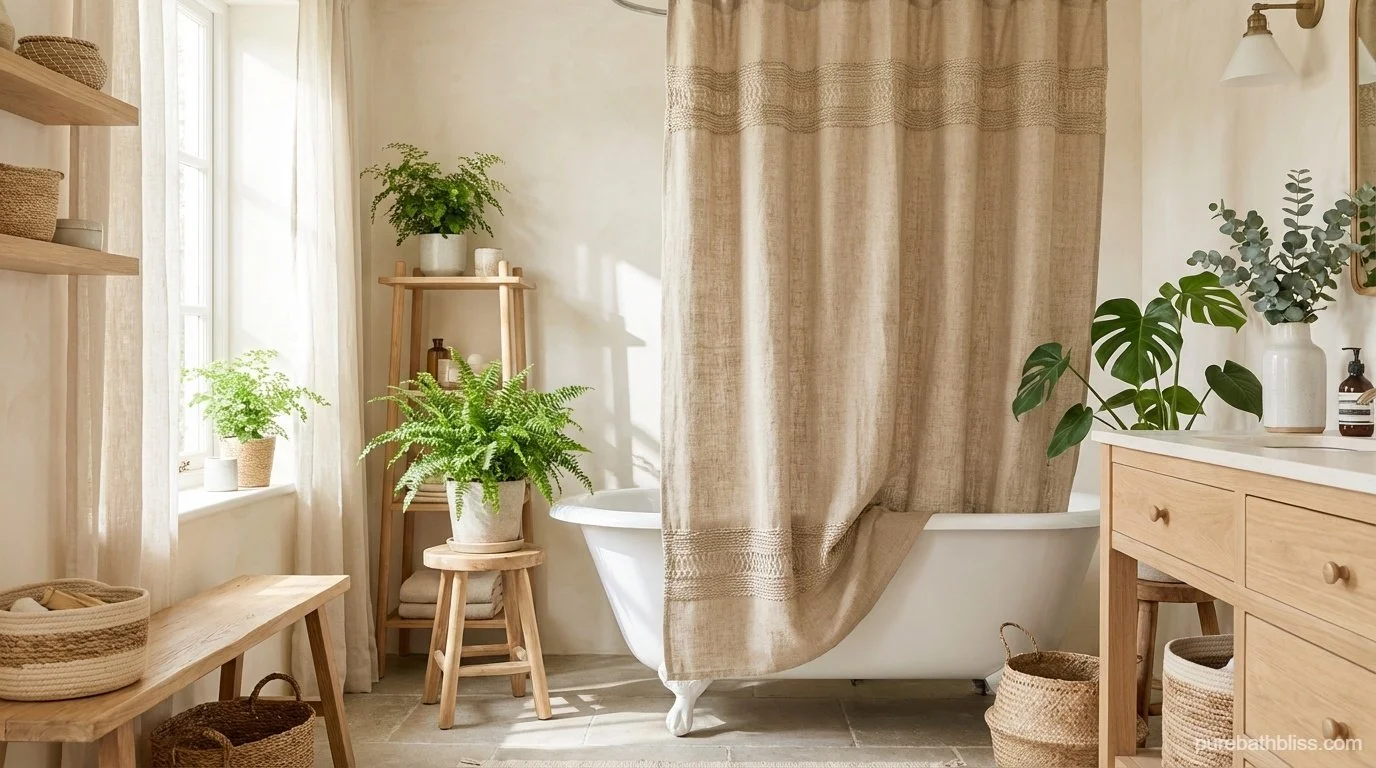
You know that distinct "new shower curtain smell"?
For years, we associated that sharp, chemical scent with cleanliness—a sign that we had successfully refreshed the bathroom. But if you have ever unpacked a cheap plastic liner and felt a slight headache or dizziness after hanging it up, your body was trying to tell you something.
That smell isn't "freshness." It’s off-gassing.
In our quest to create a healthy bathroom sanctuary, we often look at big-ticket items like ventilation fans or low-VOC paint. But sometimes, the biggest pollutant in the room is the $10 sheet of plastic hanging right next to your face while you shower.
The good news? Swapping it out is one of the cheapest, fastest, and most effective wellness upgrades you can make. Here is the definitive guide to navigating the confusing world of shower curtain materials, from the toxic to the truly pure.
The Villain: Why PVC is a Problem
Most standard shower curtain liners are made of Polyvinyl Chloride (PVC). PVC is widely considered by environmental organizations to be one of the most toxic plastics created.
To make PVC flexible enough to drape over your tub, manufacturers add plasticizers called phthalates. These chemicals are not chemically bound to the plastic, which means they easily release—or "off-gas"—into the air, especially when heated by the steam of a hot shower.
The "Toxic Soup" Effect: When you shower with a PVC curtain, you are essentially creating a small, enclosed steam room filled with Volatile Organic Compounds (VOCs).
Phthalates: Known endocrine disruptors that can mimic hormones in the body.
Organotins: Stabilizers that can affect immune system function.
Dioxins: Released during the manufacturing and disposal of PVC.
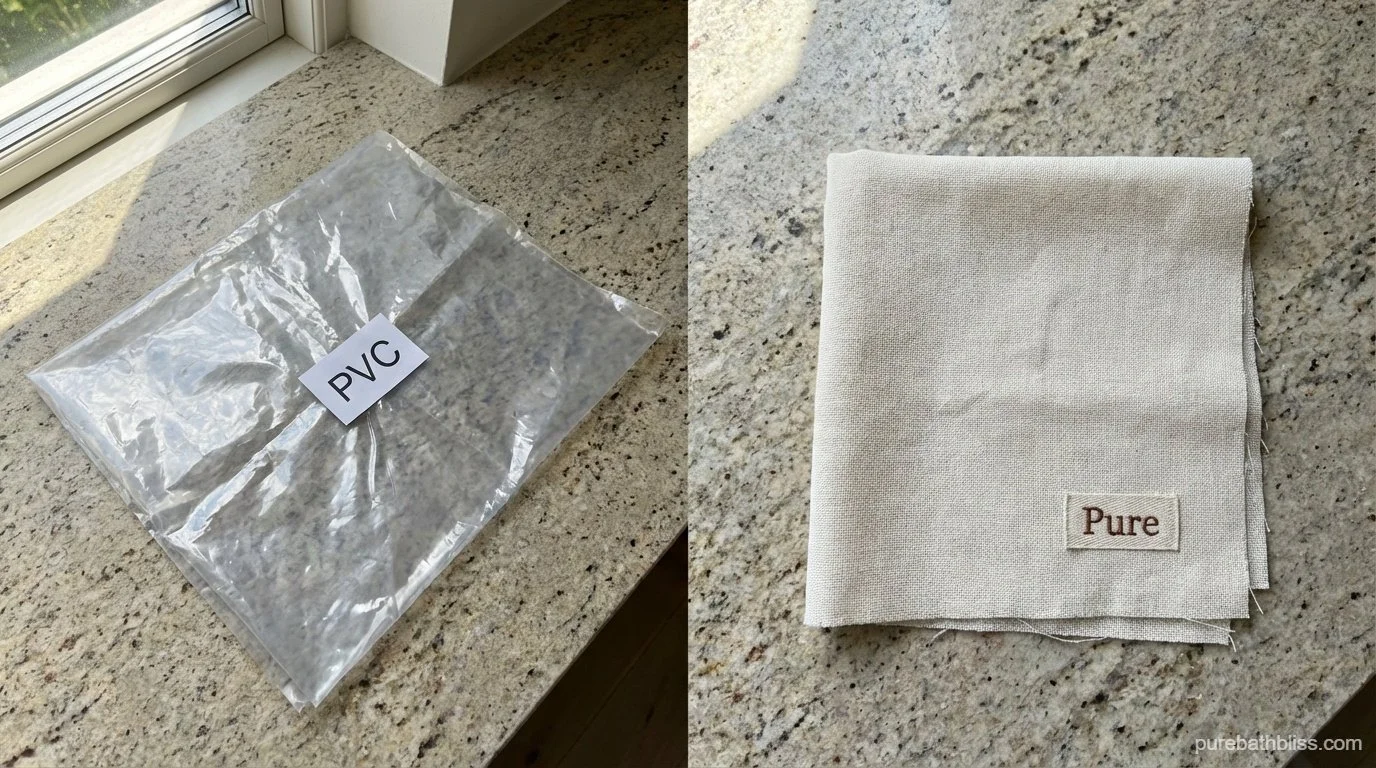
The Quick Check: If your liner smells like a pool toy or a new car, it’s likely PVC. Check the packaging. If it says "Vinyl" with no other qualifiers, put it back on the shelf.
The Hierarchy of Shower Liners
Not everyone is ready to spend $100 on a curtain, and that’s okay. There is a spectrum of safety. Here is how to make the best choice for your budget and your health.
1. The "Better" Option: PEVA or EVA
What is it? Polyethylene Vinyl Acetate (PEVA) or Ethylene Vinyl Acetate (EVA).
The Pros: These are chlorine-free plastics. They are significantly less toxic than PVC and generally do not contain phthalates. They are waterproof, cheap, and available at almost every big-box store (Target, IKEA, etc.).
The Cons: It is still a petrochemical plastic. While safer, it’s not biodegradable and can still have a faint plastic smell initially.
Verdict: A solid "bridge" option if you are on a strict budget or need a liner immediately.
2. The "Best" Option: Tightly Woven Polyester
What is it? A fabric liner treated with a water-repellent finish.
The Pros: PVC-free and machine washable. They look and feel more high-end than a plastic sheet and don’t have that "clingy" static effect that attacks you mid-shower.
The Cons: Eventually, the water-repellent finish wears off, and they can soak through if you take very long, high-pressure showers.
Verdict: The hotel standard. Great for aesthetics and air quality.
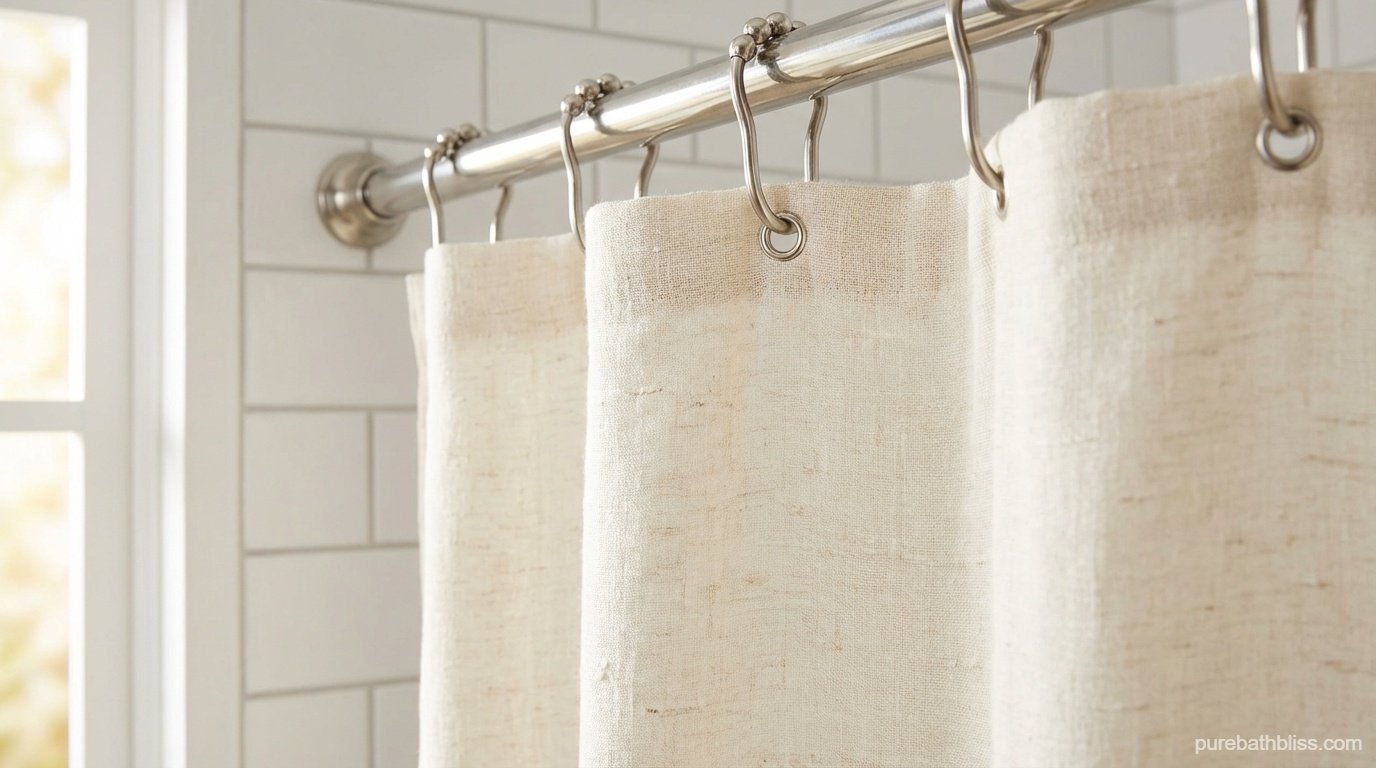
3. The "Pure Bath Bliss" Standard: Hemp or Organic Cotton
What is it? Natural fibers that are naturally resistant to bacteria and fungi.
The Pros:
Zero Toxicity: No plastic, no off-gassing.
Sustainable: Fully biodegradable at the end of its life.
Naturally Antibacterial: Hemp, in particular, is incredibly resistant to mold and mildew without chemical treatments.
The Cons: Higher upfront cost ($40–$90). They are not "waterproof" in the same way plastic is; they swell when wet to become water-resistant. You must ensure they don't drag on the floor.
Verdict: The ultimate investment for a non-toxic home.
"But Won't Fabric Get Moldy?"
This is the #1 question we hear. We have been conditioned to buy plastic because we think it’s the only thing that stops mold. But as we discussed in our Bathroom Mold Guide, plastic liners harbor mold just as easily—it just looks like pink slime.
How to Care for a Natural Liner:
Keep it Closed: Never bunch the curtain to one side after showering. Pull it fully closed across the tub so air can circulate around the entire surface.
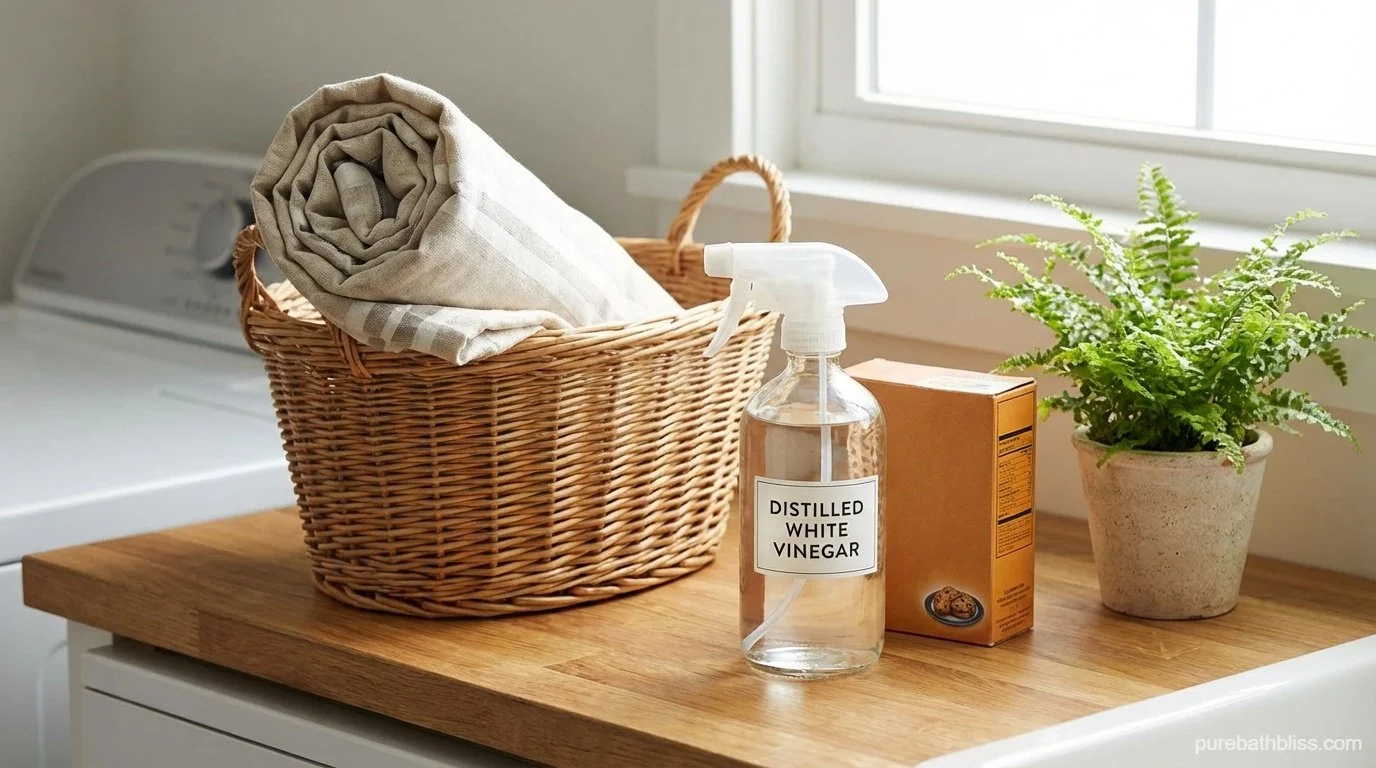
The Monthly Wash: Throw your hemp or cotton liner in the washing machine once a month with hot water and vinegar.
Ventilation: As always, ensure your bathroom fan is running to lower the room's humidity.
Our Top Picks
Ready to make the swap? Here are three liners we love that align with our non-toxic philosophy.
The Budget Swap: IKEA NÄCKTEN. It’s ridiculously cheap, made of PEVA, and does the job without the PVC smell.
The Hotel Feel: The Spruce Water Repellent Fabric Liner. (Yes, our friends at The Spruce have a great line). It’s 100% polyester, Oeko-Tex certified, and machine washable.
The Investment: Rawganique Hemp Shower Curtain. Chemical-free, grown in Europe, and sweatshop-free. It adds a beautiful, organic texture to the bathroom that plastic simply can't mimic.
The Bottom Line
Your bathroom should be a place where you can take a deep breath and relax. By ditching the PVC liner, you remove a major source of daily chemical exposure.
It’s a small change—literally a few dollars—but it sends a signal that you prioritize your health over convenience. And that is the essence of Pure Bath Bliss.
Next Up: Now that your air is cleaner, let’s look at the greenery. Discover 7 "Unkillable" Plants That Thrive in Your Windowless Bathroom to filter out the remaining toxins naturally.