The Best Low-Flow Showerheads: High Pressure Meets Water Efficiency
Transparency Note: We independently select these products based on research and user reviews. If you buy something through our links, we may earn a commission.
In the world of bathroom renovation, there is a persistent myth that "low-flow" means "low-pressure." As a builder, I hear it all the time: homeowners fear that by switching to an eco-friendly fixture, they’ll end up with a weak, unsatisfying drizzle. But the truth is that modern engineering has completely redesigned the internal "Infrastructure" of the showerhead. We are no longer just restricting water; we are optimizing it.
A high-quality low-flow showerhead uses air-injection technology and specialized spray patterns to make 1.75 gallons per minute (GPM) feel like the old 2.5 GPM standard. When you combine this efficiency with a luxury bath tray aesthetic and a clean, recaulked sink area, you create a bathroom that is both sustainable and indulgent.
Whether you are looking to lower your utility bills or simply want to upgrade your shower’s performance, here is the professional guide to choosing a low-flow showerhead that doesn't compromise on the experience.
1. The Physics of the "Feel": How Low-Flow Works
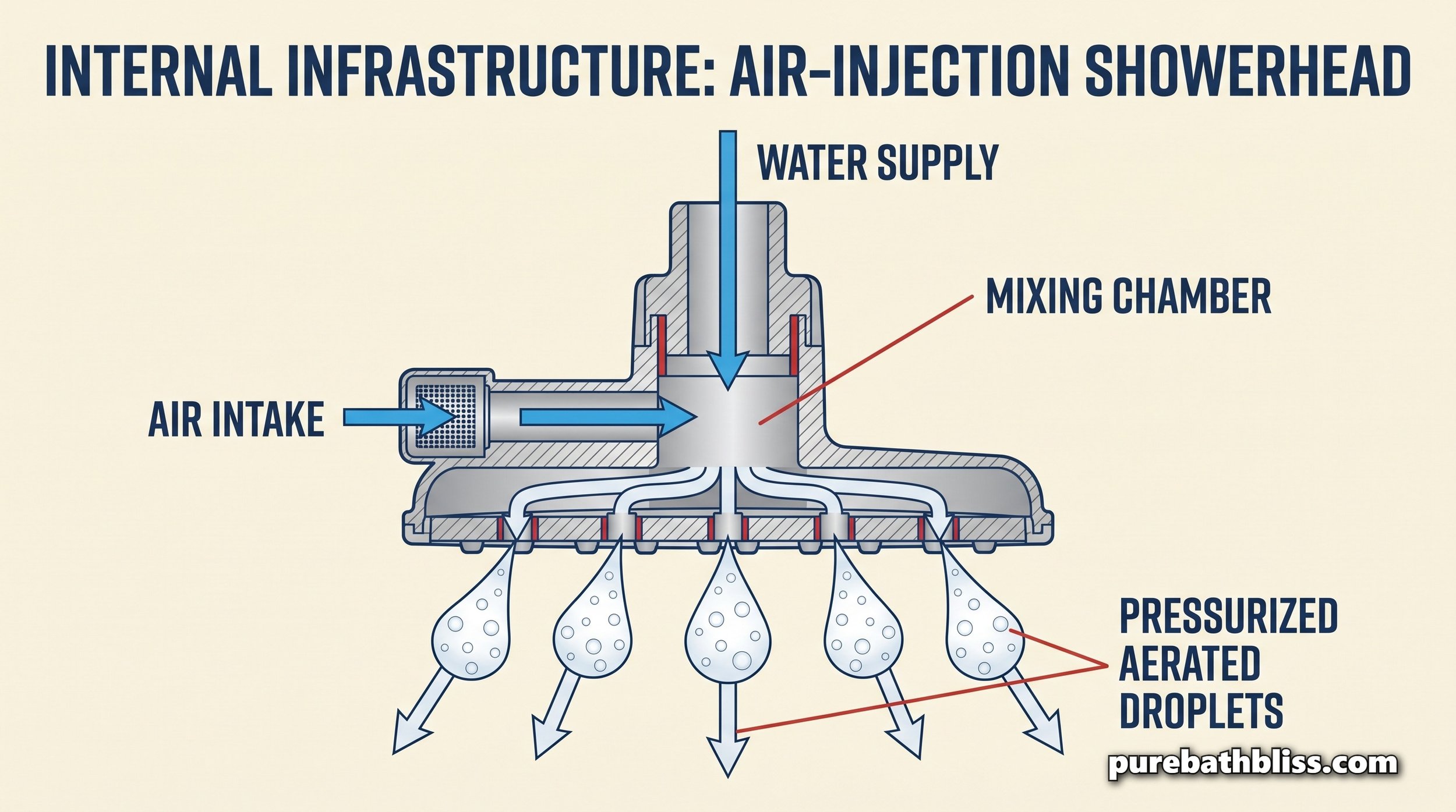
To understand why modern low-flow heads feel so good, you have to look at the internal mechanics. Older models simply used a "restrictor plate"—a plastic disc with small holes that choked the water flow. This resulted in a weak stream that felt like it couldn't rinse shampoo out of thick hair.
Air Injection (Venturi Effect): Many top-tier models inject air directly into the water stream. By mixing air with water, the droplets become larger and more "voluptuous." They hit your skin with more force, creating the sensation of high pressure even though you are using less water.
Laminar Flow: This technology creates distinct streams of water rather than a mist. Because the water isn't atomizing (turning into tiny clouds), it retains its heat better as it travels from the showerhead to your body. This is a critical component of a magnesium sleep soak ritual where maintaining water temperature is key to relaxation.
2. WaterSense Standards: The "Efficiency" Badge
When shopping for a new fixture, the most important "Infrastructure" label to look for is the EPA WaterSense certification.
The Threshold: To earn the WaterSense label, a showerhead must use no more than 2.0 GPM. Some of the most efficient models on the market today go as low as 1.5 GPM while still providing a satisfying spray.
The Savings: For a family of four, switching to a WaterSense showerhead can save more than 2,700 gallons of water per year. That is enough water to run your dishwasher for six months straight.
3. Low-Flow Comparison Table
| Model Type | Flow Rate (GPM) | The Experience | Efficiency Rating |
|---|---|---|---|
| Standard Legacy | 2.5+ | High volume; high heat loss | Low |
| WaterSense Standard | 2.0 | Balanced; air-injected feel | Good |
| Ultra-Low Flow | 1.5 - 1.75 | Pressurized; intense spray | Excellent |
4. Top Low-Flow Models for Your Home
If you are ready to upgrade your bathroom’s performance, these are the professional-grade models I recommend. They are designed to fit into a modern, hygienic bathroom environment.
Moen Magnetix Handheld Showerhead (1.75 GPM) – This is a favorite for families. The magnetic dock makes it easy for kids to use, and the 1.75 GPM flow feels remarkably powerful thanks to Moen's specialized spray engine.
Kohler Forte Single-Function Showerhead (1.75 GPM) – For those who prefer a traditional fixed head, the Forte uses "Katalyst" air-induction technology to deliver a drenching, spa-like experience.
High Sierra High-Efficiency 1.5 GPM Showerhead – If you want the absolute highest efficiency, this is the "Builder's Secret." It uses a unique nozzle that creates a pressurized spray without any tiny holes that can clog with mineral scale.
5. Maintenance: Preventing Mineral Buildup
Even the best low-flow showerhead will fail if the "Operating Procedures" are neglected. Because these heads use smaller internal channels to create pressure, they are more susceptible to calcium and lime buildup.
The Vinegar Soak: Once a month, fill a plastic bag with white vinegar and tie it around the showerhead so the nozzles are submerged. This dissolves the minerals that cause "spray deflection", where water shoots off at weird angles.
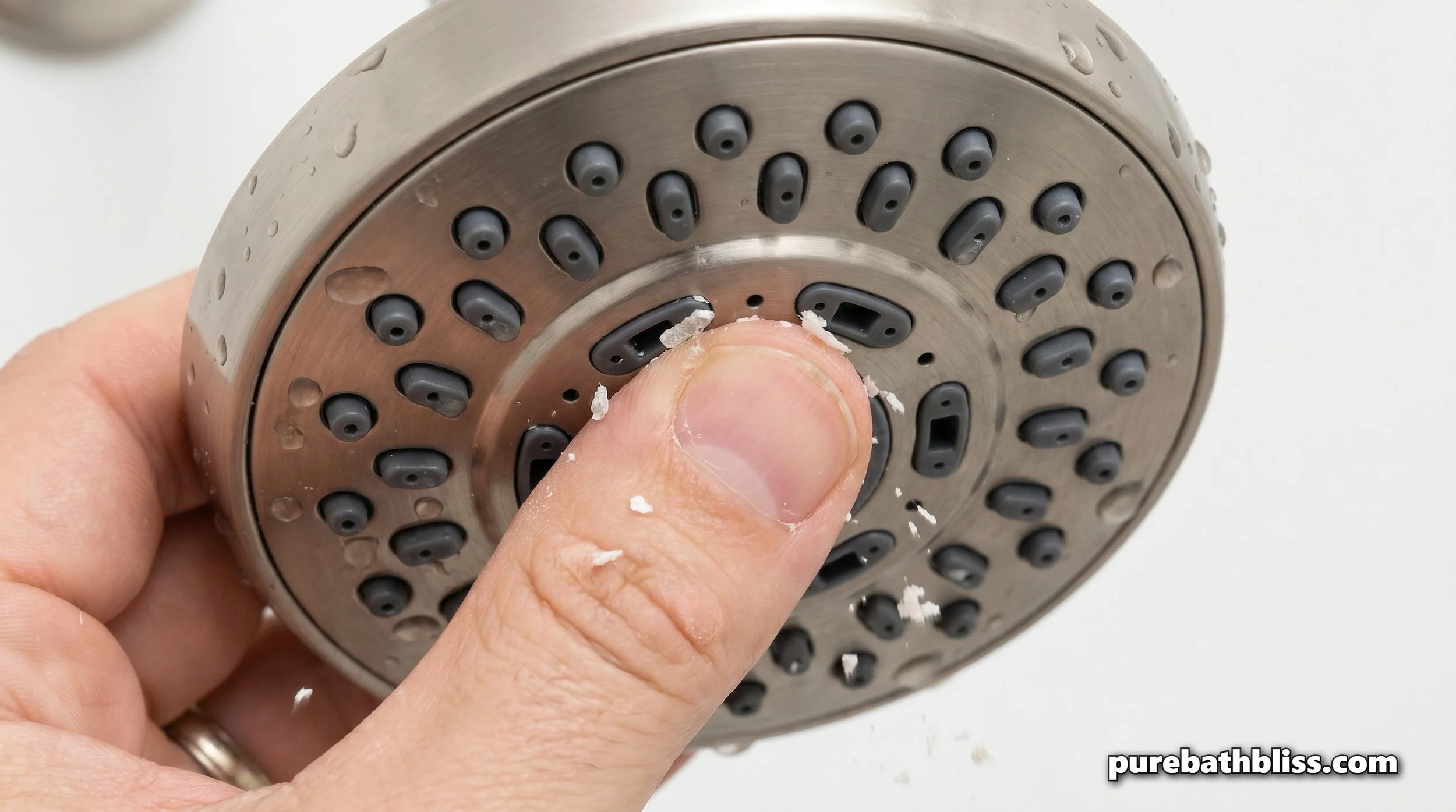
Rub-Clean Nozzles: When purchasing, look for showerheads with silicone rubber nozzles. You can simply rub your thumb over them to break up any mineral deposits. This is a much safer maintenance routine than using harsh chemicals that could damage your newly replaced toilet seat or other nearby finishes.
6. Installation: The 5-Minute Upgrade
You don't need a plumber to install a new showerhead. It is a straightforward "Infrastructure" update that takes less time than a sink recaulking project.
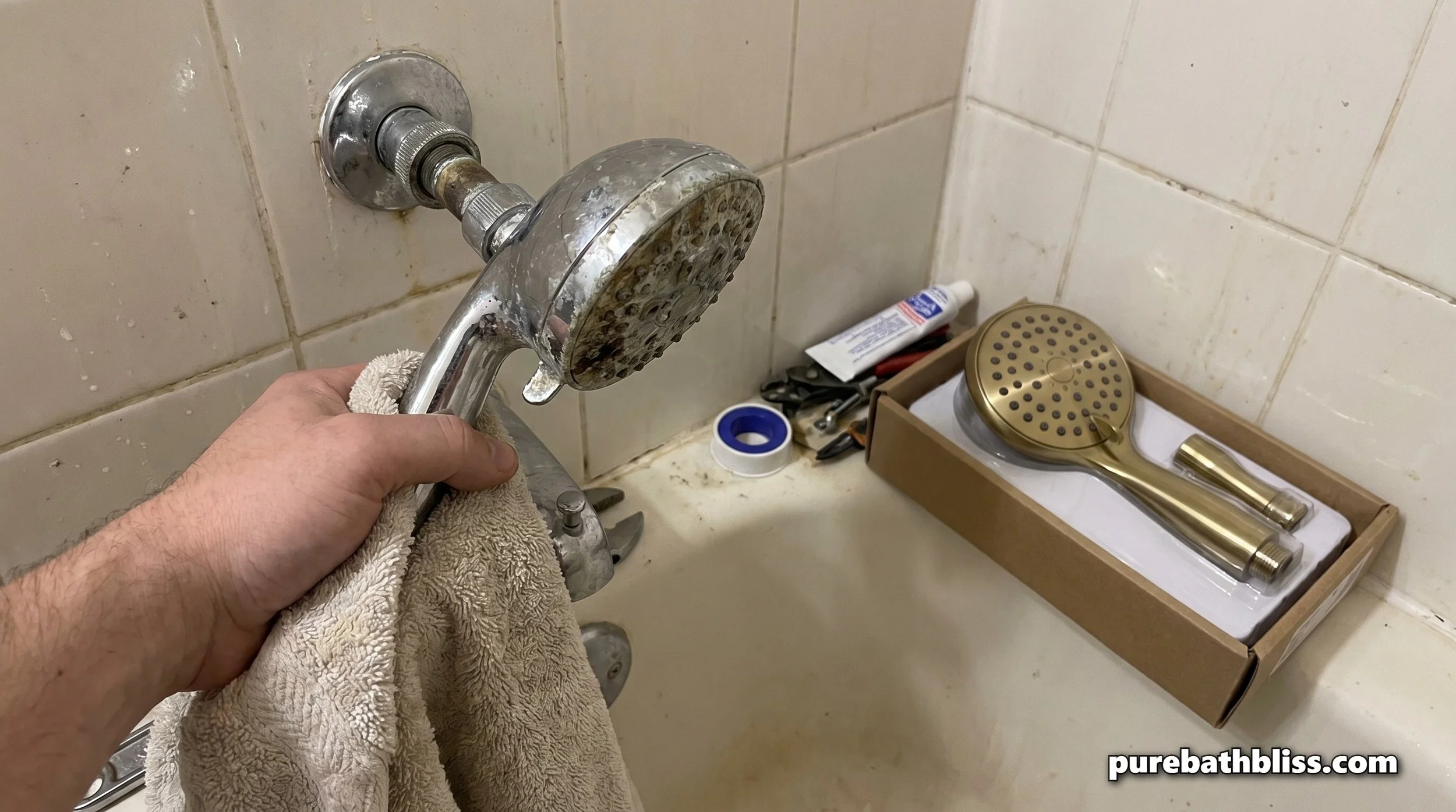
Remove the Old Head: Use an adjustable wrench to loosen the old head. Wrap a rag around the shower arm first to avoid scratching the metal.
Clean the Threads: Use an old toothbrush to scrub away any old plumber's tape from the pipe threads.
Apply New Tape: Wrap Teflon tape (Plumber’s tape) around the threads in a clockwise direction. Three full wraps are usually enough to ensure a watertight seal.
Hand-Tighten: Screw on the new showerhead by hand until it is snug. Give it one final 1/4 turn with the wrench to lock it in.
Summary: The Low-Flow Showerhead Checklist
Look for WaterSense: Ensure the fixture is certified for 2.0 GPM or less.
Air Injection is Key: Choose models that mix air with water for a "High Pressure" feel.
Check for Silicone Nozzles: Makes mineral maintenance effortless.
Match Your Finishes: Coordinate with your brushed brass or matte black hardware.
Use Teflon Tape: Essential for a leak-free "Infrastructure" connection.
Avoid the "Mist": Look for laminar flow or air-induction to keep the water hot.
Monitor Your Savings: Check your water bill after three months to see the impact of your new "Dry Zone" philosophy.
Upgrading to a high-efficiency showerhead is a rare "win-win" in home maintenance. You get to enjoy a more powerful, spa-like shower while simultaneously reducing your environmental footprint and utility costs. It is the perfect finishing touch for a high-performance bathroom.