The "Toss It" Guide: When to Throw Out Makeup, Meds, and Sunscreen (Before They Hurt You)
We all have that drawer. You know the one. It’s the bathroom graveyard filled with half-used eyeshadow palettes from three years ago, a sticky bottle of sunscreen from a beach trip in 2019, and a prescription cream you stopped using but felt too guilty to throw away.
It’s easy to think that because these products are sealed in plastic or glass, they last forever. But the reality is that bathroom products—especially organic and natural ones—have a shelf life. Using them past their prime isn't just ineffective; it can be dangerous. Old makeup harbors bacteria that cause pink eye, expired sunscreen offers zero protection against burns, and degraded skincare can turn into a skin irritant.
Consider this your permission slip. This guide is your ultimate New Year detox for your bathroom cabinet. We will teach you how to decode those tiny symbols on the back of the bottle, the exact timelines for tossing common items, and the simple "Sharpie Hack" that ensures you never guess again.
Decoding the Symbols: The Secret Language of Labels
Before you start throwing things away, you need to know what you’re looking at. Most people search for a printed date (like on a milk carton), but beauty products use a different system entirely.
The PAO Symbol (Period After Opening)
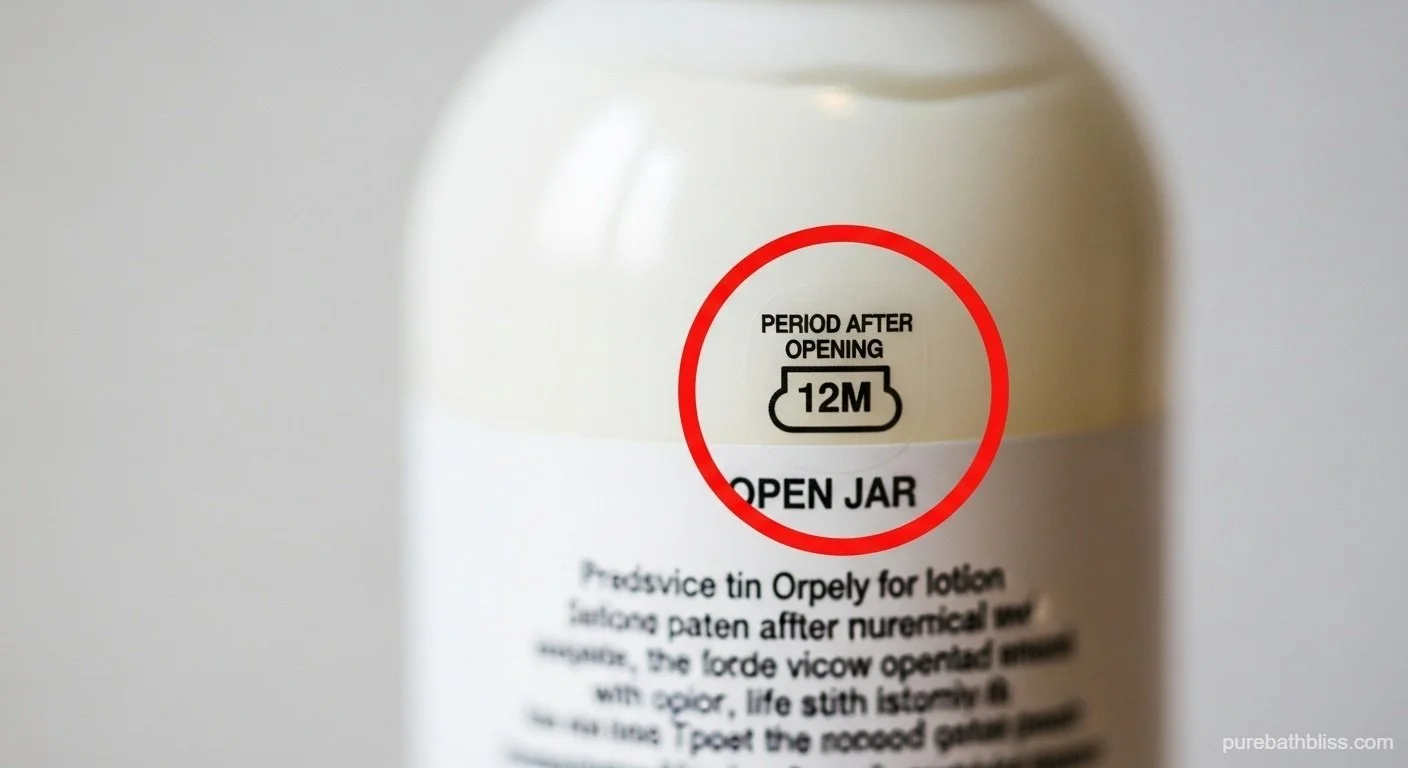
Look at the back of your shampoo, moisturizer, or foundation. Do you see a tiny icon of a jar with an open lid? Inside that jar is a number followed by the letter "M" (e.g., 6M, 12M, 24M).
This is the Period After Opening symbol.
What it means: An unopened product might last for 2–3 years on the shelf. But the moment you break that seal and introduce oxygen and bacteria, the clock starts ticking.
12M: Means it is safe for 12 months after opening. On month 13, the preservatives may fail, and bacteria can bloom.
The "Sniff & Look" Test (For Natural Products)
If you subscribe to the Pure Bath Bliss lifestyle, you likely buy organic, preservative-free products. These expire much faster than their synthetic counterparts because they lack parabens.
Smell: Does it smell like crayons, old oil, or vinegar? That means the oils have gone rancid. Toss it immediately.
Texture: Has the oil separated from the cream? Is it clumpy? Shake it; if it doesn't re-emulsify, the formula has broken down.
The Timeline: What Lasts How Long?
If you can't find a date or a symbol, follow these general safety guidelines.
The High-Risk Zone: Eyes (3–6 Months)
Your eyes are the most vulnerable mucous membranes in your body.
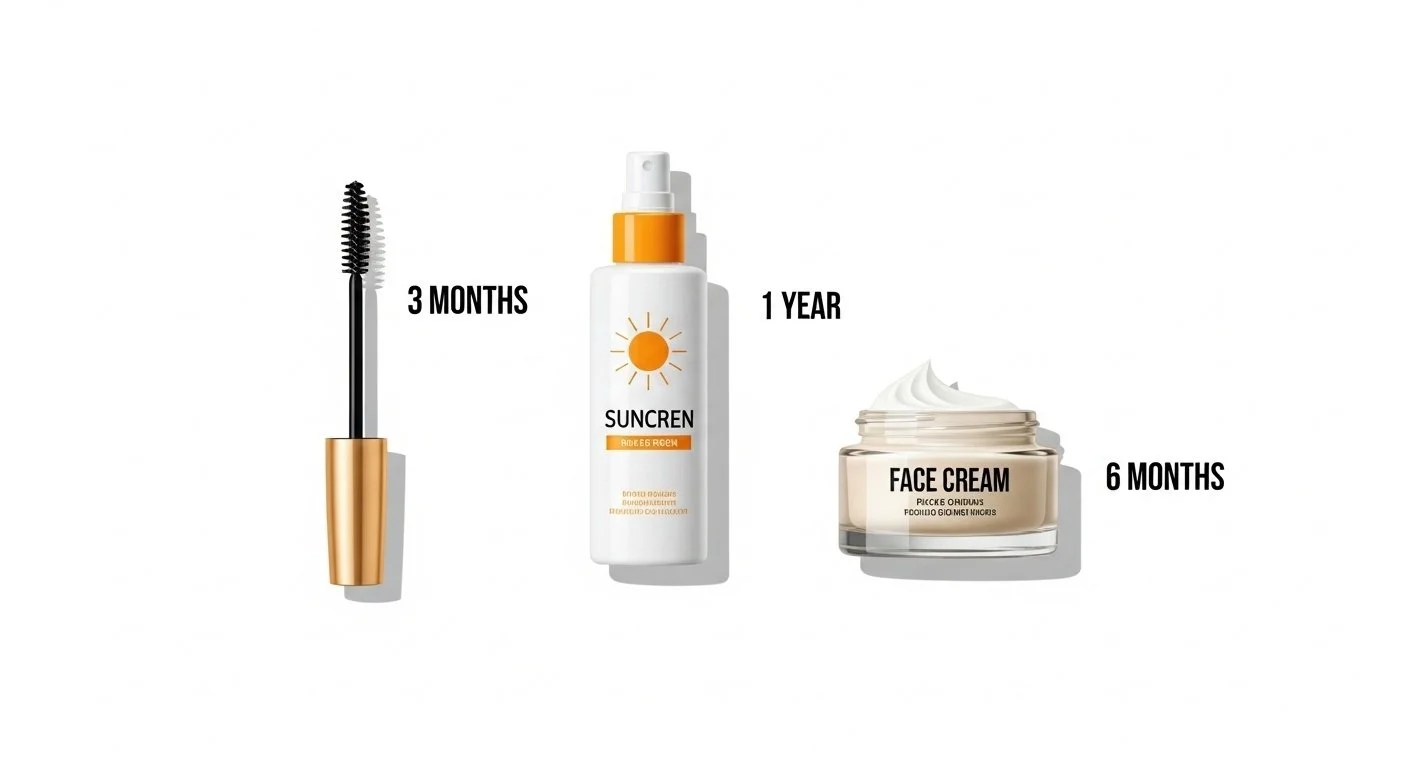
Mascara & Liquid Liner: 3 Months. The pumping action of the wand pushes air and bacteria into the dark, wet tube—a perfect breeding ground for pink eye.
Pencil Eyeliner: 1 Year. (Sharpening removes the dirty layer, so they last longer).
The Safety Zone: Sunscreen (1–2 Years)
Chemical Sunscreens: These degrade over time. Using expired sunscreen is like wearing nothing at all—you will burn.
Mineral Sunscreens (Zinc): These are more stable, but the suspension liquid can separate. Always check the printed expiration date on the crimp of the tube.
The Organic Zone: Natural Skincare (6 Months)
Face Creams & Serums: Because you dip your fingers into jars, you introduce bacteria daily. Without heavy preservatives, mold can grow invisibly. Use within 6 months.
Body Oils: Can last up to a year, but watch for rancidity (the "old oil" smell).
The Hygiene Zone: Tools
Toothbrush: 3 Months. Frayed bristles damage gum tissue and harbor bacteria.
Loofahs: 3–4 Weeks for plastic, 6 Weeks for natural. (See our Plastic Loofah Guide for more).
Medicine Cabinet Safety
Your medicine cabinet is not a time capsule. Keeping expired medication gives a false sense of security.
The Truth About Expiration Dates
While some solid pills (like ibuprofen) might just lose potency over time, liquid medications (like cough syrup or eye drops) can change chemical composition.
Antibiotics: Never keep leftovers. If they are expired, they can be dangerous or promote antibiotic resistance if taken in weak doses.
Eye Drops: Once opened, the preservatives evaporate. Discard 28 days after opening to prevent infection.
Responsible Disposal
Never flush old medicine down the toilet! It contaminates the water supply.
For a complete guide on how to dispose of tricky bathroom items—from medicine to razor blades—safely and responsibly, see our guide: Zero-Waste Recycling Guide: How to Dispose of Razor Blades, Floss, and Empty Tubes Safely.
The "Sharpie Hack": Never Guess Again
How are you supposed to remember if you opened that face cream in January or March? You don't. You outsource that memory.
The Protocol
Keep a fine-point black permanent marker in your bathroom vanity drawer.
Buy it.
Open it.
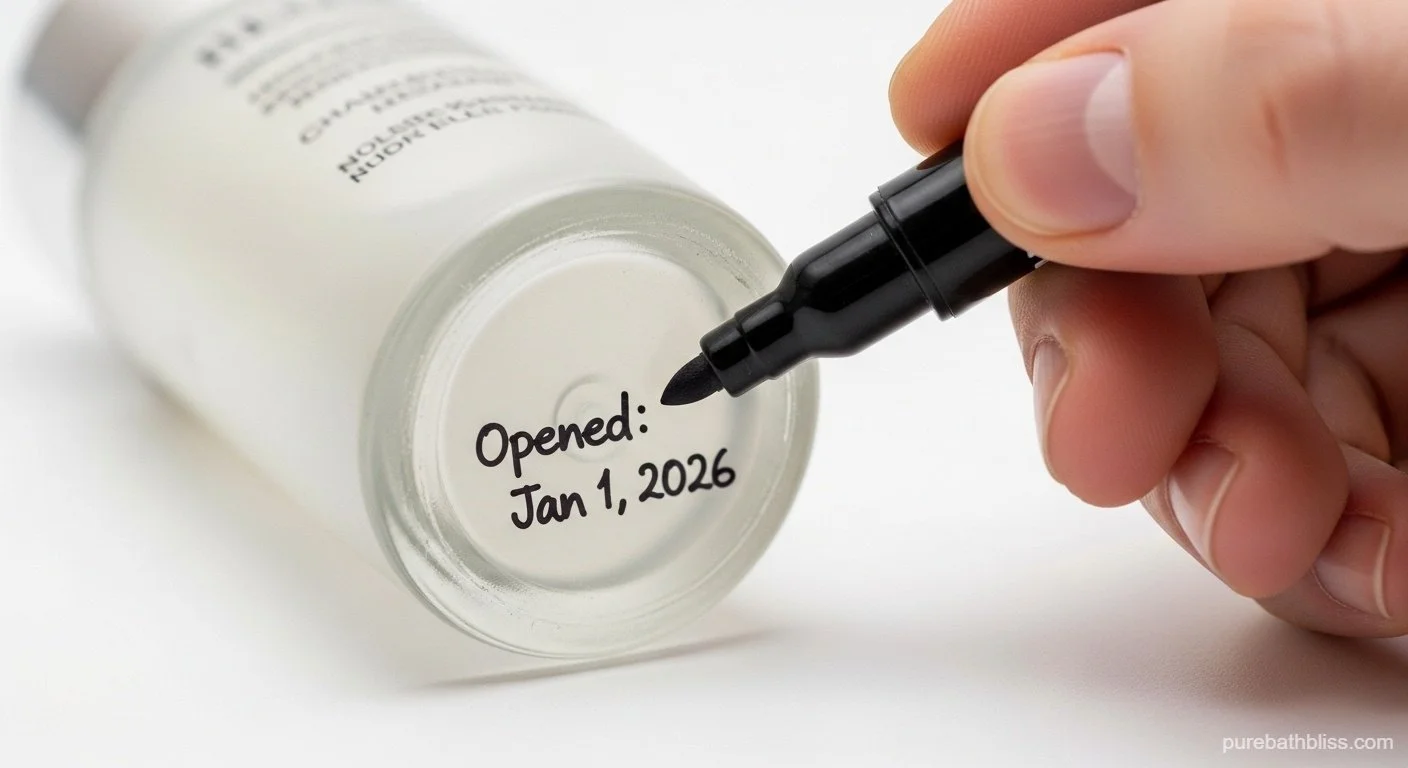
Write the Date. Immediately write the current date (e.g., "Jan '25") on the bottom or back of the bottle.
Next time you pick it up, you simply look at the bottom, check the PAO symbol (e.g., "12M"), and do the math. If it's January 2026, it goes in the trash. No guilt, no guessing.
Conclusion
A decluttered cabinet is a safer cabinet. By clearing out the expired, the separated, and the questionable, you are making space for products that actually work and support your health.
This New Year, give yourself the gift of a fresh start. Grab a trash bag, turn on some music, and be ruthless. Your skin will thank you.
Now that your cabinets are purged and safe, it's time to organize what's left! Build your dream system with our master guide: The Zero-Waste Sanctuary: The Ultimate Guide to Decluttering and Organizing an Organic Bathroom.