The Power of the Powder Room: More Than Just a Half-Bath
If you’ve ever walked into a small, windowless, yet breathtakingly decorated bathroom on the main floor of a house, you’ve experienced the magic of a powder room. In technical terms, it’s a "half-bath", a room containing only a toilet and a sink. But in the context of a high-end Sustainable Sanctuary, it is so much more.
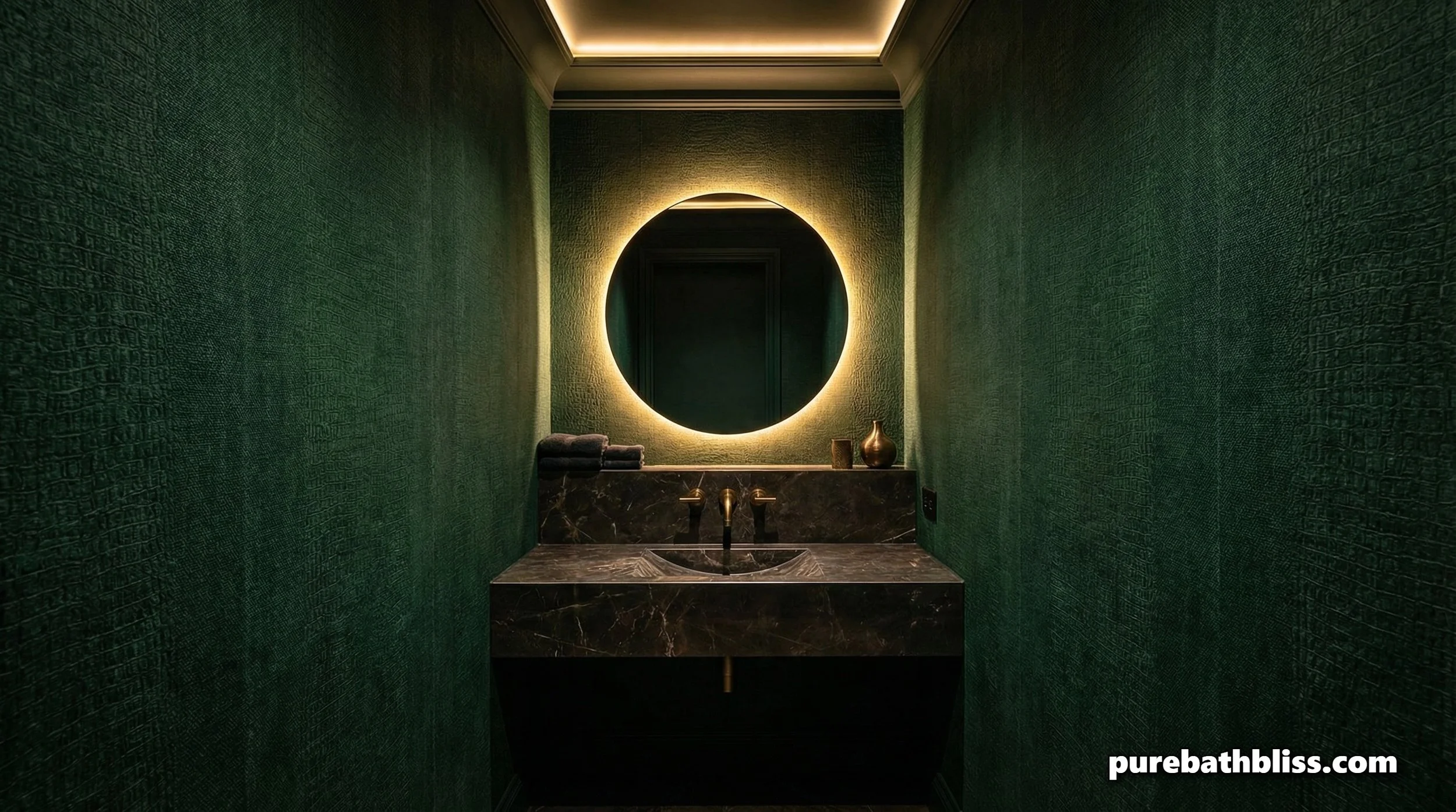
As a builder, I tell my clients that the powder room is the only place in the home where you can, and should, break all the design rules. Because there is no shower or tub, you don't have to worry about the massive steam and humidity issues we discussed in our Indoor Cold Plunge Guide. This is your chance to go bold, experiment with texture, and create a "jewelry box" for your guests.
1. The Elegant History of "Powdering"
Why do we call it a "powder room" instead of a bathroom or a toilet? The term is a linguistic relic from the 18th century, a time when social status was measured by the height and whiteness of your wig.
Guests at high-society balls required a private, discreet space to "powder" their wigs and faces without the mess of the powder getting on their clothes or the host’s furniture. These original rooms were often tiny, tucked-away closets where a servant would help a guest freshen up. When indoor plumbing became standard in the late 19th century, the name stuck, but the function evolved into a convenient guest restroom located near the social hubs of the home, the foyer or the dining room.
2. Powder Room vs. Full Bath: The Carpenter's Breakdown
As a carpenter, I categorize rooms by their "wet load" and the structural demands they place on the home's "envelope."
The Full Bath: This is a high-moisture zone. It requires heavy-duty ventilation (at least 50-80 CFM), waterproof flooring, and usually features four fixtures: toilet, sink, tub, and shower. The infrastructure must handle high volumes of steam and water runoff.
The Powder Room: This is a dry-use zone. It only has two fixtures: toilet and sink. Because there is no shower, we aren't fighting the same mold and mildew battles. This structural freedom allows us to use materials that would be "suicidal" in a full bath, such as delicate hand-painted wallpaper, unsealed wood vanities, and ornate mirrors that would otherwise warp or de-silver from humidity.
3. The Builder’s Rules for Placement
If you are adding a powder room to your home, location is your most valuable asset. As a parent of four, I know you want it close enough to the action to be useful, but private enough to avoid "acoustic awkwardness."
The Foyer Rule Placing a powder room near the front entrance is the gold standard. It allows guests to freshen up as they arrive or depart without entering the private living areas or seeing the "kid-chaos" that often populates the family bathrooms upstairs.
The Under-Stair Secret For many older homes, the space under the staircase is a dead zone. As a builder, I love converting these into powder rooms. It requires clever plumbing routing (often using a "rear-discharge" toilet), but it’s a massive space-saver that adds significant value to the property.
The Acoustic Barrier Never share a wall between a powder room and a dining room without Sound-Dampening Insulation (like Roxul). Nobody wants to hear the "mechanicals" while they are enjoying a dinner party. I recommend "double-layering" the drywall or using a solid-core door to ensure total privacy for your guests.

4. Design for the "Wow" Factor
Because the square footage is so small (usually 15 to 30 square feet), you can afford high-end materials that would be budget-prohibitive in a large primary bath.
The Vanity: Forget the bulky floor-mounted cabinets. Use a floating stone shelf or a vintage furniture piece converted into a sink. This exposes the floor, which trick the eye into thinking the room is much larger than it is.
The Lighting: Avoid harsh, recessed "can" lights. They create shadows under the eyes. Instead, use side-mounted wall sconces or a dramatic pendant light. Good lighting in a powder room should be flattering; you want your guests to look their best when they check the mirror.
The Walls: This is the place for that expensive, bold-patterned wallpaper. Since there’s no steam to peel the adhesive, a high-quality paper will last for decades.
5. Maintenance for a "Pure" Sanctuary
Even though it is a dry room, hygiene and "freshness" are the two pillars of a successful powder room.
Towel Hygiene: As we noted in our guide on How Often to Wash Bath Towels, guest towels in a powder room should be changed frequently. I recommend using high-quality linen hand towels; they are naturally antimicrobial and dry faster than thick terry cloth.
The Flush Power: Since these are often located near foyers and dining rooms, invest in a "quiet-close" lid and a high-efficiency, low-noise toilet. A 1.28-gallon-per-flush model will save water while keeping the "sound signature" of the room low.
6. Summary: The Half-Bath Matrix
| Benefit | Builder’s Perspective | Parent’s Perspective |
|---|---|---|
| Privacy | Protects the "bones" of private baths. | Keeps guests out of the "kid-chaos" zones. |
| Value | Adds roughly 10% to home resale value. | Essential for hosting large family gatherings. |
| Design | Low-risk area for bold material testing. | A small room that is actually easy to keep clean! |
Conclusion: Why Your Home Needs a Powder Room
We don't just look at the fixtures; we look at the flow. A powder room isn't just a place to wash hands; it’s a structural asset that defines the hospitality of your home. It’s where you can show off your personality without compromising the durability of your daily-use bathrooms.
Whether you're retrofitting a space under the stairs or designing a new build, treat your powder room as the "jewelry box" of your sanctuary.