The Towel Ritual: How Often Should You Really Wash Your Bath Towels?
Most homeowners view towel laundry as a chore based on the "sniff test." The logic is simple: if it smells fine, it’s clean, right? Not exactly. As a builder, I deal with moisture and microbial growth every day, and I can tell you that by the time a towel develops that distinct "musty" odor, it has already become a thriving colony for bacteria and fungal spores.
In a household with four kids, the bathroom is the most high-traffic "wet zone" in the house. If you aren't managing your towels correctly, you aren't just reusing a dirty cloth, you are reintroducing moisture and microbes into your home's air and back onto your family's freshly cleaned skin.
1. The Biology of the "Musty" Smell
To understand why we wash, we have to understand what is happening in the fibers. That "towel funk" isn't just a smell; it is the off-gassing of biofilm.
Every time you dry off, you are performing a mechanical exfoliation. Your towel catches millions of dead skin cells, body oils, and residual moisture. In the warm, damp environment of a bathroom, this is the perfect "petri dish." Bacteria like Staphylococcus aureus and various fungal spores thrive in these conditions. When they begin to break down the skin cells trapped in the fabric, they release the volatile organic compounds (VOCs) that we recognize as that "sour" smell.
2. The Magic Number: 3 to 4 Uses
The consensus for maintaining a healthy home ecosystem is to wash your bath towels after 3 to 4 normal uses.
The "Pure" Rule: If you shower daily and your bathroom has proper ventilation, a fresh towel every 3 to 4 days is the standard.
The "Parent" Reality: For children, the rule changes. Kids often don't rinse as thoroughly as adults, leaving more "food" for bacteria on the towel. They also tend to leave towels in a heap on the floor. For the under-12 crowd, a fresh towel every 2 uses is a safer bet for preventing skin irritations like eczema or "gym itch."
3. When the Rules Change: The "Instant Wash" Scenarios
In a Sustainable Sanctuary, we treat "abnormal moisture" or high biological load as a threat. There are times when a towel should never be used a second time:
The Sick Room: If a family member is dealing with a cold, flu, or skin condition, their towel is a primary vector for cross-contamination. These go straight to the wash after every single use.
The "Gym" Factor: High-intensity sweat contains a higher concentration of salts, minerals, and urea than standard shower water. These elements break down the fibers faster and attract bacteria more aggressively.
The Cold Plunge Exit: If you are using an indoor cold plunge, your body's metabolic response is heightened. The towels used for the "post-plunge" dry absorb a significant amount of concentrated sweat and skin oils as your body rewarms. Rotate these after every session.
4. The Infrastructure of Drying: Airflow is Everything
As a carpenter, I care about evaporation rates. A towel that stays damp for 8 hours is a failure of the room’s infrastructure.
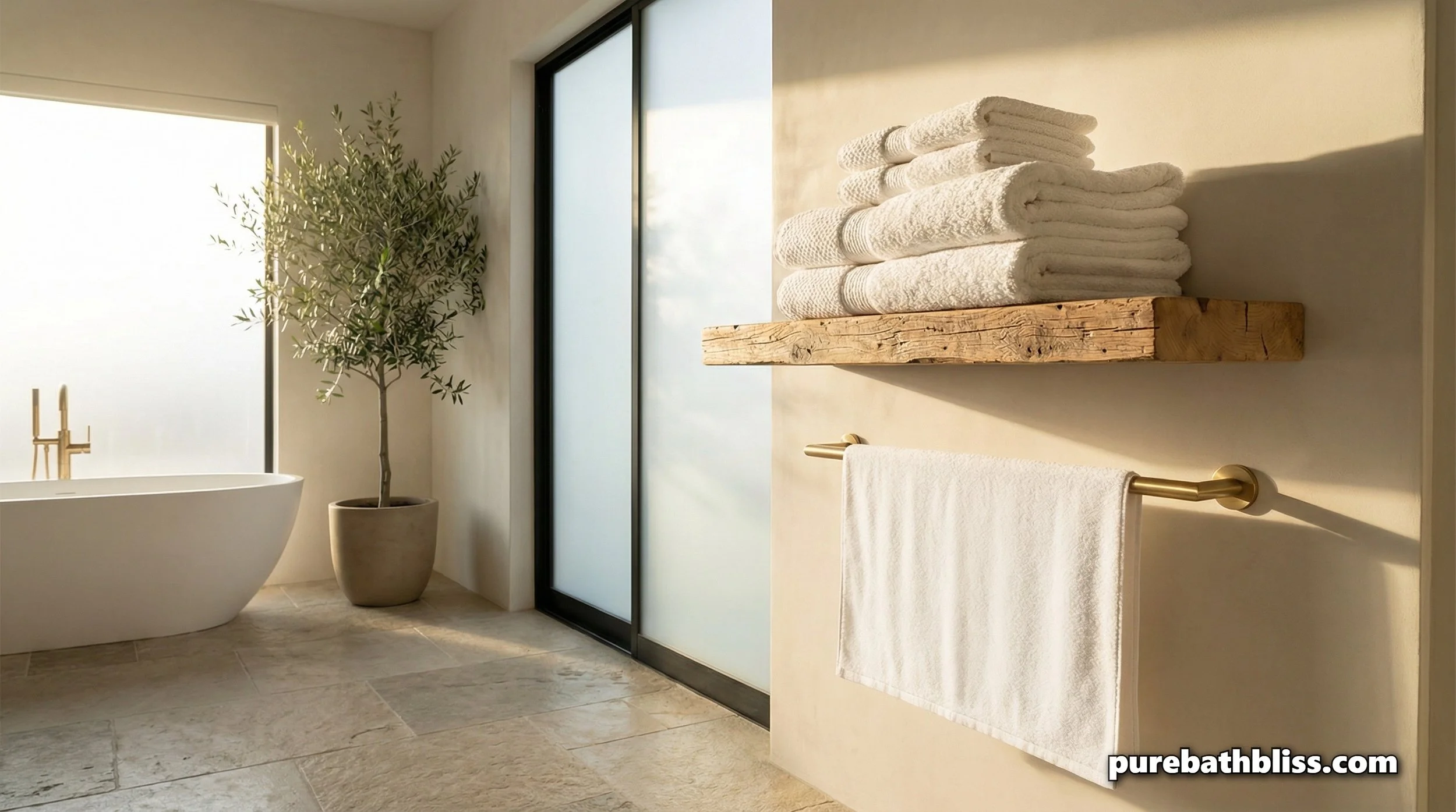
Hooks vs. Bars: I almost never recommend hooks in a Sustainable Sanctuary. When you hang a towel on a hook, it creates deep, overlapping folds. Air cannot circulate into those "pockets," trapping moisture against the wall. This leads to mold growth on the drywall and a "sour" towel by morning. Always use a towel bar and spread the towel completely flat to maximize surface area.
The Fan Test: If your towels are still damp 4 hours after a shower, your exhaust fan is failing. This excess humidity doesn't just ruin the towels; it causes your paint to peel, your vanity to swell, and your grout to crumble.
The Heated Rail: If you live in a high-humidity climate (like the Pacific Northwest or the South), a Heated Towel Rail is a structural investment. It ensures the towel dries faster than the bacteria can bloom.
5. The "Sanctuary" Laundry Ritual
To keep towels absorbent and "Pure," you must stop using traditional laundry products that actually ruin the fabric's engineering.
The Fabric Softener Lie: Most "Spring Fresh" softeners are made of silicone-based oils (quats) that coat the fibers. While this makes the towel feel soft to the touch, it makes the fibers hydrophobic (water-repellent). A towel that can't absorb water is useless.
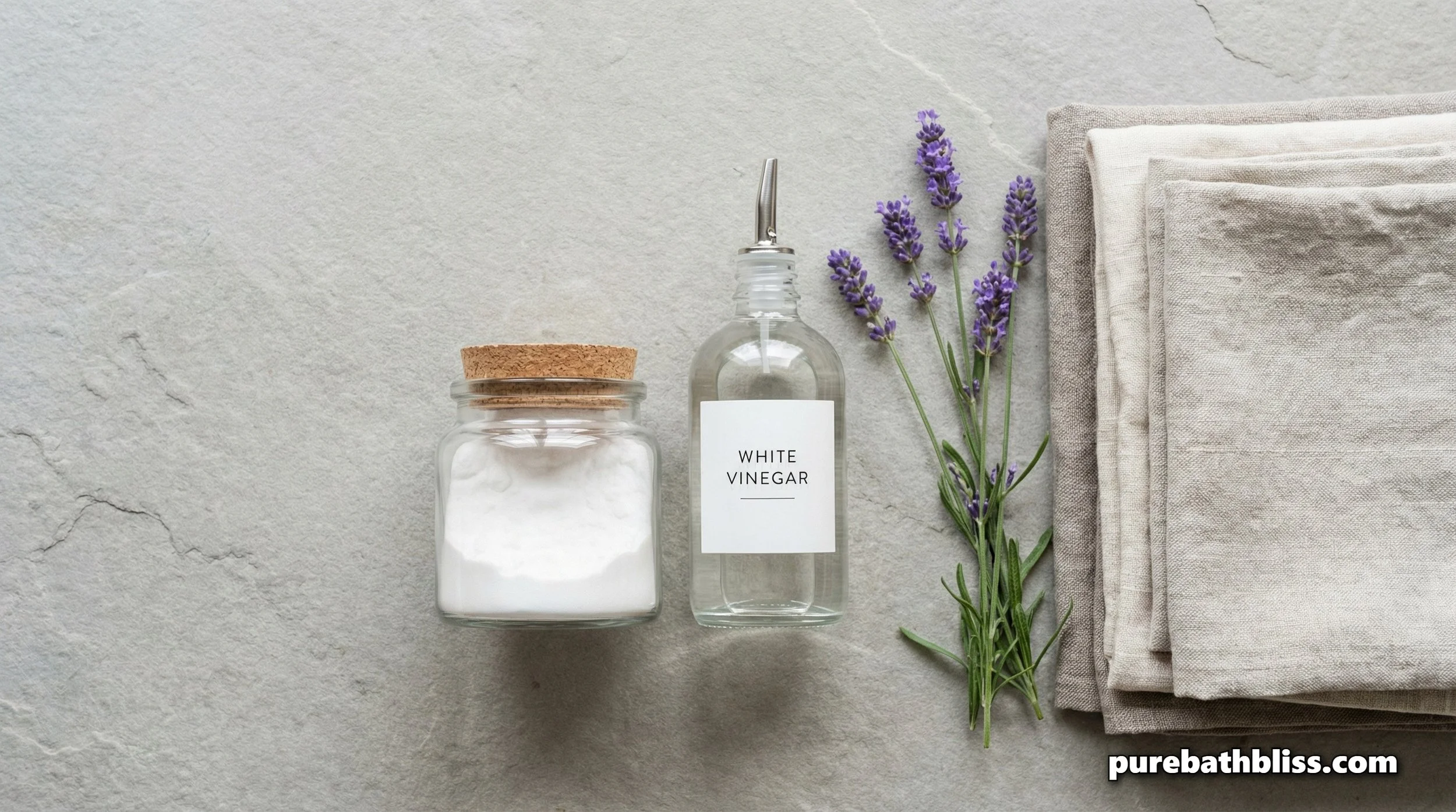
The Vinegar Reset: Once a month, wash your towels with one cup of white vinegar and no detergent. This strips away the mineral buildup from hard water and the soap residue that makes towels feel "crunchy."
The Baking Soda Boost: For towels that have a persistent smell, add 1/2 cup of baking soda directly into the drum. It neutralizes the acids in the bacterial biofilm, restoring the towel's natural "thirst."
6. Fiber Selection: Why Material Matters
Not all towels are created equal. If you are building a non-toxic home, your fiber choice dictates your wash frequency.
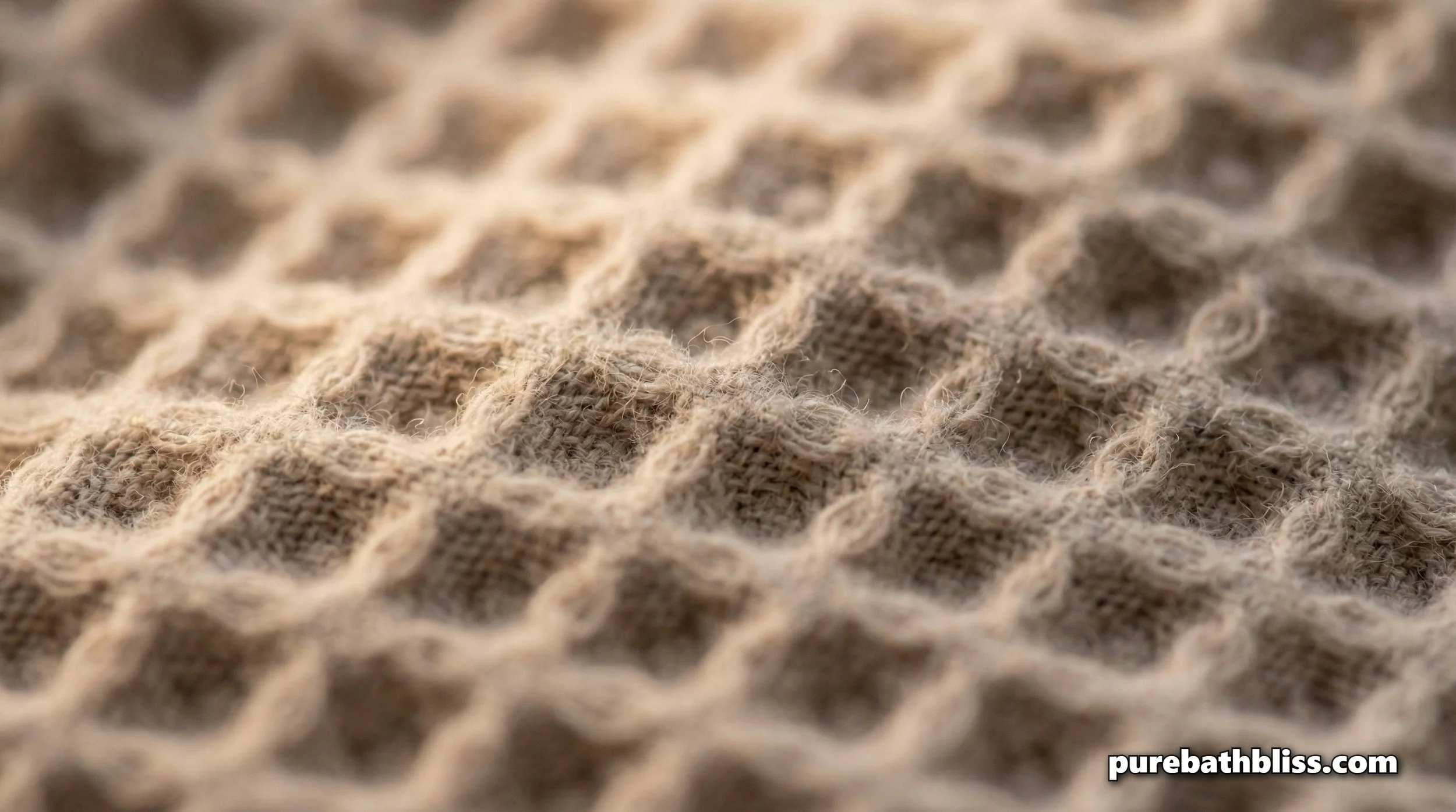
100% Organic Cotton: The gold standard for absorbency. It’s breathable and durable, but it takes longer to dry than synthetic blends.
Bamboo/Linen Blends: Bamboo is naturally antimicrobial. Linen is the fastest-drying natural fiber on the planet. A blend of these two is the "high-performance" choice for a Sustainable Sanctuary because it discourages bacterial growth even in humid conditions.
Avoid Microfiber: Microfiber is essentially plastic (polyester/polyamide). It traps bacteria in its "hooks" and is notoriously difficult to get truly clean. It also releases microplastics into our water systems every time you wash it.
Conclusion: Protecting the Fiber and the Family
In a house of six, the laundry never truly stops. But by following the 3-use rule and ensuring your bathroom's airflow is optimized, you can extend the life of your expensive organic towels and protect your family from the hidden microbes of a damp bathroom.
A towel isn't just a bathroom accessory; it’s a tool for health. Treat it with the same respect you give any other part of your home’s infrastructure.
The Towel Health Checklist:
Wash Frequency: Every 3–4 uses.
Storage: Flat on a bar, never on a hook.
Cleaning: Vinegar reset every 4 weeks.
Replacement: Invest in [100% Organic Bamboo or Cotton] every 2 years or when the "loops" begin to thin.