The 120° Rule: Why I Lowered the Hot Water Temp in My Kids' Bathroom
As a builder, I deal with "tolerances" every day. Whether it's the 1/16th of an inch on a miter cut or the weight-bearing load of a floor joist, accuracy matters. But when it comes to the safety of my four children, the tolerance for error is absolute zero.
Most homeowners don't realize that their water heater is likely sitting at a factory-default temperature that can cause a third-degree burn on a child’s skin in less than three seconds. Lowering your water temperature isn't just about safety; it’s about creating a Sustainable Sanctuary where your children can learn independence, brushing their teeth or washing their hands, without the risk of a trip to the emergency room.
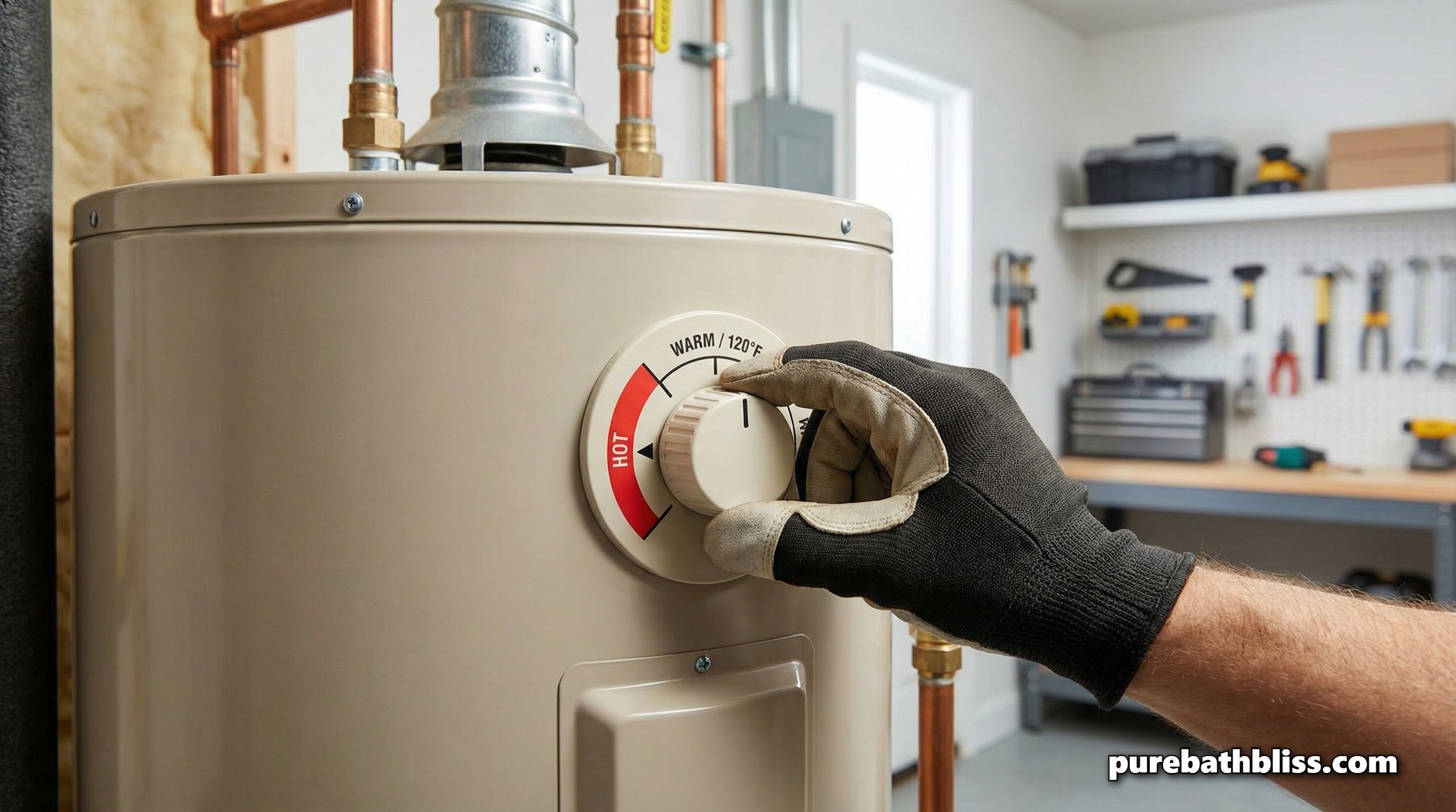
1. The Science of the "Scald"
Why is 140°F the industry default? Historically, it was designed to ensure that dishwashers could sanitize grease and bacteria effectively. However, for a child’s skin, which is thinner and has a higher water content than an adult's, 140°F water acts like a weapon.
The "Safety Window" of water temperature is surprisingly narrow:
At 140°F: A third-degree burn occurs in 3 seconds.
At 130°F: A third-degree burn occurs in 30 seconds.
At 120°F: It takes over 5 minutes of constant exposure to cause a serious burn.
That 5-minute window is the "Parent’s Safety Buffer." It gives you time to react if a toddler playfully turns the "Hot" handle while you're reaching for a towel. By setting the limit at 120°F, you are mechanically engineering safety into your home.
2. The Builder’s Dilemma: Legionella vs. Scalding
As a carpenter and home-health advocate, I have to mention the "Infrastructure Law": Legionella bacteria (which causes Legionnaires' disease) can survive and even thrive in stagnant water below 122°F. This is why many plumbers still recommend 140°F for the tank itself.
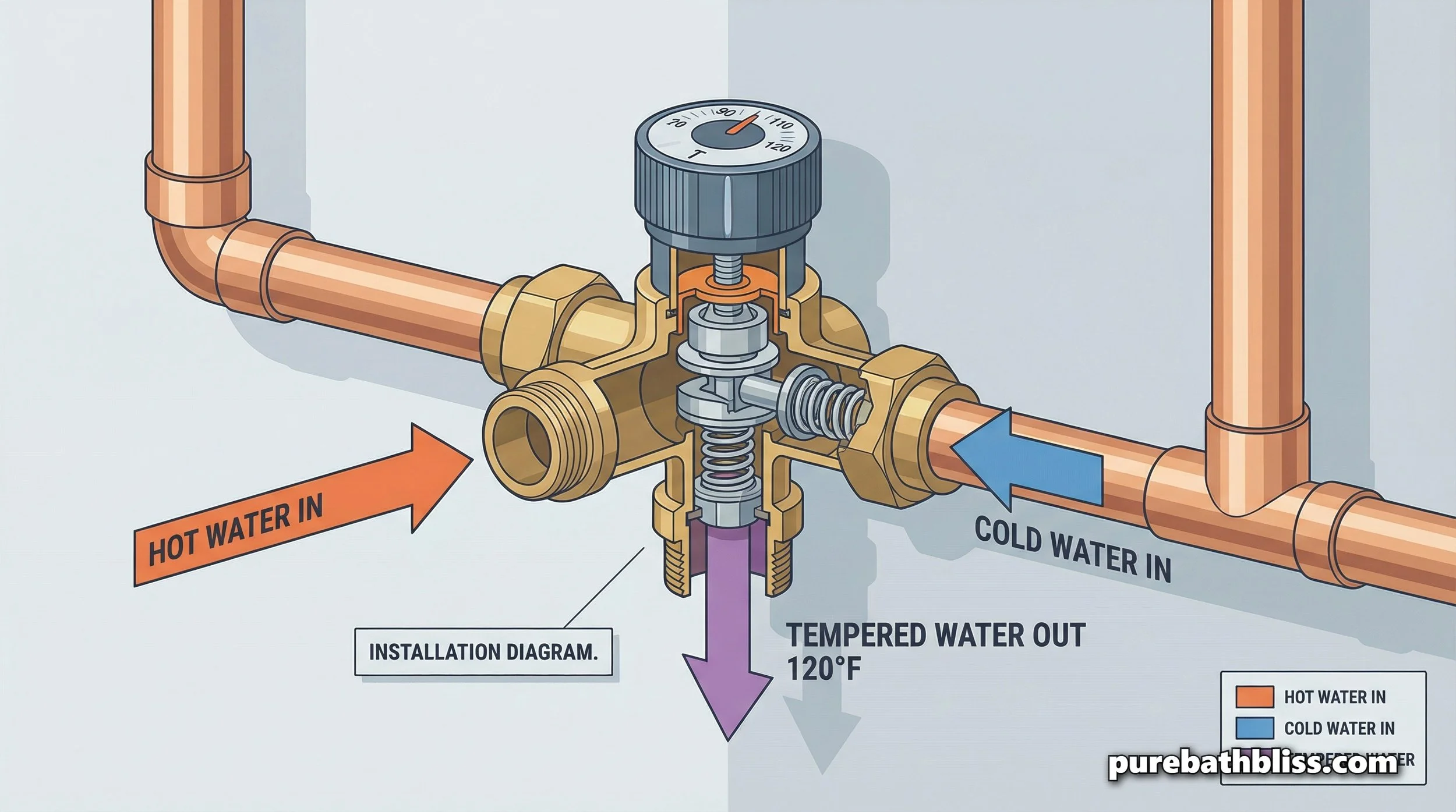
The "Pure" Solution: If you want the best of both worlds, bacteria-free water and scald-free children, you use a Thermostatic Mixing Valve (also called a tempering valve).
Keep your main tank at 140°F to kill all pathogens.
Have a plumber install the mixing valve on the hot water line leading to the kids' bathroom.
The valve automatically injects a small amount of cold water into the hot stream before it hits the tap, ensuring the water never exceeds 120°F at the faucet.
3. Financial & Sustainable Benefits
Lowering your temperature isn't just a safety play, it’s a "Pure" play for your wallet and the planet.
Energy Savings: The Department of Energy estimates that for every 10°F you lower the water temperature, you save 3–5% on your annual water heating costs. In a house of six, those savings add up to hundreds of dollars over the life of the heater.
Equipment Longevity: High temperatures accelerate mineral precipitation. At 140°F+, calcium and lime settle at the bottom of your tank twice as fast. By lowering the temp to 120°F, you slow down the "rust and crust" that eventually kills your heater, extending the life of your appliance by years.
4. How to Adjust Your Temperature: A DIY Ritual
As a homeowner, you can do this yourself in about 10 minutes.
For Gas Heaters:
Locate the dial near the bottom of the tank (it usually has a "Vacation" setting).
If it doesn't have degrees listed, look for the "Warm" or "Medium" setting.
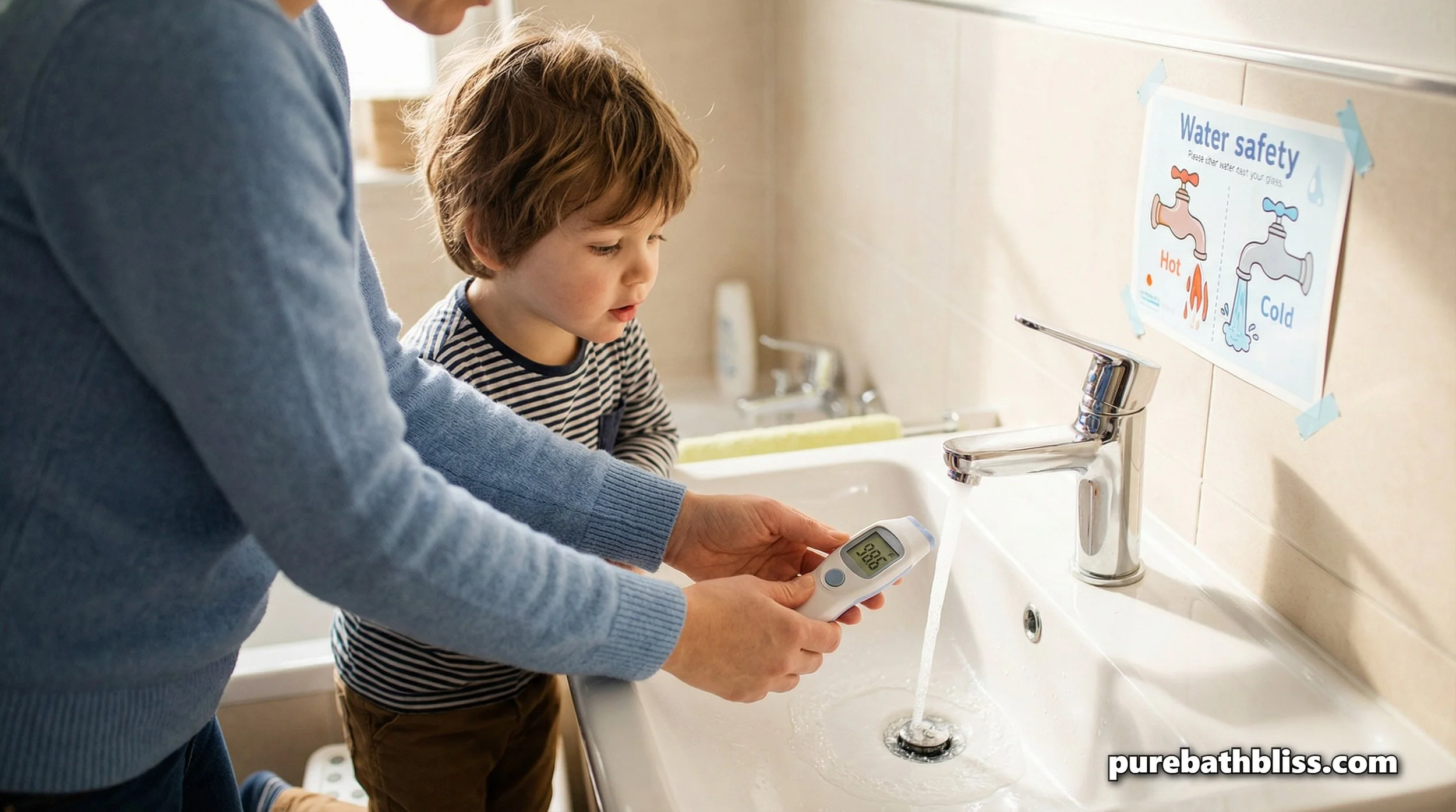
The Verify Step: Use a candy thermometer under the kitchen tap after letting the water run for 2 minutes to verify the actual "at-the-tap" temperature.
For Electric Heaters:
Safety First: Turn off the power at the circuit breaker.
Unscrew the two access panels on the side of the tank.
Peel back the insulation and use a flathead screwdriver to turn both thermostats (top and bottom) to 120°F.
Replace the insulation and panels before turning the power back on.
5. Summary: The Safety Matrix
| Action | Why It Matters |
|---|---|
| Set to 120°F | Prevents instantaneous 3rd-degree burns on sensitive skin. |
| Install Mixing Valves | Allows for high tank temp (pathogen kill) but safe tap temp. |
| Monthly Tap Test | Water heater thermostats can "drift" or fail over time. |
| Dishwasher Check | Ensure your dishwasher has a "booster heater" for sanitizing. |
6. The Psychology of Independence
When children know they can turn on the tap without being "zapped" by hot water, they develop a sense of agency over their hygiene. In our home, this adjustment was the first step in teaching our kids how to fill their own cups and wash their own faces. By removing the fear of the "Hot" handle, you turn a dangerous utility into a tool for growth.
Conclusion: Engineering Peace of Mind
Maintaining a Sustainable Sanctuary means looking at the invisible threats, like water temperature, and adjusting them to fit the needs of your most vulnerable residents. By following the 120° Rule, you are protecting your kids’ skin, extending the life of your plumbing, and saving money on your monthly energy bills.
It’s a small turn of a dial, but it’s a massive step toward a safer, more intentional home.
Now that you've engineered your water temperature for safety, learn how to keep your bathroom's air quality pristine with our guide on How to Cure Window Condensation with the Salt Bowl Method