What Is the Difference Between Men’s and Women’s Razors?
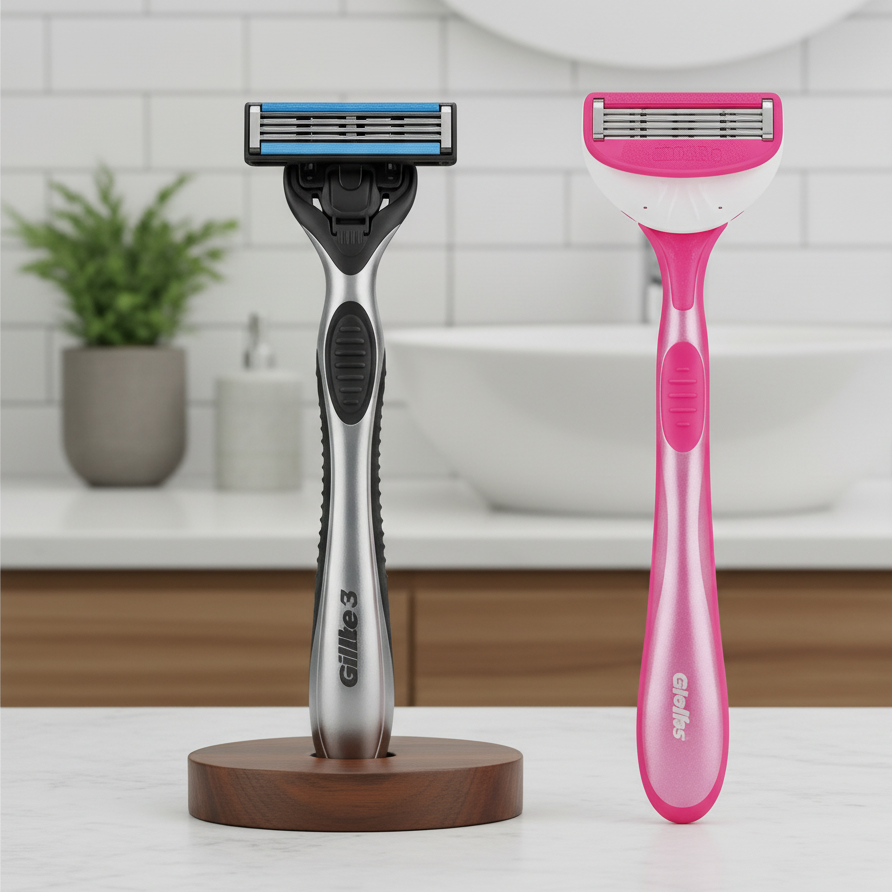
When shopping for razors, you’ll notice distinct sections for men’s and women’s products, but are they really that different? While the core function of razors—removing hair—is the same, men’s and women’s razors vary in design, blade configuration, and marketing to suit different shaving needs and preferences. Understanding these differences can help you choose the best razor for your bathroom routine, whether you’re shaving your face, legs, or other areas. This guide breaks down the key distinctions between men’s and women’s razors, focusing on functionality, ergonomics, and practicality for a hygienic, effective shave.
1. Blade Design and Configuration
Men’s razors are typically designed for facial shaving, which requires precision for dense, coarse hair. They often feature three to five closely spaced blades to cut thick facial hair in a single pass, minimizing irritation on the smaller, flatter surface of the face. Some men’s razors include a single-blade trimmer for shaping sideburns or beards, emphasizing accuracy.
Women’s razors, on the other hand, are built for larger, curved areas like legs, underarms, or the bikini line. They usually have four or five blades with a wider cartridge to cover more surface area, reducing shaving time. The blades are often paired with larger moisturizing strips containing aloe or shea butter to hydrate and soothe skin, as women are more likely to shave larger areas prone to dryness.
2. Handle Ergonomics
The handles of men’s and women’s razors reflect their intended use. Men’s razors often have shorter, heavier handles for better control during precise facial shaving. The grips are typically textured but minimal, prioritizing maneuverability for detailed work around the jawline or mustache area.
Women’s razors feature longer, lighter handles with non-slip, rubberized grips, ideal for shower use where wet hands need extra traction. These handles are often curved or angled to navigate contours like knees or ankles, making them easier to use over larger areas. The ergonomic design caters to women’s tendency to shave in wet, humid bathroom environments.
3. Moisturizing and Skin-Soothing Features
Women’s razors are more likely to include built-in moisturizing strips or gel bars infused with ingredients like aloe vera, shea butter, or hyaluronic acid. These features activate in water, providing lubrication to prevent nicks and razor burn on sensitive areas like the bikini line or underarms. This focus on hydration aligns with women’s razors targeting larger skin surfaces that may dry out during shaving.
Men’s razors, while sometimes including lubrication strips, prioritize blade sharpness and durability over moisturizing features. They’re designed for tougher facial hair, so the emphasis is on cutting efficiency rather than skin hydration, as men typically shave smaller areas with less risk of widespread dryness.
4. Aesthetic and Marketing Differences
Men’s razors are often marketed with sleek, utilitarian designs in colors like black, silver, or blue, emphasizing performance and precision. The packaging highlights features like blade technology or beard-trimming capabilities, appealing to functionality-focused consumers.
Women’s razors are marketed with softer, vibrant colors like pink, purple, or pastel shades, often paired with spa-like imagery to evoke a pampering experience. The packaging emphasizes skin smoothness, hydration, and ease of use, targeting women who view shaving as part of a broader self-care routine. This gendered marketing doesn’t affect performance but influences consumer perception and choice.
5. Price and Packaging
Women’s razors are often pricier due to the “pink tax,” a markup on products marketed to women, despite similar manufacturing costs. A five-blade women’s razor with moisturizing strips may cost more than a comparable men’s razor. Women’s razors are also more likely to come in multipacks with extra features like suction hooks or shower caddies, catering to bathroom storage needs.
Men’s razors, while sometimes cheaper, focus on blade refills or subscription models for cost savings. They’re less likely to include storage accessories, as facial shaving is often done at the sink rather than in the shower.
Can You Use Them Interchangeably?
Technically, yes—men’s and women’s razors can be used interchangeably. A woman can use a men’s razor for a precise leg shave, and a man can use a women’s razor for facial hair if they prefer the moisturizing features. The choice depends on your shaving needs, skin type, and preference for handle design or blade style. For hygiene, clean razors thoroughly after each use and store them in a well-ventilated bathroom to prevent bacterial growth.
Choosing the Right Razor for You
When selecting a razor, consider:
Shaving Area: Choose men’s razors for precision on small areas; opt for women’s razors for larger, curved surfaces.
Skin Sensitivity: Women’s razors with moisturizing strips are better for sensitive skin.
Environment: Women’s razors are ideal for shower use due to non-slip handles.
Budget: Compare prices to avoid the pink tax; men’s razors may offer similar performance for less.
By understanding these differences, you can pick a razor that enhances your bathroom routine, ensuring a clean, comfortable shave every time.