Summer Logistics: Managing the "Wet Textile" Explosion
During the summer months, the bathroom stops being a sanctuary and starts being a staging area. Between pool days and sprinkler sessions, your children are likely bringing a constant stream of soaking wet towels and swimsuits into the house. As a builder, my concern isn't just the clutter, it's the damage that standing water does to your microcement bathroom finish.
If you allow wet towels to pile up on the floor, the moisture gets trapped against the baseboards and vanity, creating a breeding ground for pink slime bacteria. To protect your "Internal Infrastructure," you need a system that prioritizes airflow and separation.
Here is how to survive the summer "Wet-Zone" without ruining your bathroom.
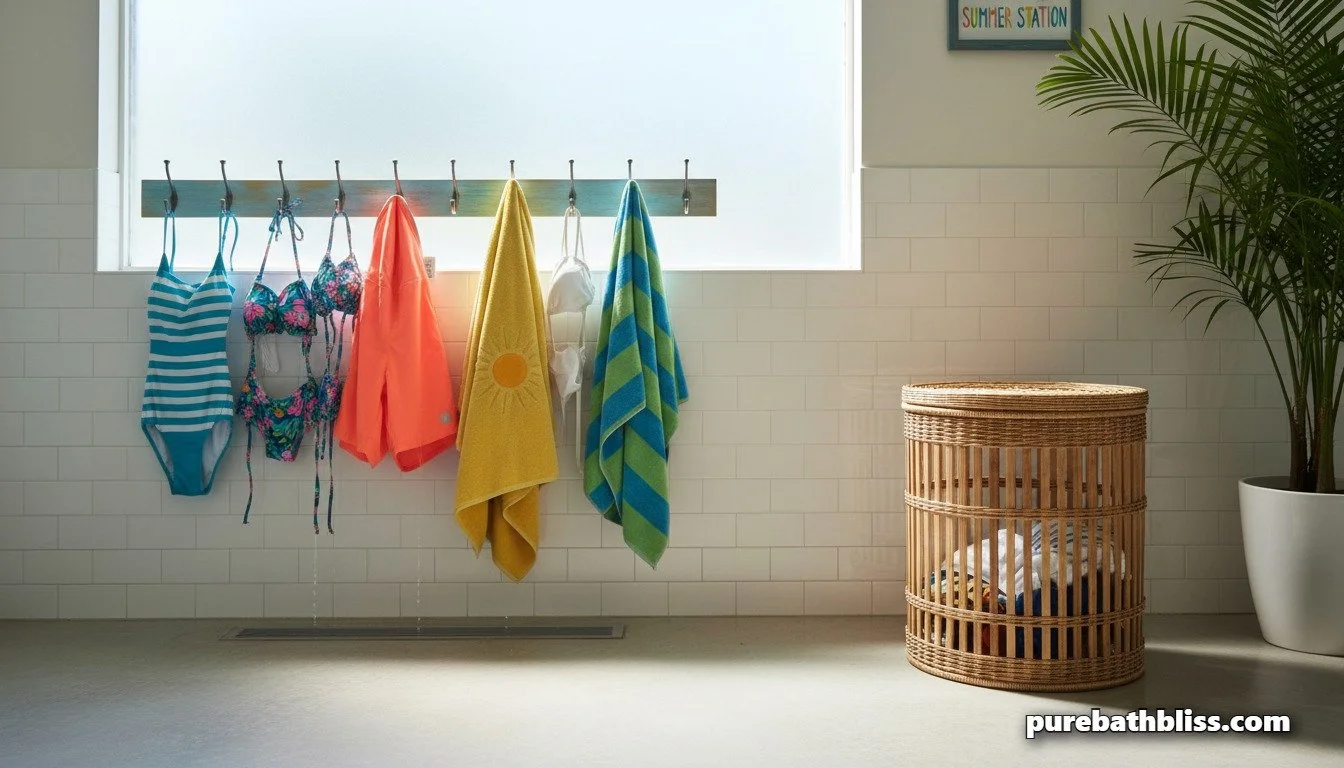
1. The "Vertical Dry" Command Center
The biggest mistake is using a traditional towel bar for summer gear. Bars are designed for one towel; they cannot handle three soaking swimsuits and four beach towels.
The Strategy: Utilize the tension rod organization hack we’ve discussed. Install a secondary rod high up in the shower specifically for "drip-drying."
The Benefit: By hanging swimsuits and towels in the shower enclosure, the water is contained within the waterproof basin and can drain away without affecting your drywall or flooring.
2. The "Breathable" Hamper System
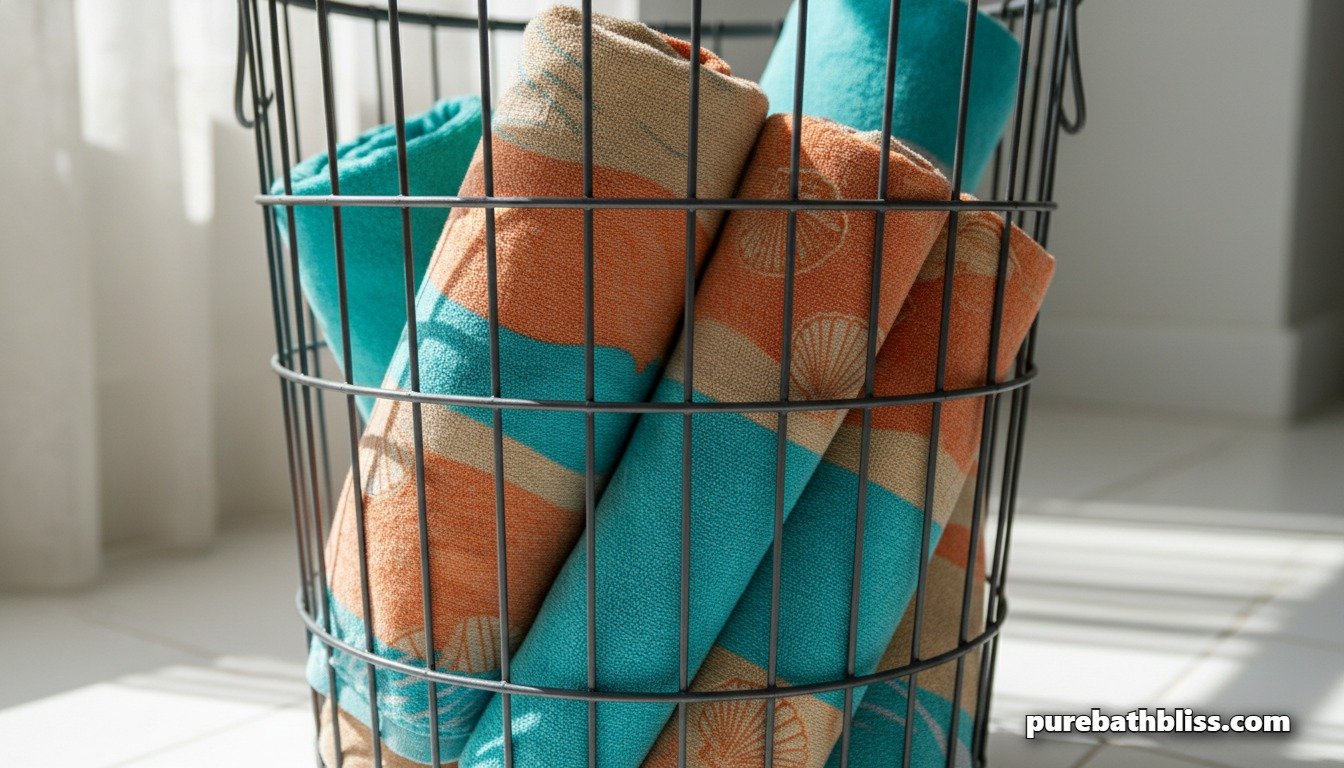
Never throw damp towels into a solid plastic or wood hamper. In the summer heat, this turns the hamper into a "humidity incubator."
The Strategy: Switch to a wire-mesh or open-weave basket during the summer months.
The Benefit: Air can circulate through the clothes, preventing the "pantry smell" that occurs when damp fabric stays stagnant. This supports your home’s non-toxic air quality by reducing the need for chemical odor sprays.
3. The Summer "Wet-Zone" Protocol
| The Problem | The "Summer" Rule | Infrastructure Benefit |
|---|---|---|
| Dripping Swimsuits | Hang on "S-Hooks" in the shower. | Prevents subfloor rot/puddling. |
| Sand in the Drain | Outdoor pre-rinse station. | Protects pipes from sediment clogs. |
| Damp Floor Piles | Mandatory 1/2" door gap airflow. | Reduces humidity & surface mold. |
| Musty Smells | Activated Charcoal in hampers. | Absorbs VOCs and stale odors. |
4. The "Post-Pool" Rinse Routine
Chlorine and salt water aren't just bad for hair; they are bad for your fixtures. If kids are jumping in the shower with pool water on them, they are introducing chemicals that can dull your finishes.
The Strategy: Teach the "Quick-Rinse" protocol. A 60-second shower with fresh water removes the salts and chemicals before they can settle on your tiles or grout.
The Maintenance: After the kids are out, do a quick wipe of the shower floor to ensure no pool chemicals are sitting on your microcement.
Summary: The Summer Logistics Checklist
Vertical Drip-Dry: Use the shower enclosure as your primary drying zone.
Wire Hampers: Swap solid bins for mesh to ensure maximum airflow.
Protect the Finish: Rinse pool water off surfaces to prevent etching.
Charcoal Absorbers: Place one in your summer hamper to fight odors.
Outdoor Rinse: Whenever possible, hose off sand before it hits the bathroom drain.
High-Hang Strategy: Keep damp towels on high hooks, never in a pile.
Cycle the Air: Run your exhaust fan consistently during the high-traffic summer hours.
By treating summer like a "Logistics Season," you can enjoy the pool and the sprinklers without letting the moisture destroy your bathroom’s infrastructure. It’s about building a system that can handle the flow, so you can spend more time in the sun and less time scrubbing the floor.