Transparency Note: We independently select these products based on research and user reviews. If you buy something through our links, we may earn a commission.
Every September the same thing happens in every major home goods store. The autumn fragrance display arrives. Pumpkin spice plugins. Apple cider wax melts. Cinnamon broom air fresheners. Sweater weather room sprays. They smell appealing on the display because the combination of warm spice and familiarity is genuinely pleasant in the abstract. They smell noticeably synthetic when you actually live with them in an enclosed bathroom for six to eight weeks.
The problem is not the autumn scent direction. Warm spice, apple, cedar, cinnamon, and clove are genuinely beautiful scents for a bathroom in the colder months. The problem is the delivery mechanism. A synthetic fragrance plugin in a small enclosed bathroom with limited ventilation is a concentrated source of chemical compounds that produces a smell most people recognize as covering something rather than being genuinely clean and pleasant. No matter how appealing the individual scent note is, the synthetic delivery tells the nose that something is being masked.
Natural autumn scents built from actual essential oils, dried botanicals, and beeswax do not have this problem because there is nothing being masked. The scent is the thing, not the disguise of something else. Here are five methods that outperform any plugin in a bathroom, with the specific blends for each one.
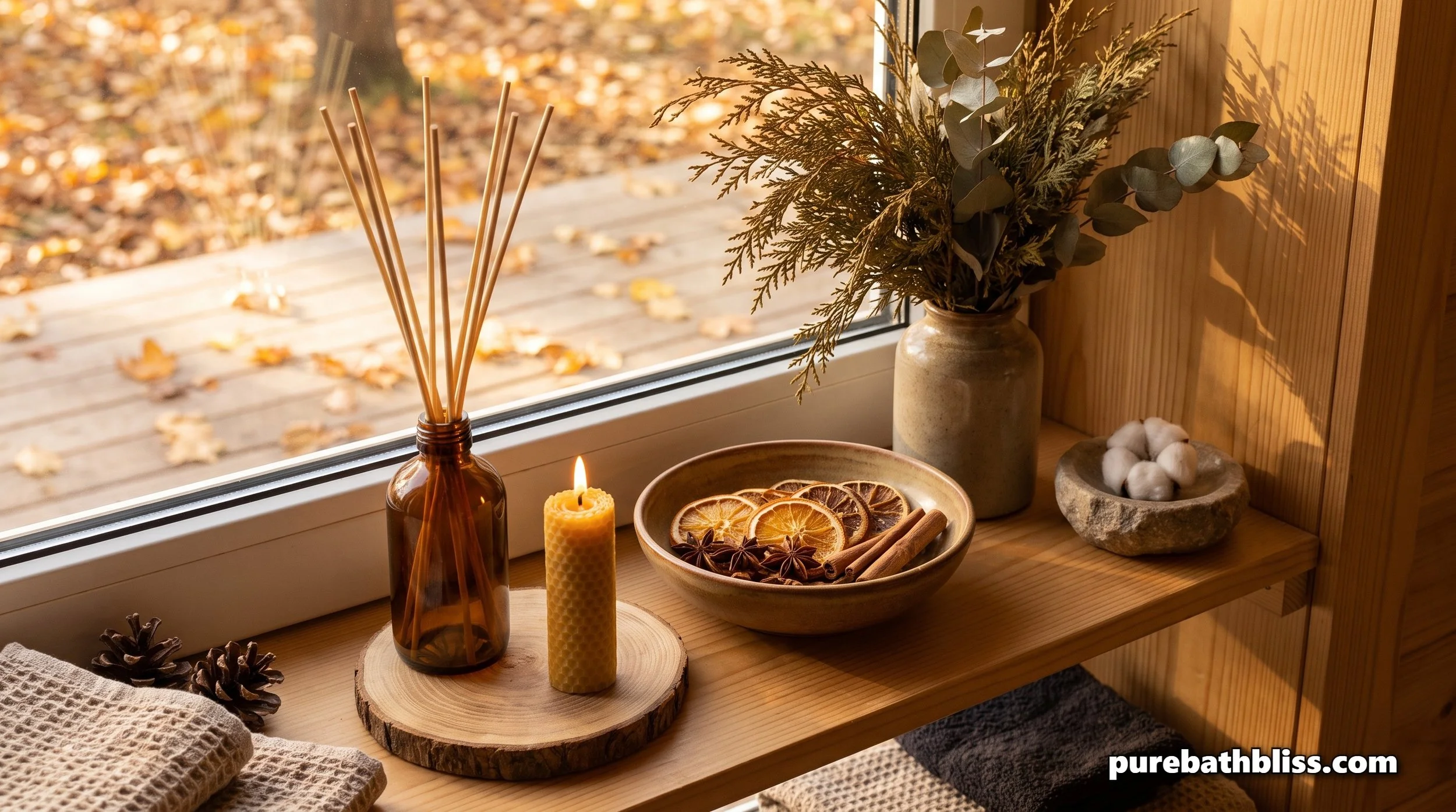
Why Natural Outperforms Synthetic in a Bathroom Specifically
The bathroom is the worst room in the house for synthetic fragrance and the best room for natural scent, for the same reason: the steam environment. When you shower, the hot water heats the bathroom air and raises the humidity significantly. In this warm, humid environment, volatile compounds from any scent source in the room become more concentrated and more readily absorbed by the respiratory system.
Synthetic fragrance compounds, which are primarily petroleum-derived VOCs, become more concentrated and more irritating in a steam environment. This is why a bathroom with a plugin often smells overwhelming rather than pleasant after someone showers. The steam intensifies the synthetic note to the point where it reads as chemical rather than autumnal.
Natural essential oils behave differently in steam. The terpenes and esters in plant-derived oils are the same class of compounds that the steam releases from eucalyptus, cedarwood, and orange peel in a natural environment. The nose recognizes them as belonging in a warm, humid environment. A reed diffuser with cedarwood and sweet orange essential oils in a bathroom that has just had a shower running smells like a forest spa. The same bathroom with a synthetic autumn plugin smells like a chemical approximation of autumn. The steam is the variable that makes the difference between these two experiences.
The Autumn Scent Families That Work in a Bathroom
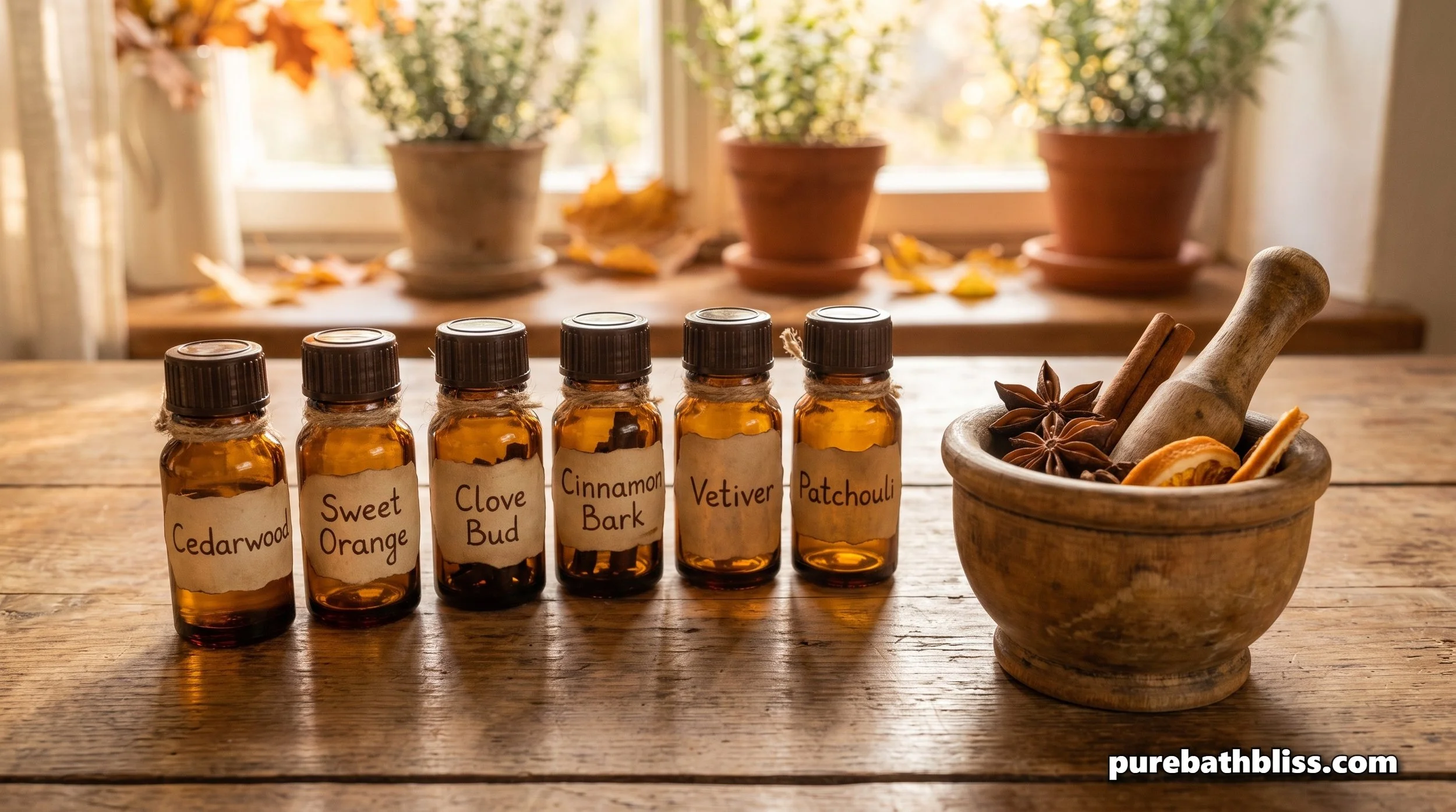
Autumn scent in a bathroom works best when it draws from three families: warm wood, warm spice, and warm citrus. Each family has a distinct character and a distinct role in a layered autumn scent environment.
Warm wood. Cedarwood, sandalwood, vetiver, and patchouli. These are the base notes that give autumn bathroom scent its depth and staying power. They are naturally grounding, slightly earthy, and evoke the specific quality of a forest in October. Cedarwood is the most versatile and the one that works best in combination with the other two families. Vetiver has a deeper, smokier quality that suits evening use particularly well. Patchouli is the most polarizing and works best as a minority note in a blend rather than a dominant scent.
Warm spice. Cinnamon bark, clove bud, nutmeg, and ginger. These are the middle notes that provide the recognizable autumn warmth. They are also the most potent and the ones that require the most restraint. A clove-dominated bathroom reads as medicinal rather than autumnal. A bathroom with clove as a supporting note in a cedarwood and orange blend reads as sophisticated and seasonal. The ratio matters enormously in the spice family: warm spice should be a supporting note at 10 to 20 percent of any blend rather than the dominant feature.
Warm citrus. Sweet orange, blood orange, mandarin, and bergamot. These are the top notes that brighten and lift the warm wood and spice combination without introducing the fresh, clean character of lemon or grapefruit that reads as summer rather than autumn. Sweet orange specifically has a warm, slightly sweet citrus quality that sits perfectly between the wood base and the spice middle in an autumn blend. Blood orange adds a slightly deeper, more complex citrus note that works particularly well in evening blends.
Method 1: The Autumn Reed Diffuser
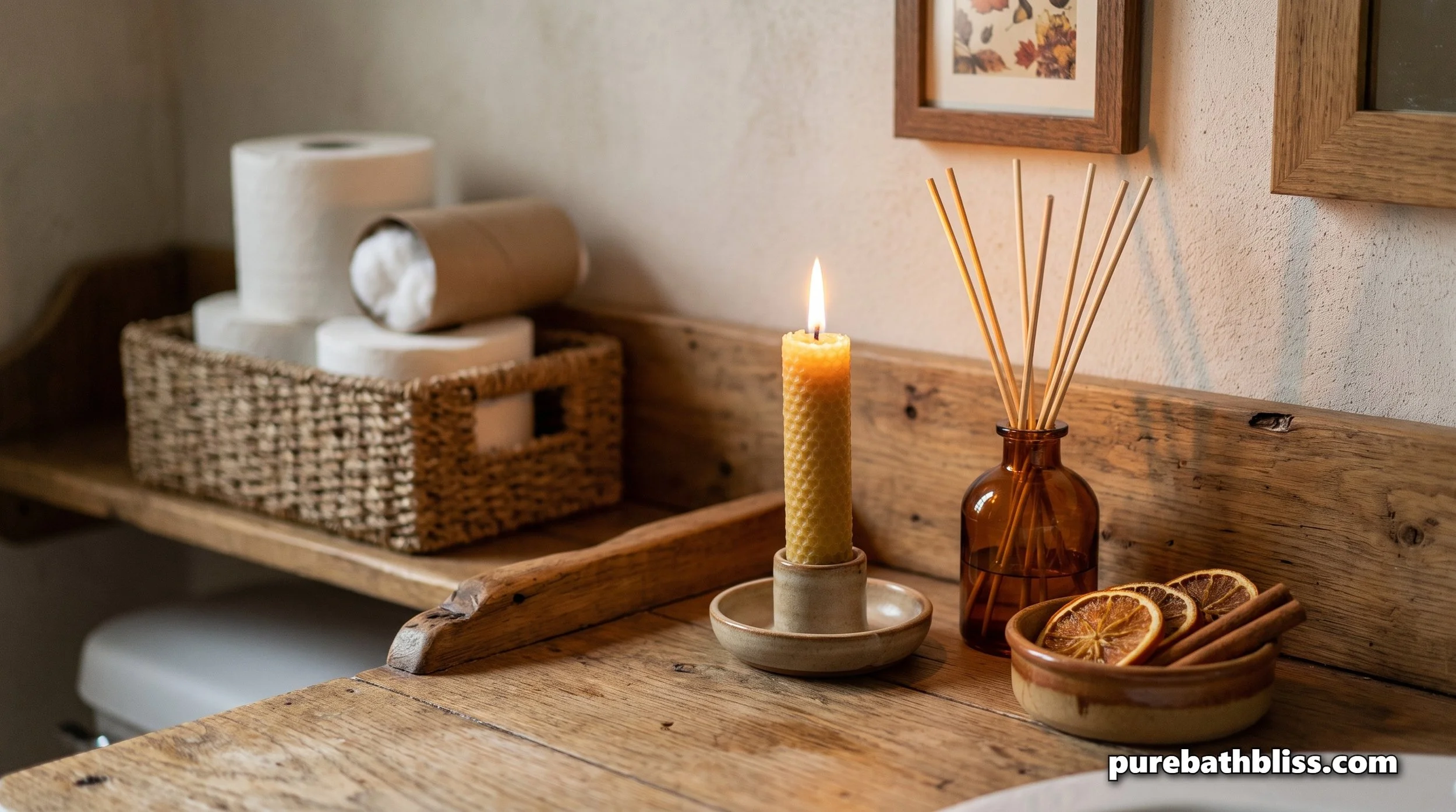
The reed diffuser is the most effective passive autumn scent method for a bathroom because it provides continuous, consistent fragrance at a gentle level that improves with the steam of daily showers rather than being overwhelmed by it. Our guide to making a DIY reed diffuser covers the exact carrier oil ratio and reed type that produces a scent throw comparable to commercial diffusers. For autumn specifically, swap the oil blend to one of the following and run it from September through November.
The Autumn Forest blend (most popular): Cedarwood 40 percent, sweet orange 35 percent, clove bud 15 percent, vetiver 10 percent. This is the blend that most closely approximates the specific quality of autumn air in a forest, warm, slightly earthy, with a bright citrus top note and a spice undertone that reads as seasonal without being obviously food-like.
The Harvest Spice blend (warmer, more Thanksgiving-appropriate): Sweet orange 40 percent, cinnamon bark 20 percent, cedarwood 25 percent, clove bud 15 percent. Warmer and more food-adjacent than the forest blend, making it the better choice for the weeks around Thanksgiving specifically.
The Evening Ember blend (best for evenings): Sandalwood 35 percent, vetiver 25 percent, blood orange 25 percent, patchouli 15 percent. Rich, warm, and slightly smoky. The most sophisticated of the three and the one that works best for evening bath routines rather than all-day passive diffusion.
Method 2: The Autumn Beeswax Candle
A beeswax candle with autumn essential oils is the scent method that produces the most immediate and noticeable transformation of a bathroom's atmosphere. The combination of warm amber light and warm autumnal scent changes the character of a bathroom within sixty seconds of lighting in a way that no passive diffusion method achieves at the same speed.
For autumn, the candle scent blend that works best is cedarwood and sweet orange with a small amount of cinnamon bark. The cedarwood and orange provide the warm, sophisticated base and the cinnamon adds the seasonal warmth without making the candle smell like a bakery. Our guide to making DIY beeswax candles covers the temperature-critical step of adding essential oils at exactly 160 degrees Fahrenheit, which is the detail that determines whether an autumn candle smells like cedarwood and orange or like warm wax.
Beeswax candles with autumn essential oil blends are also available ready-made for those who prefer not to DIY. Look specifically for beeswax or coconut wax with pure essential oil scenting rather than fragrance oils, which is the only formulation that produces the genuine natural autumn scent rather than the synthetic approximation.
Method 3: The Cedar and Herb Shower Bundle
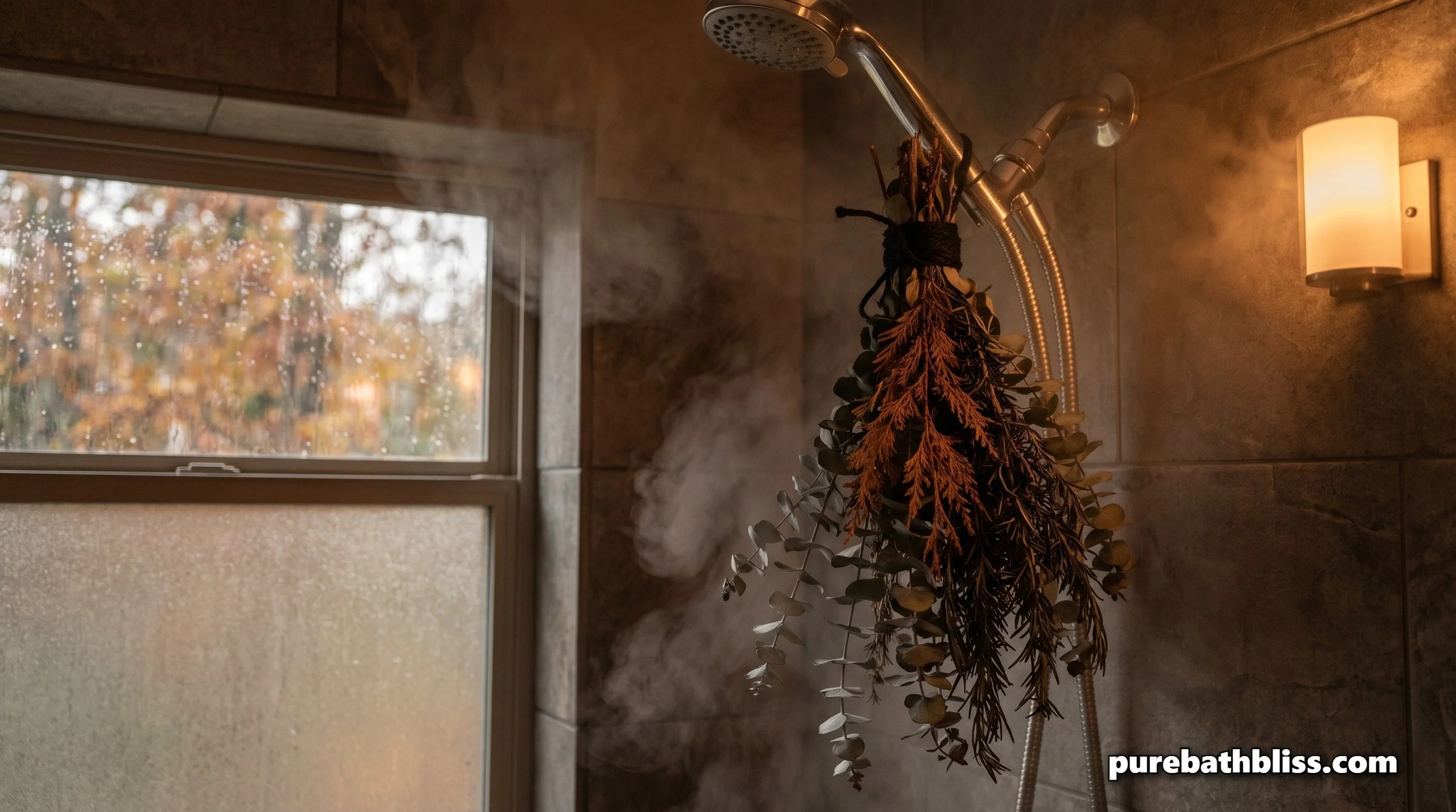
The eucalyptus shower bundle we cover year-round takes on a specifically autumn character when the bundle composition is adjusted for the season. Rather than pure eucalyptus, an autumn shower bundle combines silver dollar eucalyptus with dried cedar stems, a few sprigs of fresh rosemary, and optionally a dried orange slice tucked into the twine at the base. The result is a shower aromatherapy experience that reads as forest and spice rather than clean and fresh.
The bruising step is the same regardless of the bundle composition: roll the entire bundle firmly with a rolling pin or bottle before tying it and hanging it. This breaks the cell walls in the plant material and releases significantly more volatile oils into the steam than an unbruised bundle. Our guide to hanging eucalyptus in the shower correctly covers the full technique including the bruising method, how long the bundle lasts, and the pet safety considerations that are the same for cedar and rosemary as for eucalyptus.
An autumn shower bundle lasts approximately ten to fourteen days before the plant material dries out and loses its scent. Replace it every two weeks from September through November and the morning shower provides a consistent autumnal aromatherapy experience that no plugin or spray can replicate in a steam environment.
Method 4: Dried Botanical Arrangements
Dried botanicals in autumn tones provide the most visually coherent scent source available for a bathroom because they contribute to both the visual autumn palette and the olfactory autumn character simultaneously. A ceramic vase with dried pampas grass, cedar stems, and dried orange slices on a bathroom shelf smells gently of warm wood and citrus while looking deliberately autumnal without requiring any candle or diffuser running.
The scent from dried botanicals is subtle and benefits from being refreshed periodically. Crushing or snapping a dried cedar stem releases a burst of the natural oils. Running a finger along dried rosemary releases its sharp, warm herbal character. A few drops of cedarwood essential oil applied to the base of a dried botanical arrangement with a dropper refreshes the scent for another week without replacing the arrangement.
Dried autumn botanical bundles containing cedar, pampas grass, and dried citrus slices are available and typically cost $15 to $25 for an arrangement that lasts the entire autumn season without replacement.
Method 5: The Autumn Cotton Ball Refresh
The simplest and most immediate scent method for any bathroom at any time of year is also the best emergency refresh option when the bathroom needs an instant autumn scent without any advance preparation. Three drops of sweet orange essential oil and one drop of clove bud oil on a cotton ball placed inside the toilet paper roll or behind the toilet provides an immediate, gentle, genuinely autumnal scent that lasts three to five days before needing replacement.
This method costs almost nothing per week and requires no vessels, no equipment, and no preparation beyond having two bottles of essential oil in the bathroom cabinet. It is the method we keep available year-round and shift seasonally by changing the oil combination: eucalyptus and peppermint in summer, sweet orange and clove in autumn, cedarwood and bergamot in winter. The full natural bathroom scent approach covering all four seasons and the specific combinations for each one is covered in our guide to making your bathroom smell like a spa without synthetic fragrance.
The Autumn Bathroom Scent at a Glance
| Method | Scent Intensity | Works with Steam? | Cost per Season | Maintenance |
|---|---|---|---|---|
| Reed diffuser | Gentle, continuous | Yes, improves with steam | $8 to $15 in oils per season | Flip reeds twice weekly, top up monthly |
| Beeswax candle | Moderate, immediate | Yes, scent carries in warm air | $20 to $40 or DIY under $15 | Trim wick before each use, replace when burned down |
| Autumn shower bundle | Strong during shower, fades after | Yes, specifically designed for steam activation | $8 to $15 per bundle, replace every 2 weeks | Replace every 10 to 14 days |
| Dried botanicals | Very subtle, layering note | Yes, steam slightly activates dried plant oils | $15 to $25 for the whole season | Zero. Refresh scent with a few drops of essential oil monthly. |
| Cotton ball hack | Gentle, background | Yes, warm air carries the scent | Pennies per week | Replace every 3 to 5 days |
The most effective autumn bathroom scent environment uses three layers simultaneously: the reed diffuser as the continuous passive baseline, the beeswax candle for warmth and immediate atmosphere during morning and evening routines, and the shower bundle for the daily aromatherapy experience that no other method provides in a steam environment. The dried botanical arrangement and cotton ball hack add visual texture and an instant refresh option respectively. Together these five methods create an autumn bathroom that smells genuinely seasonal from September through November without a single synthetic compound and for a fraction of the cost of a commercial plugin collection.
The Complete Autumn Blend Guide
| Blend Name | Oils and Ratio | Character | Best Method | Best Timing |
|---|---|---|---|---|
| Autumn Forest | Cedarwood 40%, sweet orange 35%, clove bud 15%, vetiver 10% | Warm, earthy, forest-like. The most versatile autumn blend. | Reed diffuser, cotton ball | All day, September through November |
| Harvest Spice | Sweet orange 40%, cedarwood 25%, cinnamon bark 20%, clove bud 15% | Warm, spiced, seasonal. The most Thanksgiving-appropriate blend. | Reed diffuser, dried botanicals | October and November, especially Thanksgiving week |
| Evening Ember | Sandalwood 35%, vetiver 25%, blood orange 25%, patchouli 15% | Rich, smoky, sophisticated. The darkest autumn blend. | Beeswax candle, evening reed diffuser | Evening bath routine, October specifically |
| Cedar and Orange | Cedarwood 50%, sweet orange 35%, vanilla 15% | Warm, woody, slightly sweet. Most universally pleasant, least polarizing. | Beeswax candle, guest bathroom diffuser | Guest bathrooms, all-day use, year-round autumn |
| Morning Cedar | Eucalyptus 40%, cedarwood 30%, sweet orange 20%, rosemary 10% | Fresh, clean, autumnal. The morning version of the autumn scent palette. | Autumn shower bundle, morning cotton ball | Morning shower routine, September through November |
For Thanksgiving specifically, the Harvest Spice blend in the diffuser and the cedar and orange beeswax candle is the combination that most closely matches the olfactory character of the holiday while complementing rather than competing with the food smells from the kitchen. More on the specific Thanksgiving bathroom scent approach, including the method that works best in a guest bathroom with heavy traffic across a long afternoon, is covered in our Thanksgiving bathroom scent guide.