The Hair-Clog Crisis: How to Protect Your Plumbing in a Family of 6
When I’m building a master suite for a client, I spend a lot of time calculating the "pitch", the subtle slope of the pipes that ensures gravity does its job. But even a perfectly engineered 2-inch shower drain is no match for the cumulative shedding of six people.
Hair is one of the most difficult things for a plumbing system to handle because it doesn't break down; it doesn't dissolve like toilet paper. Instead, it acts like a structural "net," catching soap scum, hair conditioner, and skin cells until it forms a solid, waterproof plug. In my home, we’ve moved past the "hope for the best" stage. We treat drain maintenance as a scheduled ritual, much like changing the furnace filter or checking the smoke detectors.

1. The Frontline Defense: The Drain Protector
The most important rule in our house is that nothing goes down the drain that doesn't have to. In a Sustainable Sanctuary, the goal is to stop the problem before it enters the infrastructure. This starts with a high-quality drain protector.
For a family of six, those "internal" mesh strainers that sit inside the pipe aren't enough—they clog too fast, leading to 2 inches of standing water before the second person even gets in the shower. This standing water creates a "buoyancy" effect that actually helps hair float over the protector and into the drain.
The "External" Advantage: I recommend an "external" dome-style or mushroom-style protector. These have a larger surface area, allowing water to pass through the top even if the base is covered in hair.
The Ritual: Every person who finishes their shower is responsible for a "quick clear." They take a square of Bamboo Toilet Paper, wipe the hair off the protector, and toss it in the bin.
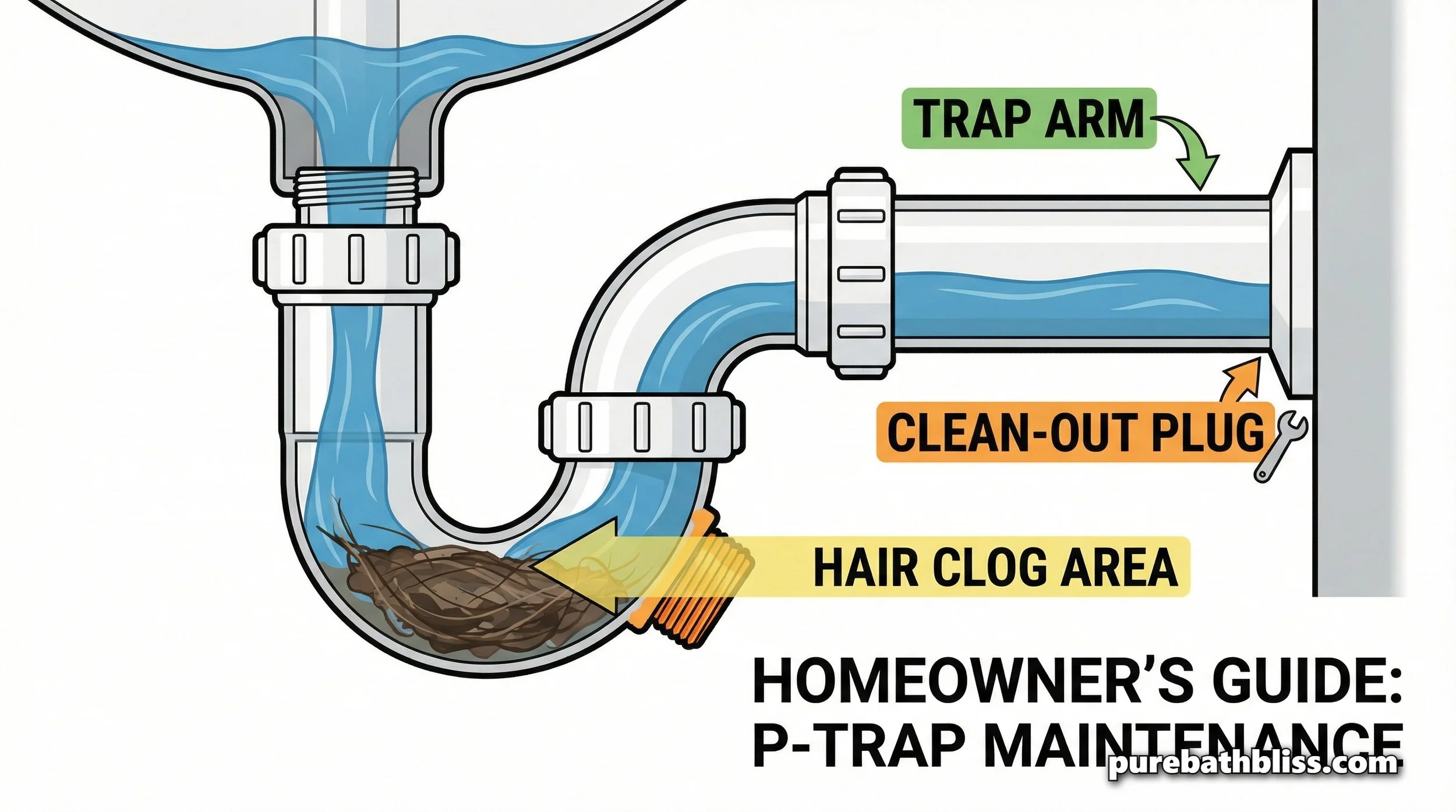
The Reality: Even with the best protector, some hair is "escapist." It’s fine, flexible, and will eventually find its way into the P-trap. This is where your secondary defense comes in.
2. Why the "Vinegar Trick" Isn't Always Enough
I love the vinegar and baking soda trick for a lot of things. It’s a "Pure" way to keep the pipes smelling fresh and to break down minor soap scum buildup. But I have to be honest: Vinegar does not dissolve hair.
Hair is primarily made of keratin, a tough, fibrous protein that is the same material found in your fingernails. Keratin is highly resistant to weak acids like vinegar. While the "fizzing" action of baking soda and vinegar can provide enough kinetic energy to "push" a loose clog along, it won't break up a dense "hair-ball" that has become lodged in the pipe's joints or around the pop-up stopper. If you have a large family, you need more than chemistry; you need mechanics.
3. The Professional Tool: The Hair Snake Ritual
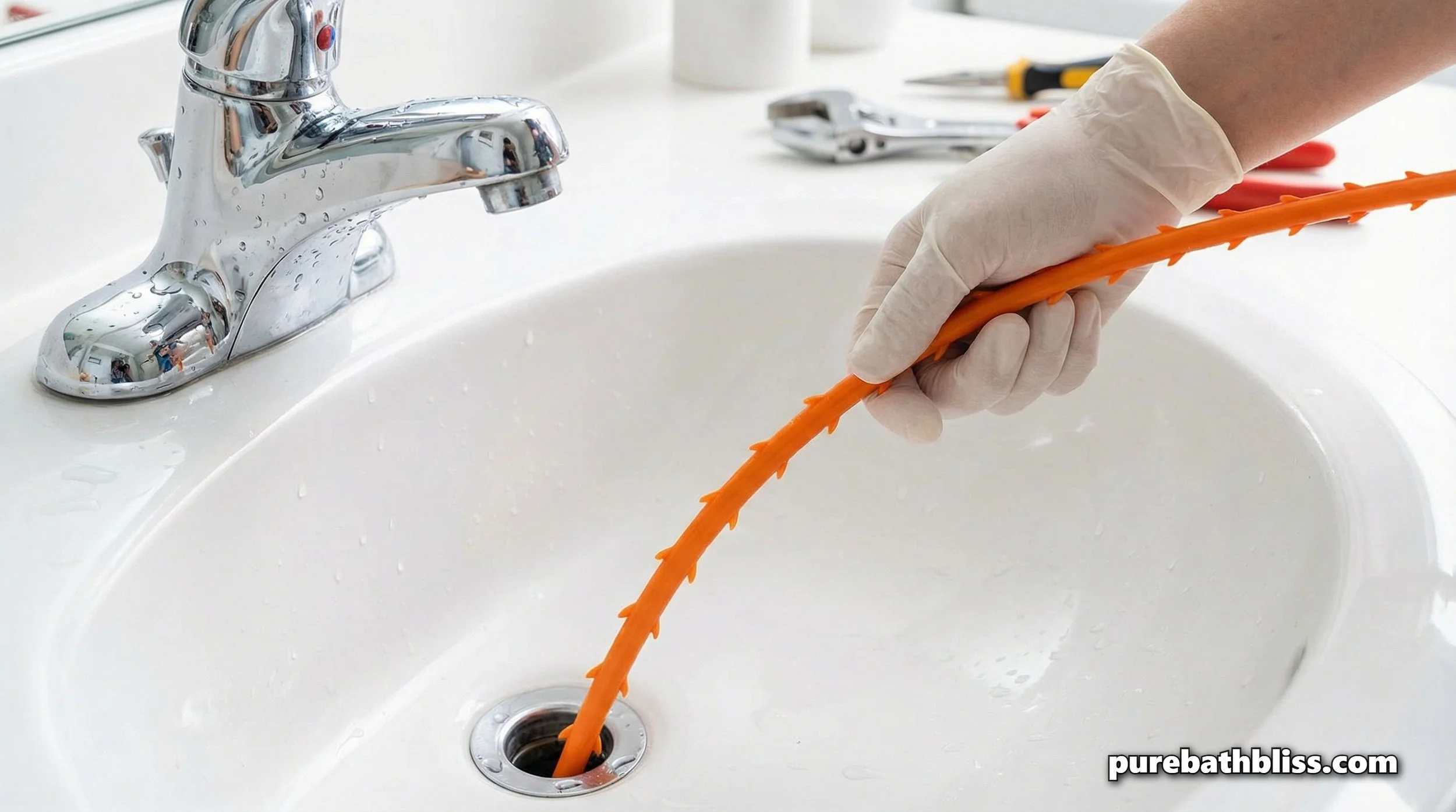
In my house, we don't wait for the water to stop draining before we act. A "slow drain" is the plumbing equivalent of a warning light on your car dashboard. I keep a flexible plastic drain snake in every single bathroom. It is the most important tool in my plumbing arsenal.
The "One per Bathroom" Strategy
Why keep one in every room? Because if the tool is in the basement or the garage, you’ll ignore that slow drain for a week. If it’s under the sink, right next to the non-toxic cleaning supplies, you can fix the problem in 60 seconds the moment you notice the water rising.
How to Snake Properly (The Professional Way):
The Entry: Most bathroom sinks have a "pop-up" stopper. You don't necessarily need to take the plumbing apart. A thin, flexible plastic snake (like a Zip-it) can usually slide right past the stopper.
The Reach: You aren't trying to reach the sewer main. 90% of hair clogs happen in the first 6 to 10 inches of the drain, either on the stopper mechanism itself or at the bottom of the P-trap.
The Twist and Pull: Insert the snake until you feel resistance, give it a gentle twist to "hook" the keratin net, and pull slowly.
The Cleanup: This is the "dirty" part. Have a paper towel ready. The hair that comes out will be coated in "biofilm" (a mix of soap and bacteria). Wipe the snake clean and repeat until it comes out clear.
4. Protecting the Infrastructure: Why Chemicals are a "No"
When a drain gets slow, the temptation is to pour a bottle of heavy-duty liquid cleaner down there. From a maintenance perspective, I beg you: Don't do it.
Pipe Corrosion: Those chemicals generate extreme heat to "melt" clogs. In older homes with metal pipes, this causes rapid corrosion. In newer homes with PVC, that heat can actually soften the solvent-welded joints, leading to "silent leaks" inside your walls.
The "Toxic Soup" Problem: If the chemical doesn't work and the drain stays clogged, you now have a sink full of caustic acid. When you finally have to call a plumber (or pull out your snake), you are at risk of chemical burns on your skin and eyes.
The Pure Way: Mechanical removal (snaking) is 100% non-toxic, 100% effective, and costs pennies compared to a bottle of chemicals.
5. Summary: The Family of 6 Maintenance Schedule
| Frequency | The Ritual |
|---|---|
| Daily | Wipe hair off the drain protector after every single shower. |
| Weekly | Run a "Vinegar and Hot Water" flush to dissolve soap scum. |
| Monthly | Perform the "Drain Snake Audit" on all sinks and showers. |
| Yearly | Inspect the P-trap joints for any "weeping" or slow leaks. |
6. The Psychology of the Slow Drain
In a large family, small annoyances can quickly turn into "household friction." A slow drain is a stressor. It leaves a ring of grime in the tub and makes the morning rush feel chaotic. By empowering yourself, and even your older kids, with a $5 drain snake, you take control of your home’s infrastructure. You shift from being a "reactive" homeowner to a "proactive" steward of your sanctuary.
Conclusion: Taking Control of the Flow
Managing hair clogs in a busy home isn't about finding a "magic" liquid; it’s about a consistent, mechanical habit. By using external protectors and monthly snaking, you protect your pipes from corrosion and your family from the stress of a bathroom backup.
Keep the water moving, keep the chemicals out, and keep your sanctuary pure.
Greg’s Drain Defense Essentials
The Shield: Stainless Steel Mushroom Drain Protector - Fits almost any standard shower.
The Weapon: Flexible Plastic Hair Snakes - Keep one under every sink.
The Maintenance: Baking Soda and Vinegar Cleaning Method - For the weekly soap-scum flush.