How to Remove Halloween Face Paint Without Destroying Your Kid's Skin
Transparency Note: We independently select these products based on research and user reviews. If you buy something through our links, we may earn a commission.
Halloween night ends and what follows is the same scene in most households with kids. Someone is tired, slightly sugared up, and wearing two hours worth of face paint that needs to come off before bed. The instinct is to wet a cloth and scrub. This is exactly what causes the red, irritated, slightly raw skin that parents assume is a reaction to the face paint itself. In most cases it is not a reaction to the paint. It is a reaction to aggressive removal.
The other issue is that not all Halloween face paint is the same formulation, and the removal method that works on one type makes another type significantly harder to remove. Using warm water and soap on oil-based face paint moves it around and sets it deeper into the skin. Using oil on water-based paint adds an unnecessary step when warm water and gentle soap would have done the job in thirty seconds.
Here is how to identify which type of paint you are dealing with, the right removal method for each, and the post-removal skin routine that leaves the face genuinely clean without redness, dryness, or residual staining.
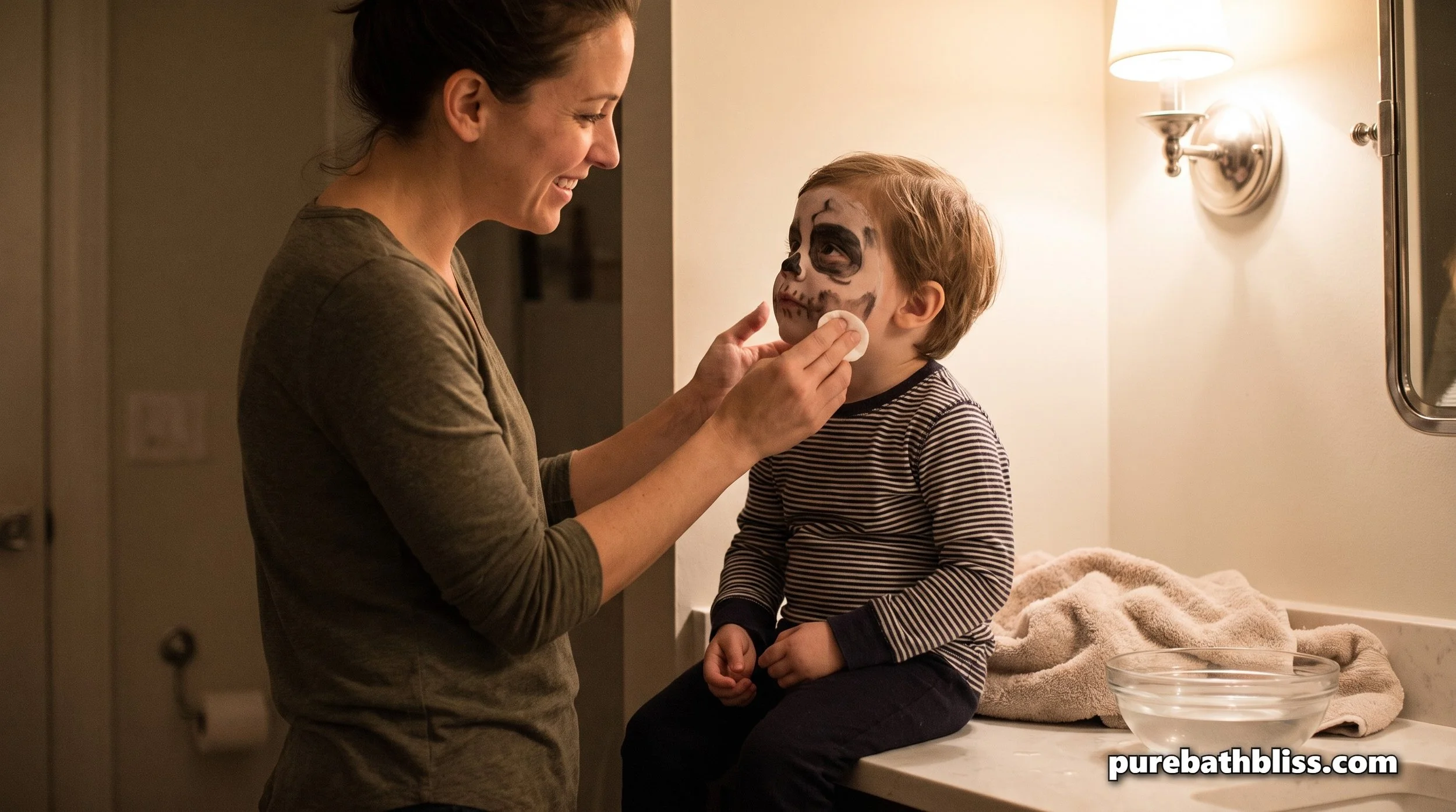
First: Know What You Are Removing
Halloween face paints and costume makeup fall into three broad categories, each with a different base chemistry and therefore a different optimal removal method. The easiest way to identify which you have is to look at the original product packaging, which should indicate whether it is water-based, oil-based or cream-based, or theatrical/professional grade. If the packaging is long gone, the texture of the paint on the face gives you a reasonable clue: water-based paints feel slightly stiff and may crack when the face moves; oil or cream-based paints feel slightly tacky or waxy; theatrical paints tend to have a matte, completely opaque quality.
| Type | How to Identify | Common Products | Best Removal Method | Removal Difficulty |
|---|---|---|---|---|
| Water-based | Labeled "water-activated," feels slightly stiff, may crack when face moves | Most children's face paint kits from craft and pharmacy stores | Warm water and gentle fragrance-free cleanser | Easy, especially if removed before fully dried |
| Oil or cream-based | Labeled "cream palette" or "oil-based," feels slightly tacky or waxy, very opaque | Professional cream palettes, high-coverage costume makeup | Oil first (coconut oil, baby oil), then gentle cleanser | Moderate. Requires oil step, resists water alone. |
| Theatrical or special effects | Completely matte, very opaque, professional finish, may include prosthetic adhesive | Stage makeup, professional Halloween FX kits | Oil first with extended massage, may need two oil applications | More involved. Patience more important than pressure. |
| Glitter or metallic | Visible shimmer or glitter particles on the skin surface | Face gems, glitter gels, metallic face paint | Oil to loosen adhesive, then warm water rinse. Keep glitter away from eyes during removal. | Moderate. Glitter particles need rinsing rather than wiping. |
For most Halloween face paint sold for children, water-based is the default formulation and the most common. If you bought a kit specifically labeled as face paint for kids at a craft store or pharmacy, it is almost certainly water-based. If the design involved highly opaque colors, professional-looking application, or theatrical special effects, it may be cream or oil-based and will require the oil-first method.
What Not to Use on a Child's Face
Before getting to the removal methods, the things to avoid are as important as the things to use. Several common household products that adults might reach for to remove stubborn makeup are genuinely inappropriate for children's skin and particularly for the delicate skin around the eyes.
Never use makeup remover wipes with fragrance. Fragrance in a product applied to skin around the eyes and mouth is a leading cause of post-removal irritation and is the most common reason a Halloween cleanup leaves children with red, stinging skin. The irritation is attributed to the paint but the wipe is the actual culprit.
Never use alcohol-based products or nail polish remover. Acetone and alcohol strip the skin barrier aggressively and are particularly harmful around the eye area. Never appropriate for a child's face regardless of how stubborn the paint is.
Never scrub with a rough cloth or exfoliating pad. Vigorous scrubbing causes micro-tears in the skin surface that make it red, raw, and more susceptible to irritation from any residual product. Press and wipe, never scrub.
Never use hot water. Hot water dilates pores and increases skin sensitivity during removal. Warm water is sufficient and considerably less irritating.
Never use adult makeup remover products not designed for children. Many adult micellar waters and makeup removers contain preservatives and surfactants that are too aggressive for a child's thinner, more permeable skin, particularly around the eye area.
The Removal Methods
Method 1: Warm Water and Gentle Cleanser (Water-Based Paint)
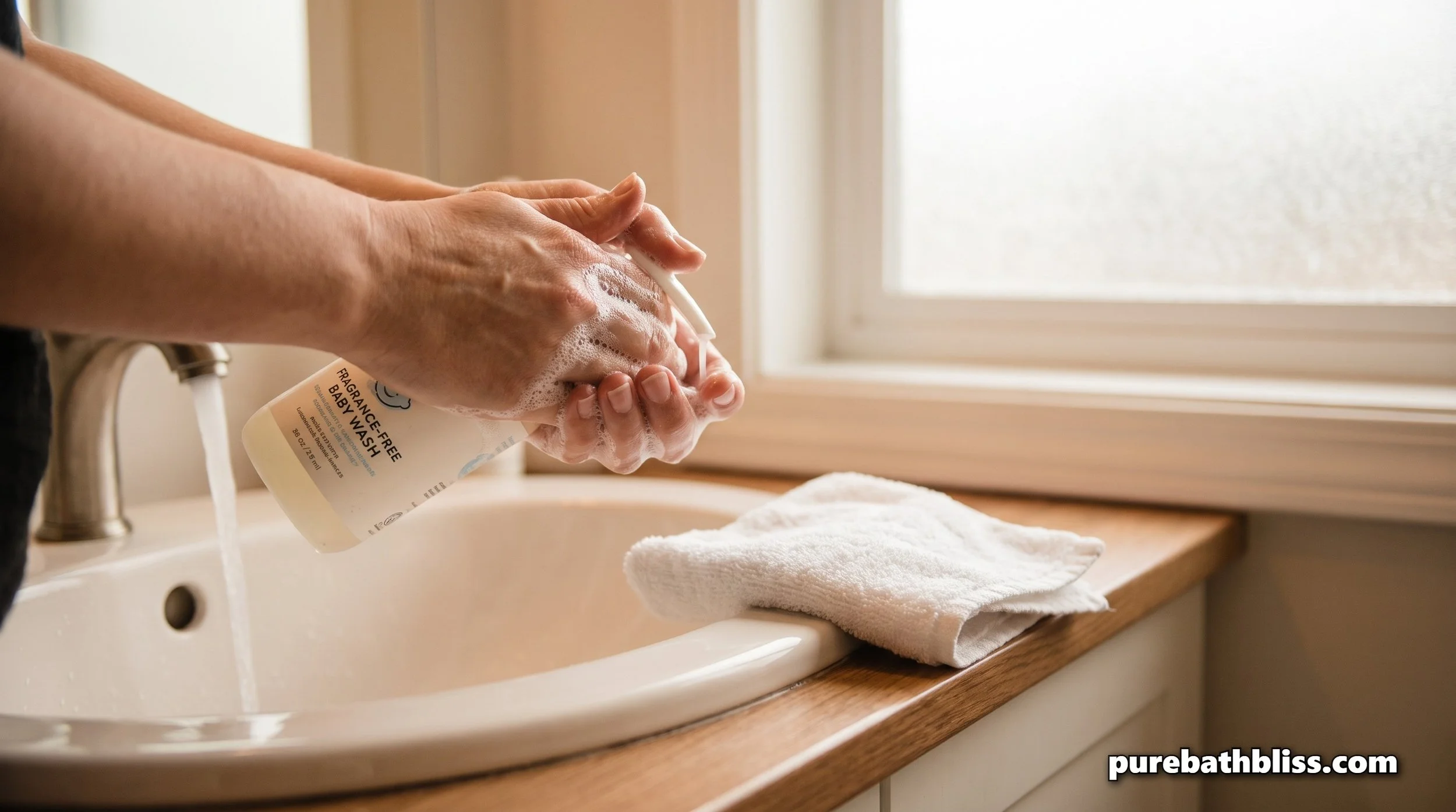
For water-based face paint, which is the most common type for children's Halloween products, warm water and a gentle fragrance-free cleanser is all you need. The water-soluble pigments break down quickly with warm water and gentle mechanical action.
Step by step:
Dampen a soft cloth or cotton pad with warm water. Press it gently against the painted area for fifteen to twenty seconds without rubbing. This hydrates and begins to loosen the dried paint without any mechanical friction.
Apply a small amount of fragrance-free baby wash or gentle castile soap to your fingertips. Work it into the paint using small, gentle circular motions. Do not press hard. The soap is doing the chemical work, the motion is just distributing it.
Rinse with warm water using a damp cloth, again pressing rather than wiping. Repeat until the water running off the face is clear.
For the area around the eyes, use a damp cotton pad only. No soap around the eye area on children. Warm water alone on a cotton pad pressed gently against the closed eyelid and wiped outward is the safest method for removing paint near the eyes.
If water-based paint has been on the face for several hours and has thoroughly dried, a brief soak with a warm wet washcloth pressed against the face for one to two minutes before starting removal makes the whole process significantly easier by re-hydrating the dried pigment layer.
Method 2: Oil First, Then Cleanse (Oil-Based, Cream, or Theatrical Paint)
Oil-based and cream paints are formulated with wax and oil bases that repel water. Trying to remove them with water first is like trying to clean a greasy pan with cold water. The oil in the paint and the water are incompatible and the paint moves around rather than lifting off. The solution is to start with oil, which dissolves the oil-based pigments and lifts them from the skin surface, and then follow with a gentle cleanser to remove the residual oil and pigment together.
Step by step:
Apply a generous amount of fractionated coconut oil, baby oil, or sweet almond oil to the painted area. Fractionated coconut oil is the best choice for children's faces because it is lightweight, odorless, non-comedogenic, and completely free of synthetic additives.
Massage the oil gently into the paint using circular fingertip motions for thirty to sixty seconds. You will see the paint beginning to dissolve and lift into the oil. Do not be alarmed by how much color transfers onto your fingers. That is the process working.
Wipe away the oil and dissolved paint mixture with a soft cloth or cotton pad using gentle pressing motions. Change to a clean area of the cloth for each wipe so you are not redepositing dissolved paint back onto the skin.
Follow with a small amount of fragrance-free baby wash and warm water to remove the residual oil from the skin surface. Rinse thoroughly. The skin should feel clean rather than greasy after this step.
For particularly stubborn theatrical or special effects makeup, a second oil application after the first wipe is more effective than pressing harder on the first pass. Patience in the oil step means you need less mechanical friction overall, which protects the skin surface.
Method 3: Micellar Water (Quick Cleanup or Partial Removal)
For quick cleanups of smaller amounts of face paint, or for finishing off residual pigment after the primary removal, a fragrance-free micellar water on a cotton pad is a gentle and effective option. Micellar water contains tiny clusters of cleansing molecules called micelles that attract and lift both oil-based and water-based pigments without requiring rinsing. For a child's face, choose a specifically formulated children's or baby micellar water rather than an adult product. Children's fragrance-free micellar water is widely available and is the most convenient single-product option when you do not want to do a two-step removal.
The Post-Removal Skin Care Step
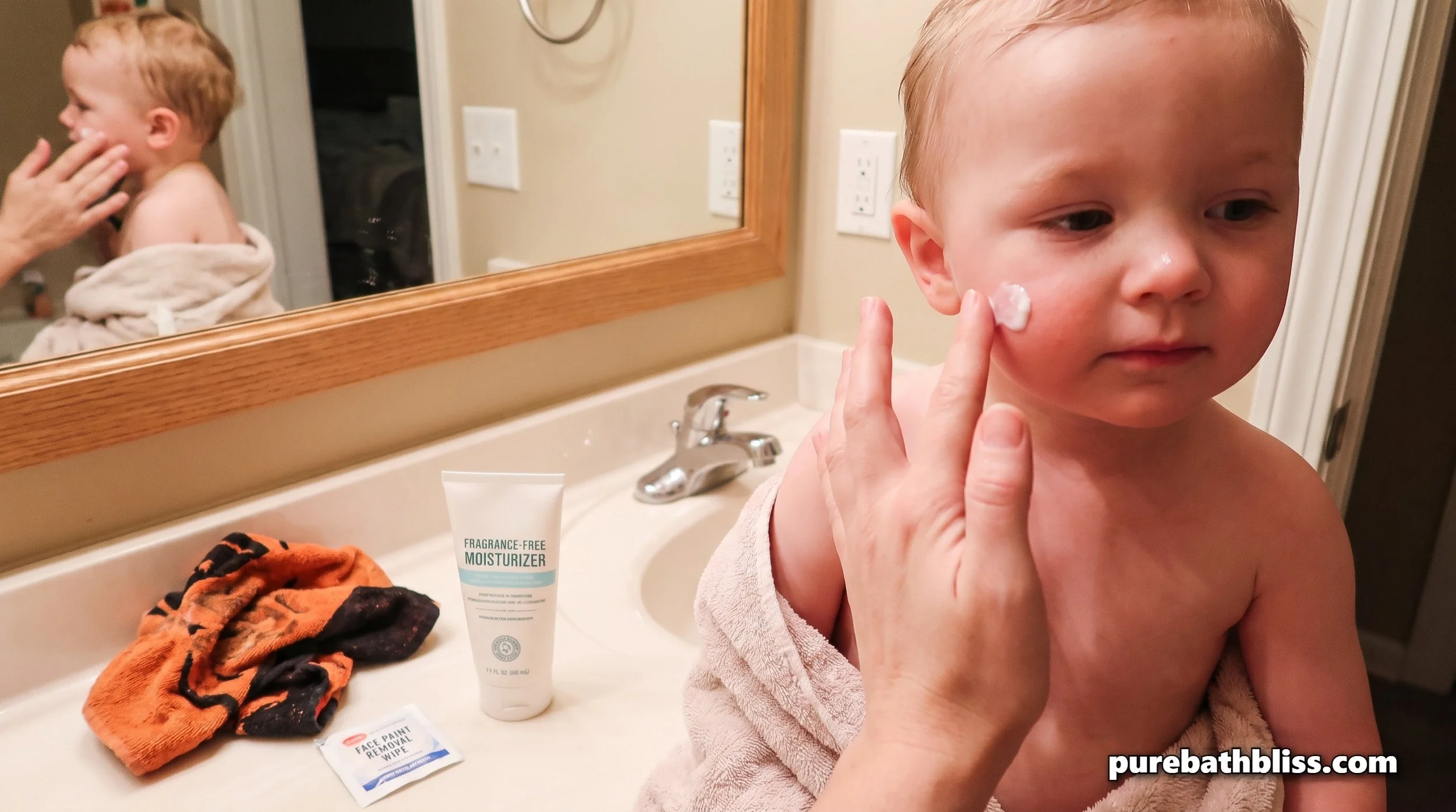
Face paint, even properly removed, has been sitting on the skin for several hours and the removal process itself, even when done gently, mildly disrupts the skin surface. A simple post-removal moisturizing step makes a meaningful difference to how the skin feels and looks the following morning.
Apply a small amount of fragrance-free, gentle moisturizer to the face immediately after removal while the skin is still slightly damp. This is the same soak and seal principle we cover in our post-bath baby skincare guide, applied to an older child's face after face paint removal. A plain colloidal oatmeal moisturizer or a simple shea butter based cream are both good choices. Avoid anything with fragrance, alcohol, or active ingredients like retinol that are not appropriate for a child's skin.
For skin that looks red or feels irritated after removal, a small amount of pure aloe vera gel is calming and anti-inflammatory. Apply after cleansing and before the moisturizer. If redness or irritation persists into the following day, that is worth monitoring. Genuine face paint allergic reactions are uncommon with properly formulated products but do occur, particularly with cheaper kits that may contain heavy metal contaminants in their pigments.
What Is Actually in Most Halloween Face Paint
The Campaign for Safe Cosmetics tested popular Halloween face paint kits sold in major US retailers and found that an Alex Toys face paint kit contained 0.65 ppm of lead, which is 43 times higher than the safe drinking water standard. Lead is a neurotoxin with no safe level of exposure for children, and it was present in a product designed to be applied directly to a child's face and left there for several hours.
This is not universal, and many face paint brands specifically formulated for children use cosmetic-grade pigments that meet much stricter standards. But it is the reason that choosing face paint based on price alone is genuinely risky, and why the ASTM D4236 label, which indicates the product has been reviewed by a toxicologist, is the minimum safety signal worth looking for when buying Halloween face paint for a child.
The broader picture of what goes on a child's skin and why the ingredient quality matters is covered in our guide to the five toxic ingredients never to use on babies. The same skin permeability that makes infant and toddler skin vulnerable to bath product ingredients makes it vulnerable to face paint ingredients left in contact for hours during trick-or-treating.
Preparation the Day Before: The Step That Makes Removal Easier
The single most effective thing you can do to make Halloween face paint removal easier is to prepare the skin before application rather than trying to compensate afterward.
Apply a thin layer of a fragrance-free moisturizer to your child's face about thirty to sixty minutes before putting on face paint. This creates a light barrier between the skin and the pigments that prevents them from adhering directly to dry skin and penetrating into pores. Well-moisturized skin holds face paint on the surface rather than absorbing it, which makes the entire removal process faster, easier, and gentler. It also helps the paint apply more smoothly and evenly in the first place.
For children with eczema or sensitive skin, applying a slightly thicker moisturizer or a thin layer of pure coconut oil as the base layer provides an even stronger protective barrier. The same post-bath moisturizing approach we cover in the eczema soak and seal guide applies here. Moisturized, barrier-supported skin tolerates face paint considerably better than dry or compromised skin and shows less irritation both during wear and during removal.
Removing Face Paint Stains from Clothes and Towels
Face paint on clothing and towels is a separate problem from face paint on skin, and acting quickly is the most important factor. Dried face paint stain is significantly harder to remove than fresh.
For water-based paint on fabric: Rinse immediately with cold water from the back of the fabric, pushing the pigment out rather than deeper in. Apply a small amount of liquid laundry detergent directly to the stain, work it in gently, and leave for ten to fifteen minutes before washing as normal. Hot water sets water-based stains, so always use cold for the initial rinse.
For oil-based paint on fabric: Apply a small amount of dish soap directly to the stain and work it in gently. Dish soap is specifically formulated to cut through oil and works on oil-based face paint in the same way it works on kitchen grease. Let it sit for five minutes, then rinse with cold water and wash as normal. Pre-treating with dish soap is more effective than laundry detergent alone for oil-based stains because of the higher surfactant concentration.
Quick Reference: The Halloween Cleanup Kit
| Item | What It Does | Best For | Notes |
|---|---|---|---|
| Fractionated coconut oil or baby oil | Dissolves oil-based and cream paints | Oil-based paint, theatrical makeup, stubborn staining | Fractionated coconut oil preferred. Odorless, lightweight, non-irritating. |
| Fragrance-free baby wash | Removes water-based paint and finishes oil removal step | Water-based paint, post-oil cleanse | Fragrance-free is non-negotiable, especially near eyes and mouth. |
| Soft white washcloths | Gentle mechanical removal without micro-tears | All paint types | White cloths help you see when all pigment is removed. Soft microfiber or cotton only. |
| Cotton pads | Gentle removal around the eye area | Eye area, detailed areas, finishing touches | Use damp cotton pad with warm water only around eyes. No soap or oil near eyes. |
| Children's fragrance-free micellar water | Lifts both water and oil-based pigments without rinsing | Quick cleanup, residual pigment, finishing step | Children's formula only. Adult micellar water may contain preservatives too strong for kids' skin. |
| Fragrance-free moisturizer | Restores skin barrier after removal | Post-removal skin care on all skin types | Apply to slightly damp skin after removal for best absorption. |
| Pure aloe vera gel | Calms redness and irritation | Skin that looks red or feels irritated after removal | Apply before moisturizer. Pure gel only, no added fragrance or alcohol. |
Having these items in the bathroom before Halloween rather than looking for them at ten at night after trick-or-treating makes the whole cleanup considerably less stressful. Most of them are things you likely already have at home.