DIY Halloween Bath Bombs: 3 Spooky Recipes That Are Actually Safe for Kids
Transparency Note: We independently select these products based on research and user reviews. If you buy something through our links, we may earn a commission.
Every Halloween, the same thing happens in the bath bomb aisle. Brightly colored bombs shaped like pumpkins and ghosts at prices that seem reasonable until you read the ingredient list and find Red 40, Yellow 5, artificial fragrance, and sodium lauryl sulfate in a product designed to sit in a tub with your child for twenty minutes.
We have been making Halloween bath bombs at home for three years now and the kids look forward to making them as much as using them. The process takes about thirty minutes, the ingredients cost under $15 for a batch of eight to ten bombs, and each bomb works out to under $2 once you have the supplies. More importantly, every ingredient in them is readable, pronounceable, and something you would choose to put on your child's skin.
Here are three spooky Halloween recipes, the base recipe that works for all three, the natural colorants that actually achieve Halloween colors without synthetic dyes, and the complete troubleshooting guide for the most common bath bomb problems.
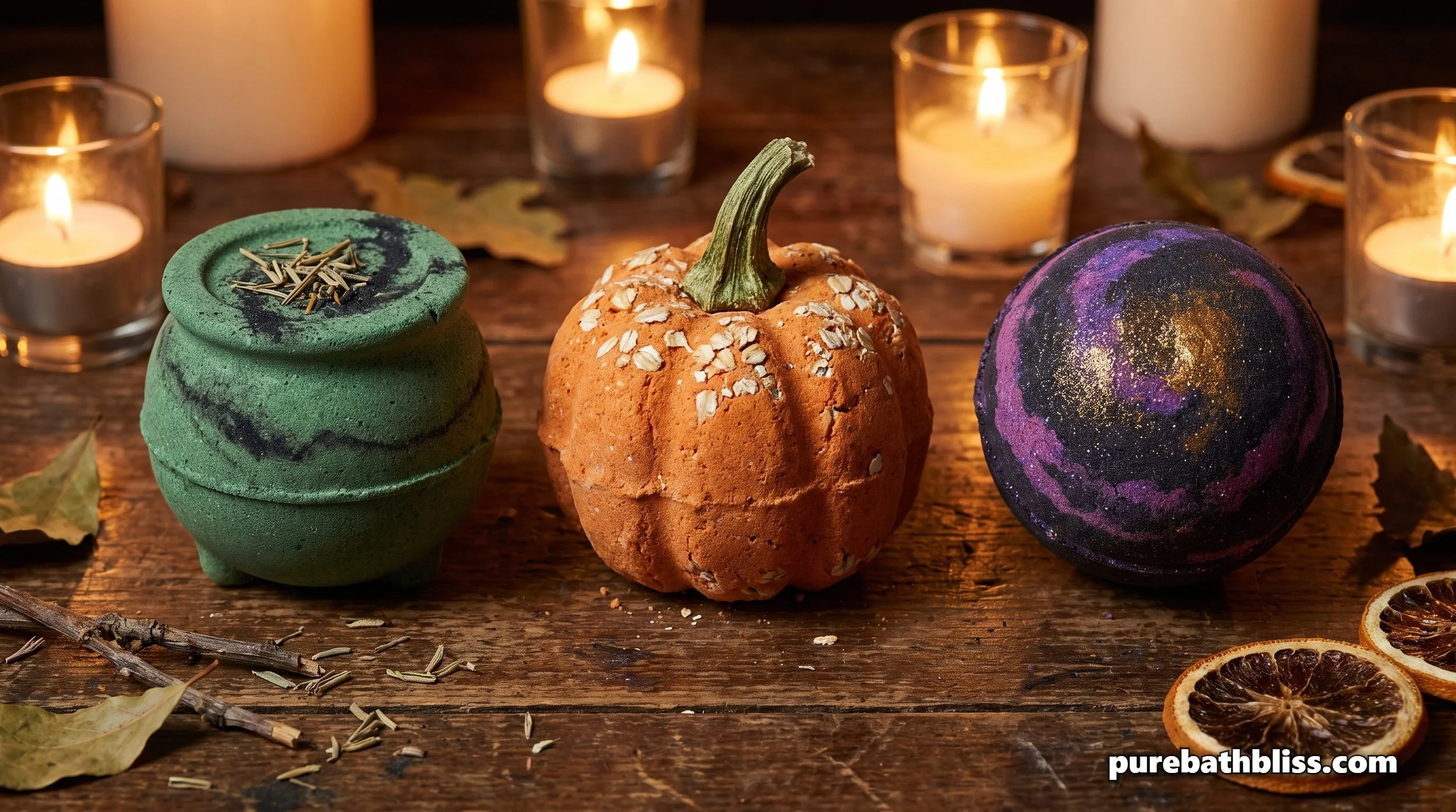
Why Commercial Halloween Bath Bombs Are Worth Skipping
The same concerns about commercial bath bombs apply year-round but Halloween versions tend to be worse because the visual effect is a selling point and achieving neon orange, bright green, and deep purple in water requires a significant quantity of synthetic dye. A bath bomb that turns the water a vivid Halloween color using FD&C Red 40 and Yellow 5 is using petroleum-derived dyes that have no benefit for the skin and that require EU warning labels about potential behavioral effects in children.
The synthetic fragrance problem is equally significant. Most commercially produced Halloween bath bombs are scented with fragrance oils rather than pure essential oils. The word "fragrance" on the label can conceal phthalates and hundreds of other undisclosed compounds in a product that sits in warm water with your child for twenty minutes, in a small enclosed bathroom where the steam carries those volatile compounds directly into the respiratory system.
Our guide to whether bath bombs are safe for kids covers all the specific ingredients to avoid and the research behind each one. The Halloween versions of these products follow the same rules, the spooky packaging does not change what is inside.
Natural Halloween Colors: The Ingredient Guide
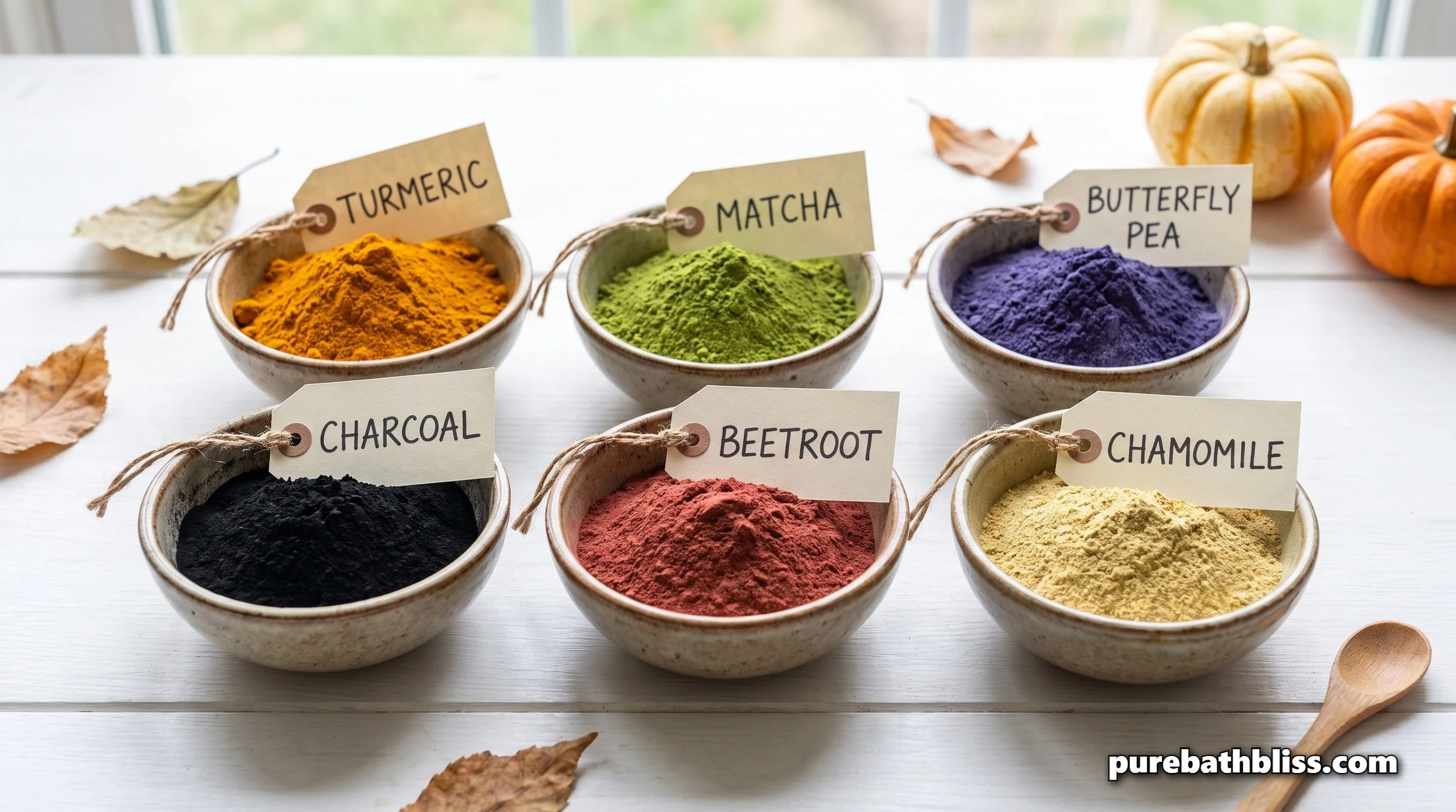
Achieving Halloween colors naturally requires knowing which plant-based powders produce which results in an alkaline bath bomb base. The pH of the bath bomb mixture affects color significantly, some natural colorants shift dramatically between the dry mix and the bath water. Here is what actually works.
| Natural Colorant | Color in Bomb | Color in Bath Water | Amount Per Batch | Halloween Use |
|---|---|---|---|---|
| Matcha powder | Deep sage green | Murky swamp green | 2 teaspoons | Witch's cauldron, slime, monster |
| Activated charcoal | Deep black | Dark gray swirls | 1 teaspoon for swirling | All three recipes — cauldron swirls, galaxy effect |
| Turmeric + paprika | Warm orange | Amber orange | 1 tsp turmeric + 1 tsp paprika | Pumpkin, jack-o-lantern |
| Butterfly pea flower powder | Deep indigo purple | Shifts from purple to blue as it fizzes — natural pH reaction | 2 teaspoons | Galaxy, midnight, witch, ghost |
| Beetroot powder | Deep red-pink | Red-pink, fades quickly | 1 to 2 teaspoons | Blood, vampire, red moon |
| Spirulina powder | Blue-green | Teal-blue | 1 teaspoon | Ghost, night sky, ocean witch |
A few notes on using natural colorants. They produce softer, more muted tones than synthetic dyes. A green from matcha will be sage rather than neon. An orange from turmeric will be warm and golden rather than fluorescent. This is both the limitation and the advantage of natural colorants — the colors look genuinely beautiful rather than artificially bright, and they do not stain the bathtub or your child's skin the way synthetic dyes can. High quantities of beetroot powder can temporarily tint the water and very lightly tint skin, which rinses off immediately with water.
The Base Recipe
All three Halloween recipes use the same base. Mastering the base first means the individual recipes are just a matter of colorant and scent choices.
Dry Ingredients
1 cup baking soda
½ cup citric acid
½ cup cornstarch
¼ cup Epsom salt or magnesium flakes
Wet Ingredients
2 tablespoons fractionated coconut oil or sweet almond oil
25 to 30 drops pure essential oil of choice
1 teaspoon water in a spray bottle for binding if needed
Equipment
Bath bomb molds — round molds for the galaxy bomb and pumpkin, or a silicone mold set with Halloween shapes
Two mixing bowls, one for dry and one for wet ingredients
A whisk and a spatula
Gloves — activated charcoal stains hands temporarily
The Critical Rule: Keep Moisture Away from the Dry Mix
The most common bath bomb failure is premature fizzing caused by moisture reaching the baking soda and citric acid mixture before it is in the mold. This means mixing quickly, adding wet ingredients very slowly, and never adding water directly to the mixture. Use a spray bottle for any water additions and mist from a distance rather than pouring. If the mixture starts fizzing during mixing, it has been exposed to too much moisture and the batch is compromised.
Mix dry ingredients thoroughly in one bowl. Mix wet ingredients in a separate bowl. Add wet to dry very slowly, a few drops at a time, whisking constantly. The mixture should look like damp sand and hold its shape when squeezed in your fist. If it crumbles, it needs a tiny bit more oil. If it fizzes, the water content is too high. Pack firmly into molds and leave to set for at least four hours, ideally overnight.
Recipe 1: The Witch's Cauldron (Green and Black)
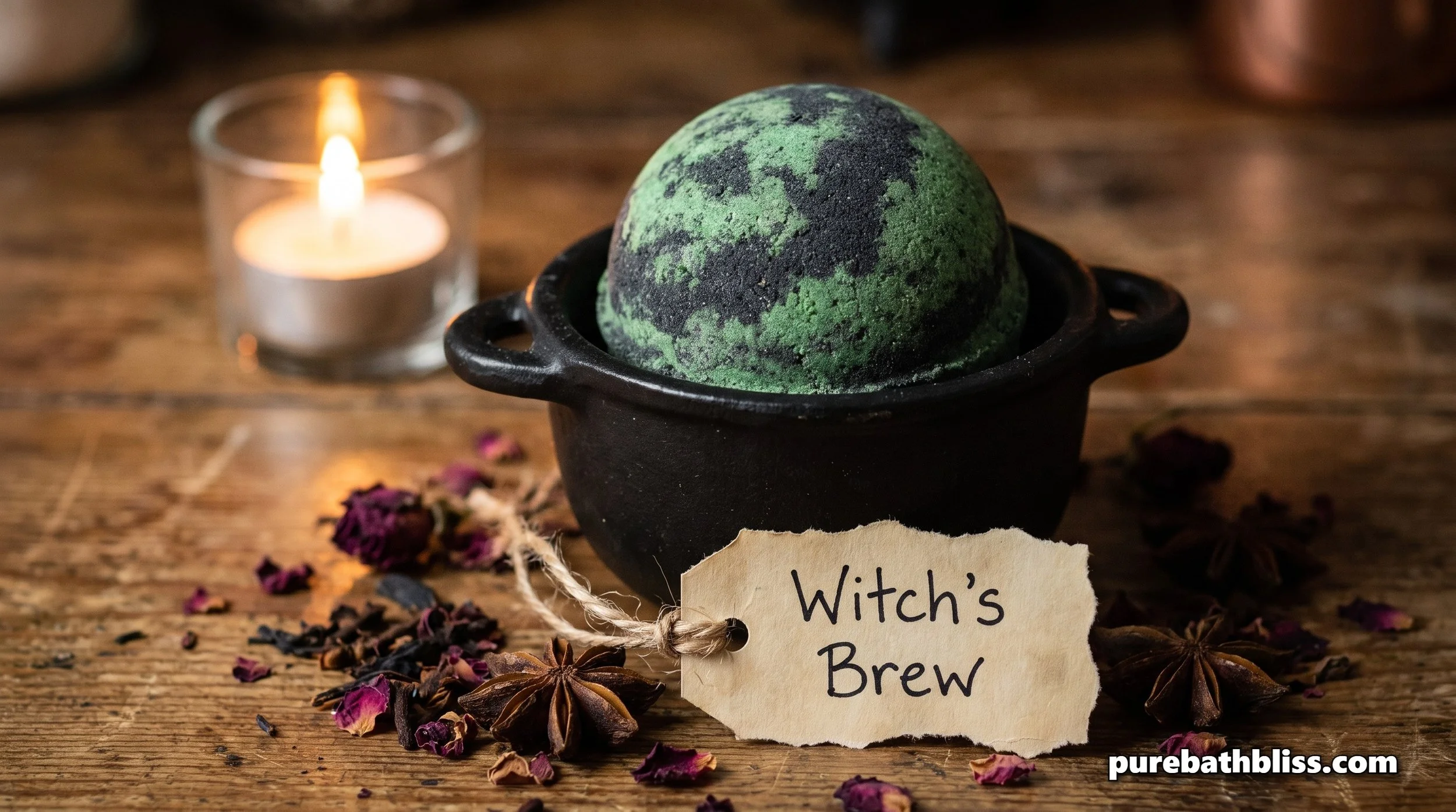
This is the most visually dramatic of the three recipes and the one kids request most. The green turns the bath water a deep swamp color and the black activated charcoal swirls create a genuinely spooky-looking bomb that smells of eucalyptus and spearmint, which is both Halloween-appropriate and genuinely decongestant, making it perfect for October when the first school colds are arriving.
Add to the base recipe:
Color: 2 teaspoons matcha powder mixed into the dry ingredients for the green base
Swirl: 1 teaspoon activated charcoal powder set aside for swirling into the mold after packing
Scent: 15 drops eucalyptus essential oil, 10 drops spearmint essential oil
To get the swirl effect: Pack the green mixture halfway into the mold, sprinkle a pinch of activated charcoal on top, add another layer of green, another pinch of charcoal, and close the mold. The charcoal layers create dark swirls through the green when the bomb dissolves in the bath. Press firmly before closing.
What the bath water does: The matcha produces a murky sage green that deepens as the bomb fizzes. The activated charcoal creates dark tendrils through the water as it dissolves. Combined, the effect is genuinely cauldron-like and the kids love it. Activated charcoal does not stain the tub.
Recipe 2: The Jack-O-Lantern (Orange and Spice)
The most kid-friendly of the three recipes in both appearance and scent. Warm orange with a genuine pumpkin spice character from clove, cinnamon, and sweet orange essential oils. Use a round mold with a green stem pressed into the top before setting for the full pumpkin effect, or any round mold for a simpler version.
Add to the base recipe:
Color: 1 teaspoon turmeric powder and 1 teaspoon paprika mixed into the dry ingredients. The combination produces a warm orange that is more vivid than turmeric alone.
Scent: 15 drops sweet orange essential oil, 8 drops clove bud essential oil, 5 drops cinnamon bark essential oil. Note: clove and cinnamon essential oils are skin sensitizers at high concentrations. Keep the combined total of these two oils to under 15 drops per full batch and do not use for children under 3 or those with sensitive skin without a patch test.
Optional decoration: Press a small dried clove into the top of the mold before the bath bomb sets as a natural decoration that scents the room when the bomb sits on the shelf.
What the bath water does: The turmeric and paprika combination produces warm amber-orange water that smells exactly like autumn. At higher quantities of paprika, very high skin contact with the bath water can temporarily tint lightly pigmented skin a faint warm tone that rinses off with water. Keep turmeric and paprika combined to 2 teaspoons maximum per batch to avoid this.
Recipe 3: The Midnight Galaxy (Purple and Black)
The most visually stunning of the three and the most photographable. Butterfly pea flower powder produces a deep indigo-purple that reacts with the citric acid in the bath water, shifting from purple through blue as the bomb fizzes. Combined with activated charcoal swirls, the galaxy effect in the bath is genuinely extraordinary and requires zero synthetic dye to achieve.
Add to the base recipe:
Color: 2 teaspoons butterfly pea flower powder mixed into the dry ingredients
Swirl: 1 teaspoon activated charcoal set aside for layering in the mold
Scent: 15 drops lavender essential oil, 10 drops cedarwood essential oil, 5 drops vetiver essential oil. This is the deep, dark, mysterious scent combination that complements the visual effect perfectly.
Optional: A pinch of cosmetic-grade mica in silver or gold dust on the outer surface of the mold before packing creates a shimmer effect on the finished bomb.
What the bath water does: Butterfly pea flower starts deep indigo-purple in the bomb and shifts to a vivid blue-purple as it contacts the slightly acidic bath water. The activated charcoal creates dark swirling tendrils. The combined effect is a genuinely galaxy-like bath that kids absolutely love and that photographs beautifully. This is the recipe most likely to generate the kind of excited reaction from children that makes bath time genuinely something to look forward to.
The Shopping List
Most of the base ingredients are pantry staples. The specialty items worth ordering in advance are:
Food-grade citric acid — the essential fizzing ingredient. Buy in a 1lb or larger bag for best value per batch.
Butterfly pea flower powder — for the galaxy recipe. The color-shifting effect is entirely natural and genuinely magical.
Food-grade activated charcoal powder — for the black swirl effect in both the witch's cauldron and galaxy recipes.
Halloween silicone molds — pumpkin, ghost, cauldron, and skull shapes are all available and reusable indefinitely.
Troubleshooting
| Problem | Most Likely Cause | Fix |
|---|---|---|
| Mixture fizzes during mixing | Too much moisture — from oil, water, or humid air | Add wet ingredients more slowly. Switch to a drier room. Reduce water additions entirely. |
| Bomb crumbles when unmolded | Not enough oil or not pressed firmly enough into mold | Add one more teaspoon of oil to the batch. Press very firmly when filling molds. |
| Bomb cracks after setting | Removed from mold too early or stored in a humid environment | Leave in mold for a full 12 hours. Store finished bombs in an airtight container or wrapped in plastic wrap. |
| Weak fizz in the bath | Old citric acid or baking soda that has absorbed moisture over time | Use fresh citric acid and baking soda. Test baking soda by adding a teaspoon to vinegar — it should fizz vigorously. |
| Color is lighter than expected | Not enough colorant powder, or diluted in a large bathtub | Increase colorant by half a teaspoon per batch. Natural colorants always produce softer tones than synthetic dyes. |
| Turmeric staining tub | Too much turmeric or sitting in colored water too long | Reduce turmeric to 1 teaspoon maximum. Rinse tub immediately after bath with hot water. A paste of baking soda on any stain removes it easily. |
The single most important variable in bath bomb making is humidity. On a humid day the mixture absorbs moisture from the air faster than on a dry day and premature fizzing becomes much more likely. If you are making these in a humid kitchen in October, run the range hood or work in an air-conditioned room. The lower the ambient humidity, the more forgiving the process.
Safety Notes for Kids
All three recipes use ingredients appropriate for children over three with healthy skin. For children under three or those with sensitive skin or eczema, omit the essential oils entirely from the recipe and use unscented versions. The fizzing, color, and skin-softening properties of the base recipe are completely intact without any scent additions and the bombs are still genuinely fun.
Activated charcoal is safe for bath use and does not absorb through the skin at the concentrations used in these recipes. It is the same ingredient used in many commercial facial masks and detox bath products. The concern about activated charcoal is in oral ingestion in very high quantities, not topical bath use.
The clove and cinnamon essential oils in the Jack-O-Lantern recipe are the only ingredients with any caution attached. Both are skin sensitizers at higher concentrations. Keeping each to under 8 drops per full batch and doing a brief patch test on the inner arm before a full bath is good practice for any child with a history of skin sensitivity. For children under 3, substitute sweet orange oil only and omit the clove and cinnamon entirely. Our guide to ingredients never to use on babies covers the broader picture of which compounds require the most caution in a child's bath routine.
Making Them with Kids
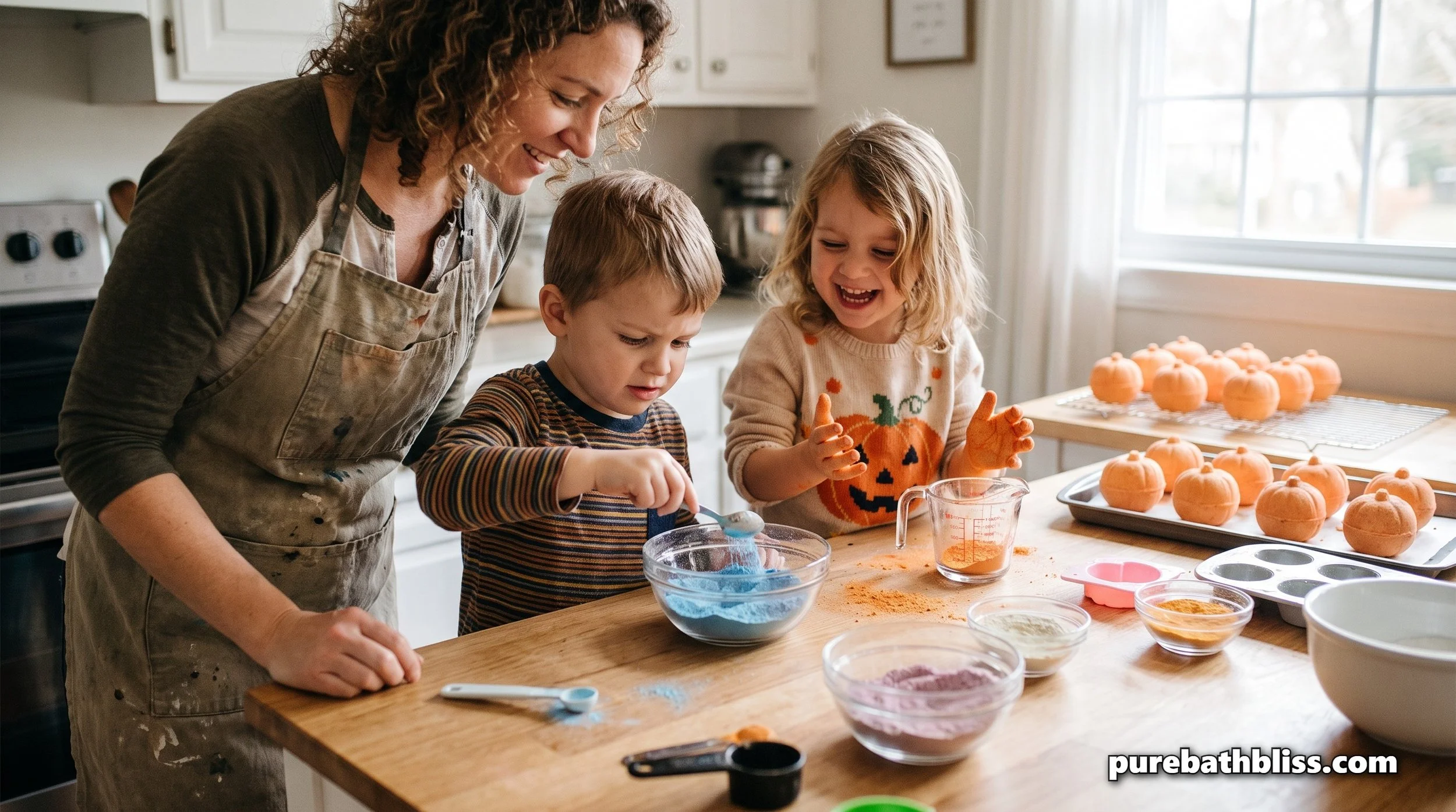
The making is half the point. These are a genuinely good activity for kids aged five and up because the chemistry is real and explainable (baking soda plus citric acid plus water equals carbon dioxide, which is the fizz), the color mixing is visual and immediate, and the result is something they use themselves. Children who help make the bath bomb are considerably more enthusiastic about the bath that follows.
Age-appropriate task division: five to seven year olds can measure dry ingredients, choose colors, and press the mixture into molds with supervision. Eight and up can handle the full mixing process and start to understand the chemistry behind why the moisture control matters. The activated charcoal swirling step is universally the favorite regardless of age, and wearing old clothes for that step is strongly advisable.