How to Remove Toilet Rust Stains with Cream of Tartar (And Why It Works Better Than Bleach)
Originally published March 2026, Updated July 2026
Transparency Note: We independently select these products based on research and user reviews. If you buy something through our links, we may earn a commission.
The orange-brown ring that develops in a toilet bowl is one of those bathroom problems that makes people reach immediately for the harshest chemical they can find. I understand the impulse. It looks bad. It implies something dirty is happening even in a bathroom that gets cleaned regularly. And the instinct is that something that looks that stubborn must require serious chemical firepower to remove.
The problem is that bleach, the product most people reach for, is exactly the wrong tool for rust. Bleach is an oxidiser. Rust is already iron oxide, meaning it is already the product of an oxidation reaction. Adding more oxidiser does not break rust down. It can actually set the stain deeper into the porcelain surface, making it significantly harder to remove. It is the equivalent of trying to put out a fire with petrol.
What actually dissolves rust is acid. Specifically, a chelating acid that can bind to the iron ions and pull them away from the porcelain surface in a water-soluble form. Cream of tartar, a byproduct of winemaking that lives in most baking cupboards, contains tartaric acid that does exactly this. I have used this method on toilets in house renovations and in our own home, and it consistently removes rust staining that bleach had made worse. Here is the complete guide.
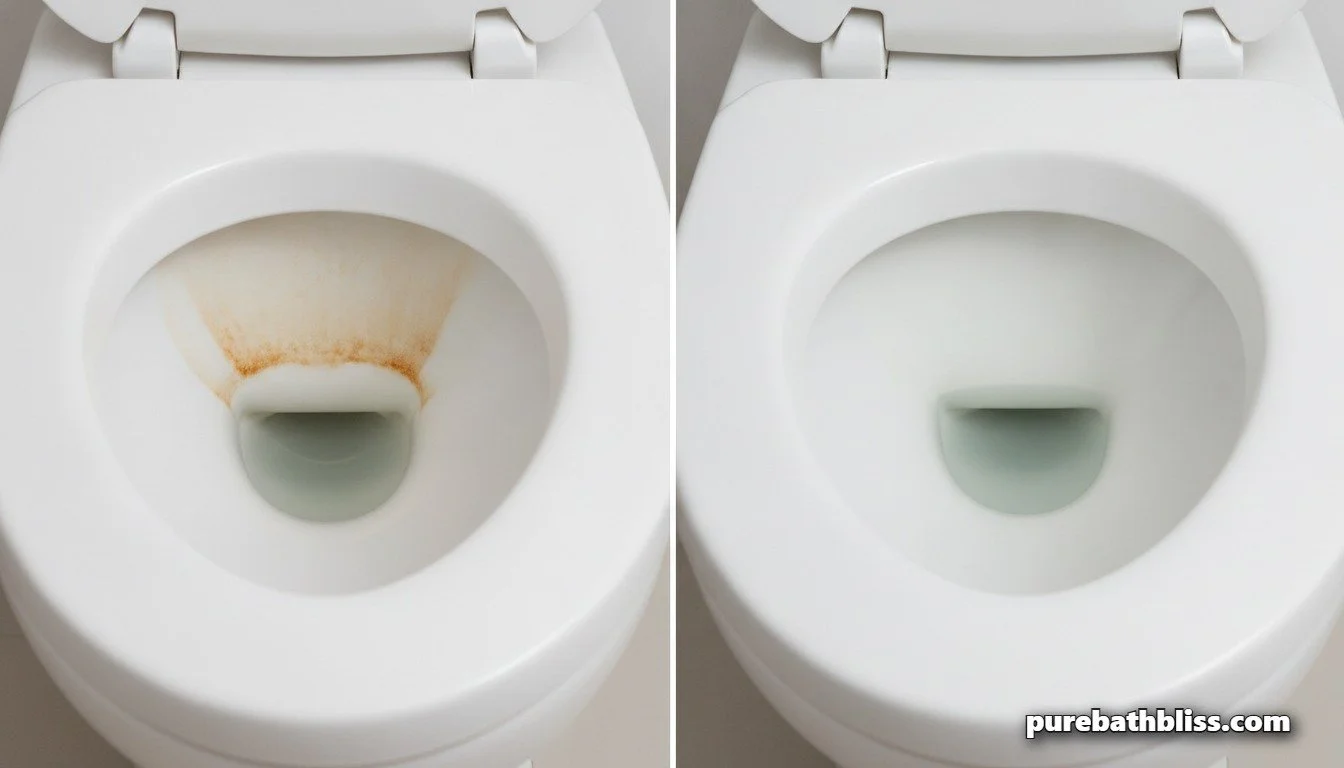
First: Identify What You Are Actually Dealing With
Not every toilet stain is rust. The colour tells you what chemistry you are dealing with, and using the wrong treatment is the most common reason DIY toilet cleaning fails. Rust treatment on limescale does nothing. Limescale treatment on rust does nothing. Before you start, confirm what you are looking at.
| Colour | What It Is | Right Treatment | Wrong Treatment |
|---|---|---|---|
| Orange or reddish-brown ring | Iron rust (iron oxide) | Acid: cream of tartar, lemon juice, citric acid | Bleach — sets the stain deeper |
| White or grey crusty buildup | Limescale (calcium/magnesium carbonate) | Acid: white vinegar, citric acid, lemon | Bleach or baking soda alone |
| Pink or reddish slime | Serratia marcescens bacteria | Hydrogen peroxide, tea tree oil, bleach | Acid alone — won't kill bacteria |
| Black or dark grey spots | Mold | Hydrogen peroxide, bleach solution | Vinegar alone on heavy mold |
| Yellow or brown urine scale | Uric acid deposits | Enzyme cleaner, baking soda and vinegar | Bleach (masks, does not dissolve) |
If your bowl has a combination of stains, which is common in hard water areas where iron and calcium deposits build up simultaneously, treat the rust first, then follow up with the limescale treatment. Our full guide to identifying and removing every type of toilet stain covers all five stain categories with specific treatments for each one.
Why Cream of Tartar Works: The Chemistry
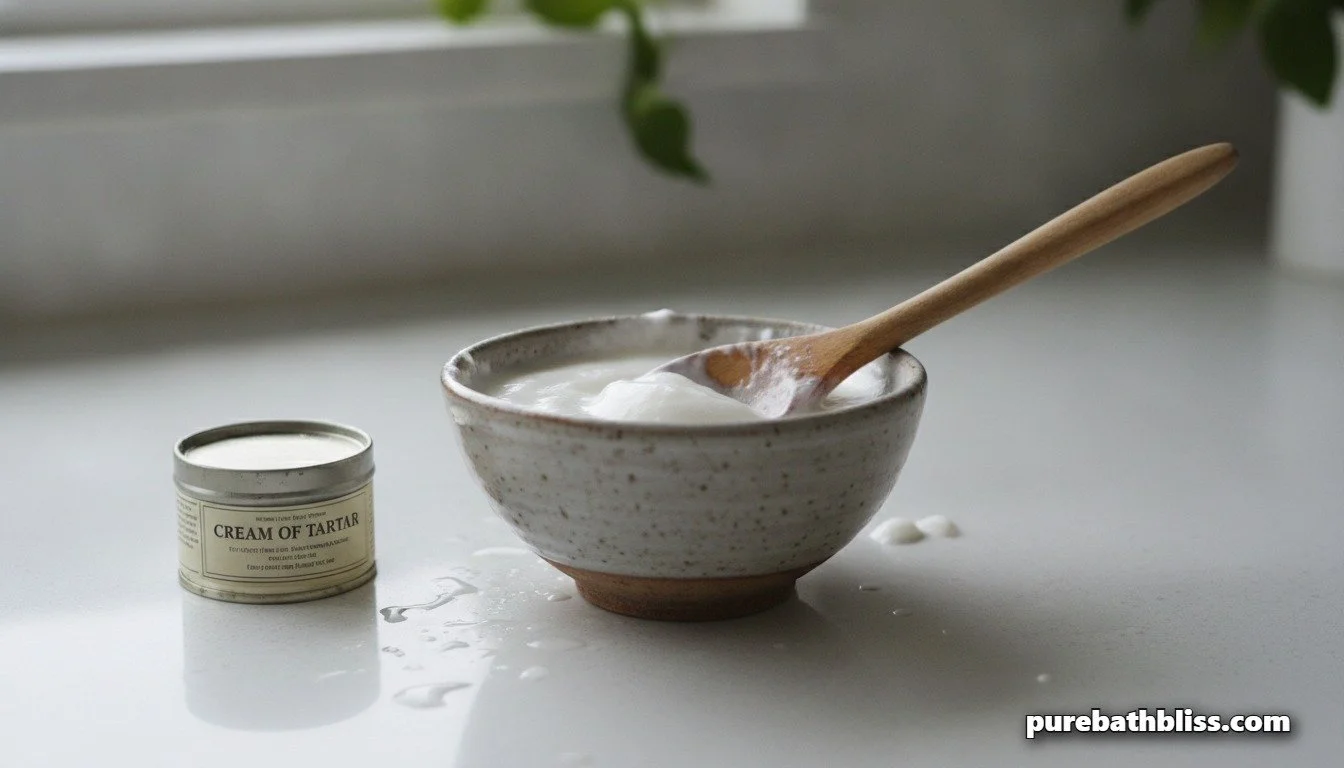
Cream of tartar is the common name for potassium bitartrate, the crystalline salt of tartaric acid. It forms naturally during the fermentation of grape juice into wine, collecting as sediment on the inside of wine barrels. That same potassium bitartrate ends up in your spice drawer where it is used to stabilise egg whites and leaven baked goods.
Its cleaning effectiveness against rust comes from two properties working together. The first is acidity. Potassium bitartrate has a pH of around 3.5, making it meaningfully acidic. At that pH, the tartaric acid reacts with iron oxide (rust) and converts it from an insoluble compound into a soluble iron tartrate complex that can be rinsed away. This is a straightforward acid-base reaction. The rust is alkaline at the porcelain surface level. The acid neutralises and dissolves it.
The second property is chelation. Tartaric acid is a particularly effective chelating agent, meaning its molecular structure allows it to bind directly to metal ions, specifically iron ions, and hold onto them. When the tartaric acid binds to the iron in the rust deposit and the whole complex becomes water soluble, the iron is physically carried away from the porcelain surface when you rinse. This chelating action is why cream of tartar outperforms simple acids like lemon juice on severe rust staining. It does not just dissolve the rust chemically — it grabs it and takes it with it.
The mild abrasivity of the powder adds a third dimension. The granular texture of cream of tartar paste provides gentle mechanical scrubbing that helps lift loosened rust particles without scratching the porcelain glaze the way pumice or harsh commercial cleaners can.
Hydrogen peroxide, when added to the paste instead of water, amplifies the effect. Peroxide is an oxidiser that bleaches the iron compounds as the tartaric acid dissolves them, improving both the cleaning and the whitening action on the porcelain surface. For light staining, water is sufficient. For moderate to heavy staining, always use hydrogen peroxide as your mixing agent.
Why Bleach Makes Rust Worse
This is worth dwelling on because it is the most common mistake people make. Bleach (sodium hypochlorite) is a powerful oxidiser and disinfectant. It is genuinely excellent for killing bacteria, whitening organic stains, and removing mold. It is the completely wrong tool for mineral stains.
Rust is iron oxide, the product of iron reacting with oxygen and moisture. When you apply bleach to rust, you are applying more oxidising chemistry to an already oxidised compound. Rather than dissolving the iron oxide, the bleach can further oxidise the iron deposits and bond them more strongly to the porcelain surface. What was a surface stain can become a deeper, harder-to-remove deposit. Multiple attempts with bleach on rust staining progressively set the stain rather than removing it.
The simple rule: for anything that is alive (bacteria, mould, mildew) use bleach or hydrogen peroxide. For anything that is mineral (rust, limescale, hard water deposits) use acid. Cream of tartar, lemon juice, white vinegar, and citric acid are all acids. Bleach is not. They are not interchangeable.
The Complete Method: Step by Step
What You Need
Cream of tartar (2 to 3 tablespoons per treatment)
3 percent hydrogen peroxide (for moderate to heavy staining) or warm water (for light staining)
A small bowl for mixing
An old toothbrush or a stiff toilet brush
Rubber gloves
Plastic wrap (for severe staining, optional)
Step 1: Lower the water level
For the paste to work directly on the stain, it needs to sit in contact with the porcelain rather than being diluted by bowl water. Use a toilet plunger to push the water level down below the stain line. This takes about thirty seconds and makes a significant difference in how effectively the paste adheres to the stained area.
Step 2: Make the paste
Combine two to three tablespoons of cream of tartar in a small bowl. Add hydrogen peroxide a few drops at a time, mixing between additions, until you reach the consistency of thick cake frosting. It should hold its shape on the spoon and not slide. For light staining, use warm water instead of peroxide. For moderate to heavy staining, peroxide is strongly preferred as the mixing agent.
Step 3: Apply to the stain
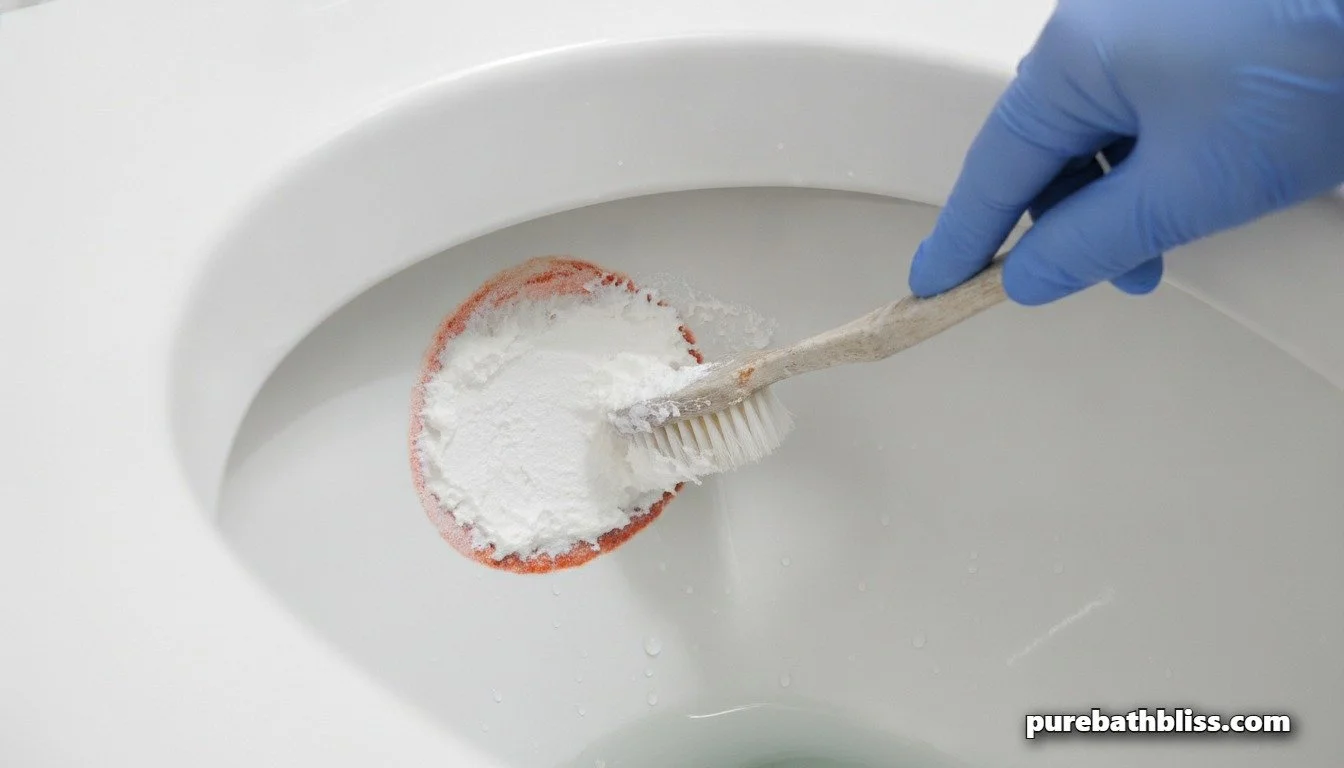
Spread the paste directly onto the rust stain using an old toothbrush. Work the paste into the stain and press firmly so it adheres to the vertical porcelain surface without sliding. Cover the entire stained area. You want the paste in direct contact with the rust, not sitting in the bowl water.
Step 4: Allow dwell time
Leave the paste undisturbed for at least twenty minutes. For severe or old staining, extend this to sixty minutes or overnight if the paste stays in contact. For overnight treatments, cover the paste with a small piece of plastic wrap pressed against the porcelain to prevent it from drying out. The tartaric acid needs sustained contact time to break the iron oxide bonds and form the soluble iron tartrate complex. This is the step most people rush. Dwell time is where the chemistry happens.
Step 5: Scrub and flush
After the dwell time, scrub with your toothbrush or toilet brush using firm circular motions. You should see the rust staining lifting as you work. If the stain has not fully cleared, do not scrub harder. Apply a second treatment and extend the dwell time. Mechanical force alone will not remove what the chemistry has not yet dissolved. Flush to rinse and assess. A second treatment the following day is more effective than scrubbing aggressively on the first pass.
Severity Guide: Matching the Treatment to the Stain
| Stain Severity | Description | Mixing Agent | Dwell Time | Escalation if Needed |
|---|---|---|---|---|
| Light | Faint orange tint, less than a few weeks old | Warm water | 20 minutes | Second application with peroxide |
| Moderate | Clear orange-brown ring, several months old | Hydrogen peroxide | 45 to 60 minutes | Overnight treatment with plastic wrap |
| Severe | Deep rust ring, multiple years of buildup | Hydrogen peroxide | Overnight, 2 to 3 applications | Wet pumice stone after paste treatments |
| Calcified | Rough, raised, hardened deposit | Hydrogen peroxide | Overnight minimum | Pumice first to break surface, then paste |
For staining that has not shifted after two to three cream of tartar treatments, a pumice stone used wet on wet porcelain is the mechanical escalation. Always keep both the stone and the porcelain surface wet during use. A dry pumice stone on dry porcelain will scratch the glaze permanently. The pumice removes the calcified upper layer of the stain, which then exposes fresh surface for the cream of tartar treatment to penetrate.
Natural Rust Remover Comparison
| Method | Active Ingredient | Best For | Limitations | Safe for Porcelain? |
|---|---|---|---|---|
| Cream of tartar + peroxide | Tartaric acid, chelation | Moderate to heavy rust | Needs dwell time | Yes |
| Lemon juice + salt | Citric acid, mild abrasive | Light rust, maintenance | Less effective on heavy staining | Yes |
| White vinegar | Acetic acid | Limescale, light rust | Weaker than tartaric acid on iron | Yes |
| Commercial rust remover | Hydrochloric or sulfuric acid | Severe rust | Can damage seals and tank components with repeated use, toxic fumes | Use sparingly |
| Bleach | Sodium hypochlorite (oxidiser) | Bacteria, mold, organic stains | Sets rust stains deeper — do not use on iron deposits | Not for rust |
| Pumice stone | Mechanical abrasion | Calcified heavy rust after chemical treatment | Must be used wet on wet only — scratches dry porcelain | Yes if wet |
For toilet bowl rust specifically, the cream of tartar and hydrogen peroxide combination is the most effective non-toxic option available. Lemon juice and salt is an excellent first-response treatment for light staining and is what we cover in our lemon and salt toilet cleaning guide. For moderate to severe rust, cream of tartar with peroxide is the step up when citrus alone is not enough.
Finding the Source: Why the Rust Keeps Coming Back
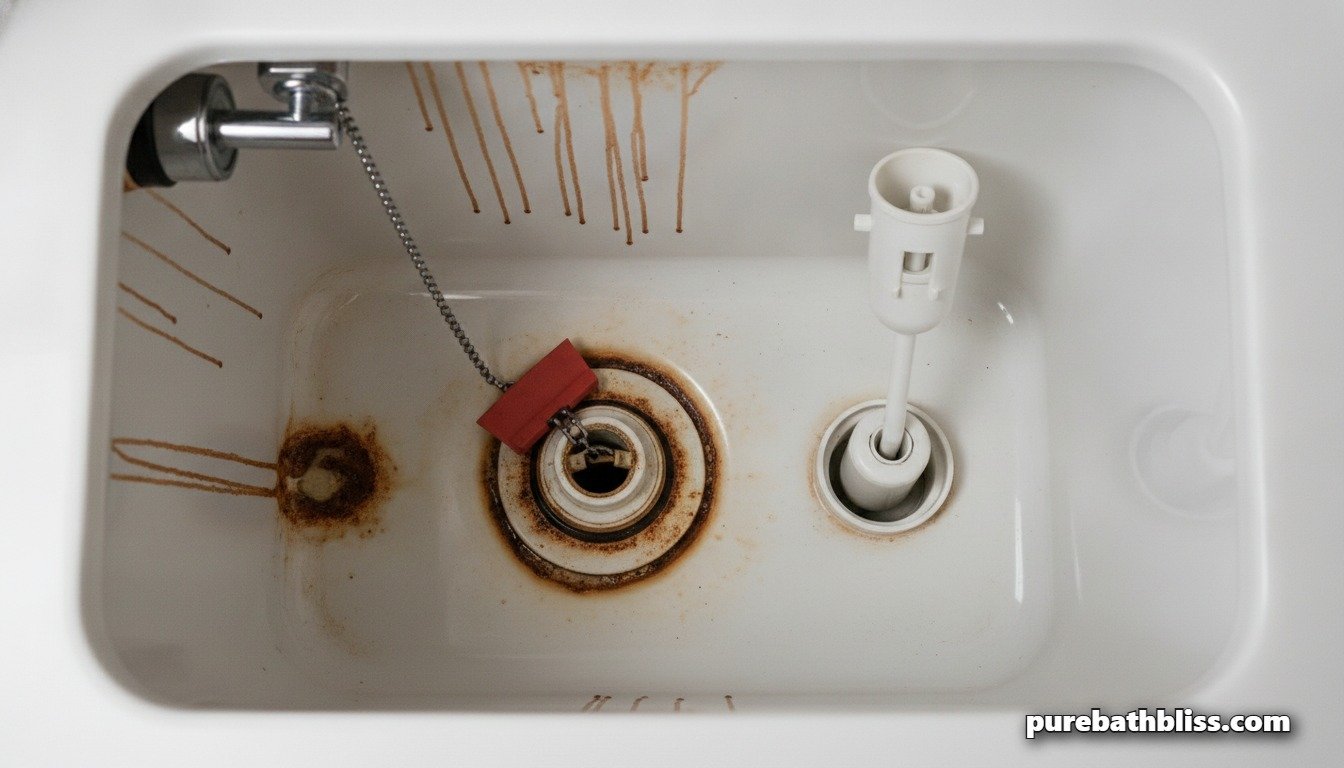
Cleaning the rust is the immediate fix. Understanding where it is coming from is how you stop it returning every few weeks. Toilet rust has four common sources, and diagnosing yours determines what the long-term solution actually is.
High iron content in your water supply is the most common cause in municipal water areas and the most common in well water areas. When water with elevated iron concentration sits in the toilet bowl, the iron oxidises at the waterline exactly as iron does anywhere when exposed to air and moisture. The staining appears at the waterline because that is where the iron-containing water meets the oxygen in the bowl. If this is your situation, a whole-house iron filter or a point-of-use filter on your water supply line is the structural solution. Cleaning treats the symptom. Filtration treats the cause.
Corroding components inside the toilet tank are an underappreciated source of rust staining. Open your toilet tank and look at the fill valve, the flush valve seat, and any metal components. If you see orange-brown residue on the tank walls or on the internal components, rust particles are being deposited into the bowl with every flush. This is also a sign that those components are degrading and should be replaced before a full failure occurs. Replacing a fill valve and flapper costs under twenty dollars and takes under an hour. Letting corroding tank components continue to deposit rust into your bowl is both a cleaning problem and a plumbing problem.
An aging water heater with a deteriorating anode rod introduces rust particles into hot water lines throughout the house. You might notice rust staining not just in your toilet but also on faucet aerators, in your shower, and on any surface that regularly contacts hot water. If your water heater is over ten years old and you are seeing rust staining across multiple fixtures, the anode rod is likely the culprit. This is a plumbing decision worth discussing with a professional.
Shaving cream cans, razor blades, or metal items stored on the toilet cistern lid or nearby are a frequently missed source of rust rings. The metal base of a shaving cream can leaves a perfect rust ring on porcelain in a matter of days when moisture from condensation sits between the can and the surface. Move metal items off bathroom surfaces and onto non-porous holders or trays.
Prevention: Keeping the Rust From Returning
Once the bowl is clean, a few simple habits prevent rust from re-establishing itself between deep cleans.
Monthly vinegar tank treatment. Pour two cups of white vinegar into the toilet tank before bed once a month. The vinegar sits in the tank overnight and runs through the rim jets during the morning flush, dissolving early-stage mineral and iron deposits from the jets and the bowl surface before they can set. This keeps the jets clear and the bowl brighter with no scrubbing required. Our vinegar bathroom guide covers this method and six other applications in detail.
Weekly toilet bomb maintenance. Our DIY toilet cleaning bombs use citric acid and baking soda to maintain the bowl between deep cleans. Dropping one in twice a week provides a continuous mild acid treatment that prevents mineral and iron deposits from accumulating to the point of requiring the cream of tartar intervention.
Keep the lid closed. This is a surprisingly effective preventive measure for iron-rich water areas. When the toilet lid is open and water sits at the surface in contact with the air, the iron oxidises faster. A closed lid reduces the oxygen exposure at the waterline and slows the rust formation cycle.
Dry storage for metal items. Any metal item that lives near the toilet, shaving cream, a metal soap dish, razor blades, metal candle holders, should sit on a waterproof tray rather than directly on porcelain or tile. The condensation and moisture in a bathroom creates rust transfer from any corroding metal surface to whatever it sits on.
The Shopping List
Cream of Tartar: Buy in bulk — a large container costs under $15 and lasts a year of regular use. The small spice-rack size is not cost-effective if you are using it for cleaning as well as baking.
Hydrogen Peroxide: 3 percent hydrogen peroxide — keep it in a dark bottle away from light. It degrades to plain water when exposed to UV and loses its effectiveness.
Toilet Brush with Stiff Bristles: A proper stiff-bristle toilet brush makes a real difference on stubborn staining. The soft-bristle versions that came with most toilet brush sets do not provide enough mechanical action on calcified rust deposits.
Pumice Stone with Handle: A handled pumice stone for severe staining that does not respond to the paste alone. Always use wet on wet porcelain only.
The Honest Bottom Line
Cream of tartar removes toilet rust stains effectively because the chemistry is right for the problem. Tartaric acid dissolves iron oxide. Chelation pulls the iron away from the porcelain. Hydrogen peroxide amplifies both effects. There is no mystery to it, and there is no reason to reach for commercial rust removers that typically use hydrochloric acid or sulfuric acid at concentrations that can damage rubber seals, tank components, and plumbing connections with repeated use.
The caveat is that cleaning the stain without addressing the source means the stain returns. If your toilet is developing rust staining every few weeks despite regular treatment, the investigation starts in the tank and ends at the water supply. Treating a symptom indefinitely is not a solution. Finding the source is.