The 2026 Organic Bathroom Forecast: 5 Trends That Will Define Sustainable Luxury
Originally published December 2025, Updated June 2026
I've been renovating bathrooms for a long time, and I can tell you that the industry is in the middle of something I haven't seen before. It's not just a style shift. The way people think about what a bathroom should do and what it should be made of has fundamentally changed in the last two years.
The clinical white bathroom with chrome fixtures and rows of plastic bottles isn't just aesthetically out of fashion. It's being replaced by something that performs better, costs less to maintain, and actually makes people feel better when they're in it. That's a meaningful convergence.
According to a 2026 survey of 101 interior design professionals by Fixr.com, 75 percent confirmed that warm, earthy tones have officially replaced cool neutrals, and 62 percent say homeowners are now prioritizing natural light as a primary driver of bathroom design decisions. These aren't fringe preferences. They represent a fundamental shift in what the market wants.
Here are the five trends I'm seeing dominate every project I work on and every renovation conversation I have, and what each one actually means if you want to bring it into your home this year.
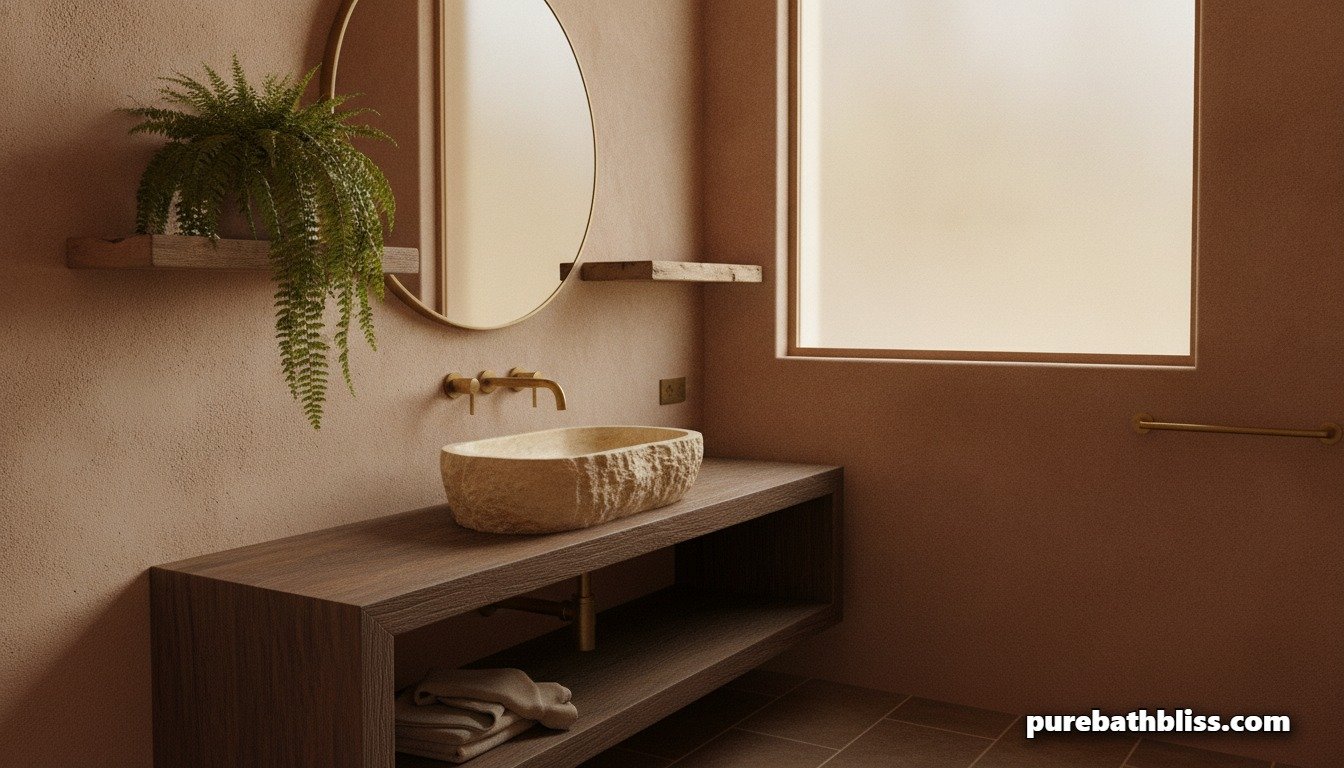
Trend 1: Biophilic Design Has Moved from Accent to Architecture
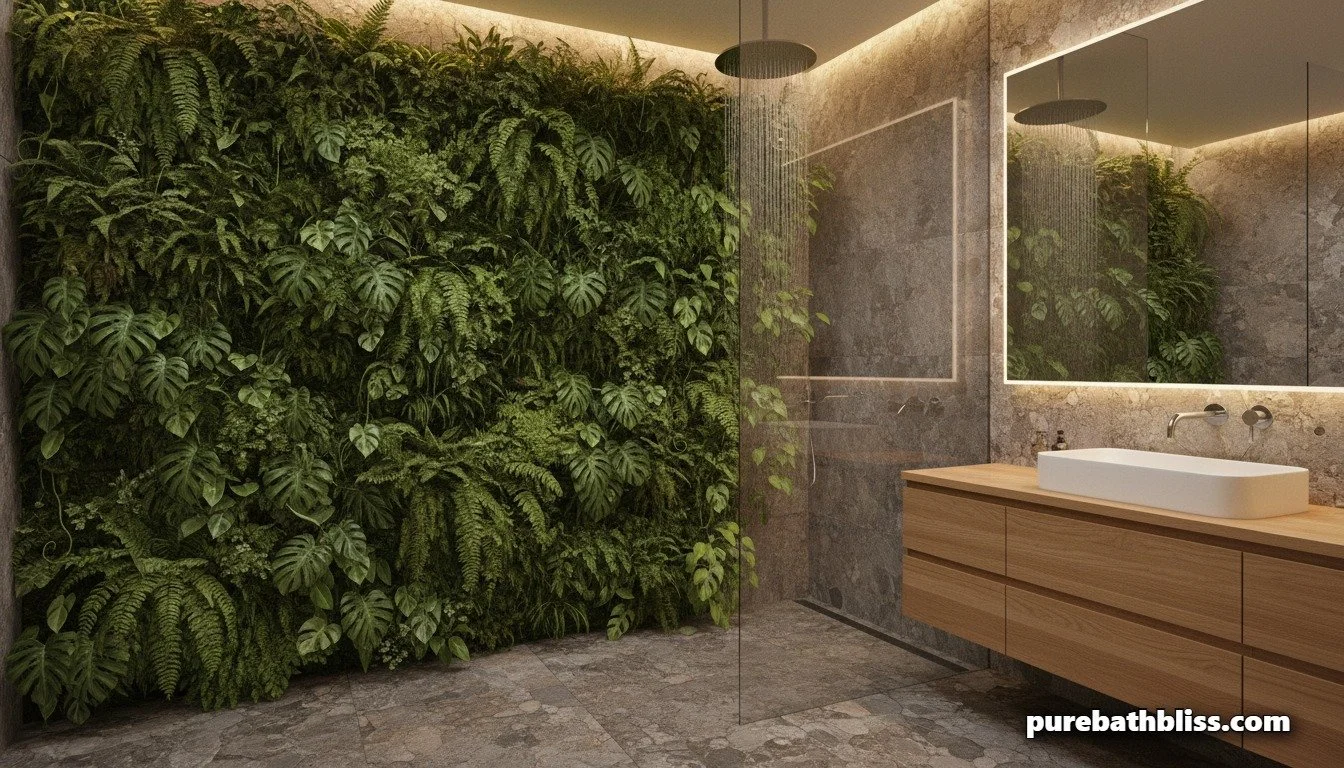
Biophilic design, the practice of bringing natural elements into built environments, has been discussed in design circles for years. In 2026 it stopped being a talking point and became a primary design driver. According to the Fixr.com industry survey, 48 percent of design professionals now cite biophilic design as a key demand from Millennial clients, with Gen Z close behind at 28 percent.
What's changed is the scale of the commitment. A lone snake plant on the windowsill was the 2022 version of biophilic design. What I'm seeing in renovations now is much more deliberate: natural wood vanities in white oak or teak, stone basins carved from single travertine blocks, living walls of humidity-loving plants built into shower alcoves, and palettes drawn entirely from outdoor landscapes. Sage, moss green, warm terracotta, clay, sand. The bathroom color story in 2026 is essentially a forest floor.
The science behind why this matters is solid. Multiple studies have documented that exposure to natural elements lowers salivary cortisol and activates the parasympathetic nervous system. In a room where most people spend their first and last ten minutes of every day, that matters enormously. You don't have to have a thousand-dollar stone basin to participate in this trend. The entry point is genuinely accessible.
The most practical starting point is plants, and the bathroom is actually one of the best rooms in the house for them. Humidity-loving species like Boston ferns, pothos, peace lilies, and bird's nest ferns thrive in exactly the environment your shower creates. Our guide to 7 unkillable plants for windowless bathrooms is where to start if you want species that actually survive rather than slowly die on your vanity. If you're ready to go further, our full guide to shower plants covers twelve species that genuinely thrive in high-humidity environments, with specific placement strategies for different bathroom layouts.
Trend 2: The End of the Clinical White Bathroom
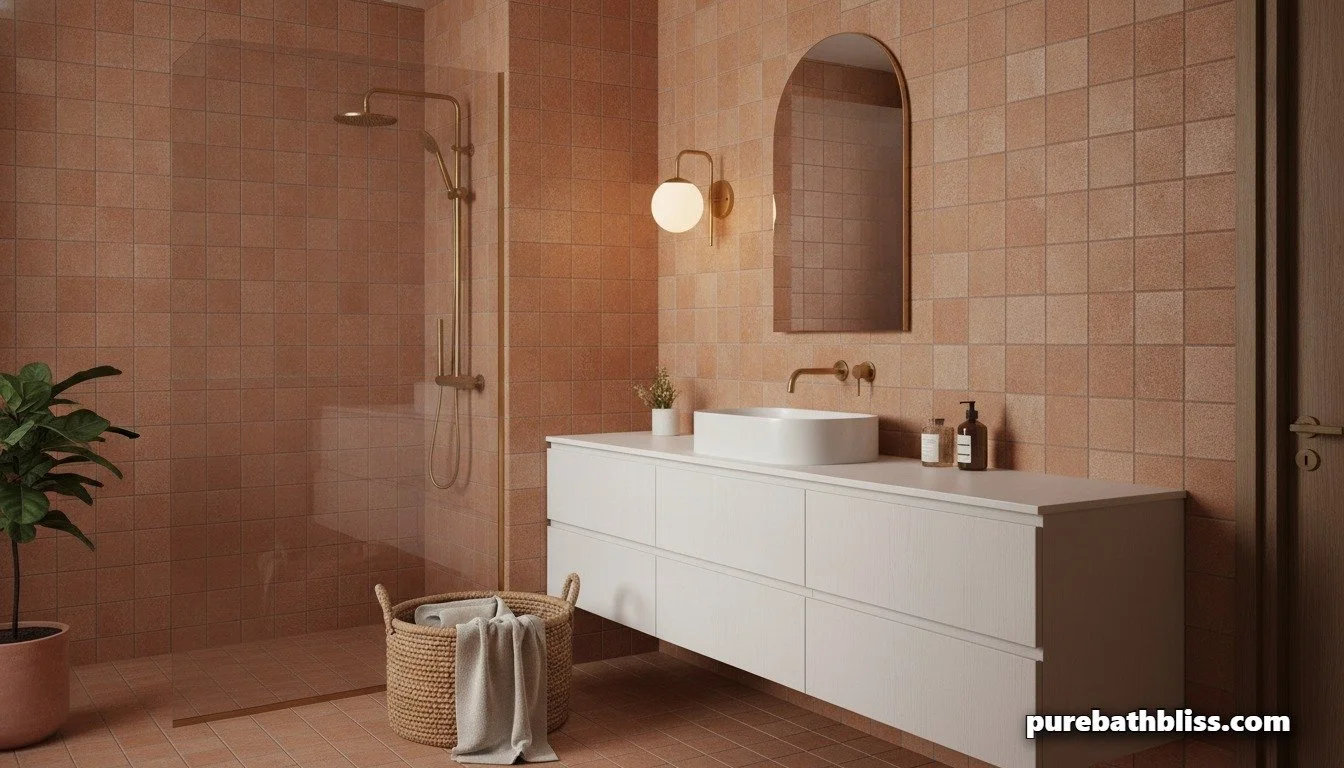
I've installed a lot of white subway tile in my career. For about a decade it was the default safe choice for bathrooms across every price point. In 2026, that era is genuinely over. The Fixr.com survey found that 75 percent of design professionals confirm warm, earthy tones have replaced cool neutrals as the dominant palette. Modern Bathroom's 2026 trend analysis describes it as a shift from "clinical aesthetics" to "organic modernism," where the bathroom is treated as a furnished living environment rather than a utility space.
What's replacing white isn't bold color for its own sake. It's the introduction of depth and warmth through materials and tone. Limewash plaster walls in soft clay. Zellige and terracotta tiles with their naturally uneven, handmade surfaces. Fluted wood cabinetry in warm oak that reads more like furniture than built-in joinery. Matte black and aged brass fixtures instead of polished chrome. The resulting rooms feel personal and settled rather than staged and sterile.
From a practical standpoint, this shift is easier to achieve than it sounds. Paint is the lowest-cost, highest-impact lever available. A warm clay or sage green on the walls transforms a white bathroom without touching a single fixture. The critical variables are finish (you need something moisture-resistant in a bathroom) and VOC content (low-VOC formulas are now genuinely as durable as conventional alternatives). Our guide to the 7 best eco-friendly paints for humid rooms covers the specific formulas that hold up in steam environments without releasing harmful compounds every time you shower. And if you are navigating which finish to use where, our satin versus semi-gloss showdown breaks down exactly which sheen level goes where and why it matters for longevity in a high-humidity space.
One important note for anyone renovating: the move away from white doesn't mean abandoning elegance. The rooms doing this well in 2026 are characterized by restraint and material quality. One or two good decisions executed properly, a travertine-inspired tile, a warm paint color, a single piece of aged brass hardware, read as sophisticated. Trying to layer everything at once reads as chaotic. Pick your material story and stay in it.
Trend 3: The Waterless Beauty Revolution
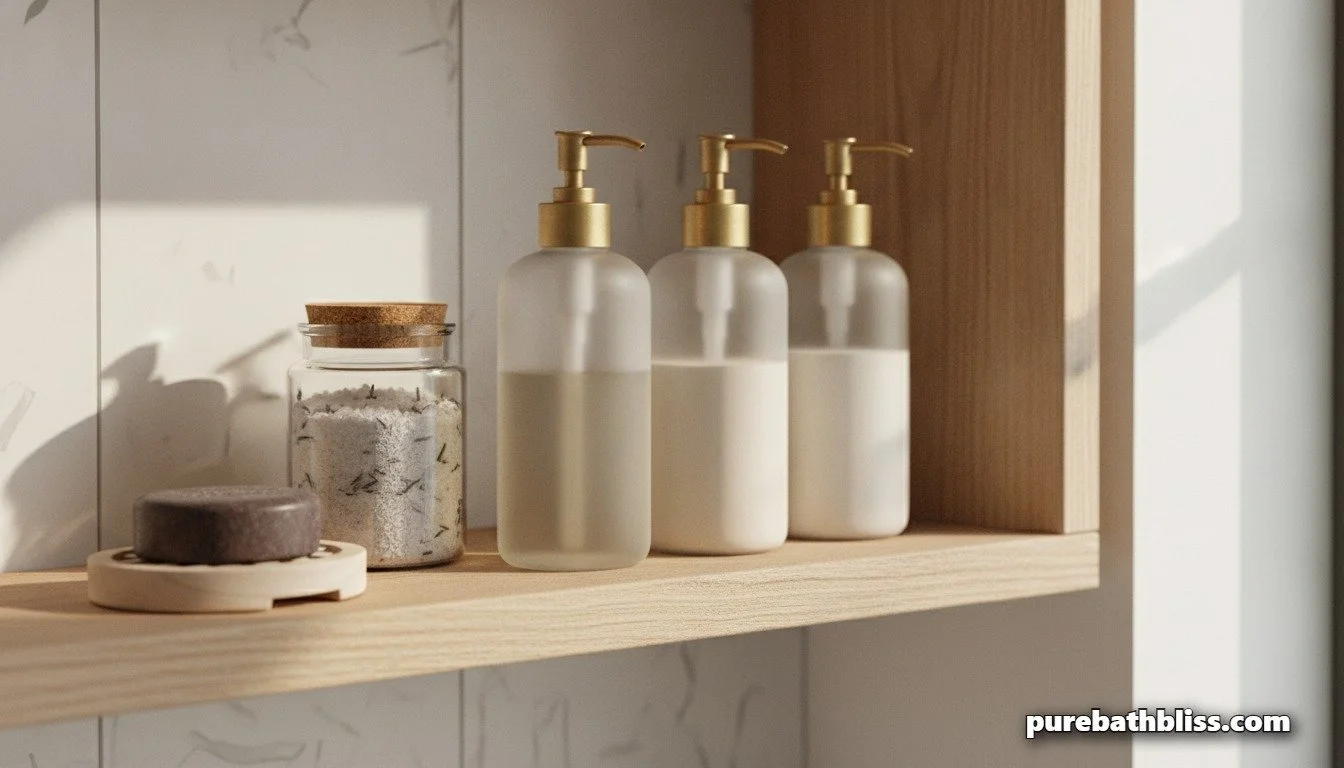
Most conventional liquid shampoos, body washes, and cleansers are between 60 and 80 percent water. You are paying to ship water, paying for preservatives to stabilize that water, and paying for the plastic bottle that holds all of it. In 2026, a meaningful segment of the market has figured this out and the product landscape is shifting in response.
Solid shampoo bars, powder-to-foam cleansers, concentrated gel tablets that you drop into a reusable bottle, and refillable glass or aluminum vessels designed to live permanently in the bathroom as decor are all gaining real commercial traction. This isn't a niche wellness phenomenon anymore. Major brands including Aesop, Lush, and a growing number of direct-to-consumer labels are building their entire product architecture around the waterless format.
The aesthetic dimension of this shift is worth noting. Refillable frosted glass and brushed metal containers displayed openly on a shelf look considerably better than an assortment of plastic bottles with their labels turned to the wall. The visual declutter that comes with switching to solid and concentrated formats is one of the easiest bathroom aesthetic upgrades available, and it costs less over time than replacing single-use products repeatedly.
The practical starting point is replacing one product at a time rather than switching everything at once. Shampoo bars have the steepest learning curve for most people (there is a brief adjustment period as your hair adapts), so many people start with body wash or hand soap concentrates and move to hair care once they're confident in the format. The shelf clutter reduction is immediate and motivating.
Trend 4: Intelligent Water Conservation
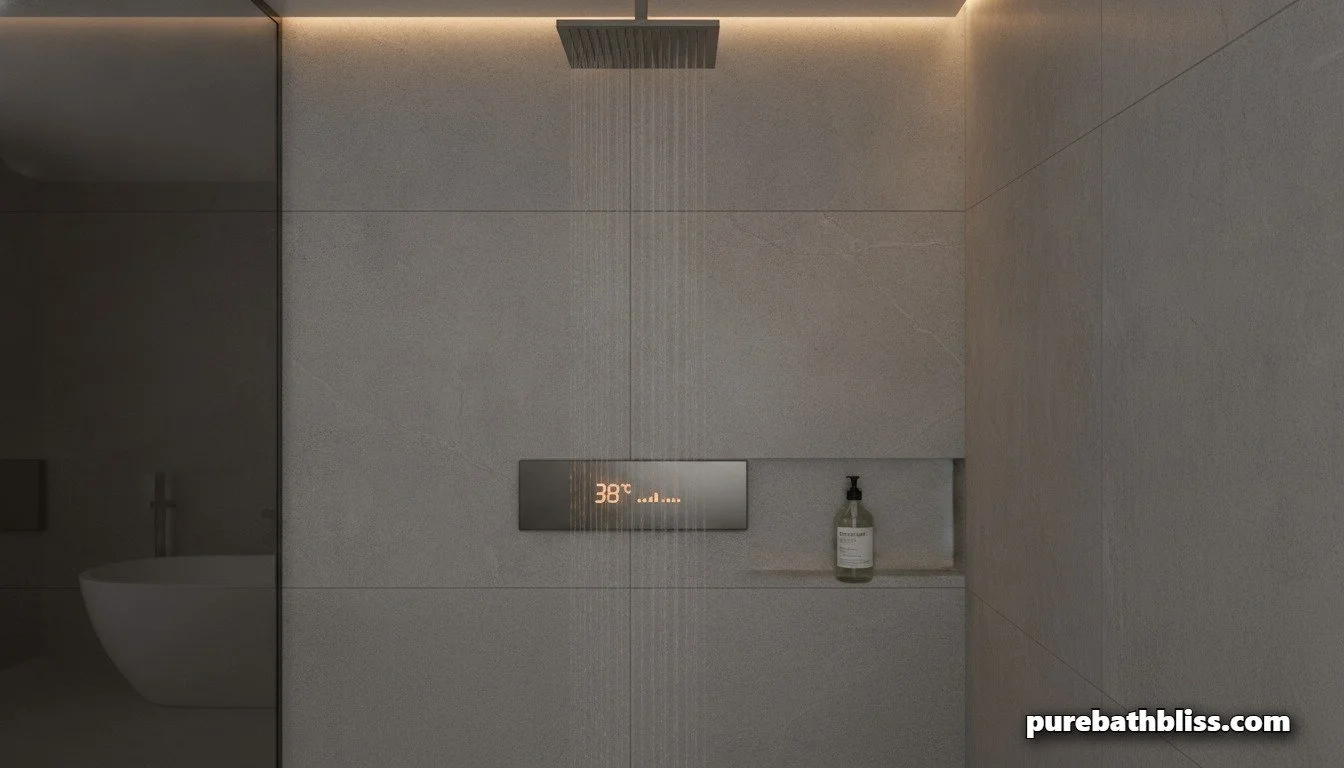
Water efficiency has been on the renovation checklist for years, but the conversation has changed. In earlier iterations, water efficiency meant sacrifice, lower pressure, smaller volume, a less enjoyable shower. In 2026, the engineering has caught up to the expectation. Smart shower systems now pause flow while water heats to temperature, display real-time usage data on wall-mounted panels, and send weekly consumption reports to your phone. The pressure is maintained, the experience is unchanged, and the water savings are significant.
According to Fixr.com, 54 percent of design professionals cite Millennials as the primary drivers of smart technology integration in bathrooms, with water efficiency embedded as a core feature rather than an add-on. The BuildTeam 2026 trend report notes that water-saving fixtures are now considered must-haves rather than upgrades for environmentally aware buyers.
On the fixture side, the toilet is where the biggest efficiency gains are available in most homes. Modern WaterSense-certified toilets use as little as 0.8 to 1.28 gallons per flush, compared to the 3.5 to 7 gallons that pre-1994 toilets used. For a family of four, upgrading to a high-efficiency model can save over 15,000 gallons of water per year. Our detailed guide to the best low-flow toilets of 2026 covers the specific models worth buying, with honest performance assessments across different household usage patterns.
You don't need a full smart home to participate in this trend. A WaterSense showerhead, a $25 shower timer, and a high-efficiency toilet are the three highest-impact changes most households can make without a full renovation. Start with whichever one your current setup makes easiest, and work outward from there.
Trend 5: Ingredient Intelligence — The End of Mystery "Fragrance"
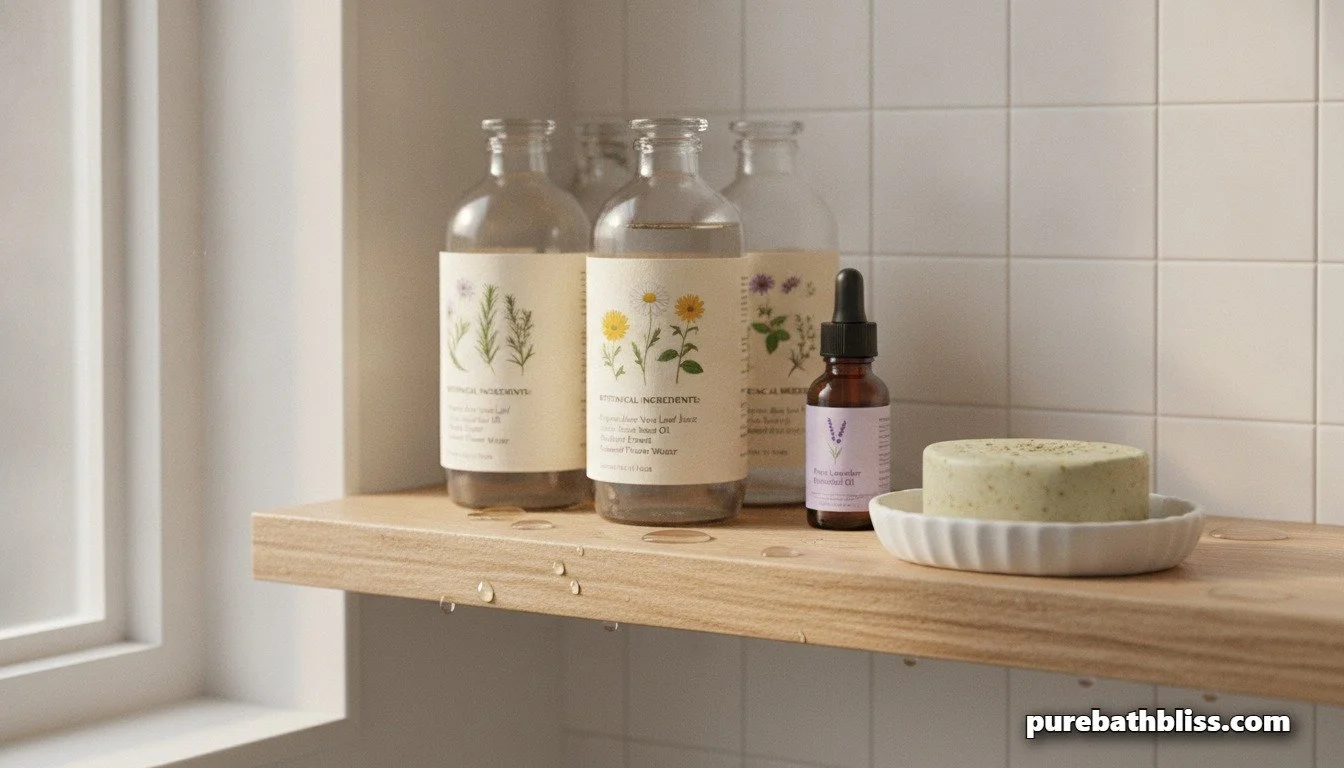
Look at the ingredients list on most conventional shampoos, body washes, and bathroom cleaners. You'll typically find a long list of chemical names followed by the catch-all term "fragrance" or "parfum." That single word can legally conceal hundreds of individual chemical compounds, including known endocrine disruptors, respiratory irritants, and skin sensitizers, none of which the manufacturer is required to disclose.
In 2026, consumers are increasingly rejecting this opacity. The demand for ingredient transparency, already well established in food labeling, has migrated into personal care. The brands winning in this space are those that list every compound by its full name, source single-origin essential oils, and can explain what each ingredient does and why it's in the formula. The ones losing ground are those still hiding behind "proprietary fragrance blends."
This matters beyond the marketing. The bathroom is one of the highest chemical exposure environments in the home. You absorb compounds through skin contact during bathing, through inhalation in an enclosed steamy room, and through repeated daily contact with cleaning products. The cumulative exposure from conventional bathroom products is not trivial, particularly in households with young children whose developing systems are more vulnerable to chemical disruption.
The practical application of ingredient intelligence isn't about achieving perfection overnight. It's about making better decisions sequentially. Replace your synthetic air freshener with a diffuser and a pure essential oil. Swap your conventional toilet cleaner for the DIY toilet bombs that use baking soda, citric acid, and tea tree oil instead of hydrochloric acid and synthetic fragrance. Choose cleaning products where you can read and understand every ingredient on the label.
The same principle applies to the products going on your skin. Understanding what's in your body wash matters more than which brand made it. Our guide to non-toxic bathroom cleaning with white vinegar is a good entry point for replacing the most chemically aggressive products under your sink with something that's equally effective and genuinely transparent about what it contains.
What These Trends Have in Common
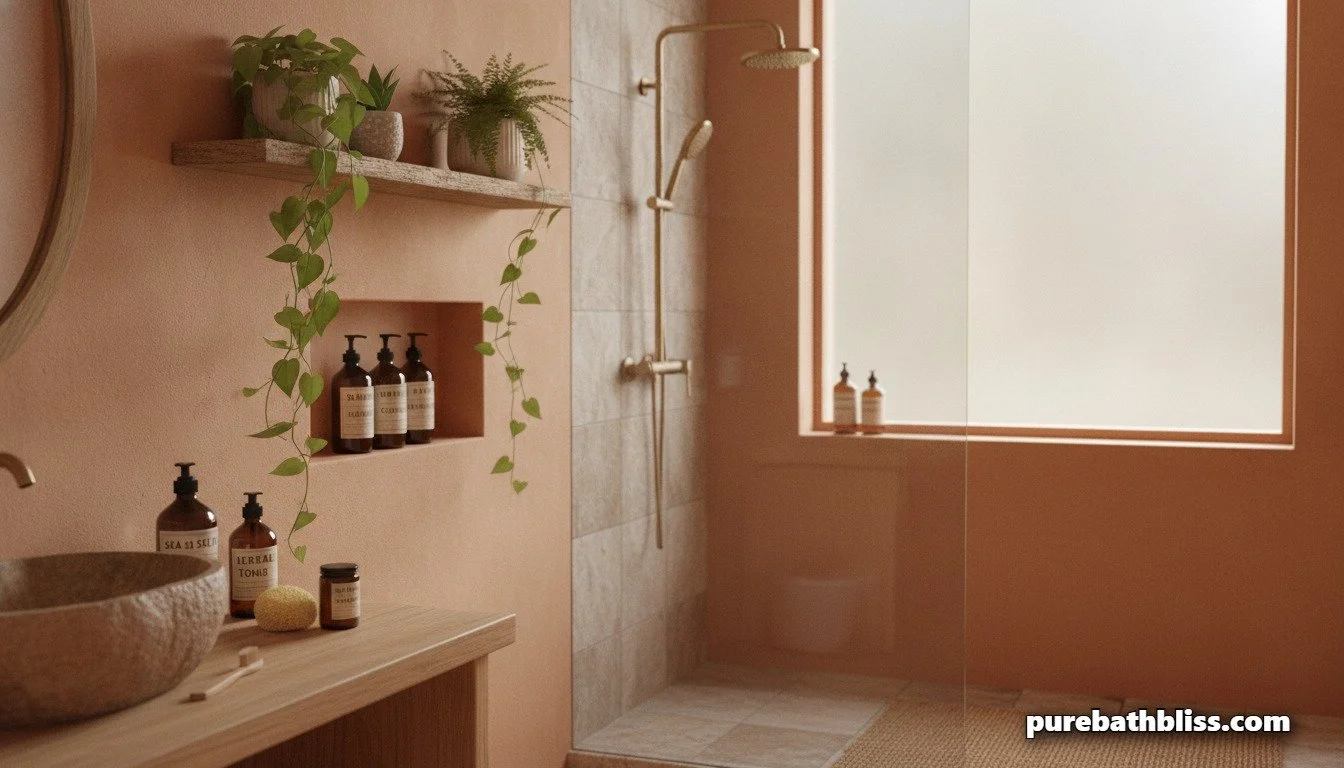
Looking across these five trends, what's consistent is that they're driven by performance and well-being rather than aesthetics alone. The all-white bathroom looks clean but doesn't necessarily feel restorative. The plastic bottle collection is convenient but doesn't tell you what's in it. The standard toilet flushes but uses four times the water it needs to.
The 2026 bathroom is being designed around how it functions as a daily environment for the people using it. That includes what the materials off-gas, how much water the fixtures consume, whether the plants clean the air, and whether the products on the shelf contain things you'd be comfortable knowing about. That's a more demanding standard than "does it look like the renovation shows," but it's also a more meaningful one.
None of these five trends require a full renovation to engage with. Each has an accessible entry point that can be implemented this week for under fifty dollars. Pick the one that resonates most with where your bathroom currently falls short, start there, and build outward. The cumulative effect of several small right decisions is a bathroom that genuinely performs better than the one you have now, and that's a more durable kind of luxury than any fixture finish or tile trend.