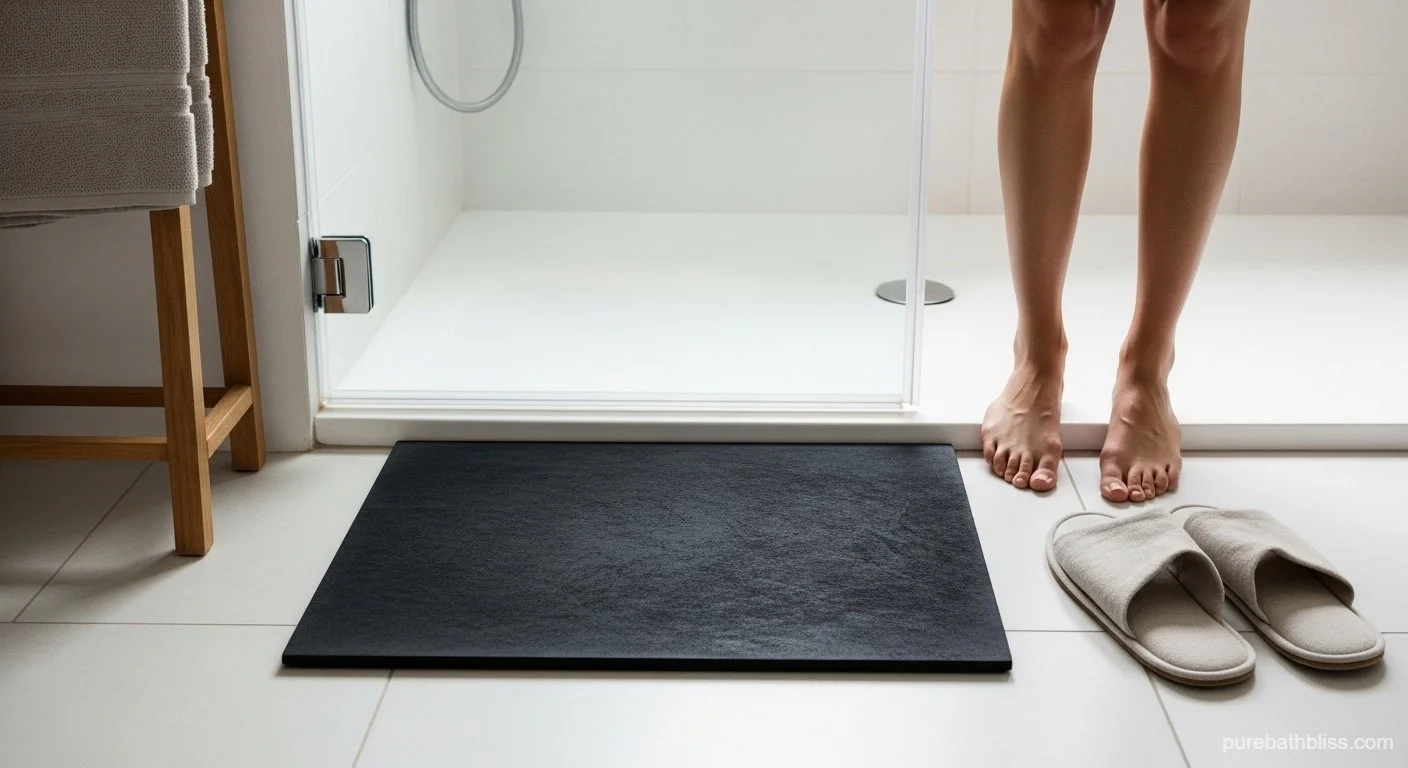
Are Diatomaceous Earth Bath Mats Worth the Hype?
You step out of the shower and straight into the dreaded “wet sock” moment. That cold, slimy fabric bath mat has been marinating in yesterday’s shower water for 18 hours. You swear you’ll replace it… until you see stone bath mats all over Instagram promising to stay bone-dry in 60 seconds and never grow mold.
Gimmick or miracle?
I lived with both for six months (cloth in one bathroom, three different stone mats in another) so you don’t have to gamble $80–$150 to find out.
Here’s the unfiltered truth.
What Exactly Is a “Stone” Bath Mat?
It’s Fossilized Algae, Not Magic
Diatomaceous earth (DE) is the fossilized remains of tiny aquatic organisms called diatoms. Their silica skeletons create a naturally porous, chalk-like rock that can hold up to 150 % of its weight in water—then release it as vapor extremely fast.
The Physics That Makes It Work
Microscopic honeycomb pores pull water in via capillary action (like a tree drinking through roots). Once inside, the water spreads across millions of tiny channels and evaporates in minutes instead of hours.
Safety Check: Yes, It’s Completely Safe
This is the same food-grade DE used in wine filtration and toothpaste. It is NOT the crystalline dust used for pool filters or pest control (that version requires a mask). Bathroom mats are heat-treated and bound with safe resins.
Performance Head-to-Head: Stone vs. Cloth
Absorbency Speed
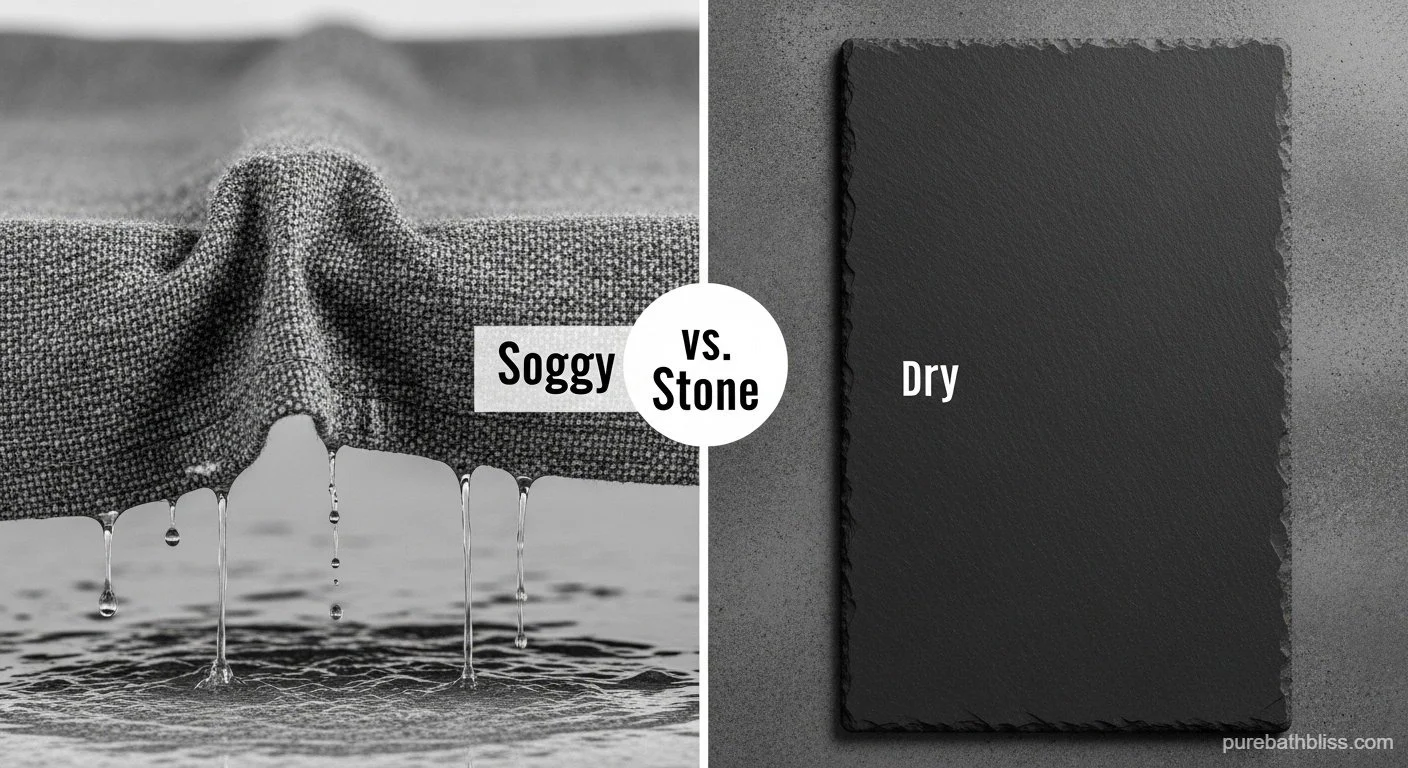
Fabric: 4–12 hours to feel dry (longer in humid climates)
Stone: 30–90 seconds for surface to feel dry to the touch I poured 500 ml of water on both. The stone mat was barefoot-ready in under a minute.
Hygiene & Mold Resistance
Cloth is cellulose—mold’s favorite food. Stone is inorganic rock—mold literally has nothing to eat. After six months, my fabric mat had two black spots. All three stone mats still look brand new.
Durability & Lifespan
Fabric: Fades, frays, and loses absorbency after 50–100 washes
Stone: Can last 5–10+ years with proper care (but can crack if you drop a shampoo bottle on it)
The Comfort Trade-Off (The Part Influencers Don’t Show)
The Honest Feel
Stone feels like cool, slightly textured slate. It is not plush. It is not cozy. Your feet will never sink in like a Turkish cotton rug.
Winter Reality Check
In January, that first step can be a jolt. Many owners keep cheap slippers nearby or place a small fabric runner on top during cold months.
Who It’s Actually For
Germ-obsessed parents
Hot, humid climates
Minimalist or Japandi bathrooms
Anyone who hates laundry
Who Should Skip It
People who want a “hug your feet” spa experience
Households with toddlers who might fall
Renters who can’t risk scratching tile
Buying Guide: Don’t Waste Money on a Fake One
Material Purity
Look for 60–80 % diatomaceous earth. Cheaper versions (<40 %) use cement fillers and lose absorbency fast.
Surface Texture
Grooved or embossed = better grip when wet
Completely flat = sleekest look but can be slippery
Critical Accessories
Non-slip bottom pad (some brands cheap out)
Included sanding block (you’ll need it every few months)
Proper thickness (10–12 mm prevents cracking)
Best tested options (2025):
Dorai Home Stone Bath Mat (top performer)
Sutera Stone Bath Mat
StoneBathwear (luxury thickness)
Maintenance: Yes, You Have to Sand Your Bath Mat
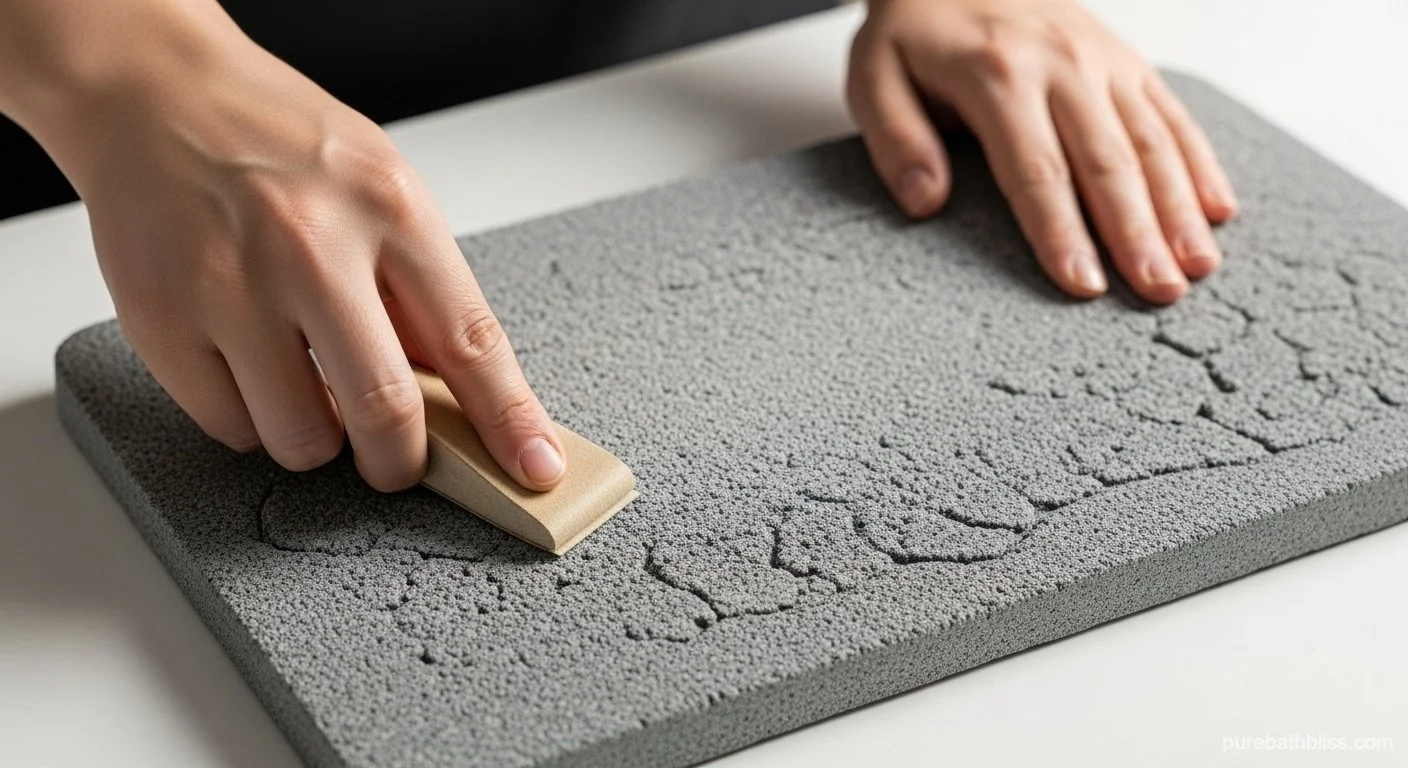
The 5-Minute “Reset” Ritual (Every 4–6 Months)
Body oils and soap residue eventually clog the pores.
Take mat outside or over trash
Lightly sand entire surface with the included 400-grit block (circular motion, 2–3 minutes)
Rinse and air-dry Absorbency returns to day-one levels.
Stain Removal
Makeup, fake tan, hair dye → hydrogen peroxide + baking soda paste, let sit 10 min, sand lightly
Never use bleach or oil-based cleaners
Preventing Warping
Always store flat, never rolled or leaned vertically when wet.
The Final Verdict
Speed of drying → Stone wins by miles
Mold & bacteria resistance → Stone (inorganic = zero food source)
Comfort & warmth → Cloth, no contest
Laundry reduction → Stone (zero washing ever)
Upfront cost → Cloth wins
Long-term cost → Stone (7–10 year lifespan vs. replacing fabric every 1–2 years)
Aesthetics → Personal taste: stone = modern luxury, cloth = traditional spa
My Personal Recommendation
Guest or kids’ bathroom → Stone (no more forgotten wet towels)
Master suite → Keep your plush fabric (life’s too short for cold feet in February)
Small apartment or hot climate → Stone all the way
Stone bath mats are not hype—they’re a legitimate upgrade for hygiene and convenience. They just come with the honest trade-off of feeling like… well, stone.
If you hate laundry and love a perpetually clean floor, you’ll wonder why you waited so long. If you shower to feel pampered and cozy, stick with the fabric you already love.
Either way, you no longer have to live with the soggy sock.