Transparency Note: We independently select these products based on research and user reviews. If you buy something through our links, we may earn a commission.
By eight o'clock on Thanksgiving night, the dishes are done, the guests have left, and something specific happens to the people who hosted. There is a particular kind of exhaustion that combines physical fullness, low-grade social depletion, and the cortisol hangover of having managed a large family gathering for six to eight hours. It does not feel like ordinary tiredness. It feels like a system that has been running at capacity all day and has not yet been told it is allowed to stop.
The instinct is usually to collapse on the couch and turn on something mindless. This is not the worst instinct. But there is a better one that most people do not think of on Thanksgiving specifically even though they might on a regular evening: a bath. Not a perfunctory shower. A deliberate warm bath with magnesium, timed correctly, that addresses the specific physiological state that a Thanksgiving feast and a long hosting day creates.
Here is the science behind why this works, the exact recipe, and the timing that makes the difference between a bath that helps you sleep and one that keeps you awake.
What Thanksgiving Actually Does to Your Body
Before getting to the bath, it is worth understanding what the body is managing on Thanksgiving night, because the recovery bath works best when it is matched to the specific physiological state rather than just being a general relaxation tool.
The digestion load. A typical Thanksgiving meal delivers between 2,500 and 4,500 calories in a single sitting, with high levels of sodium, refined carbohydrates, fat, and protein all arriving simultaneously. The digestive system responds by significantly increasing blood flow to the gut, which is one of the reasons people feel heavy and slightly foggy after a large meal. The vagus nerve, which connects the gut and the brain, is highly active during this process, which also contributes to the well-documented post-feast drowsiness. The digestion of a meal this size takes four to six hours to progress meaningfully through the system.
The sodium load. Thanksgiving dishes are typically high in sodium, from the brined turkey through to the gravy, the stuffing, and the commercially prepared sides that many households incorporate. High sodium intake causes the body to retain water, producing the bloated, slightly swollen feeling that many people notice the morning after Thanksgiving. Warm water immersion and sweating in a warm bath can support the lymphatic system in reducing this fluid retention, though the primary mechanism for sodium elimination remains kidney function and hydration.
The cortisol load from hosting. Hosting a large family gathering is a sustained cognitive and social task. Managing timing across multiple dishes, navigating family dynamics, hosting conversations across generations, and maintaining the energy to be genuinely present for guests across six to eight hours produces a cortisol load that does not simply switch off when the guests leave. The cortisol from a long hosting day lingers in the bloodstream and is one of the primary reasons hosts often feel wired rather than sleepy in the hours after a gathering, despite genuine physical exhaustion.
The magnesium depletion. A high-calorie, high-carbohydrate meal accelerates magnesium metabolism. The body uses magnesium in the enzymatic processes involved in metabolizing glucose and in the regulation of insulin response. A large carbohydrate-rich meal like Thanksgiving dinner depletes circulating magnesium measurably, which can contribute to the post-feast restlessness and difficulty sleeping that many people experience despite feeling physically full and tired.
Why a Bath Specifically
Warm water immersion addresses the Thanksgiving physiological state through four distinct mechanisms, each of which is relevant to what the body is managing after a feast and a long hosting day.
Parasympathetic activation. Warm water immersion activates the parasympathetic nervous system, the rest-and-digest branch that counteracts the sympathetic cortisol-driven state that hosting has produced. Heart rate decreases, blood pressure drops, cortisol levels begin to fall. This is not a placebo. It is a measurable physiological shift that warm water reliably produces in the nervous system within the first five minutes of immersion.
Vasodilation and circulation support. The heat of the bath causes blood vessels to dilate, increasing circulation to the extremities and supporting the body's natural fluid redistribution processes. This is particularly useful for the post-Thanksgiving sodium retention that produces swelling in the feet and ankles after a long day of standing and hosting.
Transdermal magnesium replenishment. Dissolving magnesium chloride flakes in the bath water allows magnesium ions to be absorbed through the skin during the soak. Magnesium chloride has a higher skin absorption rate than magnesium sulfate, making it the better choice for this specific application. Replenishing the magnesium that the feast depleted supports nervous system calming and helps establish the conditions for genuine sleep rather than the restless lying-awake that characterizes many Thanksgiving nights.
Core temperature cycling for sleep onset. Exiting a warm bath causes the body to dissipate the accumulated heat, dropping core temperature toward the threshold needed for sleep onset. Timed correctly, at least sixty to ninety minutes before the intended sleep time, the bath creates a reliable sleep trigger that is particularly valuable on a night when the digestion load and residual cortisol are working against natural sleep onset. The full science behind this mechanism is covered in our Epsom salt and magnesium flakes guide.
A Word of Honesty About Detox
The phrase "detox bath" is widely used in the context of post-feast recovery and it is worth being honest about what it means and does not mean. The body's actual detoxification systems are the liver and kidneys, and no bath ingredient meaningfully accelerates those processes beyond the body's own capacity. What a warm magnesium bath genuinely does after Thanksgiving is support nervous system downregulation, partially replenish magnesium that the feast depleted, encourage lymphatic circulation, and create the physiological conditions for better sleep. These are real and meaningful benefits. They do not require the word detox to be worth pursuing, and using the word accurately is more honest than implying that a bath flushes turkey and pie from the system.
The Post-Thanksgiving Recovery Bath Recipe
What You Need
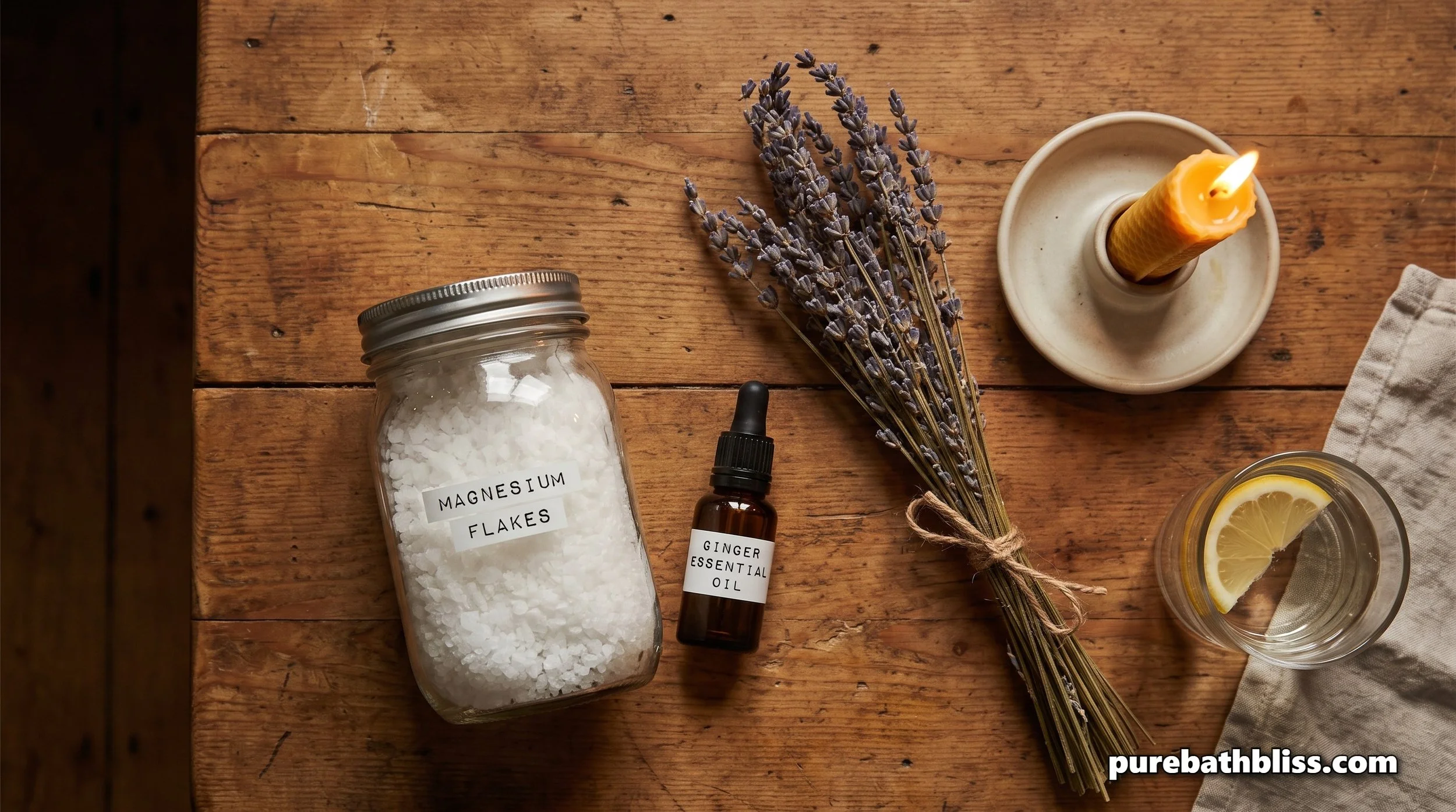
1 to 2 cups magnesium chloride flakes, preferably Zechstein-sourced for highest purity
¼ cup baking soda to soften the water and support skin comfort
5 drops lavender essential oil pre-diluted in one teaspoon of fractionated coconut oil
Optional: 2 drops ginger essential oil pre-diluted in the same carrier oil. Ginger has mild warming and circulation-supporting properties that complement the post-feast recovery context specifically.
A large glass of water to drink during the bath. Warm water immersion is mildly dehydrating and Thanksgiving dinner was likely high in sodium, making pre-hydration particularly important.
The Method
Step 1: Run the bath to 38 to 40 degrees Celsius. Slightly cooler than the ofuro temperature we cover in our Japanese bath ritual guide, because the body is already working hard on digestion and does not need the additional cardiovascular stress of very hot water on top of a full stomach.
Step 2: Add the magnesium chloride flakes and baking soda under the running water so both dissolve fully before you get in.
Step 3: Add the pre-diluted essential oils to the filled bath and stir gently with your hand.
Step 4: Dim the bathroom lights or use only candlelight. The post-feast brain does not need any additional stimulation. A dark, quiet, warm bathroom is the environment that allows the parasympathetic response to complete.
Step 5: Soak for fifteen to twenty minutes. Drink your glass of water during the bath. Do not use your phone. The whole point of this bath is to give the nervous system a genuine rest, and the phone undoes that more completely than almost anything else.
Step 6: Exit slowly. After a large meal and a warm bath, standing up quickly can cause a brief drop in blood pressure that produces light-headedness. Take your time getting out. Pat dry, apply a light moisturizer, and move toward sleep rather than back to the couch and the television.
The Timing Question
| Time After Feast | Recommended? | Why |
|---|---|---|
| Immediately after eating | No | Blood flow is concentrated in the digestive system. Hot bath vasodilation competes with this, potentially causing nausea or light-headedness. |
| 30 to 60 minutes after | Not ideal | Acute digestion still in full effect. Wait longer for best comfort and effectiveness. |
| 90 minutes to 2 hours after | Good | Acute digestion has progressed. Bath supports recovery and sleep preparation without competing with the digestive process. |
| 2 to 3 hours after | Ideal | Best window for most people. Digestion is well underway, cortisol has begun to drop naturally, and the bath's sleep-onset timing aligns well with a reasonable bedtime. |
| 3 or more hours after | Fine but less targeted | Still beneficial. The sleep-onset timing may mean you are taking the bath quite late, which is worth considering if you need to be up early the next morning. |
The timing is the detail most people get wrong with a post-feast bath. Getting into a very hot bath immediately after a large meal is genuinely inadvisable. The body is directing blood flow to the digestive system and the heat of the bath adds vasodilation that competes with that process, potentially causing nausea or light-headedness. Waiting at least ninety minutes after the main meal before drawing the bath allows the initial acute phase of digestion to progress before the bath adds its circulatory effects. Two hours after the feast is the ideal window for most people.
The Post-Bath Protocol

What happens after the bath determines whether the bath's work is preserved or immediately reversed. Three specific things undermine the post-Thanksgiving bath if they happen in the window between exiting the bath and sleeping.
Bright screen time. The blue light from a television, phone, or tablet resets the melatonin suppression that the warm bath and dim candlelight spent twenty minutes establishing. The instinct to check in on whatever streaming series you have been watching is understandable. Thirty minutes of screen time after the bath meaningfully delays sleep onset on a night when you are already working against a digestion-related sleep challenge.
Snacking. The post-bath window is one where the stomach may feel slightly emptier than it did immediately after the feast, due to the vasodilation and fluid redistribution of the bath. The instinct to have a small snack is common and if you are genuinely hungry a small amount of protein is fine. Returning to the dessert table is not, because it reactivates the digestion load the bath was designed to support the body in managing.
Intense conversation or emotionally stimulating content. A difficult family conversation, a political discussion, or emotionally intense television content in the hour after the bath reactivates the sympathetic nervous system response that the bath worked to counteract. The post-bath hour is the transition to sleep, and protecting its quietness is what makes the sleep that follows genuinely restorative.
The Morning After
If the bath was timed correctly and the post-bath protocol was followed, the morning after Thanksgiving should feel meaningfully better than the morning after Thanksgivings where you fell asleep on the couch at nine thirty with the television on. The magnesium replenishment supports deeper sleep architecture. The cortisol reduction from the bath means the nervous system has had a genuine overnight recovery window rather than continuing to process the day's stress in parallel with digestion. The sodium retention from the feast will still be present to some degree in the morning regardless of the bath, and drinking water consistently through the following day is the most effective way to support its resolution. The bath is not a reset button. It is a recovery support tool for a body that did a lot of work on Thanksgiving and deserves a deliberate transition to rest.