Magnesium Flakes vs. Epsom Salt: The Science Behind Deep Muscle Relaxation
In the relentless rhythm of modern life, where deadlines stretch and screens glow incessantly, the yearning for a sanctuary of calm becomes a primal whisper. For centuries, humanity has sought solace in warm waters, a therapeutic embrace promising respite from physical exertion and mental strain. Among the most revered allies in this quest for deep muscle relaxation are two distinct, yet often conflated, compounds: magnesium flakes and Epsom salt. Both promise a journey to tranquility, a soothing balm for weary bodies, but beneath their crystalline forms lies a fascinating scientific divergence. This article embarks on an investigative voyage, dissecting the chemical intricacies, absorption pathways, and distinct benefits of each, ultimately empowering you to make an informed choice for your personal ritual of restoration.

The Core Contenders: A Chemical Unveiling
At first glance, magnesium flakes and Epsom salt might appear as mere variations of the same essential mineral. Both deliver magnesium, a powerhouse electrolyte vital for over 300 enzymatic reactions in the body, including crucial roles in muscle and nerve function, blood glucose control, and blood pressure regulation. However, their fundamental chemical structures dictate differing properties, absorption rates, and ultimately, the nuanced experiences they offer.
Epsom Salt: The Familiar Ally (Magnesium Sulfate Heptahydrate)
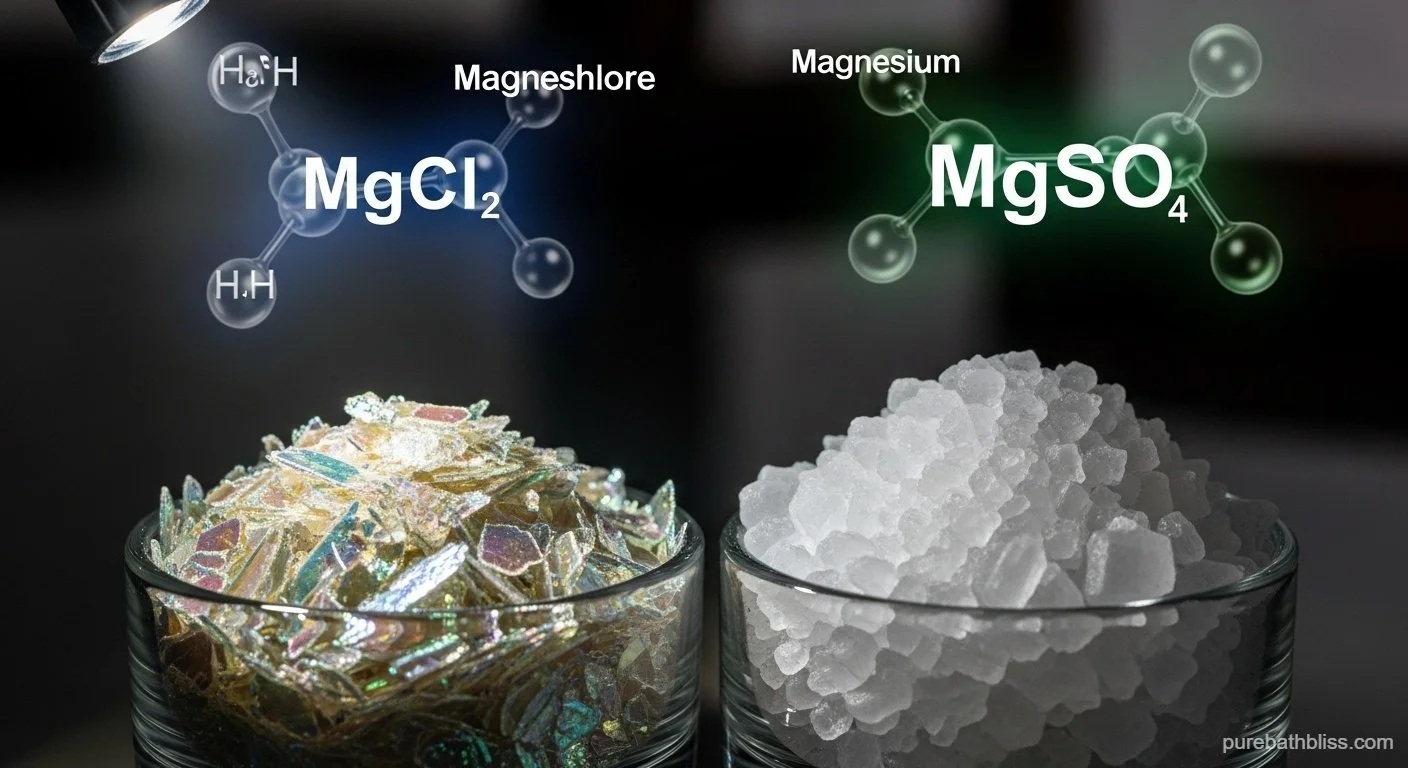
For generations, Epsom salt has been a household staple, its name intrinsically linked with soothing aches and pains. Discovered in the 17th century in Epsom, England, this humble compound has graced countless bathwater concoctions. Chemically, Epsom salt is magnesium sulfate heptahydrate (MgSO₄·7H₂O). This means it's a compound of magnesium, sulfur, and oxygen, bonded together as a sulfate, and typically found with seven molecules of water.
The magic of Epsom salt isn't just in the magnesium; the sulfate component plays a significant role. Sulfates are essential for numerous biological processes, including detoxification pathways, healthy joints, and the formation of brain tissue and mucin proteins. When dissolved in warm water, Epsom salt dissociates into magnesium ions and sulfate ions, both of which are theoretically available for transdermal absorption. The experience of an Epsom salt bath is often described as deeply warming and detoxifying, a classic remedy for post-workout soreness and general tension. Its readily available nature and affordability have cemented its status as a go-to for many seeking a simple, effective soak.
Magnesium Flakes: The Purified Powerhouse (Magnesium Chloride)
Emerging as a more contemporary contender, magnesium flakes often boast a purer, more concentrated form of magnesium. These flakes are predominantly magnesium chloride (MgCl₂), typically sourced from ancient, pristine seabeds, most notably the Zechstein Sea in Northern Europe, which lies over a mile beneath the earth's surface, untouched by modern pollution. This geological isolation ensures an exceptionally pure product, free from the heavy metals and contaminants often found in surface-level sources.
The key difference here is the chloride ion. Unlike the sulfate in Epsom salt, chloride is a highly bioavailable carrier for magnesium. It is naturally present in our stomach acid and plays a vital role in maintaining electrolyte balance, aiding digestion, and facilitating cellular communication. When magnesium chloride flakes dissolve in water, they release magnesium ions and chloride ions. This specific chemical structure is crucial for its distinct transdermal properties. Advocates often describe a magnesium chloride bath as having a softer, almost silken feel on the skin, a testament to its potentially different interaction with the body's largest organ. The purity and specific chemical form of magnesium flakes position them as a premium choice for targeted magnesium supplementation through the skin.
The Science of Absorption: A Transdermal Journey
The effectiveness of both magnesium flakes and Epsom salt hinges on a fundamental question: can magnesium truly be absorbed through the skin? This concept, known as transdermal absorption, has been a subject of scientific debate, but a growing body of evidence and anecdotal experience supports its efficacy, particularly for topical magnesium applications.
Myth vs. Reality: Do They Really Get In?
For a long time, conventional wisdom held that the skin, being the body's primary protective barrier, was largely impenetrable to minerals like magnesium. However, the skin is not an impermeable fortress; it's a complex, semi-permeable organ designed for both protection and exchange. Research indicates that certain compounds, especially those with small molecular sizes and specific ionic charges, can indeed pass through the epidermal layers, enter the lymphatic system, and eventually reach the bloodstream.
Studies, albeit often small-scale and preliminary, have shown increases in serum magnesium levels after regular transdermal application, be it through bath soaks, oils, or gels. The warm water of a bath further aids this process by increasing peripheral circulation, opening pores, and creating a favorable osmotic gradient. While the exact percentage of absorption remains an area of ongoing research, the subjective experiences of millions who report relief from muscle soreness, improved sleep, and reduced stress after magnesium baths strongly suggest a physiological effect. The skin, far from being a passive shield, actively participates in our metabolic and mineral balance.
Bioavailability Battle: Which One Delivers More?
This is where the chemical distinction between magnesium sulfate and magnesium chloride truly comes into play, particularly concerning bioavailability – the proportion of a substance that enters the circulation and is able to have an active effect.
Magnesium chloride (flakes) is often lauded for its superior transdermal absorption and cellular uptake compared to magnesium sulfate (Epsom salt). The reason lies in the accompanying ion. Chloride ions are highly soluble and are rapidly absorbed by the cells. When magnesium chloride dissociates in water, the magnesium ions are paired with chloride ions, which are believed to facilitate their passage through the lipid bilayers of skin cells more efficiently. Moreover, chloride is a vital electrolyte, already abundant in the body, and helps maintain cellular fluid balance, which may further enhance the overall absorption process. The body readily recognizes and utilizes chloride, making it an ideal partner for magnesium delivery.
On the other hand, while magnesium sulfate certainly delivers magnesium, the sulfate ion is a larger molecule and may not penetrate the skin as readily or efficiently as chloride. While sulfates are crucial for many bodily functions (like liver detoxification), their transdermal absorption for the primary purpose of increasing systemic magnesium levels might be less direct or potent than that of magnesium chloride. This isn't to say Epsom salts are ineffective; they clearly provide benefits. However, for those specifically targeting robust magnesium replenishment and cellular delivery, magnesium chloride flakes are often considered the more biologically efficient option due to the enhanced penetrative power facilitated by the chloride ion.
Beyond Relaxation: Unpacking the Wider Benefits
While deep muscle relaxation is the headline benefit, both magnesium flakes and Epsom salt contribute to a broader spectrum of well-being, touching upon athletic recovery, stress management, and even skin health.
Muscle Relief and Recovery
The primary reason many turn to magnesium soaks is for the profound relief they offer to tired, aching muscles. Magnesium is absolutely critical for proper muscle function. It acts as a natural calcium channel blocker, regulating the flow of calcium into muscle cells. Calcium triggers muscle contraction, while magnesium facilitates muscle relaxation. A deficiency in magnesium can lead to muscle cramps, spasms, and tension.
When absorbed transdermally, magnesium helps to relax muscle fibers, reduce inflammation, and alleviate soreness. For athletes, this translates to faster recovery times, decreased post-exercise muscle fatigue, and a reduced risk of injury. The warmth of the bath itself, combined with the magnesium, promotes increased blood circulation to the affected areas, further aiding in the removal of metabolic waste products like lactic acid and delivering oxygen and nutrients for repair. The experience is akin to a gentle, internal massage, coaxing tight knots to unravel and tension to dissipate into the warm waters.
Stress Reduction and Sleep Enhancement
Beyond the physical, magnesium plays a pivotal role in neurological health and mood regulation. It acts as an antagonist to glutamate, an excitatory neurotransmitter, and a co-factor for gamma-aminobutyric acid (GABA), an inhibitory neurotransmitter. By promoting GABA activity, magnesium helps to calm the nervous system, reduce anxiety, and foster a sense of tranquility.
A warm magnesium bath before bed can be an incredibly effective natural sedative. The gentle heat combined with the calming effects of absorbed magnesium helps to lower cortisol levels, quiet an overactive mind, and prepare the body for restful sleep. Users often report falling asleep more easily and experiencing deeper, more restorative sleep after a magnesium soak. It's a holistic approach to unwinding, addressing both the physical tension that often accompanies stress and the neurological hyper-arousal that disrupts peaceful slumber. The steam rising from the bath, infused with the mineral's subtle essence, creates an almost meditative atmosphere, disconnecting the bather from the day's digital cacophony.
Skin Health and Detoxification
Both forms of magnesium offer distinct benefits for the skin and detoxification processes. The sulfates in Epsom salt are crucial for detoxification pathways, particularly the liver's ability to process toxins. Sulfation is a key detoxification pathway, and soaking in magnesium sulfate can potentially aid the body's natural cleansing mechanisms, supporting overall cellular health. This contributes to the feeling of being "cleansed" after an Epsom salt bath.
Magnesium chloride, with its higher bioavailability, also supports skin health by contributing to cellular regeneration and hydration. Magnesium is involved in maintaining the skin's barrier function, helping it to retain moisture and protect against environmental damage. Some users report improved skin tone and reduced dryness with regular magnesium chloride soaks. The gentle exfoliation provided by the mineral-rich water can also leave the skin feeling softer and smoother. Furthermore, the overall reduction in stress and inflammation facilitated by magnesium can have a positive ripple effect on skin conditions often exacerbated by these factors.

Practical Application: Crafting Your Perfect Soak
To harness the full potential of these mineral marvels, understanding the practical aspects of their use is key. Crafting the perfect soak is an art form, a ritual that can significantly enhance their therapeutic benefits.
Dosage Recommendations
For Epsom Salt: A general recommendation for a standard bath is about 1-2 cups (250-500g). For targeted muscle relief or a more intense detoxifying experience, some individuals may use up to 3 cups. However, it's always wise to start with a smaller amount and gauge your body's response.
For Magnesium Flakes: Due to their higher concentration and perceived greater bioavailability, a slightly smaller quantity is often sufficient. Typically, 1/2 to 1 cup (125-250g) of magnesium flakes is recommended for an adult bath. For children, significantly reduce the amount, perhaps to 1/4 cup, and always consult with a pediatrician first.
Always ensure the salts or flakes are fully dissolved in the water before entering the bath to prevent localized skin irritation from undissolved crystals.
Temperature and Duration
The temperature of your bathwater is crucial. It should be comfortably warm, not scalding hot. Water that is too hot can cause dehydration and put undue stress on the cardiovascular system. A temperature between 98-102°F (37-39°C) is ideal, as it promotes relaxation and vasodilation, enhancing the transdermal absorption process without being overwhelming.
For optimal benefits, aim for a soaking duration of at least 20-30 minutes. This allows sufficient time for the magnesium ions to penetrate the skin and for the body to relax deeply. Longer soaks, up to 45 minutes, can be beneficial for deep relaxation, but monitor your body's response, especially for the first few times. After your soak, gently pat your skin dry and consider applying a natural moisturizer to lock in hydration.
Enhancements: Essential Oils and Ambiance
Elevate your magnesium bath experience by transforming it into a holistic sensory retreat. The addition of essential oils can amplify the therapeutic effects and enhance the ambiance.
Lavender oil: Renowned for its calming and sleep-inducing properties, perfect for an evening soak.
Eucalyptus or Peppermint oil: Invigorating and excellent for clearing congestion and soothing respiratory passages, adding a refreshing dimension.
Chamomile oil: Gentle and deeply relaxing, ideal for sensitive skin and heightened stress.
Add 5-10 drops of your chosen essential oil directly to the bathwater after the magnesium has dissolved, or mix them with a carrier oil like jojoba or almond oil before adding to the water to ensure even dispersion and prevent skin irritation.
Beyond essential oils, consider setting the scene: dim the lights, light some candles, play soft, instrumental music, or simply revel in the quietude. Make this time a sacred pause, a deliberate step away from the demands of the world, allowing your mind and body to fully surrender to the soothing power of the mineral-rich waters. This mindful approach transforms a simple bath into a profound act of self-care and rejuvenation.
The Verdict: A Nuanced Choice
Having journeyed through the chemical compositions, scientific debates surrounding absorption, and the extensive benefits, it becomes clear that the choice between magnesium flakes and Epsom salt is not about one being definitively "better" but rather about understanding their distinct characteristics and aligning them with individual needs and preferences.
Epsom Salt (Magnesium Sulfate):
Pros: Highly accessible, cost-effective, time-tested remedy, excellent for general muscle relaxation and the detoxification benefits attributed to sulfates. Provides a comforting, traditional bath experience.
Cons: Sulfate ion may be less efficiently absorbed transdermally for systemic magnesium replenishment compared to chloride.
Magnesium Flakes (Magnesium Chloride):
Pros: Superior transdermal absorption due to the chloride ion, often sourced from highly pure ancient deposits, potentially more potent for targeted magnesium replenishment, and has a gentler feel on the skin.
Cons: Generally more expensive than Epsom salt, and might be less readily available in all retail outlets.
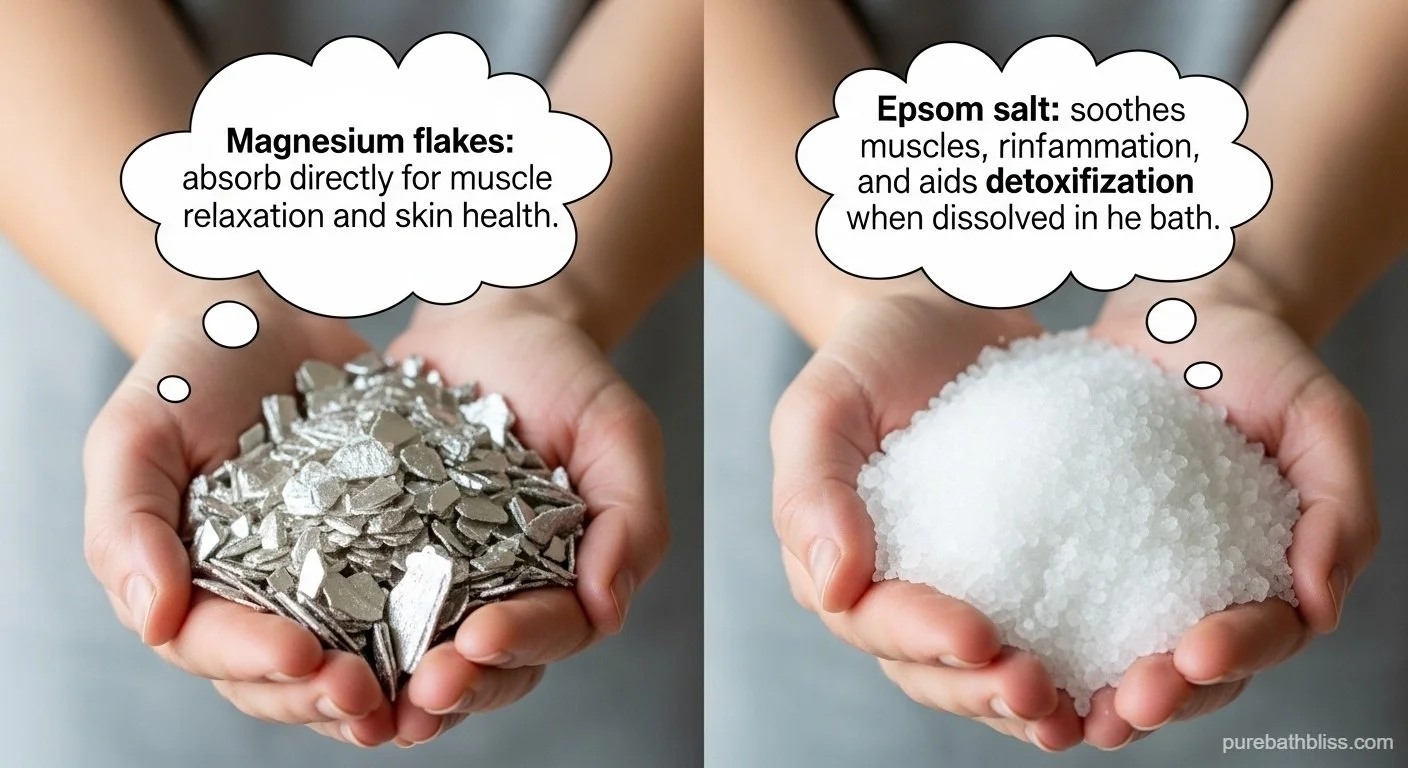
For those seeking a budget-friendly, effective option for general muscle soreness, stress relief, and the added benefit of sulfate-based detoxification, Epsom salt remains a magnificent choice. Its historical use is a testament to its enduring efficacy. However, for individuals looking to maximize transdermal magnesium uptake, address significant magnesium deficiencies, or those with sensitive skin who prefer a purer form, magnesium chloride flakes present a compelling, premium alternative. Athletes, individuals under chronic stress, or those experiencing persistent muscle issues might find the enhanced bioavailability of magnesium flakes particularly appealing.
Ultimately, both compounds offer a gateway to the therapeutic power of magnesium. The "better" choice is the one that best suits your body, your budget, and your personal wellness goals. Many individuals even choose to alternate or combine them, leveraging the unique strengths of each.
Conclusion: Embracing the Science of Soothing
The humble bath, elevated by the scientific marvels of magnesium, transforms from a mundane cleansing routine into a profound act of self-care. Whether you choose the familiar embrace of Epsom salt or the purified potency of magnesium flakes, you are engaging with a fundamental mineral that underpins countless bodily functions. The science behind deep muscle relaxation isn't magic; it's a testament to the intricate dance between our bodies and the natural world, facilitated by the remarkable properties of magnesium.
As we navigate the complexities of modern existence, prioritizing moments of tranquility becomes not a luxury, but a necessity. Understanding the subtle yet significant differences between magnesium sulfate and magnesium chloride empowers us to make informed choices, optimizing our paths to recovery, relaxation, and overall well-being. So, draw that warm bath, dissolve your chosen mineral, and surrender to the soothing embrace – a testament to ancient wisdom validated by contemporary science, promising deep muscle relaxation and a renewed sense of serenity.