Why Fan Location in the Bathroom Matters (And Where to Place It for Maximum Efficiency)
You’ve finally finished the renovation: sleek new tiles, a water-saving rainfall showerhead, and a fresh coat of low-VOC paint. But every time you step out of the shower, the room feels like a tropical rainforest. The mirror is fogged for an hour, the walls are "sweating," and a faint, musty smell begins to linger in the corners.
The culprit is rarely the fan itself; it is almost always where the fan is sitting. In the eco-friendly home niche, we talk a lot about air quality and "breathable" spaces. Bathroom fans are not just about removing odors; they are your primary mechanical defense against structural decay and toxic mold. This guide breaks down the science of air movement and the 2026 standards for bathroom ventilation.
The Negative Pressure Factor: How Fans Actually Work
To understand where to put a fan, you first have to understand how it moves air. A bathroom fan works by creating negative pressure. It pulls humid air out of the room, creating a vacuum. For that vacuum to be filled, fresh, dry air must be pulled into the bathroom—usually through the gap under your bathroom door.
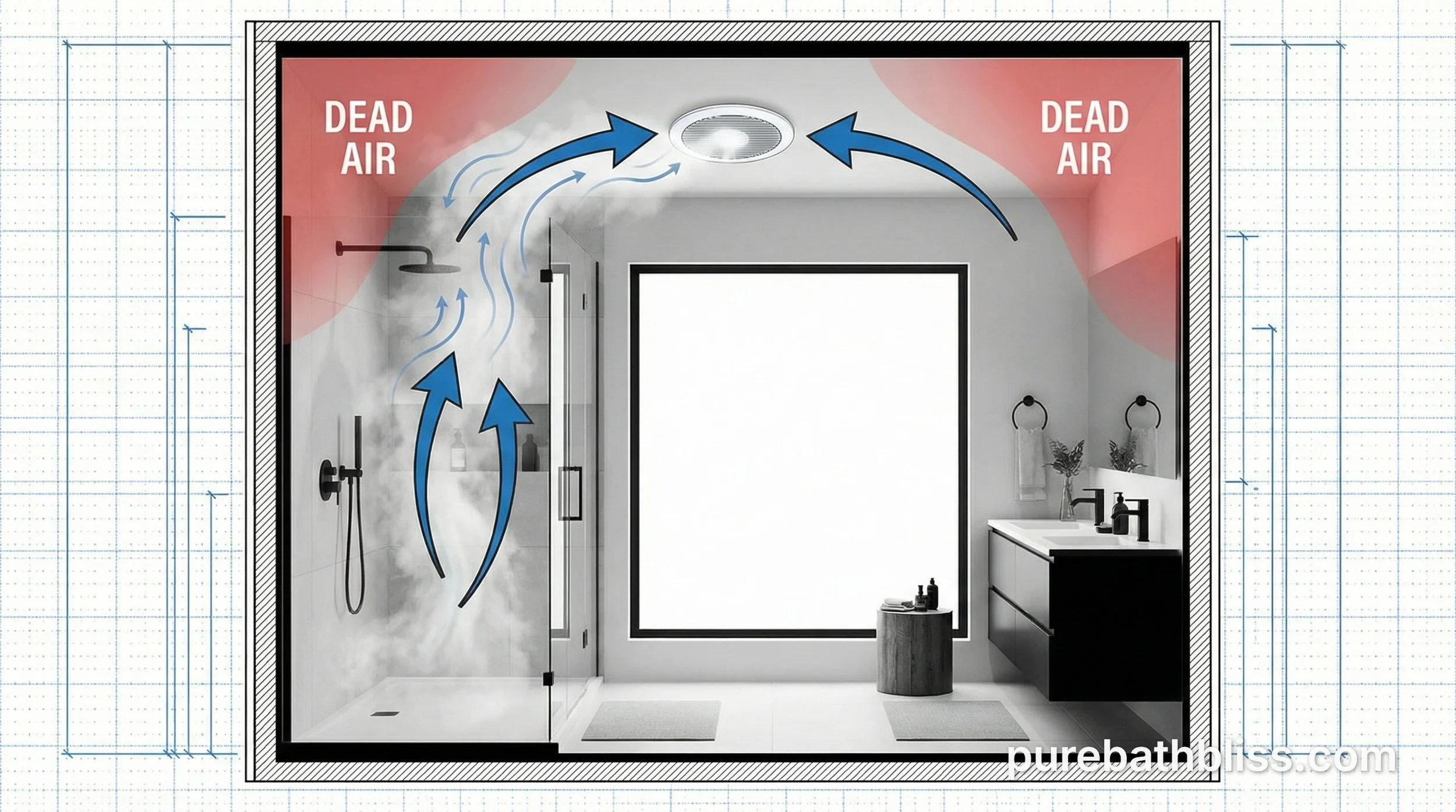
If the fan is placed in a "dead zone" such as the center of the room far away from the shower, the steam has to travel across the entire ceiling to reach the exhaust. Along the way, that steam cools down. As it cools, it turns from a gas back into a liquid, condensing on your paint, light fixtures, and mirror. This is why a poorly placed fan leads to "sweating walls" even if the fan is technically "on."
Moisture Control and Mold Prevention
If moisture stays on your grout or drywall for more than 24 to 48 hours, mold spores begin to colonize. A strategically placed fan removes the "source" moisture before it has a chance to settle. This is the difference between a healthy bathroom and one that requires a $5,000 remediation job in three years.
For more on creating a mold-resistant, eco-friendly space, see our master guide: The Zero-Waste Sanctuary: The Ultimate Guide to Decluttering and Organizing an Organic Bathroom.
The Golden Rules of Fan Placement
Rule #1: The Source Principle
The fan should be located as close to the primary moisture source as possible. In 90% of bathrooms, this is the shower or bathtub. Most modern fans are "UL Listed" for use over tubs and showers, provided they are installed on a GFCI-protected circuit. Placing the fan directly above the shower captures the steam at its hottest and most concentrated point, before it can disperse into the rest of the room.
Rule #2: The Cross-Flow Path
For a fan to work efficiently, it needs a "pathway" for the air. The best setup is to place the fan on the opposite side of the room from the bathroom door. This forces the fresh, dry air entering from the hallway to travel across the entire room, "sweeping" the humidity toward the exhaust. If the fan is too close to the door, it will simply pull the fresh hallway air right back out, leaving the steamy shower air trapped in the corner.
Rule #3: The Shortest Duct Path
A fan’s efficiency is often killed by what happens behind the ceiling. A fan motor is only as strong as the ductwork it is pushing against. You want the shortest, straightest path possible to the outside of your house. Every 90-degree elbow or "turn" in your ductwork adds the equivalent of 10 feet of resistance to the air. Aim for a total duct run of less than 20 feet.
Choosing the Right Fan for the Location
While placement is key, the type of fan you choose must match the location.
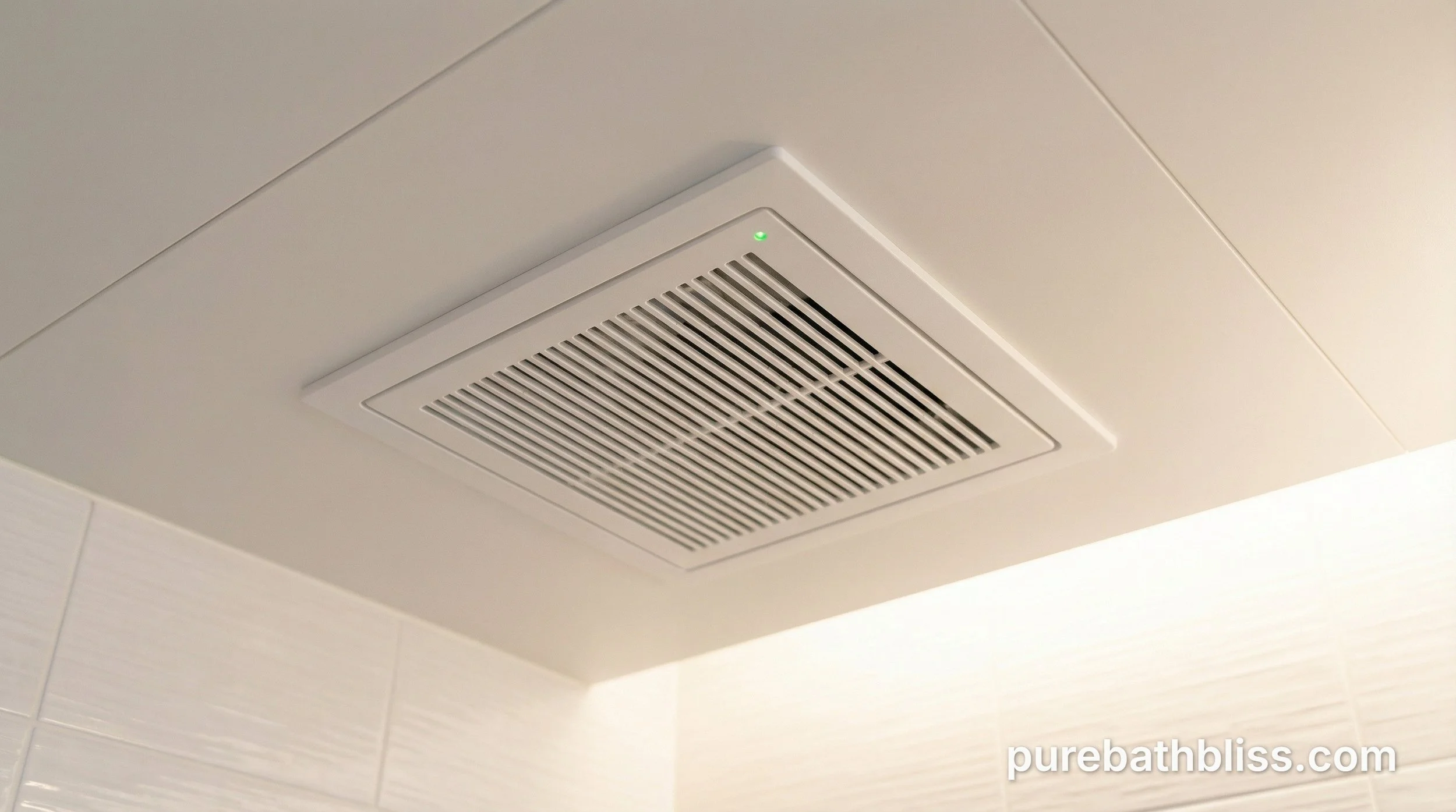
Ceiling Mounted Fans are the gold standard because heat and steam rise naturally. Placing the fan at the highest point of the room allows it to catch the air that is already trying to escape. Wall Mounted Fans are better suited for small bathrooms or retrofits where there is no attic access. These must be placed as high as possible on an exterior wall, ideally 12 to 18 inches below the ceiling, to catch the rising steam.
If you are designing a high-end, quiet sanctuary, you might consider an Inline or Remote Fan. In this setup, the actual motor is located in the attic or crawl space, and a simple grille is placed in the bathroom ceiling. This removes the noise from the room while maintaining incredibly strong airflow, which is perfect for larger bathrooms with multiple shower heads.
2025 Building Codes: Safety and Compliance
In 2025, building codes (such as the IRC Section M1504) have become significantly stricter. Ventilation is no longer seen as an "option" it is a structural requirement.
Exhausting Directly Outdoors: It is now illegal in most jurisdictions to vent a bathroom fan into an attic, soffit, or crawl space. Venting into an attic causes "Attic Mold," which can rot your roof rafters and go undetected for years.
Rigid vs. Flexible Ducting: Code now heavily favors rigid metal ducting. Flexible "slinky" style plastic ducts tend to sag over time. These sags create "bellies" where condensation pools, eventually leading to stagnant water and bacterial growth inside your vents.
The 20-Minute Rule: To truly protect your home, a fan should run for at least 20 minutes after you finish your shower. This ensures that the residual moisture on the walls is fully evaporated. Many homeowners are now installing humidity-sensing switches that handle this automatically.
Common Placement Mistakes to Avoid
One of the most frequent mistakes is placing the fan near a window. While it seems logical, this actually "short circuits" the ventilation. The fan will pull fresh air in from the window and push it right back out the exhaust, leaving the humid air by the shower completely untouched.
Another common error is venting through the roof without a backdraft damper. In colder climates, a vertical pipe without a damper allows heavy, cold air to fall down into your bathroom, making the room freezing and causing your heater to work overtime. Always ensure your exterior vent cap has a functioning flap to prevent "backdrafts."
The Bigger Picture: Ventilation as Wellness
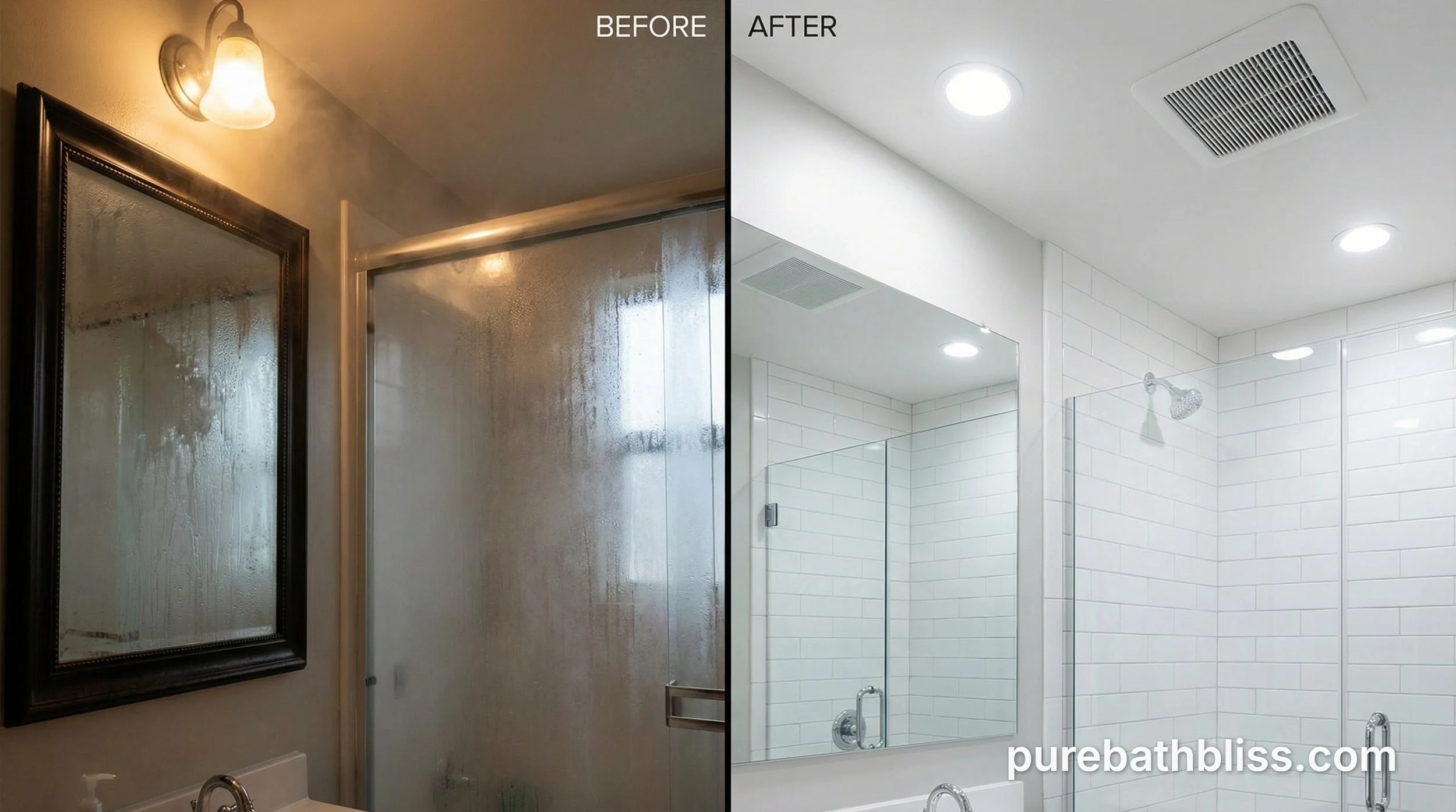
A well-placed fan is about more than just avoiding mold; it’s about the "Healthy Home" movement. High humidity in the home is a leading cause of dust mite proliferation and respiratory issues. By optimizing your fan location, you are:
Improving Sleep Quality: Especially in master suites, where damp bathroom air can migrate into the bedroom.
Protecting Your Investment: High-end cabinetry and wood trim will last decades longer in a low-humidity environment.
Saving Energy: A well-placed fan clears the room faster, meaning the motor runs for less time overall.
Conclusion
Fan location should never be an afterthought in a bathroom renovation. It is the foundation of a healthy, comfortable, and long-lasting space. By placing your exhaust near the moisture source, ensuring a straight path to the outdoors, and respecting the flow of air from your door, you can ensure that your bathroom remains a sanctuary rather than a sauna.
Breathe easier starting today by getting the science of your ventilation right.